
Houseplant
Virginia Spiderwort
Tradescantia virginiana
Also known as Tradescantia virginiana
How to grow Tradescantia virginiana, the classic garden spiderwort and parent of the border hybrids, a hardy clump-former with violet three-petalled flowers.
At a glance
- Difficulty
- Easy
- Water
- When the top of the soil dries; likes steady moisture
- Light
- Full sun to part shade
- Temperature
- Hardy; tolerates hard frost
- Humidity
- Average
- Hardiness
- USDA 4-9, RHS H7, hardy to -30 C
- Type
- Herbaceous perennial
- Height
- 30 to 60 cm
- Native to
- Eastern North America
A hardy woodland-edge and meadow wildflower from eastern North America, the type species of its genus. It is fully hardy to hard frost, dying back in winter and returning in spring, and it takes full sun to part shade and ordinary, moisture-retentive soil. It flowers longest with some moisture, and rots only in permanently waterlogged ground.
Hardiness zones describe winter cold alone. Summer heat, humidity, rainfall and the length of the growing season decide as much, so treat the range as the outer limit rather than as a recommendation.
Harmful if eaten
- Do not eat
- The sap
- Harm from
- Handling it and eating it
- Affects
- People, cats and dogs
Spiderworts are listed by the ASPCA among the plants that can irritate cats and dogs, whose skin may redden or who may have a mild stomach upset after contact with or chewing the sap. It is not a serious poison, and the flowers are edible in small amounts, but the sap can slightly irritate sensitive skin, so wear gloves if you are prone to it and keep chewing pets from grazing it.
Sources: ASPCA toxic and non-toxic plants, RHS potentially harmful garden plants
About
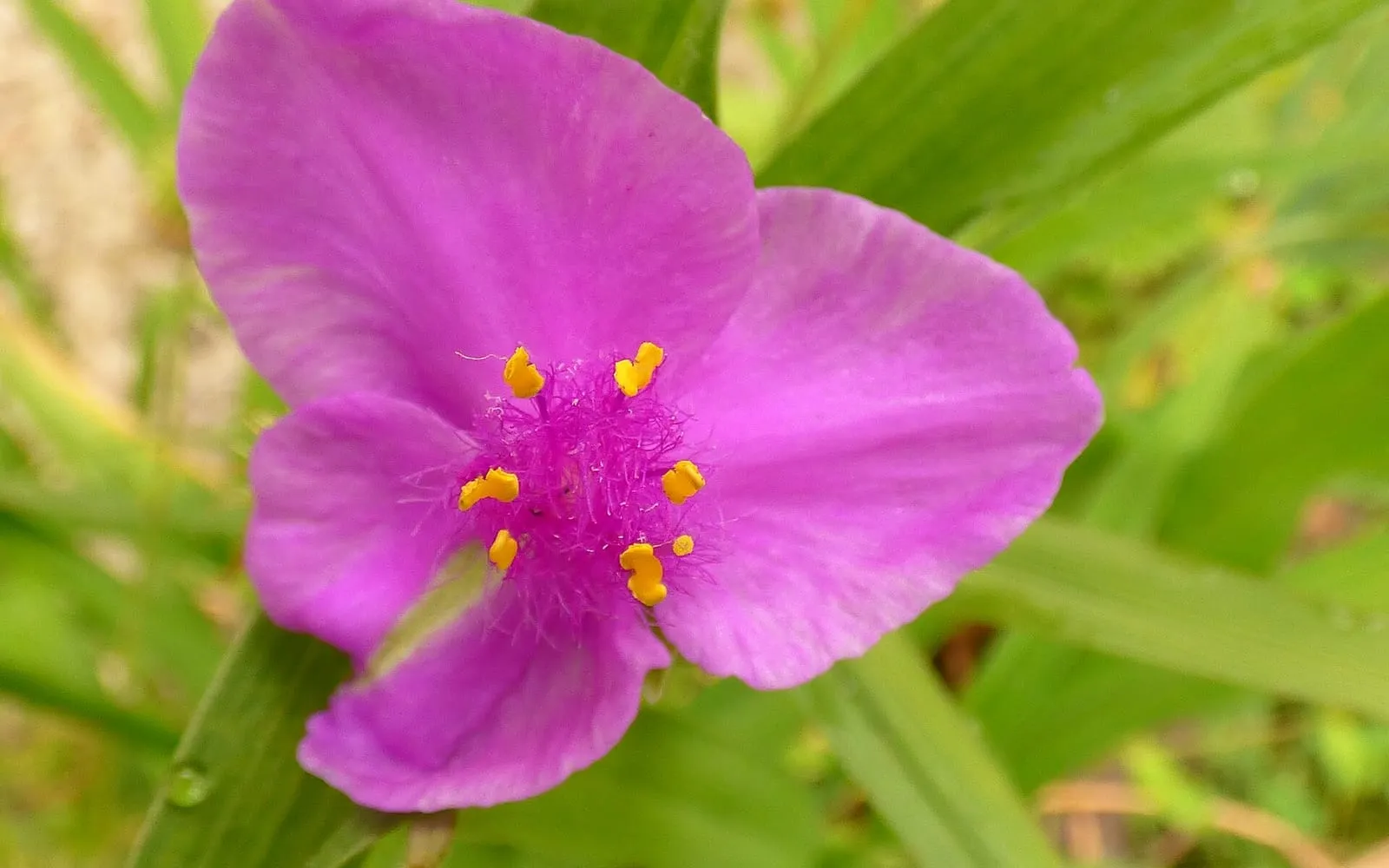
Virginia spiderwort is the plant that gave the genus its garden reputation. The elder John Tradescant received it from the American colonies in the early seventeenth century, and Linnaeus later honoured the Tradescant family with the name Tradescantia. Many named border spiderworts grown today descend from this species. It builds a low, arching mound of long, folded leaves and, in summer, opens loose heads of three-petalled flowers in violet-blue, purple, rose or white, each with a fuzzy tuft of yellow-tipped stamens.
A single bloom opens in the morning and is gone by mid-afternoon, but the plant carries so many buds that the clump stays in flower for months. It comes from the damp margins of eastern American woods and meadows, so it prefers cooler, moister conditions than its prairie relatives. It flowers longest where the soil does not dry out hard. Fully hardy and long-lived, it dies away each winter and returns in spring.
Appearance and character
A mature plant is a rounded, arching mound of foliage. The leaves are strappy and channelled, folded lengthways and clasping the stem, fresh mid-green and often slightly downy. They are softer and less waxy than the smooth prairie kind.
Flowers gather in nodding clusters at the shoot tips. Each flower has three petals, in shades from deep purple to palest white, with golden anthers on bearded filaments. The buds sit in a papery bract and open in sequence over a long season. Named garden forms range from near-black purple to clear pink and pure white, with the same basic care.
Where it is from
Tradescantia virginiana grows through the woodlands, clearings and streamside meadows of eastern North America, favouring the dappled edge where trees give way to open grass.
That woodland-edge home explains its preferences. It is hardy to around minus 30 degrees C and disappears underground each winter, but it flowers best and longest where its roots stay cool and evenly damp. Sun suits it if the soil holds moisture. Drought cuts the display short, and only permanently sodden ground rots it.
How it grows
New growth breaks from the crown in spring, flowering stems build through late spring and summer, and the plant returns to a dormant crown as autumn ends. It thickens slowly at the root and drops seed freely into open ground, so a settled clump enlarges year by year.
Set it in ordinary soil that holds some moisture, in sun or dappled shade, in a mixed border or a cool, part-shaded corner. Keep it reasonably damp for the fullest flowering. Once the first flush of bloom fades and the stems slump, cut the clump back close to the ground and it should regrow with fresh leaves and a further round of flowers. Divide the crown in spring or autumn to increase your stock or to keep a big plant in check.
Through the seasons
Spring brings a mound of new leaves from the crown. Divide congested plants now, and work in a light feed as growth begins.
Summer is the long flowering season, fresh blooms each morning across many weeks. Keep the roots cool and moist for the best show.
Autumn the foliage yellows and dies down. Trim it away as it collapses, and split the plant if you want more.
Winter the crown rests below ground, wholly hardy and content without protection.
Care difficulty
Easy. Planted in decent, moisture-holding soil in sun or half-shade, it flowers for months and returns dependably with little fuss. It suits a shaded, cooler bed where many summer flowers struggle. The main error is a waterlogged site that rots the crown. Two habits need light management: a mid-season collapse is fixed by shearing the plant down, and free seeding is reduced by cutting off the faded heads.
Watering
Water whenever the surface of the soil begins to dry, keeping the plant steadily moist through the flowering months. It flowers for longer with damp roots than a prairie spiderwort would. Let excess drain freely and keep it clear of permanently sodden ground.
In a container, water once the top of the compost dries and empty the saucer afterwards. It responds poorly to a long, hard dry spell in the growing season, though it takes ordinary garden conditions in its stride.
Warning signs, diseases and pests
The mid-season flop and general shabbiness are natural once the first flush is done, not a sign of illness. Cut the clump right back and it renews itself, frequently with a second flowering.
Ground that never drains will rot the crown, so avoid heavy, stagnant soil. Aphids may cluster on tender growth and slugs graze the emerging shoots; rinse the aphids away and protect young growth from slugs in spring.
Seedlings appear readily around a contented plant. Deadhead after flowering to hold it in check, or let it colonise a wilder part of the garden.
Growing environment
It grows well in full sun where the soil stays moist, and equally well in part shade. It prefers a little more coolness and damp than the open-prairie spiderworts want. A dappled, streamside position gives the longest flowering.
The plant is fully hardy and needs no winter care, retreating to the ground and returning each spring. Ordinary conditions with reliable moisture suit it best.
Grow it in decent, moisture-retentive but well-drained soil in a border or a cool corner, in sun or half-shade. It is a hardy garden perennial and will not thrive as a tender indoor plant.
Feeding
Feed sparingly. A single light dressing of general fertiliser in spring is plenty. The plant flowers freely in ordinary soil, and overfeeding encourages floppy, leafy growth at the expense of bloom.
Leave it alone through autumn and winter. A tired old clump responds far better to division and replanting in refreshed soil than to extra feeding.
Troubleshooting
It has flopped and gone shabby. Normal after the opening flush. Shear the clump back to a few centimetres and it regrows with fresh leaves and often another round of flowers.
It keeps seeding around. A happy plant self-sows freely. Cut off the spent heads to limit it, or let it naturalise where a little spread is welcome.
Each flower dies within hours. That is the spiderwort way; one bloom lasts a single morning, but the clump keeps opening new ones day after day for weeks.
How is it different from the prairie sort? It is shorter, often softly hairy and fonder of moisture and shade, whereas Ohio spiderwort has smoother, blue-green foliage and prefers drier, sunnier ground. Both are hardy native perennials.
Is it safe around pets? Mildly irritant only. The ASPCA lists spiderworts among plants that can upset cats and dogs, so keep a grazing pet off it, though it is no serious poison.
Virginia Spiderwort problem guides
Not sure what is wrong? See the common houseplant pests guide.