
Houseplant
Purple Heart
Tradescantia pallida
Also known as Purple Queen
How to grow purple heart, Tradescantia pallida. Why light matters more than feeding for keeping the purple colour strong, and the sap that can trigger a skin rash even after years of handling it without trouble.
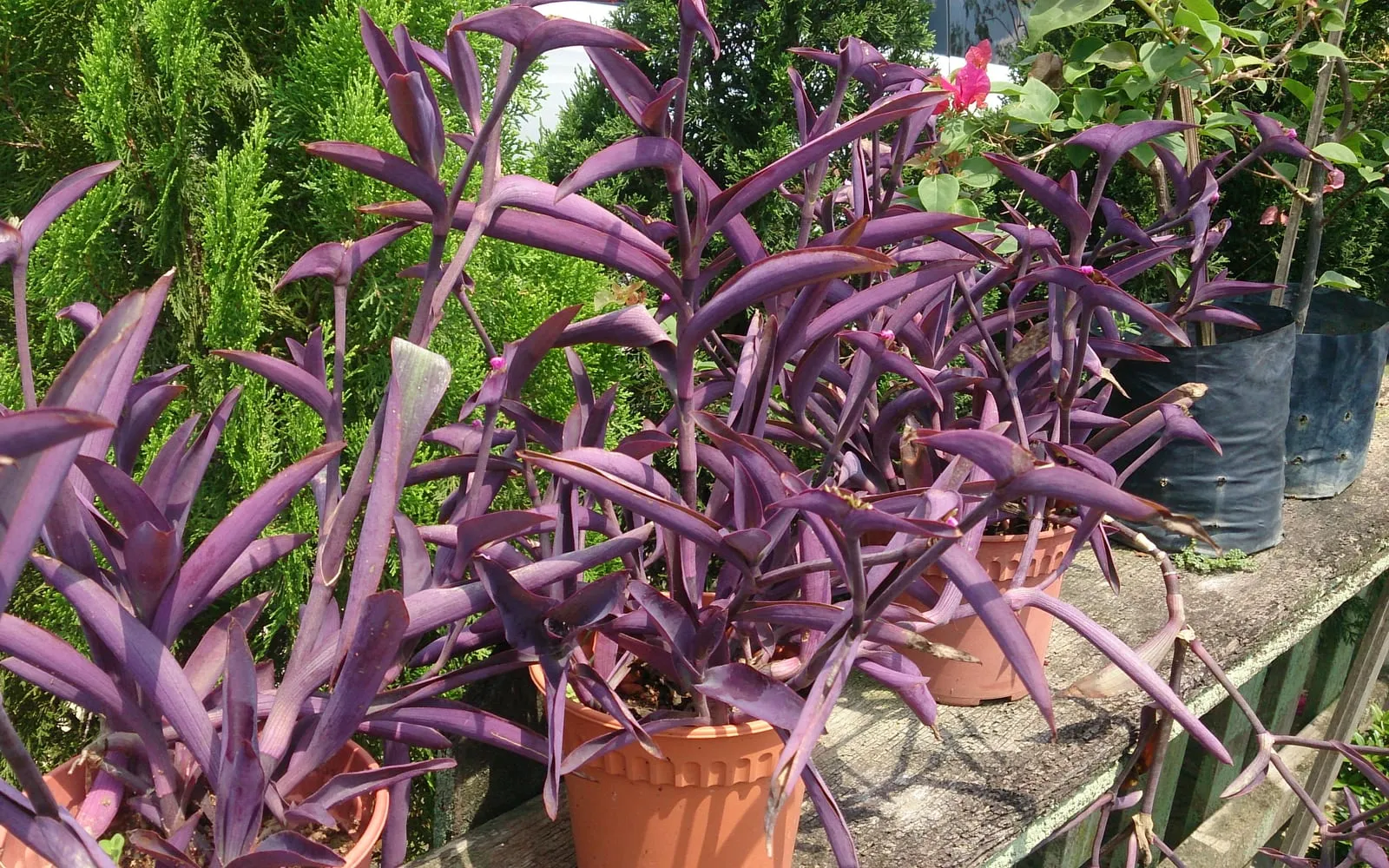
At a glance
- Difficulty
- Easy
- Water
- When the top half of the compost has dried, roughly weekly in summer
- Light
- Bright light, some direct sun for the strongest colour
- Temperature
- Above 5 deg C for foliage; roots survive lower where grown outdoors
- Humidity
- Average room humidity is fine
- Hardiness
- USDA 7b-11, RHS H3, hardy to -5 C
- Type
- Evergreen trailing perennial, semi-succulent
- Height
- 20-40 cm, trailing further where hung or grown as ground cover
- Native to
- Mexico
Tougher than its tropical look suggests. Top growth is killed outright by frost, but the rootstock survives a real winter chill where planted in the ground, regrowing from the base the following spring. Grown as a houseplant, none of that matters: keep it warm and in good light year round.
Hardiness zones describe winter cold alone. Summer heat, humidity, rainfall and the length of the growing season decide as much, so treat the range as the outer limit rather than as a recommendation.
Harmful if eaten
- Do not eat
- The sap
- Harm from
- Handling it and eating it
- Affects
- People, cats and dogs
Tradescantia causes far more skin trouble than stomach trouble. Its watery sap produces a red, itchy dermatitis in people who handle it repeatedly, familiar to gardeners who propagate it in quantity, and the reaction builds with exposure, so someone who has handled it for years without a problem can suddenly start reacting. Dogs and cats that push through a trailing or ground-cover planting develop the same rash, typically on the muzzle, the belly and between the toes, and it is often mistaken for an allergy to something else entirely, since nobody suspects the houseplant. Eating it causes a sore mouth and mild stomach upset and nothing worse. The plant roots from any stem fragment and is invasive outdoors in warm climates, which is a separate reason not to tip cuttings over a hedge. Wear gloves to take cuttings or cut it back, and if a pet develops a persistent, unexplained rash with a trailing tradescantia at its height, move the plant and see whether the rash clears.
Sources: RHS potentially harmful garden plants, ASPCA toxic and non-toxic plants
About
Purple heart is grown for its deep purple foliage. The colour is strongest in bright light with some direct sun, and plants kept in dim positions fade towards green. Light matters more than feeding for keeping the colour strong.
It grows quickly, trails well from a pot and roots easily from stem cuttings. In warm climates it can spread outdoors from broken stem pieces, so cuttings should be disposed of carefully.
Appearance and character
Leaves are narrow, pointed and fleshy, 7 to 15 cm long, a deep, uniform violet-purple that darkens further with more sun and softens towards green in shade. They clasp the stem in overlapping sheaths, giving each joint a slightly swollen look.
Stems are thick, fleshy and somewhat brittle where they meet a leaf joint, trailing or sprawling rather than climbing, and rooting readily wherever a node touches damp soil or compost.
Small three-petalled flowers, pale pink to lavender, open along the stems through summer, more a light scattering than a show, and rarely change the overall look of the plant, which is grown for its foliage colour rather than its blooms.
Where it is from
Tradescantia pallida comes from northeastern Mexico, where it grows as a low, sprawling ground cover in open, sunny sites. That origin explains its tolerance of heat, its need for strong light to colour well, and its speed of growth, all traits of a plant adapted to spread fast across open ground before competitors close in.
It has since naturalised well beyond that native range, growing wild in warm regions worldwide from cuttings and fragments that took root wherever they were discarded, a spread that says as much about how easily it propagates as about the climates it can tolerate.
How it grows
Pot it in an ordinary free-draining houseplant compost; it is not particular about soil and grows in almost anything that does not stay waterlogged.
Pinch out the growing tips regularly to keep growth bushy rather than leggy, since an unpinched plant stretches into long, sparse trails with gaps developing between leaves over time.
Repot or divide every year or two as it fills its pot, or start again from fresh cuttings, which root within a week or two in water or damp compost and grow on quickly.
Grown outdoors in a warm climate, it makes fast, low ground cover or spills attractively over a wall, though it should be sited with its tendency to root from broken stems in mind, since it can spread further than planned in mild, damp conditions.
Through the seasons
Spring is the best time to take cuttings, repot, and cut back any winter legginess to encourage bushy new growth.
Summer is the main growing season, with the strongest colour and fastest growth given good light. Water and feed on the regular schedule.
Autumn slows growth gradually as light levels drop.
Winter is a rest indoors, with slower growth and paler colour at lower light. Where grown outdoors in a marginal climate, top growth is usually cut back by the first frost and regrows from the base in spring.
Care difficulty
Easy, and one of the most tolerant trailing houseplants for a beginner. It recovers readily from being cut back hard, roots from almost any cutting, and tolerates occasional neglect. Light is the one thing it will not compromise on. Skimp there and the plant survives, but the purple fades towards green.
Watering
Water when the top half of the compost has dried out, typically weekly in summer and less often in winter as growth slows. Water moderately rather than heavily and let the pot drain fully afterwards.
It tolerates missed waterings far better than overwatering, since the somewhat succulent stems and leaves hold a working reserve of moisture, but a pot left standing in water for any length of time is at real risk of root rot.
Warning signs, diseases and pests
Root rot follows compost that has stayed too wet, showing as stems that darken and soften near the base while upper growth wilts despite damp compost. Cut back to firm, healthy stem, let the cuts dry briefly, and repot into fresh compost.
Aphids occasionally cluster on soft new growth at the stem tips. A strong jet of water or an insecticidal soap deals with light infestations quickly.
Legginess with pale, washed-out colour and long gaps between leaves is the commonest complaint and is a light problem rather than a pest or disease. Move the plant somewhere brighter and pinch back the leggy growth to encourage denser regrowth.
Growing environment
Bright light with some hours of direct sun each day produces the deepest colour; too little light and the foliage fades towards green while the stems stretch and thin.
Indoors, keep it above 5 deg C; it is not a plant that tolerates cold well as a houseplant, whatever its outdoor rootstock hardiness in the ground.
Average room humidity suits it fine, and it has no particular need for misting or a pebble tray.
Grown outdoors as summer bedding or ground cover in a cooler climate, lift and pot up a piece before the first frost if you want to keep it going through winter indoors, since the top growth will not survive a hard freeze.
Feeding
Feed with a balanced liquid houseplant fertiliser at half the strength on the label, once a month through spring and summer.
Stop feeding in autumn and winter, when growth has slowed and unused fertiliser accumulates as salts in compost rather than being taken up.
Troubleshooting
The leaves have turned green instead of purple. Not enough light. Move the plant somewhere brighter and new growth should come in with stronger colour within a few weeks, though existing green leaves will not change back.
The plant has gone long, thin and sparse. Also usually a light issue, compounded by not pinching it back. Move it to better light and cut the longest stems back hard; it regrows quickly from the remaining growth.
My skin gets itchy after handling it. A genuine and fairly common reaction to the sap, which can develop even after years of handling the plant without trouble. Wear gloves for pruning and propagating from now on.
It has spread beyond where I planted it outdoors. Any broken stem that touches soil can root, so a cutting discarded on open ground is often enough to start a new patch. Remove unwanted growth promptly and dispose of trimmings away from bare soil.
Can I grow it outdoors in a temperate climate? As a tender perennial or summer bedding plant, yes, treating it as you would a dahlia: plant it out after the last frost and either treat it as an annual or lift and overwinter a cutting indoors.
Purple Heart problem guides
Not sure what is wrong? See the common houseplant pests guide.