
Houseplant
Ohio Spiderwort
Tradescantia ohiensis
Also known as Tradescantia ohiensis, Bluejacket
How to grow Tradescantia ohiensis, the prairie spiderwort or bluejacket, a hardy North American perennial with waxy blue-green foliage.
At a glance
- Difficulty
- Easy
- Water
- When the soil dries; drought-tolerant once established
- Light
- Full sun to part shade
- Temperature
- Hardy; tolerates hard frost
- Humidity
- Average
- Hardiness
- USDA 4-9, RHS H7, hardy to -30 C
- Type
- Herbaceous perennial
- Height
- 60 to 90 cm
- Native to
- Eastern North America
A hardy meadow and prairie wildflower from eastern North America, growing in open ground, roadsides and grassland. It is fully hardy to hard frost, dying back in winter and returning in spring, and it tolerates full sun to part shade, drought and poor soil. It rots only in permanently waterlogged ground, and is one of the toughest, most adaptable perennials to grow.
Hardiness zones describe winter cold alone. Summer heat, humidity, rainfall and the length of the growing season decide as much, so treat the range as the outer limit rather than as a recommendation.
Harmful to cats and dogs if eaten
- Do not eat
- The sap
- Harm from
- Handling it and eating it
- Affects
- Cats and dogs
Spiderworts are listed by the ASPCA among the plants that can irritate cats and dogs, whose skin may redden or who may have a mild stomach upset after contact with or chewing the sap. It is not a serious poison, and the flowers are edible in small amounts, but sensitive people can get a little skin irritation from the sap, so wear gloves if you are prone to it and keep chewing pets from grazing it.
Sources: ASPCA toxic and non-toxic plants, RHS potentially harmful garden plants
About
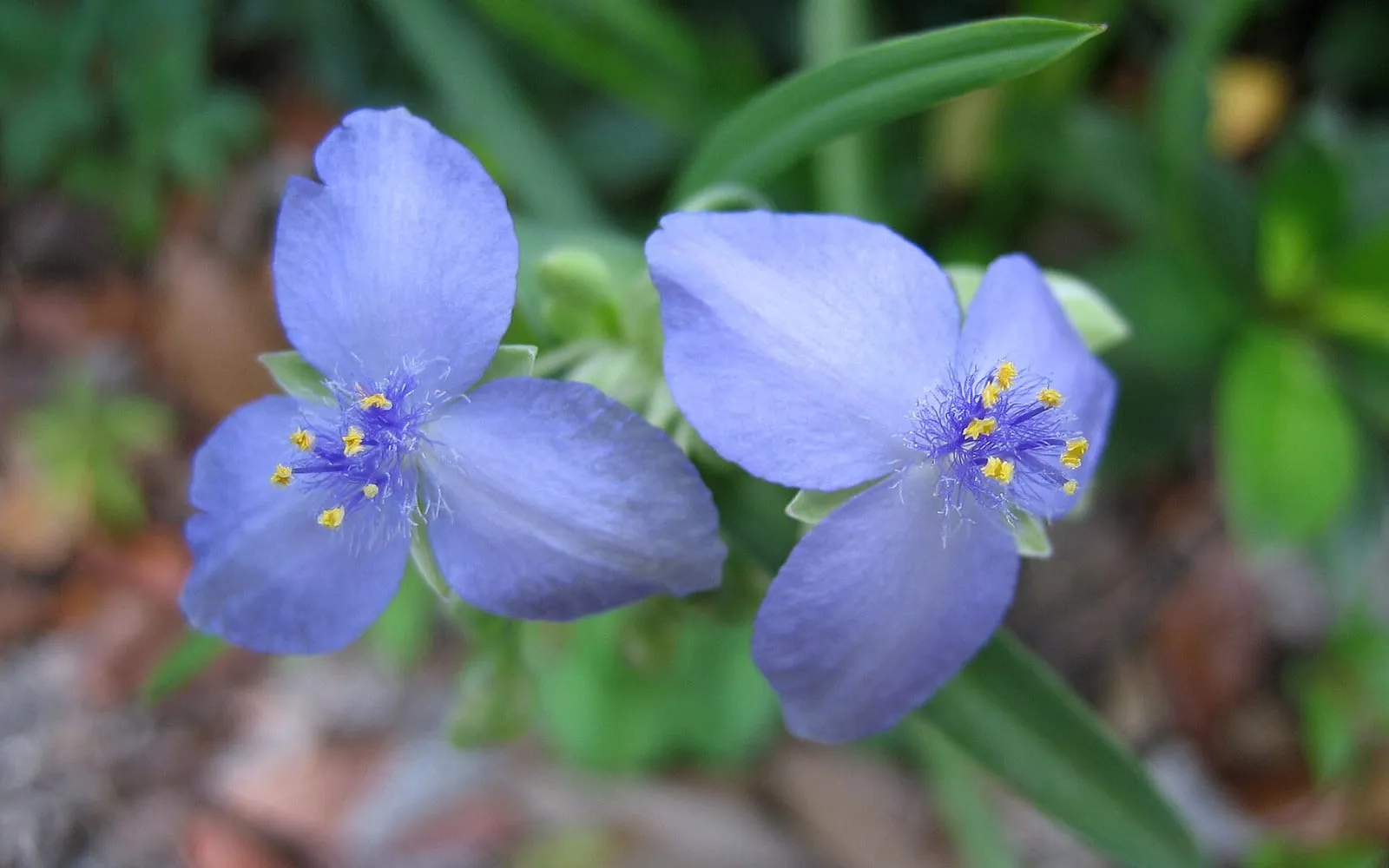
Ohio spiderwort, also called bluejacket, is the commonest and most widespread of the wild spiderworts across the eastern and central grasslands of North America. It forms an upright tuft of narrow, folded leaves in a cool blue-green, and through early and midsummer it opens clusters of three-petalled flowers in clear sky blue, sometimes shading to violet. Each flower is spent by afternoon, its petals dissolving to a jelly-like droplet, but a strong clump keeps flowering for weeks by opening a fresh batch each dawn.
The plant is very hardy, dying back underground each winter and returning larger the following spring. It comes from open prairie, roadsides and railway banks, so it tolerates drought, thin soil and hot sun better than many border perennials. Gardeners use it for hot, difficult ground where fussier plants fail. It is far removed from the soft trailing spiderworts sold as houseplants, being a rugged, cold-climate wildflower for open ground.
Appearance and character
The leaves tell it apart from its relatives. They are long, keeled and grassy, smooth and waxy with a bluish bloom, arching out of an upright clump and clasping the stem where they join it. There is no hairiness to the leaf blade, which is the quickest field mark against the woodland spiderwort.
The flowers open in tight terminal clusters, each a triangle of three rounded blue petals set around a knot of stamens whose filaments carry fine blue hairs. Those staminal hairs are a stock subject in biology classes, where a single strand shows the flow of the living cell down a microscope. Stems reach knee to waist height and tend to lean and sprawl once flowering is over.
Where it is from
Tradescantia ohiensis ranges widely through the tallgrass prairies, meadows and disturbed open ground of eastern and central North America, thriving in full sun on soils from sand to heavy clay. It is a coloniser of bright, often dry places instead of a plant of the shaded wood.
That prairie origin is why it copes with so much. It withstands hot summers, sharp winters down to around minus 30 degrees C, long dry spells and poor ground, retreating below soil each autumn and returning in spring. Only ground that stays waterlogged all year defeats it, since the crown then rots.
How it grows
The clump stirs in spring, throws up leafy flowering stems through late spring and summer, then dies back to a resting crown as autumn closes. It spreads slowly outward at the root and scatters seed where the ground is bare, so a happy plant gently increases.
Plant it in ordinary, free-draining soil in sun or light shade, in a border, gravel area or wildflower patch. Keep new plants watered through their first season, after which the roots go deep enough to find their own moisture in most summers. When the stems flop and tire after the first flush, shear the whole clump close to the ground; it breaks fresh from the base within a fortnight and often flowers a second time. Lift and split the crown in spring or autumn to make more.
Through the seasons
Spring sees new blue-green shoots spear up from the crown. This is the moment to divide an overgrown clump.
Summer is peak flowering, a fresh crop of blue flowers each morning over many weeks. Water only if the ground bakes for a long stretch.
Autumn brings yellowing and collapsing top growth. Cut it away as it dies, and split the plant if you want more.
Winter leaves the crown dormant below ground, needing no cover even in hard frost.
Care difficulty
This is about as undemanding as a flowering perennial gets. It does well with light care rather than fuss. Set it in reasonable soil with plenty of light and it flowers for weeks, then comes back stronger each year without feeding, staking or coddling. The main way to kill it is to plant it in ground that never drains. Its one habit to manage is post-flowering sprawl, fixed by cutting the clump back, and its readiness to seed itself, limited by deadheading.
Watering
Give a newly set plant regular water through its first summer while the roots establish, then step back. Once settled, it draws on deep roots and rides out most dry spells without help, needing a soak only in a prolonged drought.
A plant in a container is thirstier than one in open ground, so water it when the compost dries and let the surplus drain away. What it will not forgive is standing in cold, stagnant wet, so keep it out of heavy, airless soil and it stays trouble-free.
Warning signs, diseases and pests
Sprawling, tatty stems after the main flush are the plant’s normal habit, not a disease. Cut the clump hard to the ground and it regrows clean, often with a second wave of flowers.
Ground that stays saturated will rot the crown, so avoid boggy, compacted spots. Aphids sometimes crowd the softest new tips; a jet of water knocks them off, or the garden’s ladybirds clear them for you.
Self-sown seedlings can turn up further afield than you intended. Snip off the spent flower heads before they ripen to keep it in bounds, or let it drift through an informal planting.
Growing environment
It flowers most freely in full sun and still performs in part shade, taking a wider spread of light than most border plants. That tolerance, along with its indifference to soil type, is the root of its toughness.
The plant is fully hardy and self-reliant through winter, dying to the ground and needing no protection. Ordinary open-garden conditions suit it, and it takes drought and lean soil in its stride.
Grow it in free-draining ground in a sunny or lightly shaded border, a gravel garden or a rough corner. This is a hardy outdoor perennial, unsuited to life as a warm-room houseplant.
Feeding
Feed it little or not at all. It flowers happily in plain and even poor soil, and a rich diet only makes the stems soft and prone to flopping. At most, scatter a light general feed once as growth begins in spring.
Nothing is wanted in autumn or winter. A clump that has lost vigour does better split and replanted into refreshed soil than fed in place.
Troubleshooting
The stems have fallen over and look scruffy. Expected once the first flush ends. Cut the whole clump back to a few centimetres and it reshoots clean, usually with more flowers to come.
Seedlings are popping up everywhere. It sows itself where soil is bare. Remove the flower heads as they fade to limit it, or welcome the spread in a wild planting.
Each flower is over by lunchtime. That is how spiderworts work; a single bloom lasts one morning, but the clump opens fresh ones daily for weeks on end.
How does it differ from the woodland spiderwort? This one has smooth, waxy, blue-green leaves and thrives in dry, open sun, where Virginia spiderwort is often hairy and leans towards moister, part-shaded ground.
Is it a risk to pets? Only a mild one. The ASPCA lists spiderworts among plants that can irritate cats and dogs, so stop a pet grazing it, though it is no serious poison.
Ohio Spiderwort problem guides
Not sure what is wrong? See the common houseplant pests guide.