
Houseplant
Horse Phalaenopsis
Phalaenopsis equestris
Also known as Equestris orchid
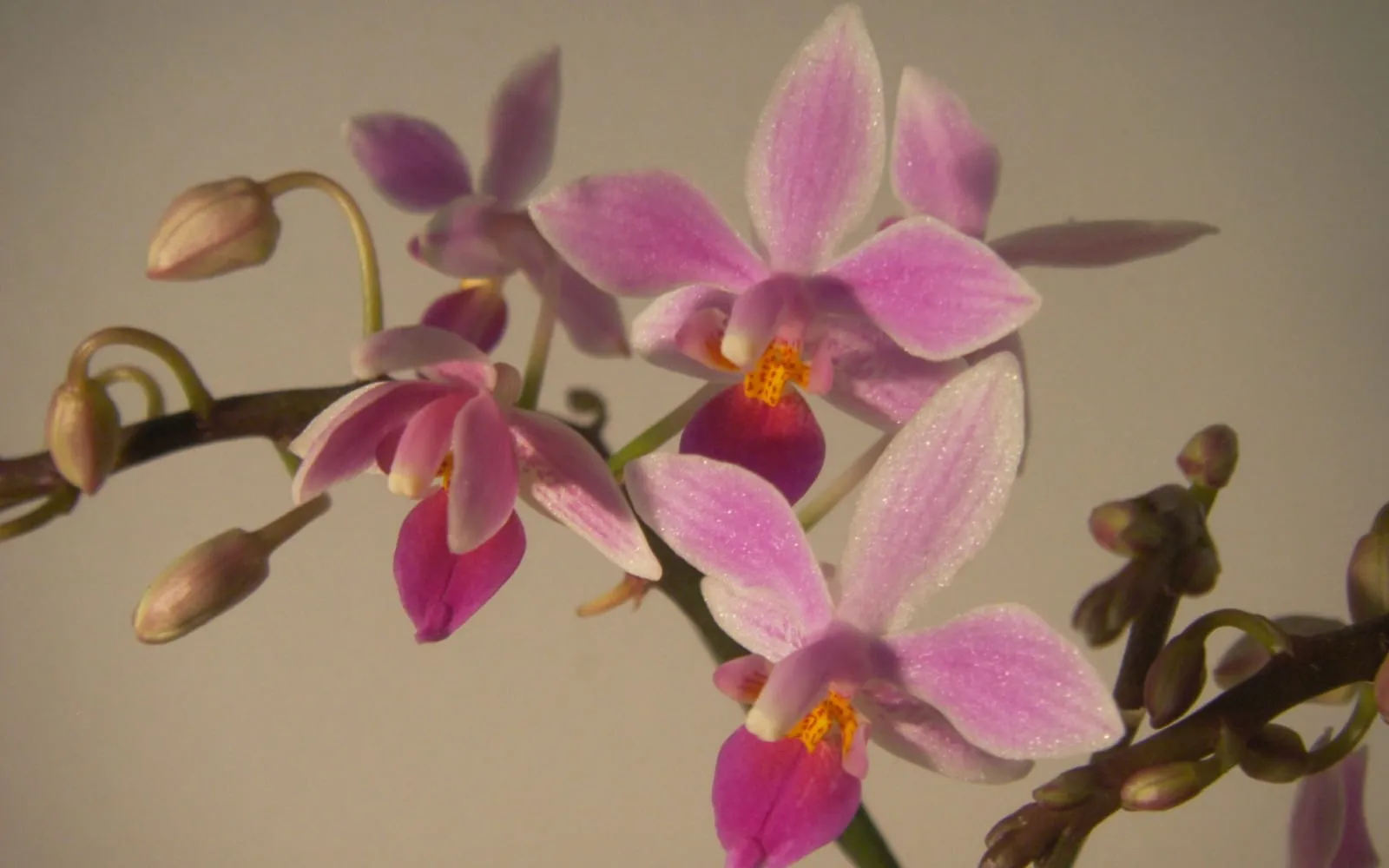
How to grow the equestris orchid as a houseplant. Its small pink flowers on branching spikes, and why it is the parent behind many miniature Phalaenopsis hybrids.
At a glance
- Difficulty
- Easy
- Water
- Water when the roots turn silvery-grey, roughly weekly
- Light
- Bright indirect light, no direct midday sun
- Temperature
- 16-30 deg C, avoid below 13 deg C
- Humidity
- Moderate to high, 50 percent or more
- Hardiness
- USDA 10-12, RHS H1b, hardy to 13 C
- Type
- Evergreen epiphytic perennial orchid
- Height
- 15-20 cm
- Native to
- Philippines, Taiwan
A tropical lowland species with no frost tolerance, grown as a houseplant across almost the entire temperate world. It is somewhat more forgiving of a brief cool spell than some other Phalaenopsis species, though it still needs consistent warmth to keep producing its near-continuous flower spikes rather than pausing for a true rest.
Hardiness zones describe winter cold alone. Summer heat, humidity, rainfall and the length of the growing season decide as much, so treat the range as the outer limit rather than as a recommendation.
Not known to be toxic
Horse Phalaenopsis has no toxicity listing from the RHS or the ASPCA, and Phalaenopsis orchids generally are considered safe around pets and children. There is no documented history of poisoning associated with this species.
Source: ASPCA
About
This compact species has small, delicate pink to lilac flowers on spikes that branch and rebloom almost continuously, so that a well-established plant can be in flower for the greater part of the year rather than producing one seasonal display. Individual flowers are noticeably smaller than those of the large hybrid moth orchids sold in supermarkets, but the plant more than compensates in sheer number and persistence of bloom.
It has been used extensively as a parent in breeding, passing its compact size and its branching, repeat-flowering spikes on to a large share of the miniature Phalaenopsis hybrids now widely sold, which makes this wild species the origin point for a trait many growers know from those hybrids without realising where it came from.
Appearance and character
A tight, low fan of a few broad, leathery leaves stays close to the compost, much more compact than many other Phalaenopsis species, which is part of what has made it so useful for breeding smaller houseplant varieties. Flower spikes emerge from between the leaves and branch repeatedly as they grow, opening a steady trickle of small flowers along their length over an extended period.
Colour varies between individual plants from pale pink through to a deeper rosy-lilac, generally with a slightly darker lip, and because spikes keep branching and producing further buds rather than finishing after one flush, an established plant rarely looks completely bare of flowers for long.
Where it is from
Lowland forest and scrub across the Philippines and Taiwan, growing as an epiphyte on tree branches and trunks in warm, humid, well-ventilated conditions with dappled rather than direct light.
That lowland tropical origin explains its need for consistent warmth year round, though its distribution across a range of coastal and somewhat more open habitats than a deep rainforest species has left it slightly more tolerant of brighter light and moderate humidity than some of its shadier relatives.
How it grows
Roots grow both into the bark mix and out into open air, taking up moisture and nutrients from humid air as much as from the growing medium, which is why an open, chunky bark mix rather than dense compost is essential. New leaves add slowly from the centre of the fan while older, lower leaves eventually yellow and drop as the plant matures.
Its defining habit is what happens with a spent flower spike: rather than cutting it back to encourage a fresh one from the base, as is standard with many other orchids, this species often continues to branch and rebloom from the same spike for a long period, so a spike is generally left in place until it has clearly stopped producing new buds.
Through the seasons
Spring growth and flowering both typically strengthen as light increases.
Summer is usually the strongest growing period. Water and feed on a regular weekly rhythm, and expect the branching spikes to keep extending themselves with fresh buds.
Autumn flowering often continues with little interruption given consistent indoor warmth, though growth may slow slightly as light drops.
Winter keep the plant away from cold draughts and cold glass; this species has no true winter dormancy indoors and generally keeps flowering if kept warm enough.
Care difficulty
Easy. This is a forgiving, free-flowering species well suited to a beginner, and its habit of branching and reblooming from the same spike means a grower gets more flowering for less intervention than a species that needs its spikes cut back and replaced each time.
Watering
Water when the roots have turned a silvery-grey rather than on a fixed calendar, typically around once a week in a warm home, soaking the compost thoroughly and letting every drop of excess drain away completely. Never let the pot stand in water afterward, since this species’ fine roots are prone to rot in constantly wet conditions.
Warning signs, diseases and pests
Scale insects and mealybug both occasionally colonise the leaves or the base of a spike, appearing as small stationary bumps or cottony clusters, and are treated with careful manual removal or a horticultural soap for persistent infestations. Spider mites can appear in warm, dry indoor air, showing as fine speckling on the leaves.
A spike that has stopped producing new buds after a long flowering run is not a sign of ill health; it has reached the end of its natural branching cycle and can be cut back to encourage a fresh spike from the base. Soft, translucent patches on leaves point to rot from water sitting in the crown, and tipping water out after every watering avoids this.
Growing environment
Bright, indirect light suits it well, with a little more tolerance for brighter conditions than some shadier Phalaenopsis species, though direct midday sun still risks scorching the leaves. Moderate to high humidity supports the best flowering, and a pebble tray or a naturally humid room both help.
Feeding
A balanced orchid fertiliser at quarter strength, applied with most waterings during active growth, supports both steady leaf growth and the near-continuous flower production this species is known for. A plant kept in almost constant bloom benefits from consistent light feeding rather than infrequent, heavier applications.
Troubleshooting
A flower spike has stopped branching and producing new buds. This is the normal end of that spike’s cycle rather than a problem. Cut it back to just above a node, or to the base, to encourage a fresh spike.
Leaves have gone soft and translucent near the crown. Suspect crown rot from water pooling in the growing point. Always tip the plant to drain the crown after watering.
The plant is flowering less than it used to. Check light levels first, since this species flowers most freely in bright but indirect conditions, and consider whether an old spike should be cut back to prompt fresh growth.
Roots look shrivelled rather than plump and silvery-green. The plant is underwatered relative to its needs. Increase watering frequency slightly, always allowing full drainage afterward.
Horse Phalaenopsis problem guides
Not sure what is wrong? See the common houseplant pests guide.