
Outdoor plant
Teasel
Dipsacus fullonum
Also known as Common teasel, Wild teasel
How to grow teasel in a wildlife garden. Its spiny architectural seed heads, goldfinch appeal in winter, and the historic use that gave it its name.
At a glance
- Difficulty
- Easy
- Water
- Naturally rain-fed once established
- Light
- Full sun to light shade
- Hardiness
- USDA 3-9, RHS H7, hardy to -35 C
- Type
- Hardy biennial
- Height
- 1-2.5 m in the second year
- Native to
- Europe, Western Asia, North Africa
Extremely hardy through cold temperate winters, and untroubled by almost any ordinary garden climate within its broad range. Its biennial life cycle rather than temperature is the main thing to plan around, since the plant spends its first year as a low rosette and only flowers, sets seed and dies in its second year.
Hardiness zones describe winter cold alone. Summer heat, humidity, rainfall and the length of the growing season decide as much, so treat the range as the outer limit rather than as a recommendation.
Skin irritant
- Do not eat
- The spiny stems and flower heads
- Harm from
- Handling it
- Affects
- People
Teasel has no listed toxicity from ingestion, but its stiff, sharp spines along the stems and flower heads can cause painful scratches and minor puncture wounds on contact. This is a mechanical hazard rather than a chemical one, and handling a mature plant, particularly the dried seed heads often collected for decoration, is worth doing with gloves.
Source: RHS
About
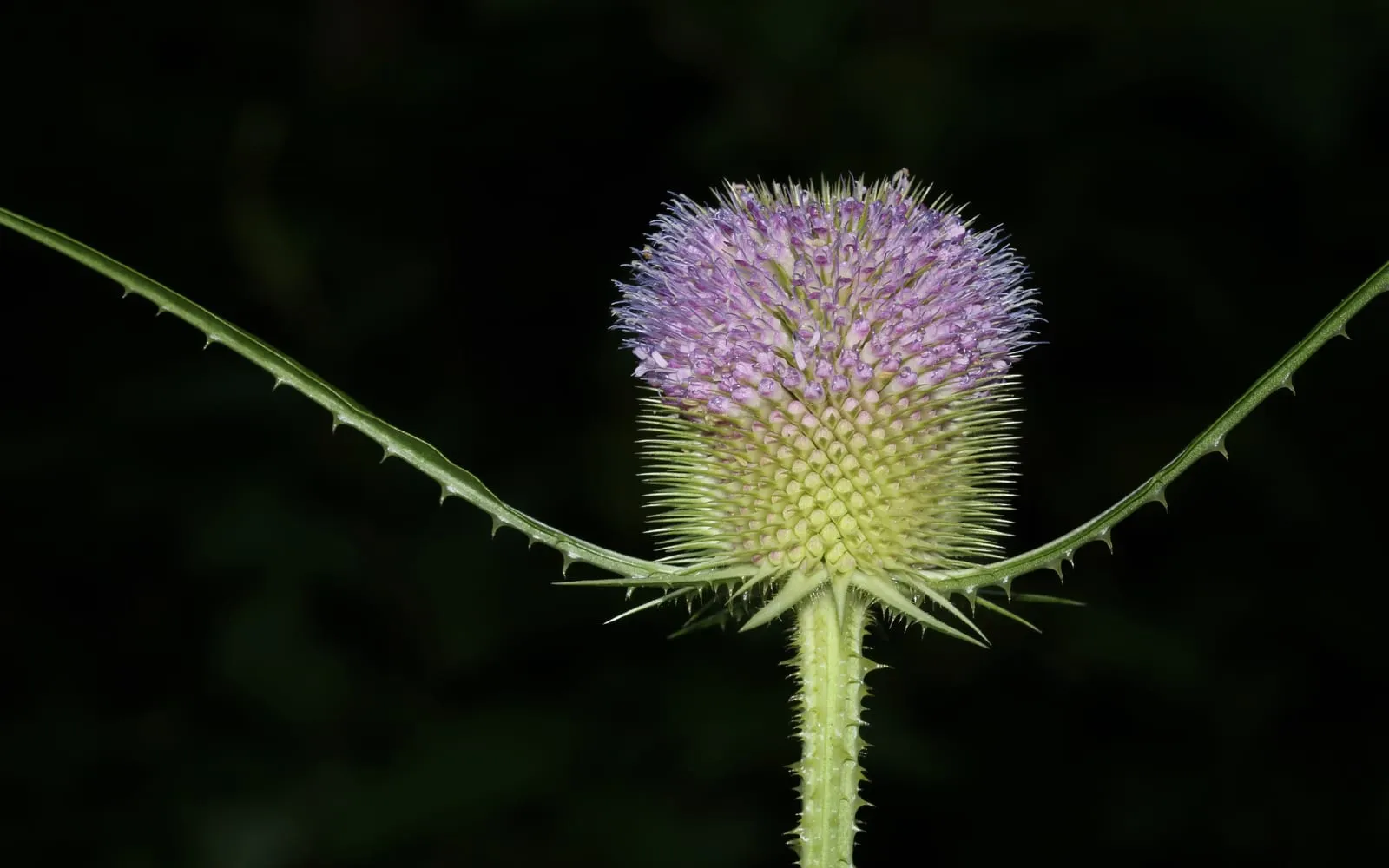
Teasel is a tall, architectural biennial grown as much for its striking, spiny seed heads through autumn and winter as for its purple-pink summer flowers, which open in a distinctive band that circles the flower head and moves gradually from the middle both upward and downward as flowering progresses. Its dried, spiky seed heads are a familiar sight in winter hedgerows and are also collected and used, sometimes dyed, in dried flower arrangements.
The plant’s Latin and common names both come from its old use in cloth-making. For centuries, the dried hooked flower heads were used to raise the nap on woven woollen cloth, a process called teasing. Cultivated forms with especially stiff, hooked bracts were still grown for the textile trade into the twentieth century.
Appearance and character
In its first year, the plant forms a low rosette of large, prickly, crinkled leaves close to the ground, storing energy for the following year’s rapid growth. In its second year, a tall, branching, spiny stem shoots up, holding pairs of leaves fused around the stem in a way that forms small cups capable of holding rainwater, and topped with egg-shaped flower heads covered in stiff spines.
Small purple-pink flowers open in a narrow band around each flower head, starting near the middle and spreading both upward and downward over several weeks, an unusual flowering pattern that sets teasel apart from most other tall garden plants. Once flowering finishes, the head dries to a striking, spiky brown structure that persists on the plant through winter. Those seed heads are a well-known draw for goldfinches, whose fine bills reach the seeds few other birds can, which is a good reason to leave the dead stems standing rather than cutting them down in autumn.
Where it is from
Grassland, hedgerows, waste ground and riverbanks across Europe, western Asia and North Africa, tolerant of a wide range of soil types and conditions, typically favouring damper ground over reliably dry positions.
That broad tolerance of ordinary, moisture-retentive soil across a huge native range is why the species establishes so readily wherever it is introduced, and it has naturalised well beyond its original range in several other temperate parts of the world.
How it grows
A hardy biennial spending its entire first year as a low, non-flowering rosette, building up the reserves needed for a rapid second-year growth in its second year, when a tall flowering stem develops, sets seed, and the whole plant then dies. Because of this two-year cycle, a continuous display in a garden setting needs plants at different stages present simultaneously, achieved either by staggered sowing or by reliable self-seeding once an initial population is established.
Self-seeding is usually reliable once a few plants have flowered and set seed, and a naturalistic planting often maintains itself indefinitely through a mix of first-year rosettes and second-year flowering plants present together each season.
Through the seasons
Spring first-year rosettes continue developing, while second-year plants send up their tall flowering stems.
Summer is the main flowering period for second-year plants, with the distinctive band of purple-pink flowers moving up and down the spiny flower heads over several weeks.
Autumn flower heads dry to their familiar spiky brown structure, persisting on the dead stems and beginning to release seed.
Winter dried seed heads remain standing through winter, providing both architectural interest and a valuable food source for goldfinches and other seed-eating birds.
Care difficulty
Easy. This is an especially low-maintenance plant once established, with its biennial cycle being the main thing to understand and plan around rather than any complicated ongoing care.
Watering
This species relies on natural rainfall once established, particularly in reasonably moisture-retentive soil, and supplemental watering is rarely necessary except during establishment or an unusually severe drought.
Warning signs, diseases and pests
This is an unusually trouble-free plant, with few significant pests or diseases reported in typical cultivation; aphids occasionally colonise soft new growth on young rosettes but rarely cause lasting harm.
A planting that produces only first-year rosettes with no flowering plants is not unusual in the early stages of establishing this biennial species from scratch, since it takes two full growing seasons from an initial sowing before the first flowers appear, after which a self-sustaining mix of ages generally develops.
Growing environment
Full sun to light shade both suit it, and ordinary, moisture-retentive soil gives the best results, though this species tolerates a fairly wide range of conditions. Leave dried seed heads standing through winter rather than cutting them back, both for their own architectural value and as a food source for garden birds.
Feeding
None needed. This species grows well in ordinary garden soil without supplemental feeding.
Troubleshooting
No flowers have appeared despite the plant looking healthy. Check whether the plant is still in its first-year rosette stage, since flowering only happens in the second year of this biennial species’ life cycle.
You want a continuous display rather than a two-year gap. Sow seed in two successive years, or allow reliable self-seeding once an initial population has flowered, so that both first-year rosettes and second-year flowering plants are present together each season.
You want to collect seed heads for dried arrangements. Cut mature, dried heads on their stems once fully brown and before birds have stripped most of the seed, wearing gloves throughout given the stiff spines, and consider leaving some heads in place for goldfinches if wildlife value matters as much as decoration.
The plant is self-seeding more widely than intended. Cut down some flower heads before they fully dry and disperse seed, while leaving others in place for birds and for the following year’s display, rather than removing the whole crop at once.
You are wondering whether the small cups formed by the leaves serve a purpose. These rainwater-holding cups around the stem are a real feature of the species, sometimes drowning small insects, and the plant’s scientific name references this water-holding habit directly, though the ecological benefit to the plant itself remains debated among botanists.