
Outdoor plant
Two-Toothed Achyranthes
Achyranthes bidentata
Also known as Niu Xi, Ox Knee
How to grow two-toothed achyranthes, Achyranthes bidentata, an upright Asian perennial with swollen stem nodes, long grown for its root in Chinese medicine.
At a glance
- Difficulty
- Moderate
- Water
- Keep the soil moist in dry spells
- Light
- Full sun to partial shade
- Temperature
- Hardy to moderate frost; top growth dies back
- Hardiness
- USDA 6-9, RHS H4, hardy to -15 C
- Type
- Herbaceous perennial, dying back in winter
- Height
- 60 to 120 cm
- Native to
- Eastern Asia
A temperate East Asian perennial that dies back in winter and regrows from the root in spring, hardy to moderate frost but not to deep cold. It grows best with a warm summer and a moist, fertile soil. It comes from Chinese woodland edges and cultivated ground, and it slows and dies back where winters are hard.
Hardiness zones describe winter cold alone. Summer heat, humidity, rainfall and the length of the growing season decide as much, so treat the range as the outer limit rather than as a recommendation.
Harmful if eaten
- Do not eat
- The root, which is the medicinal part
- Harm from
- Eating it
- Affects
- People
The foliage is not a recognised hazard, and the plant is grown for the root, which is used in traditional Chinese medicine under the name niu xi. The root contains saponins and other active compounds and is prepared and taken deliberately as a remedy, so it is not something to dig up and eat casually, and traditional practice avoids it in pregnancy. There is no reason to eat any part of a garden plant, and handling it is harmless. This guide describes the plant instead of any medicinal use, which is a matter for a qualified practitioner.
Sources: RHS potentially harmful garden plants, North Carolina Extension plant toxicity database
About
Two-toothed achyranthes is an upright perennial herb from eastern Asia, grown for its root instead of for any garden display. Its Chinese name niu xi means ox knee, from the swollen joints along its stems that look like the knobbly knees of an ox, and that feature is the easiest way to recognise it.
It is a plant of woodland edges, stream banks and cultivated ground across China and neighbouring countries, where it has long been raised as a medicinal crop. The root is the part that is used, dug and dried, and the plant is a staple of Chinese herbal practice.
As a garden plant it is modest, a leafy green upright herb with small, unshowy flowers and clinging seed heads. It is grown mainly by those interested in medicinal or Asian plants instead of for ornament, and this guide covers how it grows instead of how it is used.
Appearance and character
Stems are upright and jointed, and the joints, or nodes, are noticeably swollen, giving the ox-knee look that names the plant. They carry leaves in opposite pairs up their length.
Leaves are oval to lance-shaped, pointed, mid green and slightly hairy, plain in appearance and arranged in the neat opposite pairs typical of the plant.
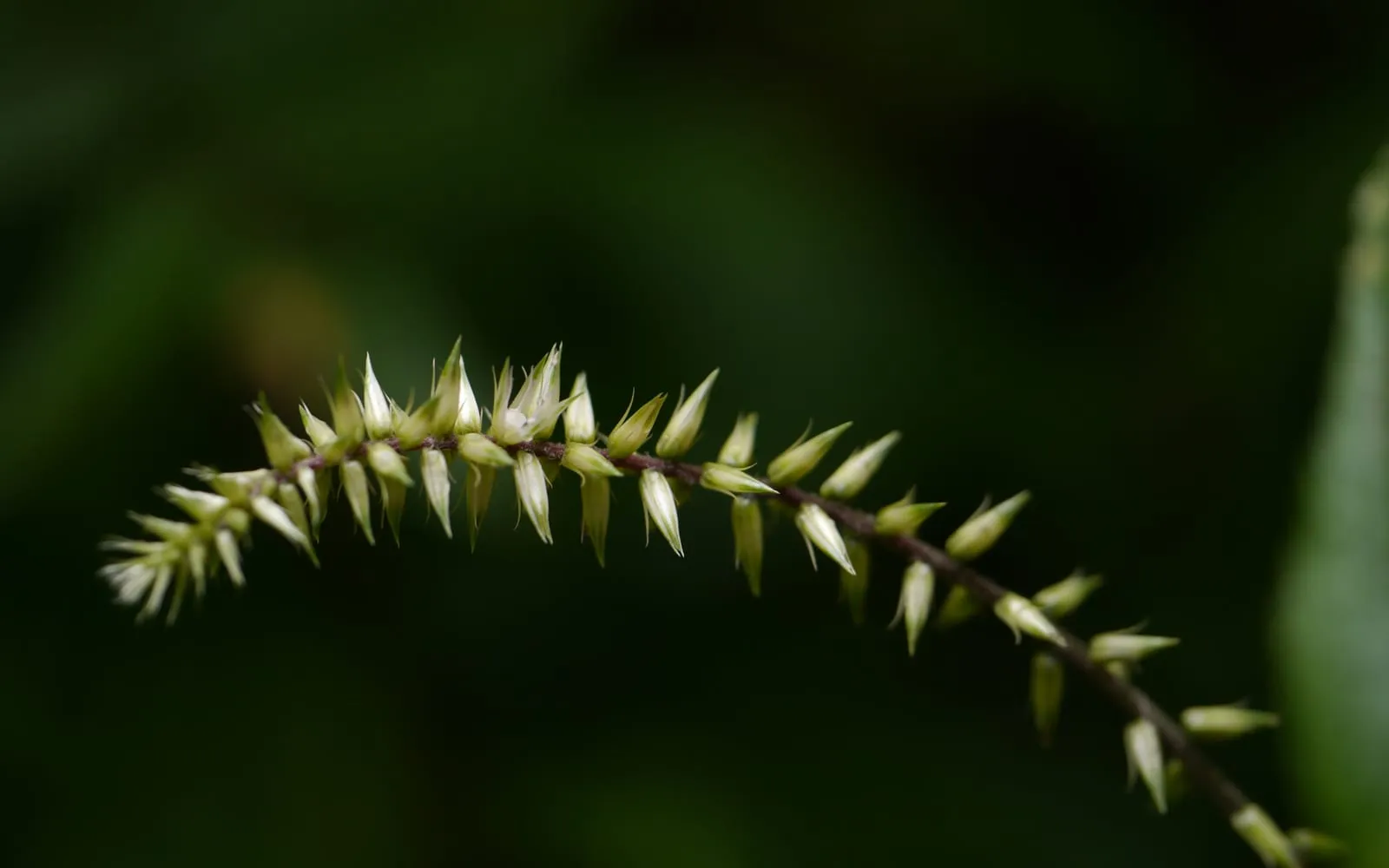
Flowers are small and greenish, borne in slender spikes at the stem tips and leaf joints through late summer. They are not showy, and after flowering they turn down against the stem.
Seed heads carry small bracts armed with tiny hooked teeth, the two teeth of the name bidentata, which catch on fur and clothing and carry the seed away. This is how the plant spreads and why it can turn up as a self-sown weed.
The habit is a leafy, upright clump of some sixty centimetres to well over a metre, dying back to the root each winter and returning in spring.
Where it is from
Achyranthes bidentata grows across eastern Asia, in China, Korea, Japan and into the Himalayas, along woodland edges, stream sides, roadsides and disturbed ground. It favours moist, fertile soil in sun or light shade.
That background makes it an easy plant to grow in a warm-temperate climate. It needs only a decent soil and summer moisture, and it can seed about freely where the season suits it. Deep winter cold, instead of any fussiness, is its main limit.
How it grows
It grows quickly in spring from the overwintered root, building an upright leafy clump through summer and flowering in late summer, then dying back with the cold. Given moisture and reasonable soil it needs little help.
Plant it in moist, fertile, free-draining soil in full sun or partial shade, and water it in dry spells to keep it growing steadily. It is not demanding, and the main risk is its readiness to self-seed by way of the clinging seed heads.
Cut it back as it dies down in autumn, and remove seed heads before they scatter if you want to keep it from spreading. Where it is grown as a medicinal crop the root is lifted in the dormant season, which also keeps a clump in check.
Through the seasons
Spring brings fast new growth from the root as the soil warms, the jointed stems rising quickly.
Summer is leafy growth, the clump filling out and the flower spikes forming towards the end of the season.
Autumn brings flowering and the clinging seed heads, then the top growth dies back with the first frosts. This is the season to lift roots or cut the plant down.
Winter the plant rests as a dormant root, with nothing showing above ground until spring.
Care difficulty
Moderate, and closer to easy in a warm-temperate climate. It only needs a moist, fertile soil and a warm summer, grows readily, and has few pests. The main cares are containing its self-seeding and protecting it from deep winter cold, which it does not tolerate well. As an ornamental it is unremarkable, so it is grown for interest instead of display.
Watering
Keep the soil moist through the growing season, watering in dry spells, since the plant comes from stream sides and damp ground and grows best without drying out. It is not a drought plant.
An established clump on reasonably retentive soil needs watering only in a real dry spell, and a spring mulch helps hold moisture and reduces the need.
Warning signs, diseases and pests
Self-seeding is the main issue. The hooked seed heads catch on clothing and animals and scatter the plant widely, so remove them before they ripen if you want to keep it contained.
Aphids may gather on soft growth, as on many leafy perennials, and can be dislodged with water or left to natural predators outdoors. The plant is otherwise little troubled.
The root is the medicinal part and should not be eaten casually. The plant poses no hazard to grow or handle, and there is no toxic risk in having it in the garden.
Growing environment
Full sun to partial shade suits it, with light shade welcome in a hot climate and more sun giving a sturdier plant in a cool one. It is adaptable on light.
The soil should be moist, fertile and free-draining, of the kind found along the woodland edges and stream sides it comes from. It dislikes both drought and cold, waterlogged ground.
Give it a spot where its self-seeding will not be a problem, or deadhead it to control that, and where its plain, leafy growth can sit among other foliage plants instead of needing to carry a display on its own.
Feeding
Feed lightly. A spring mulch of compost, or a single dressing of balanced fertiliser on a poor soil, keeps it growing well through the season. It is a vigorous grower that needs no heavy feeding, which would only push soft, floppy growth.
Troubleshooting
Why are the stem joints swollen? That is normal and is where the name ox knee comes from. The swollen nodes are a natural feature of the plant, not a sign of any problem.
It is seeding itself all over the garden. The hooked seed heads catch and spread easily. Cut the flower spikes off before they set and scatter seed, and pull up unwanted seedlings while young.
Can I use the root myself? The root is used in traditional Chinese medicine, but that is a matter for a qualified practitioner and not something to attempt from a garden plant. This guide covers growing it, not any medicinal use, and the root should not be eaten casually.
Will it survive a cold winter? It is hardy to moderate frost but dislikes deep cold, dying back to the root each winter and regrowing in spring. In a hard-winter area a thick mulch over the crown helps it through.
Is it an ornamental plant? No. It is a plain, leafy herb with small flowers, grown for interest or as a medicinal crop instead of for garden display.