
Outdoor plant
Pink Lady's Slipper
Cypripedium acaule
Also known as Moccasin Flower, Pink Moccasin Flower
How to grow pink lady's slipper, Cypripedium acaule. It depends on a soil fungus no garden bed reliably has, a wild-dug plant almost always dies within a season or two, and genuine nursery-propagated stock is rare.
At a glance
- Difficulty
- Difficult
- Water
- Keep the soil consistently moist through the growing season, never waterlogged
- Light
- Dappled shade under pine or oak woodland canopy
- Temperature
- Needs a cold winter dormancy; not a plant for a mild climate
- Humidity
- Consistently moist but never waterlogged around the roots
- Hardiness
- USDA 2-7, RHS H7, hardy to -40 C
- Type
- Herbaceous perennial orchid, dying back to an underground rootstock each autumn
- Height
- 20-40 cm in flower
- Native to
- eastern North America
Native as far north as Newfoundland and Labrador, so winter cold is not what stops most attempts at growing this plant, and a cold winter is part of what it needs rather than a risk to protect it from. The limit is biological rather than climatic. Seed cannot germinate and a mature plant cannot go on living without a specific Rhizoctonia-type fungus already present in the soil, and no zone number or soil recipe can guarantee that partner is there.
Hardiness zones describe winter cold alone. Summer heat, humidity, rainfall and the length of the growing season decide as much, so treat the range as the outer limit rather than as a recommendation.
Skin irritant
- Harm from
- Handling it
- Affects
- People
Cypripedium species carry glandular hairs on the stem and leaves that can cause a poison-ivy-like contact rash in sensitive people after handling the plant, a reaction documented across the lady's slipper genus rather than specific to this one species. It is not listed as a poisoning risk if eaten, and no toxicity to cats, dogs or horses is documented for it. In practice the point is close to moot: a wild population should never be handled or picked in the first place, and a nursery-grown plant is handled rarely enough that the rash is an uncommon complaint even among growers who keep several.
About
Pink lady’s slipper is one of the most recognisable native orchids in eastern North America, named for the inflated pink pouch of its single flower. It is also one of the worst candidates for an ordinary garden that any well-known wildflower offers, and that fact belongs at the front of this guide rather than buried in it.
The plant depends on a specific fungus living in the soil around its roots, present in the woodland floor it grows in and absent from almost every garden bed. Without that fungus, seed will not germinate at all, and a mature plant dug up and moved elsewhere typically survives only a year or two on stored reserves before it fails. Digging one from the wild is also illegal or restricted across most of its range. What follows describes how the species lives, and what a realistic path to growing one looks like for a gardener who still wants to try.
Appearance and character
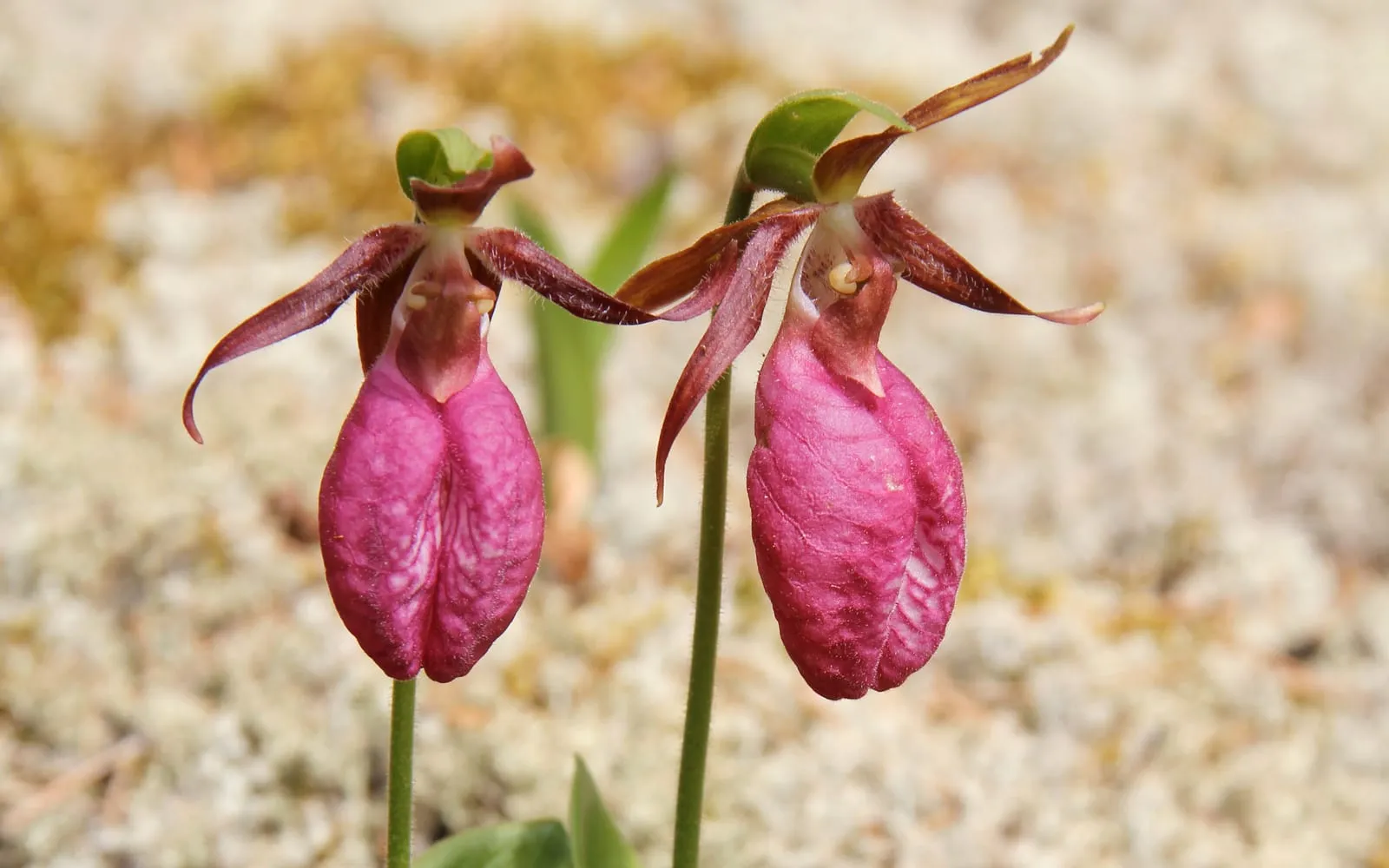
Two broad, deeply pleated, oval leaves rise directly from the ground each spring. A single leafless flower stalk grows up between them, topped by one flower with a large, inflated pink pouch veined with darker pink or maroon, and slender maroon-brown petals and sepals above it.
The pouch is a trap as much as a display. A bee entering through the front slit finds the only exit routed past the flower’s pollen, picking some up or depositing it on the way out.
After flowering, the leaves persist through summer, photosynthesising to build reserves in the rootstock, then die back completely in autumn. The plant spends winter as a dormant rootstock below ground, invisible until the leaves push through again the following spring.
Where it is from
Cypripedium acaule grows across eastern North America, from Newfoundland and the Canadian Maritimes south through New England and the Appalachians into the southeastern United States, always in acidic woodland: pine barrens, oak-pine forest and boggy conifer woods with a thick layer of needle litter or peat over sandy or rocky ground.
That litter layer is not incidental. The fungus the plant depends on lives in it, breaking down organic matter and supplying the seedling orchid with carbon and nutrients in a relationship few garden plants share. A patch of ordinary garden soil, however well prepared, does not contain this fungus unless it arrived there naturally, and that cannot be engineered by adding compost or acidifying the soil.
How it grows
Most gardeners should not buy or plant a wild-collected specimen. Digging one up is illegal in most of its range without landowner or agency permission regardless of land ownership, the species is listed as threatened, rare or of special concern in a number of US states and Canadian provinces, and international trade in wild-collected material is restricted under CITES, the treaty covering endangered species, because the entire orchid family falls under it. A plant offered cheaply online or at a roadside stall has very often been dug from the wild regardless of how it is labelled, and it will most likely die within a season or two in a garden bed that lacks its fungal partner, wasting the plant for no lasting benefit to anyone.
A small number of specialist native-plant and orchid nurseries propagate Cypripedium acaule from seed using symbiotic flask culture, growing the seedling together with its fungal partner under laboratory conditions before it is potted on. This is slow and expensive work, and nursery- propagated plants of this particular species remain uncommon in the trade compared with some of its Asian and hybrid relatives. Where such stock is available, it still needs acidic, humus-rich soil with good drainage, dappled shade under trees, and, ideally, planting into ground where a compatible fungus is already present from nearby pines or oaks. Even then, establishment can fail for reasons that are not always obvious, and a gardener taking this on should treat success as a genuine uncertainty rather than an outcome regular care can guarantee.
For most people who want to enjoy this plant, the realistic option is to see it growing wild, in a nature reserve or protected woodland where established colonies persist, and to leave it exactly where it stands.
Through the seasons
Spring brings the paired leaves up through the leaf litter, followed by the single flower, usually in mid to late spring depending on latitude.
Summer is when the leaves photosynthesise to build reserves in the rootstock for the following year, with no flower present after the early bloom fades.
Autumn sees the leaves yellow and die back completely as the plant returns all its resources below ground.
Winter is spent entirely as a dormant rootstock, which needs the cold period this species evolved with rather than protection from it.
Care difficulty
Difficult, and that rating understates the problem: this is a species most gardeners should not attempt to establish from a purchased plant at all, because success depends on a fungal partner that ordinary garden preparation cannot supply. A specimen from a reputable, symbiotic- flask nursery in the right acidic woodland setting stands a better chance than a wild-dug one, but even correctly sited plants can fail for non-obvious reasons, and no amount of watering, feeding or mulching substitutes for the fungus itself being present. Where the fungus is already established in the ground, an existing colony can persist for decades with almost no intervention.
Watering
Keep the soil consistently moist through spring and summer, mimicking the steady dampness of leaf litter over acidic woodland soil, without letting water pool around the roots or the rootstock.
Reduce watering once the leaves die back in autumn, since the dormant rootstock over winter needs the soil to stay damp rather than either waterlogged or fully dry.
Warning signs, diseases and pests
Root rot follows soil that has gone from consistently moist to waterlogged, showing as a rootstock that fails to send up leaves the following spring. Improve drainage before attempting to replant in the same spot.
Slugs and snails graze new shoots and flower buds as they emerge in spring, removing an entire season’s growth from a young specimen. Beer traps or a physical barrier help without resorting to pellets near a bed this sensitive to disturbance.
Vine weevil larvae feed on roots and the rootstock below ground, and damage often goes unnoticed until the plant fails to reappear the following spring. A biological nematode drench applied to the soil in late summer is the standard control where the pest is confirmed.
Transplant shock accounts for the failure of the great majority of plants moved from one location to another, wild-dug or otherwise, and there is no reliable remedy once a plant shows it: the safest course is never to move an established, growing specimen at all.
Growing environment
Dappled shade under a mature pine or oak canopy matches the light this species gets in the wild; deep shade or full sun both suit it poorly.
Strongly acidic soil, in the pH 4.5 to 5.5 range, with a covering of pine or oak leaf litter left in place rather than cleared away, comes closest to replicating the ground the plant depends on. Alkaline or neutral soil will not support it regardless of any other conditions.
Consistent moisture without waterlogging, the balance woodland litter naturally holds, matters more here than for most garden plants, since both drought and standing water threaten the roots and the fungus together.
Feeding
None. Fertiliser harms this species rather than helping it, disrupting the balance of the mycorrhizal relationship the plant depends on for nutrition, particularly nitrogen applied anywhere near the root zone.
Leaving fallen pine needles or oak leaves in place around an established plant does the feeding work instead, breaking down slowly into the kind of nutrient supply the fungal partner is adapted to use.
Troubleshooting
Can I buy this plant and plant it in an ordinary flower bed? Almost certainly not successfully. Without the specific fungus this species depends on already present in the soil, a plant bought from an ordinary garden centre is likely to decline over a season or two regardless of watering or feeding.
I found one growing on my own land. Can I move it to a better spot? Leave it where it is. Transplanting kills the great majority of established plants, because disturbing the roots disturbs the fungal network they depend on, and a plant thriving in its current spot is proof that spot already has what it needs.
Where can I get one legitimately? Look for a specialist native-orchid nursery that states plainly its stock is propagated from seed by symbiotic flask culture rather than collected from the wild, and treat any seller who cannot say where their plants came from as a wild-collected source regardless of the label.
My nursery-grown plant died after a year even though I followed the soil advice. This happens even with correctly sourced stock and does not necessarily mean a mistake was made. The fungal relationship this species depends on is not fully understood, and establishment can fail for reasons that remain unclear even to specialist growers.
Is it legal to photograph or admire wild colonies? Yes, and this is the recommended way to enjoy the species for almost everyone. Stay on marked trails, do not dig, pick or trample the plants or the surrounding leaf litter, and treat an established wild colony as something to look at rather than something to take home.