
Outdoor plant
Tree Dahlia
Dahlia imperialis
Also known as Bell Tree Dahlia
How to grow tree dahlia, Dahlia imperialis. Why it needs the short days of autumn to trigger flowering, how often frost cuts the canes down before the buds open, and staking the hollow, several-metre stems against an autumn storm.
At a glance
- Difficulty
- Easy
- Water
- Regularly and generously through the growing season
- Light
- Full sun
- Temperature
- Top growth is killed outright by frost; tubers need protection below about -5 deg C
- Hardiness
- USDA 8-11, RHS H2-H3, hardy to -2 C
- Type
- Tuberous perennial, dying back to the ground after frost
- Height
- 2-5 m in a single growing season, more where frost arrives late
- Native to
- Central America
The tubers are hardier than the famously tender top growth, and a thick, dry winter mulch lets them survive short spells down to around minus five in milder zone 8 gardens. The bigger obstacle outside a long, warm growing season has nothing to do with cold tolerance: this species needs the short days of autumn to trigger flowering, and in many temperate gardens a frost cuts the plant down before the buds it has been building all summer ever get to open.
Hardiness zones describe winter cold alone. Summer heat, humidity, rainfall and the length of the growing season decide as much, so treat the range as the outer limit rather than as a recommendation.
Not known to be toxic
Dahlia carries a mild irritant, though the ASPCA notes the level as low, and reactions are generally limited to mild stomach upset if a good quantity of foliage or tuber is eaten, or mild skin irritation in some people from handling the sap. Nothing about a tree dahlia in particular raises that risk above an ordinary garden dahlia. The scale of this species is a more practical hazard than its chemistry: canes several metres tall and heavy with foliage can snap in a strong wind, which is a safety consideration for where you plant it rather than a toxicity one.
Sources: ASPCA (Dahlia), RHS potentially harmful garden plants
About
Tree dahlia is a very tall, tuberous dahlia that can make several metres of hollow cane growth in one season. It needs rich soil, regular water and support before the canes are exposed to autumn wind.
Flowering is the difficult part in many temperate gardens. The plant is triggered by short autumn days, so frost may cut the stems down before the buds open. It is most reliable where autumn stays mild long enough for the flowers to develop.
Appearance and character
Stems are thick, hollow and jointed like bamboo, up to 8 cm across at the base, growing with real speed through summer and reaching several metres by the time flowering, if it happens, begins in autumn.
Leaves are large and finely divided, bi- to tripinnate, up to 60 cm long, giving the towering stems a soft, ferny canopy rather than a stiff, woody look despite their scale.
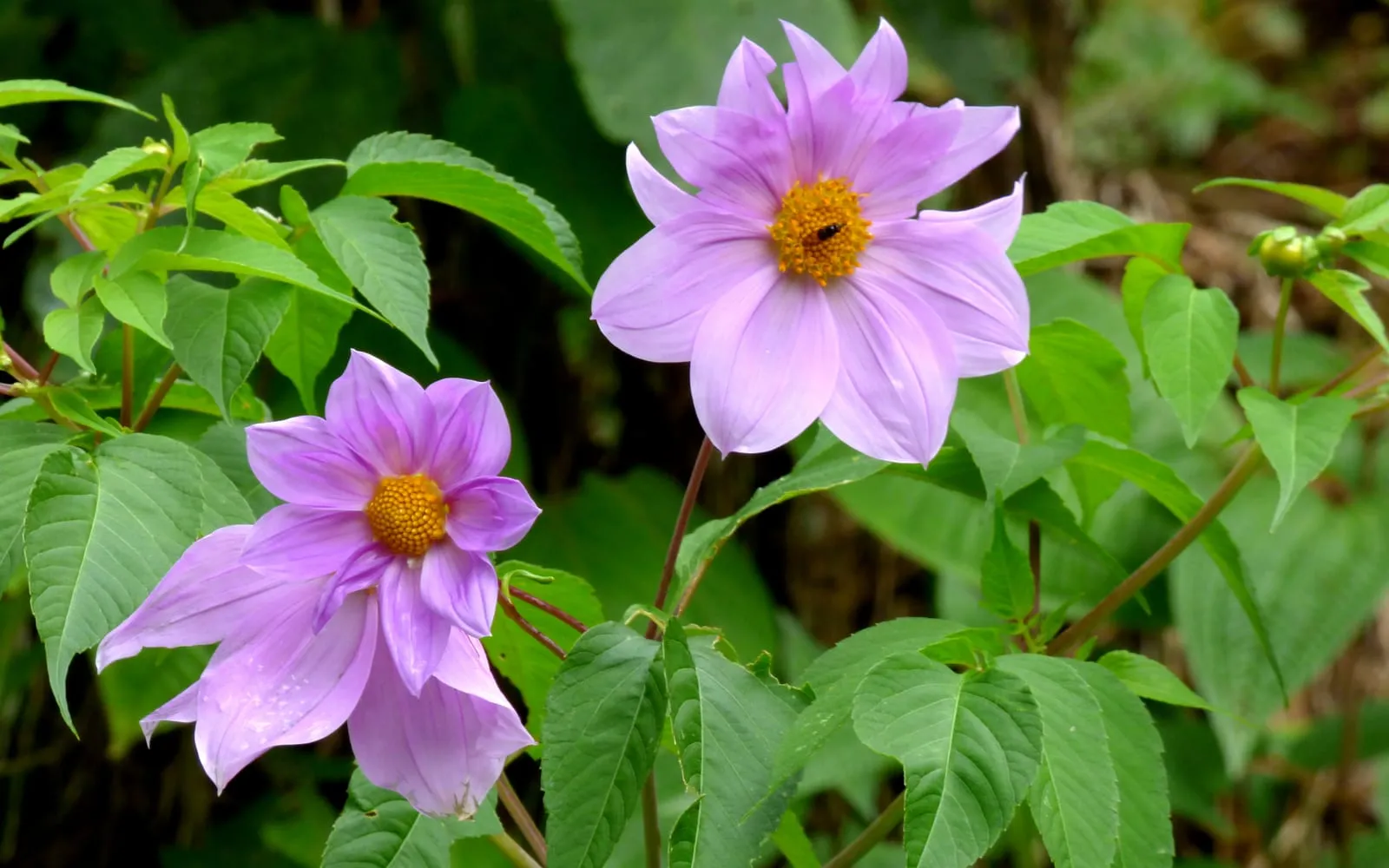
Flowers, when the season allows them to open, are soft lavender-pink with a bright yellow centre, 10 to 15 cm across, held in open clusters that nod from the top of the canes, high above head height on a well-grown plant.
The whole structure dies back to the ground at the first hard frost, and what looked like a small tree by late summer is reduced to bare, collapsed canes over a below-ground tuber within a single cold night.
Where it is from
Dahlia imperialis is native to the highlands of Central America, from Mexico through to Colombia, growing at elevations high enough to keep temperatures moderate year round despite the tropical latitude, with a distinct dry season followed by a wet one.
That highland origin, rather than a lowland tropical one, is why the species has a genuine tuberous dormancy response to cooler, drier conditions, unlike a true tropical plant that would die outright without a warm season to retreat into. It also explains the short-day flowering trigger, since at its native latitude the shortening days of the local dry season reliably signal the approach of a period the plant has evolved to flower ahead of.
How it grows
Plant tubers in spring once the risk of frost has passed, in fertile, moisture-retentive but well-drained soil, in the sunniest, most sheltered spot available, since both heat and shelter from wind matter for a plant that grows this tall this fast.
Stake or support the canes once they reach any real height, particularly in an exposed garden, since the hollow stems, however thick, can snap in a strong wind despite the plant’s tree-like appearance.
Water and feed generously through the growing season, since the sheer scale of growth the plant produces in a single year draws heavily on both.
In any climate where frost arrives before flowering reliably completes, consider starting tubers early under cover to gain extra weeks of growing time, or grow the plant in a large container that can be moved under glass in autumn to extend the season and give flowering a better chance.
Cut the collapsed canes down after the first hard frost blackens them, and mulch thickly over the tuber for winter protection in any climate where the ground might freeze.
Through the seasons
Spring is for planting tubers once frost risk has passed, or for bringing overwintered tubers back into growth under cover for an earlier start.
Summer is rapid, dramatic stem and leaf growth, the main spectacle of the plant even before any flowers appear.
Autumn is when flowering is triggered by shortening days, if the season runs long enough for it to happen before frost arrives.
Winter kills the top growth outright at the first hard frost. Cut down the collapsed canes and mulch the tuber, or lift and store it under cover in a climate too cold for it to survive in the ground.
Care difficulty
Easy in terms of routine care, since it grows fast and vigorously with comparatively little attention through summer beyond regular water and feed. The genuine difficulty is climatic rather than horticultural: getting the plant to flower at all in a garden where the growing season is too short for it to reach the short-day trigger before frost cuts it down, which no amount of feeding or care can fully overcome.
Watering
Water regularly and generously through the growing season, since the huge leaf canopy a mature plant carries by late summer loses a considerable amount of water on a hot day and wilts quickly if the soil dries out.
Reduce watering once the top growth has been blackened by frost in autumn, and keep the area over a mulched, in-ground tuber on the drier side through winter to reduce the risk of it rotting while dormant.
Warning signs, diseases and pests
Slugs and snails target young shoots emerging in spring, when a whole season’s growth can be set back by a few nights of unchecked feeding on tender new growth. Standard slug and snail controls in spring are worth the effort given how much the plant has to grow afterward.
Aphids occasionally cluster on soft new growth at the stem tips. A strong jet of water or an insecticidal soap deals with light infestations.
Wind damage, snapped canes despite their apparent sturdiness, is the most common structural problem on an exposed site. Stake tall canes before they are tested by an autumn storm rather than after one has already brought them down.
Growing environment
Full sun suits it best, and is close to essential given how much growth the plant produces in a single season.
Shelter from strong wind protects the tall, hollow canes from snapping, and also helps retain the warmth that a marginal-climate plant needs to reach flowering before frost.
Fertile, moisture-retentive but well-drained soil supports the rapid growth rate; poor or dry soil noticeably limits how tall and how well the plant performs in a single season.
In a climate where the growing season is short, consider a warm, south- facing position against a wall, which adds a few extra weeks of effective growing time and improves the odds of flowering before frost.
Feeding
Feed fortnightly through the growing season with a balanced, general-purpose fertiliser, since the scale of growth this plant produces draws heavily on soil nutrients.
Taper feeding off in late summer as the days shorten and the plant shifts toward flowering, since heavy feeding late in the season encourages more leafy growth at the expense of the flowering the plant is trying to trigger.
Troubleshooting
It grew enormous but never flowered before frost killed it. This is the commonest outcome in a garden with a shorter growing season than the plant needs. Consider starting the tuber earlier under cover in spring, choosing the warmest, most sheltered spot in the garden, or growing it in a large container that can be moved under glass in autumn to buy extra time.
A cane snapped in a storm. Cut the broken cane back to sound tissue and stake the remaining canes before the next storm; the plant usually continues growing from the undamaged canes without lasting harm.
Should I lift the tuber for winter? In any climate colder than about zone 8, yes. Lift it after the first frost blackens the top growth, let it dry, and store it somewhere cool, dark and frost-free over winter, much as you would a garden dahlia’s tubers, replanting in spring.
Can I keep it smaller? Not easily while keeping the tree-like form that gives the plant its name. Cutting it back hard through the growing season limits height but also delays or prevents flowering, since it removes the growth the plant needs before the autumn trigger arrives.
Is the towering growth normal, or is something wrong? It is entirely normal. Reaching several metres in a single growing season from a modest tuber is exactly what this species does given warmth, sun, water and feed, and nothing about that rate of growth signals a problem.