
Houseplant
Spoonleaf Peperomia
Peperomia magnoliifolia
Also known as Peperomia magnoliifolia, Desert Privet
How to grow Peperomia magnoliifolia, the spoonleaf peperomia or desert privet, a compact semi-succulent foliage plant with thick glossy leaves.
At a glance
- Difficulty
- Easy
- Water
- When the top half of the mix has dried
- Light
- Bright indirect light
- Temperature
- Warm; keep above about 12 deg C
- Humidity
- Average to high
- Hardiness
- USDA 10-12, RHS H1b, hardy to 10 C
- Type
- Evergreen semi-succulent foliage perennial
- Height
- 20 to 30 cm
- Native to
- The Caribbean, Tropical America
A compact semi-succulent foliage plant from the warm forests of the Caribbean and tropical America, growing in dappled light with its thick leaves storing water. It needs warmth, bright indirect light and a free-draining mix kept on the dry side, and it cannot take frost. It is safest above about 12 deg C, and its main enemy is overwatering, which rots the stems.
Hardiness zones describe winter cold alone. Summer heat, humidity, rainfall and the length of the growing season decide as much, so treat the range as the outer limit rather than as a recommendation.
Not known to be toxic
A safe plant to keep around pets and children. Peperomias are listed by the ASPCA among the plants that are non-toxic to cats and dogs, and no harmful compound is recorded in them. A pet or child that chewed a leaf would come to no real harm beyond a possible brief stomach upset, so this compact foliage plant can sit within easy reach in a home with animals.
Sources: ASPCA toxic and non-toxic plants, RHS potentially harmful garden plants
About
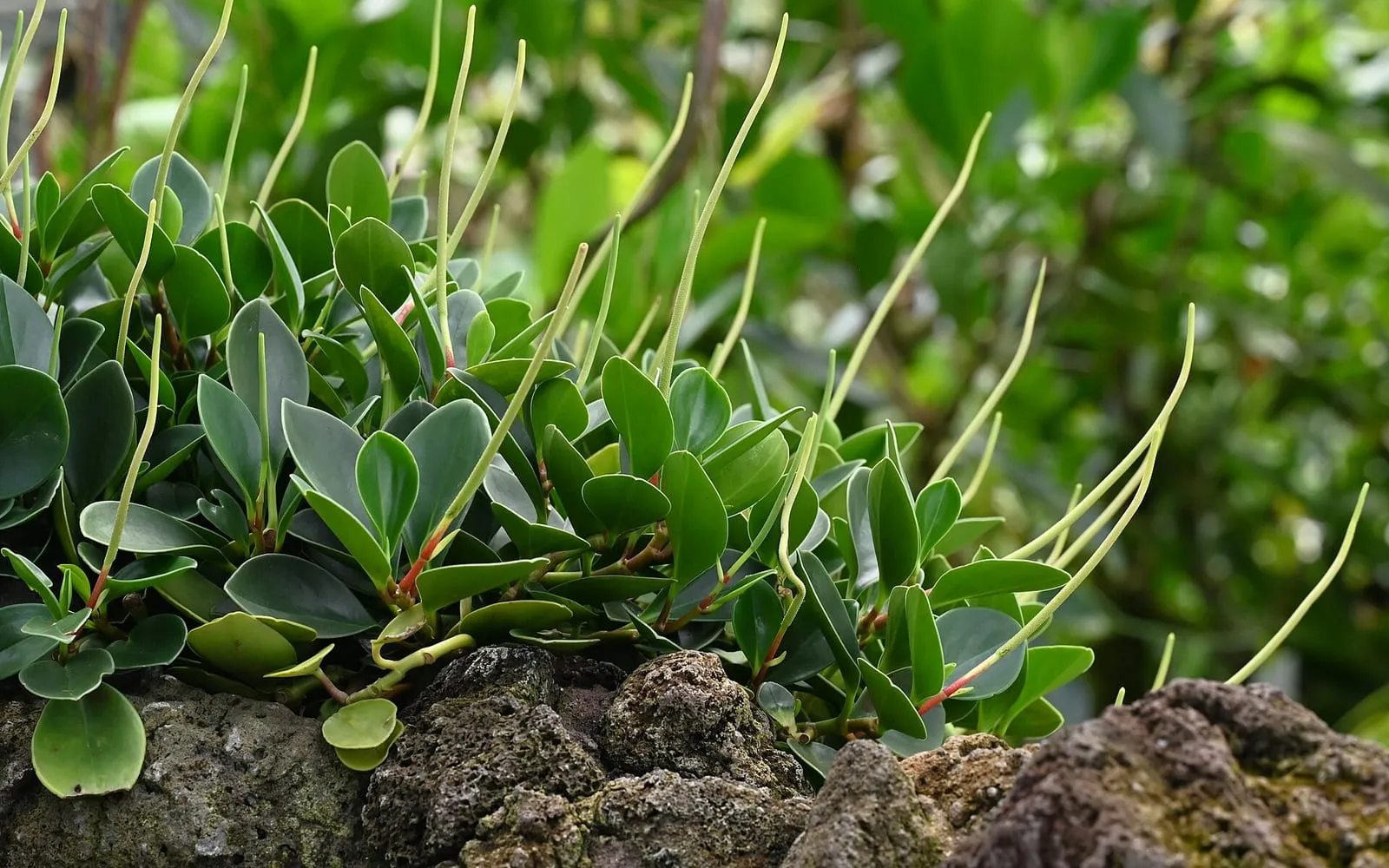
Spoonleaf peperomia is a neat, compact foliage plant with thick, glossy, rounded leaves that feel almost succulent to the touch. Held on short, fleshy stems in a bushy little mound, the leaves are a deep glossy green in the plain form and boldly marked with cream and gold in the popular variegated forms. It stays small and tidy, which makes it a favourite for a windowsill, a shelf or a desk.
It comes from the warm forests of the Caribbean and tropical America, growing in dappled light with its fleshy leaves storing water, so it is a semi-succulent that wants a free-draining mix kept on the dry side instead of constant moisture. That habit makes overwatering its chief enemy, since its soft, fleshy stems rot easily if kept wet.
Easy, compact and undemanding, it needs warmth, bright indirect light and careful, restrained watering. It is safe around pets, being one of the non-toxic peperomias, and it is happy in the ordinary conditions of a warm room so long as it is not overwatered. Give it a bright spot and let the mix dry between waterings, and it causes few problems.
Appearance and character
The leaves are thick, glossy and rounded to oval, almost succulent, deep green in the plain form and marked with cream and gold in the variegated forms, held on short, fleshy stems.
The plant forms a compact, bushy mound instead of a climber or trailer, staying small and neat, which suits it to a sill, shelf or desk.
Its flowers are the slim, greenish, rat-tail spikes typical of peperomias, curious instead of showy, and the plant is grown for its foliage.
Its fleshy leaves and stems store water, so it needs to dry a little between waterings instead of sitting in constant moisture.
Where it is from
Peperomia magnoliifolia grows in the warm forests of the Caribbean and tropical America, in dappled light, often perched on rocks or logs, with its fleshy leaves storing water. It is a plant of warmth, humidity and free drainage instead of wet ground.
Give it warmth, bright indirect light and a free-draining mix kept on the dry side, since its fleshy leaves carry a water store. It cannot take frost, and its main weakness is overwatering, which rots its soft stems.
How it grows
It grows steadily through the warm months, filling out its compact mound, and slows in winter. Warmth and bright indirect light keep it neat and well coloured; overwatering rots it, and deep shade dulls the variegation.
Grow it in a light, very free-draining, peat-free mix, and water when the top half of the mix has dried, keeping it on the dry side, since it stores water in its leaves. Let it drain fully and never leave it standing wet.
Give it bright indirect light, out of direct sun, and warmth above about 12 deg C, away from cold draughts. Pinch the stems to keep it bushy, and it needs little other care.
Propagation is very easy from leaf or stem cuttings, rooted in a gritty, barely moist mix.
Through the seasons
Spring brings fresh growth. Pot on if needed, resume feeding, and pinch to keep it bushy.
Summer is the main growing season. Water when the top half of the mix dries, feed monthly, and keep it in bright indirect light.
Autumn slows growth as light fades. Reduce feeding and let the mix dry more between waterings.
Winter the plant rests. Keep it warm above about 12 deg C, water sparingly, and away from cold draughts, since cold, wet compost rots it.
Care difficulty
Easy, and one of the more forgiving compact foliage plants, given warmth and restraint with water. It stays small and neat with little help. Its main weakness is overwatering, which rots its fleshy stems, so it needs a free-draining mix kept on the dry side. Keep it warm, bright and lightly watered, and it causes few problems.
Watering
Water when the top half of the mix has dried, keeping the plant on the dry side, since its fleshy leaves store water and it rots if kept wet. Let it drain fully and never leave it standing in water.
Water sparingly over winter, when cold, wet compost is the main danger. Drooping or rotting stems mean overwatering; slightly limp, thin leaves mean it has been too dry, which is far less common and easily fixed with a drink.
Warning signs, diseases and pests
Overwatering rots the roots and soft stems, the commonest way to lose it, shown by drooping, blackening stems and mushy leaves. Let it dry out, cut out the rot, and restart from healthy cuttings, watering more sparingly.
Mealybugs settle on the stems and leaf joints as white fluff; wipe them off with dilute alcohol and check the joints regularly. Otherwise it is little troubled by pests.
Dull, washed-out variegation usually means too little light; give it brighter indirect light to keep the cream and gold markings bold.
Growing environment
Bright indirect light suits it, out of direct sun, which scorches the leaves, and keeps the variegation bold. It tolerates fairly low light, though the markings fade there.
Warmth above about 12 deg C and average to high humidity keep it happy, well away from cold draughts. It is content in the ordinary conditions of a warm room.
Grow it in a light, very free-draining, peat-free mix in a small pot in bright indirect light, on the dry side, and it is safe within reach of pets and children.
Feeding
Feed monthly through the growing season with a balanced liquid feed at half strength, to support the foliage. Ease off in autumn and stop in winter.
An occasional plain-water flush clears any salts. Fresh mix supports a newly potted or rooted plant for its first weeks.
Troubleshooting
The stems are drooping and blackening. Overwatering, which rots the fleshy stems. Let it dry out, cut out the rot, and restart from healthy cuttings, watering more sparingly and using a free-draining mix.
The variegation has faded. Too little light. Give it brighter indirect light to keep the cream and gold markings bold.
The leaves look slightly limp and thin. It has been too dry, which is uncommon for this water-storing plant. A drink restores them; then return to watering only after the mix has partly dried.
How often should I water it? Only when the top half of the mix has dried, keeping it on the dry side, since it stores water in its fleshy leaves and rots if kept wet.
Is it safe around pets? Yes. Peperomias are on the ASPCA’s non-toxic list, so this compact foliage plant is safe with cats, dogs and children.
Spoonleaf Peperomia problem guides
Not sure what is wrong? See the common houseplant pests guide.