
Houseplant
Spiral Aloe
Aloe polyphylla
Also known as Aloe polyphylla, Kroonaalwyn
How to grow Aloe polyphylla, the spiral aloe, a Lesotho mountain plant with a perfect spiral rosette that needs cool, sharply drained conditions.
At a glance
- Difficulty
- Difficult
- Water
- When the top of the mix has dried; steady in the growing season
- Light
- Bright light with some direct sun; cool
- Temperature
- Cool; tolerates frost and snow, does not tolerate heat
- Humidity
- Average; used to mountain mist
- Hardiness
- USDA 7-9, RHS H5, hardy to -12 C
- Type
- Evergreen rosette succulent
- Height
- Rosette 30 to 60 cm across
- Native to
- Lesotho
A high-altitude aloe from the Drakensberg mountains of Lesotho, where it grows on steep, rocky slopes in cool, misty summers and cold, snowy winters. Unlike most aloes it is a mountain plant that tolerates frost and snow but does not tolerate heat and humidity, wanting cool, bright, sharply drained conditions. It survives to about minus 12 deg C in fast-draining ground, and rots quickly in warm, wet or stagnant compost.
Hardiness zones describe winter cold alone. Summer heat, humidity, rainfall and the length of the growing season decide as much, so treat the range as the outer limit rather than as a recommendation.
Harmful if eaten
- Do not eat
- The leaf sap and latex
- Harm from
- Eating it
- Affects
- People, cats and dogs
Aloes carry a bitter yellow latex just under the leaf skin, rich in anthraquinones that act as a strong purgative and irritate the gut. The ASPCA lists aloe as toxic to cats and dogs, which may vomit, drool or develop diarrhoea after chewing a leaf, and the latex upsets the human stomach too. The spiral aloe is a specialist plant, but its sap should still be treated as poisonous. Keep it away from pets that chew.
Sources: ASPCA toxic and non-toxic plants, RHS potentially harmful garden plants
About
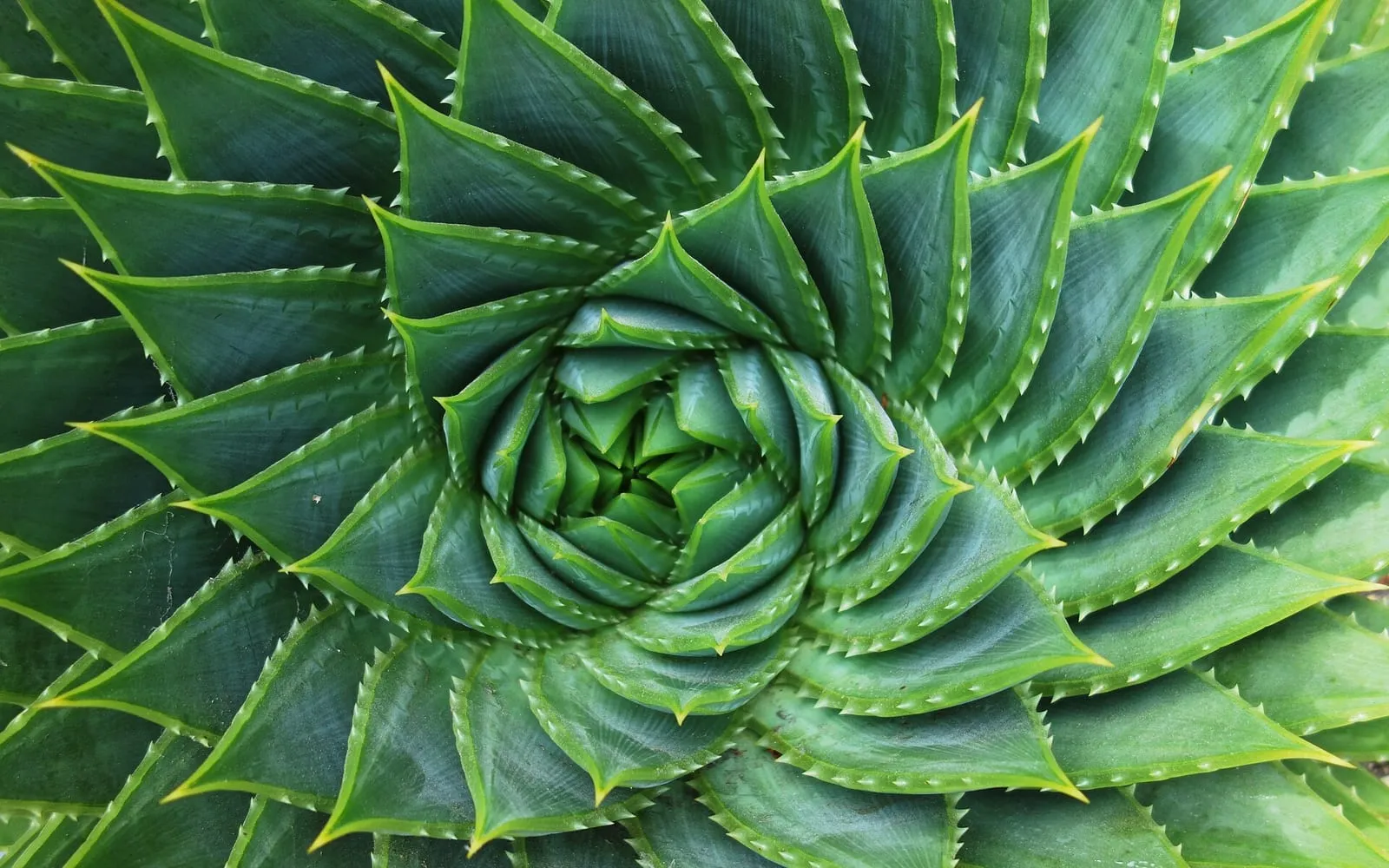
Spiral aloe is famous among succulent growers and difficult to keep alive. Its rosette arranges its leaves into a clear spiral, five ranks of grey-green blades winding clockwise or anticlockwise from the centre. A mature plant is striking, but it is also one of the hardest succulents to grow well.
The difficulty comes from where it lives. Unlike the desert aloes, this is a mountain plant from the high Drakensberg of Lesotho, growing on steep, rocky slopes in cool, misty summers and cold, snowy winters. It needs cool air, bright light and very sharp drainage, and it responds poorly to the heat, humidity and stagnant compost that suit an ordinary aloe. Warm, wet conditions can rot it quickly.
It does not offset, so it cannot be increased from pups, and it transplants badly, often dying when its roots are disturbed. Raised from seed and grown cool, bright and sharply drained, it can be kept; treated like a windowsill aloe in a warm room, it seldom lasts. This is a plant for a grower ready to meet its mountain conditions instead of a beginner’s aloe.
Appearance and character
The rosette is the reason people grow it. Its leaves sit in five spiralling ranks that wind out from the centre, clockwise on some plants and anticlockwise on others.
The leaves are broad, grey-green, and tipped with a soft dark point, each edged with fine pale teeth, and the spiral only becomes clear as the plant matures past its early years.
It grows as a solitary rosette and does not offset, so unlike most aloes it cannot be divided or grown on from pups, and every plant must be raised from seed.
Its flower, on a mature plant, is a branched head of red to salmon blooms on a stout stalk, though the plant is grown above all for the spiral of its leaves.
Where it is from
Aloe polyphylla is endemic to the high Drakensberg mountains of Lesotho, growing at two to three thousand metres on steep, rocky, well-drained slopes, in cool, misty, wet summers and cold winters with frost and snow. It is a true alpine among aloes.
That mountain home means the usual aloe advice does not apply. It needs cool conditions, bright light and extremely sharp drainage on a slope, tolerates frost and snow, and does not tolerate heat, humidity and standing wet. The steep ground it grows on drains instantly, which is the condition hardest to reproduce in a pot.
How it grows
It grows through the cool, moist part of the year and slows in both the heat of high summer and the cold of deep winter. It is slow to reach its full spiralled size, taking several years, and needs steady, cool, bright conditions throughout to develop the pattern well.
Grow it in an extremely free-draining, gritty mix, ideally in a pot tilted or planted on a slope so water drains away from the crown at once, and keep it cool and bright. Water steadily when the surface dries in the growing season, but never let the crown or roots sit wet.
Keep it cool and airy above all: a cold frame, an unheated but bright porch, or a sheltered spot outdoors in a cool climate suits it far better than a warm room. It tolerates frost and snow in sharply drained ground but often rots in warm, humid, stagnant air.
Propagation is from seed only, since it does not offset, and even seedlings resent root disturbance, so disturb the roots as little as possible when potting on.
Through the seasons
Spring brings cool, moist growing weather, its best season. Water steadily as the surface dries, and give bright, cool, airy conditions.
Summer can be too hot in many gardens. Keep it as cool, bright and airy as possible, shaded from fierce heat, and water enough to keep it growing without waterlogging.
Autumn is another good growing spell as the heat eases. Continue steady watering and keep it bright.
Winter it rests through the cold. It tolerates frost and snow in sharply drained ground, so keep it cool, bright and much drier, never warm and wet.
Care difficulty
Difficult, and one of the hardest succulents to keep long-term. Its needs are the opposite of an ordinary aloe’s: cool instead of warm, sharply drained on a slope instead of merely potted, and intolerant of the heat and humidity a windowsill provides. It rots at the first spell of warm, stagnant wet, does not offset so cannot be replaced from pups, and handles root disturbance poorly. Meet its mountain conditions and it can be grown; treat it as a beginner’s aloe and it usually dies.
Watering
Water steadily when the surface of the gritty mix dries during the cool growing seasons of spring and autumn, keeping the plant growing without ever letting the crown or roots stand wet. The drainage must be very sharp, so that water passes through at once.
Ease back in the heat of summer and the cold of winter, keeping it drier at both extremes. Warm, wet or stagnant compost is lethal, far more so than for a desert aloe, so err towards sharp drainage and airflow instead of towards moisture.
Warning signs, diseases and pests
Warm, wet or stagnant compost rots the roots and crown, the overwhelming cause of failure. Keep the drainage extreme, the air cool and moving, and the crown dry. A soft, browning centre means the rot has reached the crown, from which the plant rarely recovers.
Poor air flow and damp also bring aloe rust and fungal leaf spotting, orange or dark blotches on the leaves; improve ventilation, keep water off the leaves, and remove affected tissue. Mealybugs and scale may settle in the leaf bases and can be treated with dilute alcohol or oil.
A rosette that loses its tight spiral and grows loose and pale is short of light, or being grown too warm. Give it brighter, cooler, airier conditions to hold the pattern.
Growing environment
Bright light with some direct sun suits it, but coolness matters as much as light. It needs the cool, bright, airy conditions of its mountain home, not the warmth of a heated room, which combined with humidity rots it.
It tolerates frost and snow in sharply drained ground, so a cool climate garden slope, a cold frame or an unheated bright porch suits it better than indoors. It cannot abide heat, humidity or stagnant air.
Grow it in an extremely free-draining, gritty mix, tilted or on a slope so water drains from the crown at once, in a cool, bright, well-ventilated spot. This is the single most important thing to get right.
Feeding
Feed sparingly, once or twice in the cool growing season, with a dilute, low-nitrogen feed. It needs little, and rich feeding forces soft growth that rots and loses the crisp spiral.
Give nothing in the heat of summer or the cold of winter. Fresh gritty mix supports a plant through its first weeks, and it should be potted on rarely, to spare its roots.
Troubleshooting
The centre has gone soft and brown. Crown rot from warm, wet or stagnant compost, the usual way this plant is lost. Keep the drainage extreme, the air cool and moving, and the crown dry. A soft crown rarely recovers.
The spiral has gone loose and the rosette is pale. Too little light, or too much warmth. Give it brighter, cooler, airier conditions to tighten the rosette and hold the spiral.
Can I grow it from a pup like other aloes? No. It does not offset, so it cannot be divided or grown on from pups. Every plant is raised from seed, and it handles root disturbance poorly.
Why does mine keep dying when my other aloes thrive? It is a cool mountain plant, not a desert one, so warmth, humidity and ordinary potting compost that suit a normal aloe rot it. It needs cool, airy, sharply drained conditions instead.
Is it safe around pets? No. Like all aloes it carries a bitter latex that the ASPCA lists as toxic to cats and dogs, so keep it away from pets that chew.
Spiral Aloe problem guides
Not sure what is wrong? See the common houseplant pests guide.