
Houseplant
Flat-Topped Aeonium
Aeonium tabuliforme
Also known as Aeonium tabuliforme, Dinner Plate Aeonium, Saucer Plant
How to grow Aeonium tabuliforme, the flat-topped aeonium, a short-lived succulent whose near-flat plate of leaves forms a perfect spiral.
At a glance
- Difficulty
- Difficult
- Water
- When the top of the mix dries, more in winter growth; keep water off the plate
- Light
- Bright light with some direct sun; shade from strong summer sun
- Temperature
- Cool to warm; keep above about 5 deg C
- Humidity
- Low to average
- Hardiness
- USDA 9-11, RHS H2, hardy to 4 C
- Type
- Evergreen rosette succulent, strictly monocarpic
- Height
- Plate to 30 cm across, barely raised
- Native to
- Canary Islands
A flat-growing rosette succulent found only on Tenerife in the Canary Islands, where it grows sideways out of shaded, damp cliff faces. It grows through the cool, wet winter and rests in the dry summer, needing bright but not scorching light, cool humid air and sharp drainage. It has little frost tolerance, is safest above about 4 deg C, and rots easily if water sits in its flat rosette.
Hardiness zones describe winter cold alone. Summer heat, humidity, rainfall and the length of the growing season decide as much, so treat the range as the outer limit rather than as a recommendation.
Not known to be toxic
Safe to keep around pets and children. This aeonium, a member of the Crassulaceae, is not listed as toxic by the ASPCA or the RHS, and no harmful compound is recorded. A bitten leaf would give at most a brief, mild stomach upset, so the flat plate of leaves is safe to grow in a home with animals or young children.
Sources: ASPCA toxic and non-toxic plants, RHS potentially harmful garden plants
About
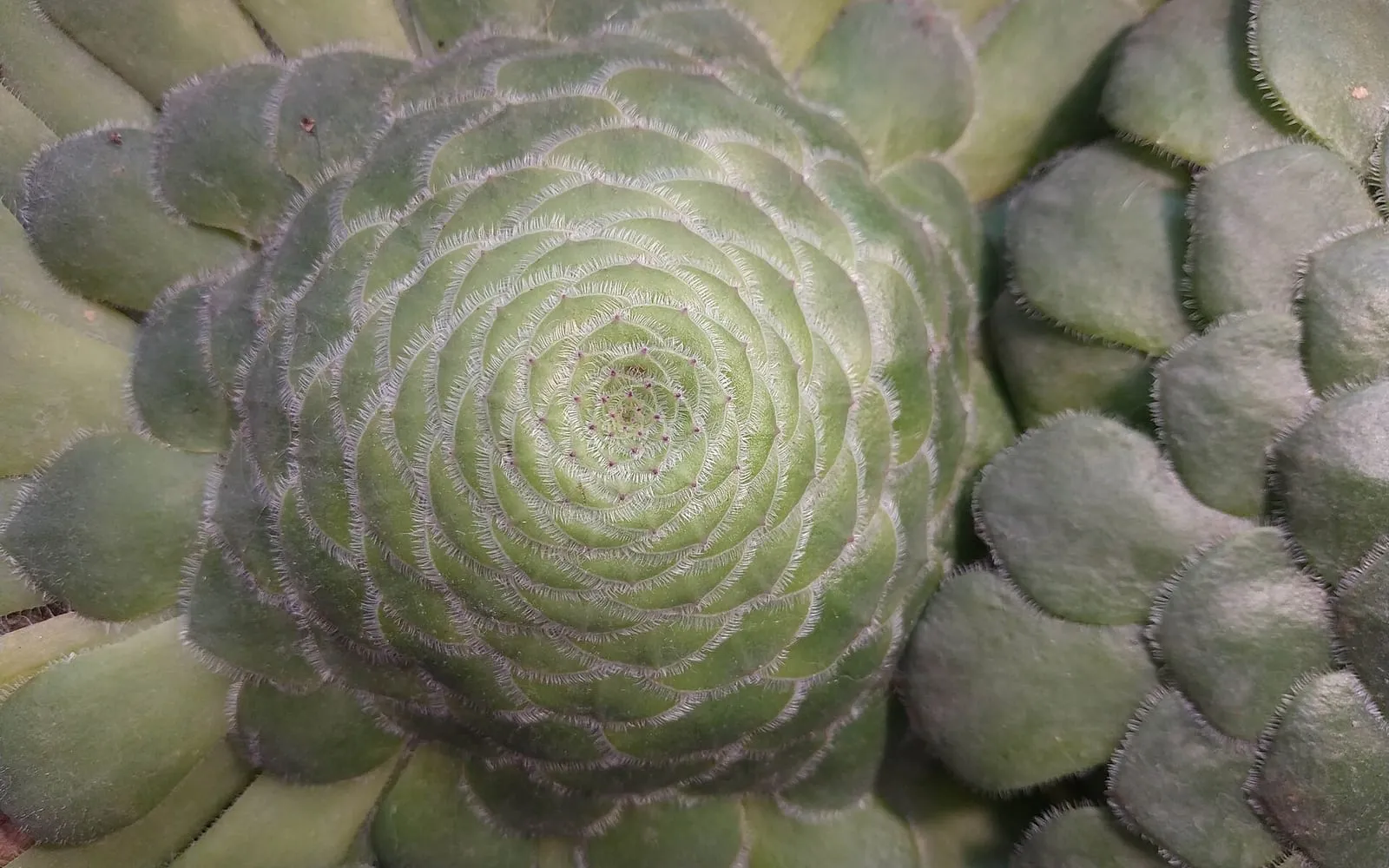
Flat-topped aeonium is one of the flattest succulents in cultivation. It presses its many leaves into a single, almost two-dimensional plate, a flat green disc laid on the soil like a saucer, its leaves arranged in a precise overlapping spiral. A big plant can be 30 centimetres across and barely a couple of centimetres high.
In the wild on Tenerife it grows sideways out of shaded, damp cliff faces, the flat plate held vertically against the rock so that rain runs off instead of pooling. Grown flat in a pot, that same plate collects water in its centre, and water sitting on the crown can rot it quickly. That makes this one of the harder common aeoniums to grow.
It follows the aeonium growth pattern, growing in the cool, damp winter and resting in the dry summer, and it is strictly monocarpic. The plate builds for a few years, sends up a tall flower cone, and then dies. Grown carefully, watered at the soil and never over the leaves, it is a distinctive plant to keep.
Appearance and character
The rosette is flattened into a single plate, its leaves spread almost edge to edge in one plane, laid in a tight, symmetrical spiral that gives the plant its saucer or dinner-plate look.
Each leaf is spoon-shaped, a fresh mid-green, fringed with fine hairs along the edge, and the whole plate is soft and slightly translucent at the rim when held to the light.
It grows as a single, solitary rosette, rarely offsetting, and its strict monocarpic habit means the plant is usually raised anew from seed after it flowers.
Its flower is a tall, dense cone of small yellow blooms rising from the centre of the plate, after which the whole rosette sets seed and dies.
Where it is from
Aeonium tabuliforme is endemic to Tenerife in the Canary Islands, growing on shaded, damp, north-facing cliff faces, where the flat plate sits vertically against the rock in bright but filtered light and constant humidity. Rain runs straight off the vertical plate.
That vertical, cliff-face life explains its main weakness in a pot. Grown flat, its plate collects water in the centre, which the wild plant never has to cope with, so crown rot is the constant risk. It needs bright but not scorching light, cool humid air, very sharp drainage, and water delivered to the soil, never onto the leaves.
How it grows
It grows through autumn, winter and spring, adding leaves to the spiral and widening the plate, and rests over summer, when growth stops. Over several years the plate reaches full size, then flowers and dies, so each rosette has a limited life.
Grow it in a gritty, free-draining mix with a little compost, in a shallow pot, and tilt the pot slightly or water only at the soil so that water never sits in the centre of the plate. Water when the surface dries in the cool growing season, and keep it much drier in summer.
Give it bright but filtered light, shaded from strong summer sun, and keep it cool, humid and airy above about 4 deg C. Good air movement over the plate helps it dry quickly and reduces rot risk.
Propagate from seed, or occasionally from a rare offset or a leaf, since the solitary, monocarpic plate usually gives few propagation options and dies after flowering.
Through the seasons
Autumn ends the summer rest as it cools. The plate resumes adding leaves; start watering at the soil and feeding again.
Winter is the main growing season. Give bright, filtered light, water at the soil when the surface dries, and feed lightly, keeping it cool but frost-free.
Spring continues growth, and a mature plate may send up its flower cone, after which it will die.
Summer is a rest. Growth stops; keep the plate shaded, cool and nearly dry, and keep water well away from the crown.
Care difficulty
Difficult, and one of the harder common aeoniums, entirely because of its flat plate. Grown level, it catches water in its centre and rots at the crown, so it must be watered at the soil and kept airy and on the dry side. Add its winter-growing calendar and its strict monocarpic habit, and it needs more attention than its relatives. Watered carefully, it can grow well indoors.
Watering
Water when the surface of the gritty mix dries during the autumn-to-spring growing season, but deliver the water to the soil at the edge of the plate, never over the leaves, and never let it pool in the centre of the rosette. Standing water on the crown rots the plant faster than anything.
Cut right back over summer, keeping the pot nearly dry while the plate rests. Tilting the pot slightly helps any stray water run off. A plate that softens or discolours at the centre is rotting; act at once by drying it out and improving air flow.
Warning signs, diseases and pests
Crown rot, a soft, discoloured, collapsing centre, is the main danger and comes from water sitting in the flat rosette. Water only at the soil, keep the plate airy, and tilt the pot so water runs off. Once the crown goes soft, the plant is usually lost.
Mealybugs and aphids hide among the flat, overlapping leaves, well concealed by the tight spiral. Check the plate closely and wash or wipe them out, since they are easy to miss. Root rot follows wet compost, worst in the summer rest, so keep drainage sharp.
A plate that domes up or whose leaves lift at the edges needs more light. Give it brighter, though still filtered, light to keep it flat.
Growing environment
Bright but filtered light keeps the plate flat and firm without scorching the soft leaves. Direct summer sun burns it, and too little light makes the plate dome and the leaves lift. Shade it in the hottest months.
Cool, humid, airy conditions suit it, above about 4 deg C, matching its shaded Tenerife cliffs. Good air movement is important, since it helps the flat plate dry and prevents crown rot.
Grow it in a shallow pot of gritty, free-draining mix, tilted slightly or watered only at the soil, on a cool, bright, airy sill out of strong sun.
Feeding
Feed lightly, a couple of times over the autumn-to-spring growing season, with a dilute balanced feed. It needs little, and rich feeding forces soft growth that spoils the tight, flat plate.
Give nothing over the summer rest. Fresh gritty mix supports a newly potted plant through its first weeks.
Troubleshooting
The centre of the plate has gone soft and discoloured. Crown rot, from water sitting in the flat rosette. Water only at the soil, keep the plate airy, and tilt the pot so water runs off. A soft crown usually means the plant is lost.
The plate is doming up and the leaves are lifting. It needs more light. Give it brighter, still filtered, light to keep the rosette pressed flat.
Why did it flower and then die? It is strictly monocarpic, so the plate dies after flowering. Save seed to raise a new plant, as it rarely offsets.
How do I water it without rotting it? Water at the soil around the edge of the plate, never over the leaves, and never let water pool in the centre. Tilting the pot and good air flow both help.
Is it safe around pets? Yes. Aeoniums are not listed as toxic, so the flat plate is safe with cats, dogs and children.
Flat-Topped Aeonium problem guides
Not sure what is wrong? See the common houseplant pests guide.