
Houseplant
Coral Aloe
Aloe striata
Also known as Aloe striata, Striped Aloe
How to grow Aloe striata, the coral aloe, a spineless aloe with smooth blue-grey leaves edged in coral pink and arching coral-red flowers.
At a glance
- Difficulty
- Easy
- Water
- When the mix has dried through; drought-hardy
- Light
- Full sun to bright light
- Temperature
- Warm to cool; tolerates a light frost, keep dry when cold
- Humidity
- Low
- Hardiness
- USDA 9-11, RHS H3, hardy to -4 C
- Type
- Evergreen rosette succulent
- Height
- Rosette 45 to 60 cm across
- Native to
- South Africa
A smooth-leaved aloe from the dry Karoo and Eastern Cape of South Africa, growing on rocky slopes in strong sun and low rainfall. It needs full sun, sharp drainage and long dry spells, tolerates a light frost when dry, and is safest above about minus 4 deg C. It rots in cold, wet ground but is otherwise among the toughest and most forgiving aloes.
Hardiness zones describe winter cold alone. Summer heat, humidity, rainfall and the length of the growing season decide as much, so treat the range as the outer limit rather than as a recommendation.
Harmful if eaten
- Do not eat
- The leaf sap and latex
- Harm from
- Eating it
- Affects
- People, cats and dogs
Beneath the skin of an aloe leaf is a bitter yellow latex loaded with anthraquinones, which act as a purgative and irritate the gut. The ASPCA lists aloe as toxic to cats and dogs, which may vomit, drool or scour after chewing a leaf, and the latex upsets the human stomach as well. The coral aloe is safer to handle than a spiny aloe, but it should still be kept away from pets that chew.
Sources: ASPCA toxic and non-toxic plants, RHS potentially harmful garden plants
About
Coral aloe is a smooth-leaved aloe without the marginal teeth found on many of its relatives. Its broad, flat leaves are a soft blue-grey, faintly striped along their length, and instead of the fierce teeth most aloes have along their edges, they have only a smooth, waxy margin of coral pink, brightening to a warm rose in strong sun. That pink rim gives the plant its name and makes it safe to handle and to site where people pass.
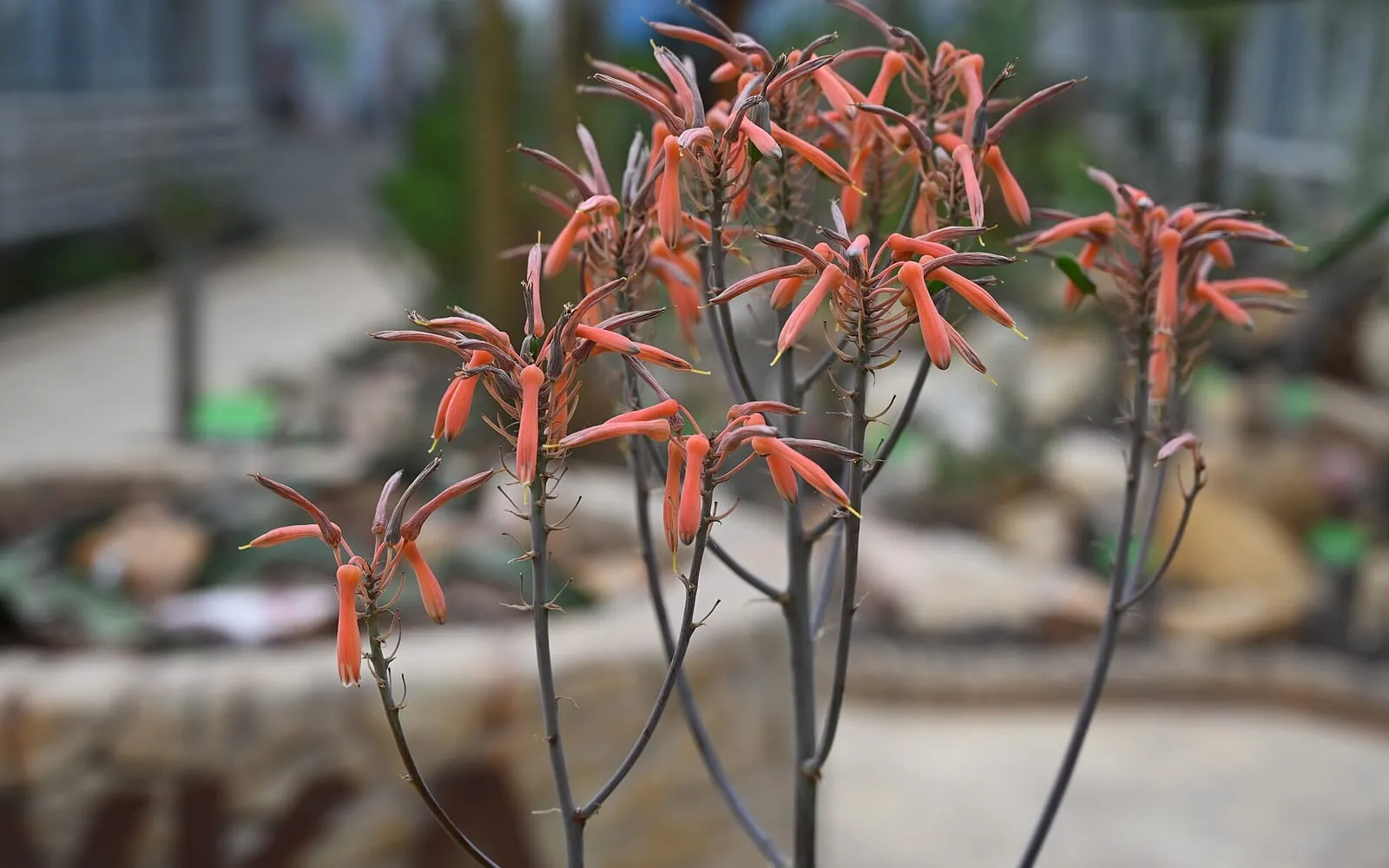
The flower colour repeats the leaf edge. In late winter and spring a mature plant sends up branched, arching stalks topped with heads of coral-red to orange blooms, a good source of nectar and a strong splash of warm colour when little else is out. Between the pink-edged leaves and the coral flowers it is grown mainly for appearance.
It comes from the dry Karoo and Eastern Cape of South Africa and needs the standard desert-aloe treatment: full sun, gritty soil and long dry spells. Tough, drought-hardy and forgiving, tolerant of a light frost when dry, it is one of the easiest aloes to grow, unlike its demanding mountain cousin the spiral aloe.
Appearance and character
The leaves are broad, flat and smooth, a soft powdery blue-grey with faint lengthwise stripes, arranged in an open rosette, and edged not with teeth but with a smooth, waxy coral-pink margin.
That pink edge deepens to rose or red in strong sun and cool weather, and the absence of marginal teeth makes the plant unusually safe to handle among the aloes.
It is mostly solitary, though it may offset modestly with age, so it can be increased from the occasional pup as well as from seed.
Its flower is a branched, arching head of coral-red to orange blooms on a stout stalk in late winter and spring. The flowers are rich in nectar and are one of the plant’s main attractions.
Where it is from
Aloe striata grows in the dry Karoo and Eastern Cape of South Africa, on rocky, sun-baked slopes in a climate of strong sun, low rainfall and long dry seasons. It is a true dryland aloe.
Give it full sun, sharp drainage and long dry spells. It stores water in its thick leaves and tolerates a light frost when dry. Cold, wet ground is the main danger, because it rots the roots, but in every other respect it is undemanding.
How it grows
It grows through the warmer months, broadening its rosette and thickening its leaves, flowers in late winter and spring, and slows in the cold. It is best treated as a steady succulent rather than a plant to push hard for speed.
Grow it in a free-draining, gritty succulent mix in a pot to suit the spreading rosette, and water when the mix has dried through. It stores water in its leaves and needs far less than a leafy houseplant, so let it dry out between drinks.
Give it full sun for the firmest rosette and the brightest pink edges, and keep it warm to cool. Outdoors in a warm climate it takes a light frost if the soil drains freely and it is kept dry in winter; in a pot, keep it nearly dry and sheltered from winter wet.
Propagate from the occasional offset, or from seed, which comes readily after flowering.
Through the seasons
Spring brings the coral flowers and renewed growth. Water when the mix dries through, give full sun, and enjoy the bloom.
Summer is the main growing season. Keep it in full sun for the firmest rosette and the deepest pink margins, watering only as the mix dries and feeding lightly.
Autumn slows growth as light fades. Ease off watering, and begin keeping a potted plant dry ahead of winter.
Winter is a cool, dry rest, when the flower stalks begin to rise. It takes a light frost if dry, so keep it nearly dry and sheltered from winter wet.
Care difficulty
Coral aloe is easy and one of the most forgiving aloes. Given full sun and sharp drainage it is tough, drought-hardy and reliable, taking a light frost when dry, and its smooth, toothless leaves make it safe and pleasant to handle. Its one weakness is cold, wet compost, which rots it. Beyond keeping it dry in winter, it needs very little, which makes it a good aloe for a beginner.
Watering
Water once the gritty mix has dried right through, soaking the broad rosette and letting it drain. Those thick, pink-edged leaves store plenty of water, so it copes with a long drought and prefers to dry fully between drinks.
In winter water only sparingly; a cold, wet pot rots this otherwise frost-hardy aloe. Leaves that thin or curl slightly are thirsty; a soft, discoloured base or a translucent, yellowing leaf points to rot from overwatering or cold. When unsure, keep it drier.
Warning signs, diseases and pests
Cold, wet compost rots the roots, the most common cause of trouble. Sharp drainage and a dry winter are the best prevention, and this aloe takes a light frost only when dry. Wet roots in cold conditions raise the risk sharply. A soft, discoloured base means rot has set in.
Aloe scale shows as small greyish-white discs on the leaves, and mealybugs as white fluff in the leaf axils; both can be wiped off with dilute alcohol or treated with horticultural oil. Fungal leaf spotting can follow damp, stagnant air, so keep it airy and water off the leaves.
Washed-out colour and a loose, floppy rosette mean too little light. Move it into full sun to firm the rosette and restore the pink edges.
Growing environment
Full sun keeps the rosette firm and the coral edges bright, and cool nights in sun deepen the pink further. In shade the plant grows loose and pale and the colour fades. It needs as much direct light as you can give it.
It takes a light frost when dry, so it can grow outdoors in a warm climate with sharp drainage, kept dry over winter. In a pot, keep it dry and sheltered from winter wet. It needs low humidity and dislikes stagnant damp.
Grow it in a free-draining, gritty succulent mix in a pot in full sun, or, in a frost-free climate, outdoors in a sunny, well-drained spot. Its toothless leaves let you site it near paths without worry.
Feeding
A dilute, low-nitrogen cactus feed once or twice over spring and summer is plenty. Overfeeding softens the rosette and dulls the coral edging that the plant is grown for.
Feed nothing over winter. A plant just set in fresh gritty mix has enough nutrients for its first weeks.
Troubleshooting
The base has gone soft and discoloured. Rot from cold, wet compost. Improve drainage, water sparingly, keep it warmer and drier, and remove rotted tissue. Keeping it dry in winter prevents it.
The rosette is loose and pale and the pink has faded. Too little light. Move it into full sun to firm the rosette and restore the coral edges.
There are small discs or white fluff on the leaves. Aloe scale or mealybugs. Wipe them off with dilute alcohol or treat with horticultural oil, and check the leaf axils regularly.
How is it different from other aloes? Its leaves are smooth and toothless, edged with coral pink rather than spines, which makes it safe to handle, and it is easier to grow than the fussy spiral aloe.
Is it safe around pets? No. Like all aloes it contains a bitter latex the ASPCA lists as toxic to cats and dogs, so keep it away from pets that chew.
Coral Aloe problem guides
Not sure what is wrong? See the common houseplant pests guide.