
Houseplant
Spatulate Aeonium
Aeonium spathulatum
Also known as Aeonium spathulatum
How to grow Aeonium spathulatum, a small shrubby Canary Islands aeonium with woody stems tipped with tiny sticky rosettes.
At a glance
- Difficulty
- Moderate
- Water
- When the mix has mostly dried, more in winter growth
- Light
- Bright light with some direct sun; shade from fierce summer sun
- Temperature
- Cool to warm; keep above about 5 deg C
- Humidity
- Low to average
- Hardiness
- USDA 9-11, RHS H2, hardy to 4 C
- Type
- Evergreen shrubby succulent, monocarpic rosettes
- Height
- 30 to 60 cm
- Native to
- Canary Islands
A small branching shrub from the Canary Islands, growing on sunny rocky slopes and doing its growing through the mild, wet winter while resting in the dry summer. It needs bright light, cool conditions and sharp drainage, has little frost tolerance and is safest above about 4 deg C. It dislikes both hard frost and prolonged summer heat and drought.
Hardiness zones describe winter cold alone. Summer heat, humidity, rainfall and the length of the growing season decide as much, so treat the range as the outer limit rather than as a recommendation.
Not known to be toxic
A safe plant to keep with pets or children. This aeonium, like the rest of the Crassulaceae group, is not listed as toxic by the ASPCA or the RHS, and holds no harmful compound. A chewed leaf would cause at most a passing, mild stomach upset, so the little shrub is safe to place within reach of animals and young children.
Sources: ASPCA toxic and non-toxic plants, RHS potentially harmful garden plants
About
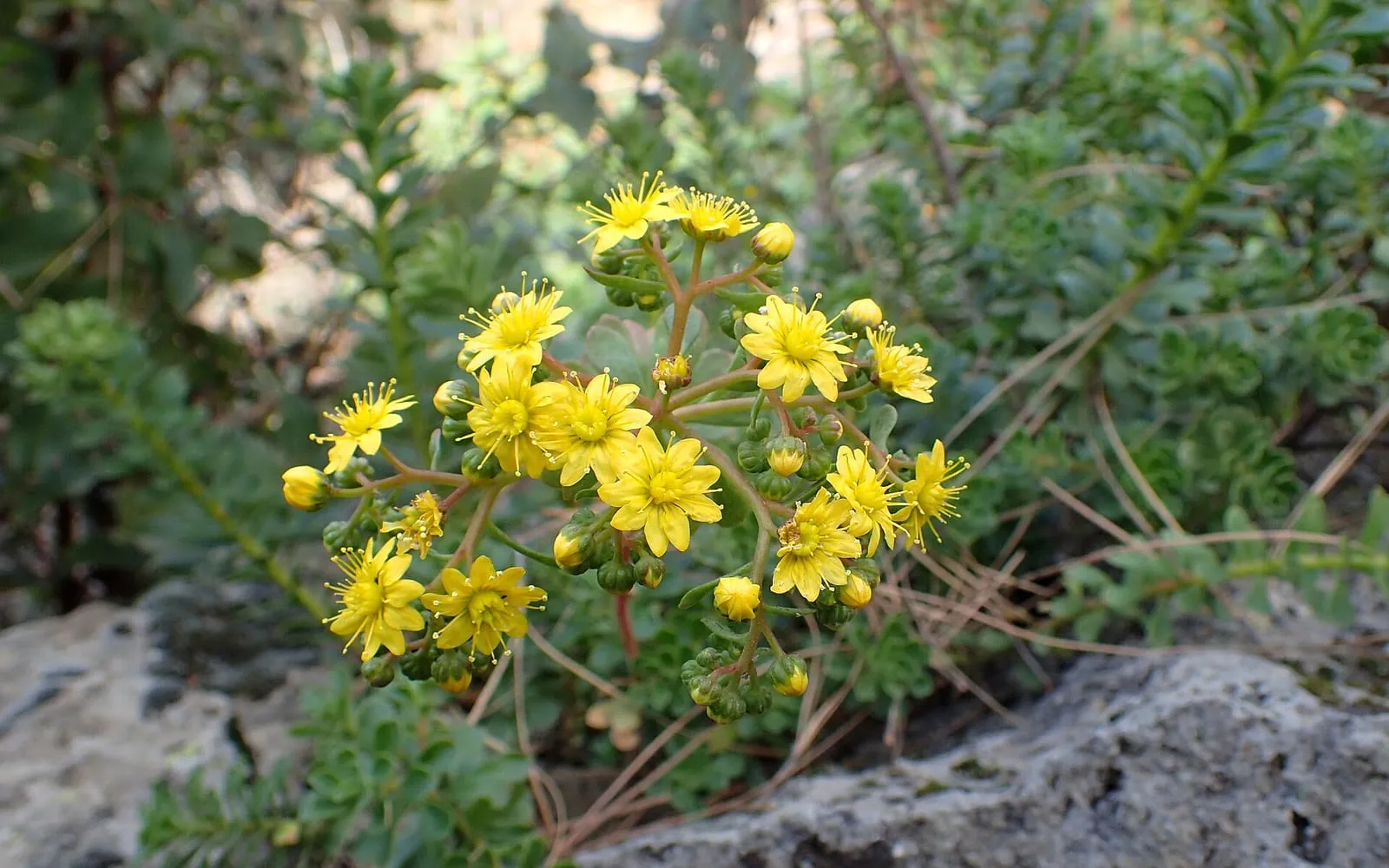
Spatulate aeonium is a small, bushy aeonium. Instead of one broad dish of leaves, it builds a small, much-branched woody shrublet, each of its many thin stems tipped with a neat little rosette of spoon-shaped, slightly sticky green leaves. A well-grown plant forms a dense green bush a foot or two high, studded with dozens of small rosettes, and topped in season with sprays of bright yellow flowers.
Its shrubby, many-stemmed habit sets it apart from the flat, solitary aeoniums and makes it easy to keep going, since flowering only kills the one rosette that blooms while the rest of the bush carries on. That is a useful difference from the strictly monocarpic kinds that die outright.
It keeps the aeonium calendar, growing through the cool, damp winter and resting through the dry summer, and wants the cool, bright conditions of its Canary Island home. Pinched and kept in good light, it makes a shapely little succulent shrub for a windowsill.
Appearance and character
The plant is a small, branching shrub, its many slim woody stems dividing and each ending in a small rosette, so the whole builds into a rounded bush instead of a single rosette.
The leaves are small and spoon-shaped, a fresh green flushing red or bronze in strong sun, and slightly sticky to the touch from fine glandular hairs, tightly packed into rosettes at the stem tips.
In good light the shrub stays dense and compact; in poor light the stems stretch, the rosettes spread open, and the plant grows leggy and bare below.
It flowers in sprays of small, star-shaped yellow blooms at the stem tips. Each flowering rosette dies afterwards, but the branching habit means the shrub as a whole lives on.
Where it is from
Aeonium spathulatum grows on the Canary Islands, on sunny, rocky slopes and cliffs in a mild, Mediterranean-type climate of wet winters and warm, dry summers. It is used to bright light, cool air and sharp drainage among the rocks.
Give it bright light, cool conditions and free drainage, water in the cool months while it grows, and a drier rest through the summer heat, when it naturally slows. It has no tolerance for hard frost or long summer drought.
How it grows
It grows through autumn, winter and spring, extending and branching its stems and filling out the rosettes, and rests over summer, when growth slows and the rosettes tighten. Pinching the stem tips in the growing season makes it branch more and stay bushy.
Grow it in a gritty, free-draining mix with a little compost, in a pot to suit its shrubby size, and water when the mix has mostly dried during the cool growing season. Keep it drier through the summer rest.
Give it bright light with some direct sun to keep it compact, shaded only from the fiercest summer midday sun, and keep it cool and airy above about 4 deg C. Prune leggy stems back in spring to shape it and to provide cuttings.
Propagation is easy from stem cuttings, an advantage over the solitary aeoniums. Snip a rosette-tipped stem, let the cut dry, then root it in gritty mix.
Through the seasons
Autumn ends the summer rest as it cools. Growth resumes; start watering and feeding, and pinch to encourage branching.
Winter is the main growing season. Give bright light, water when the mix mostly dries, and feed lightly, keeping it cool but frost-free.
Spring carries on the growth and brings the yellow flower sprays. Prune leggy stems and take cuttings now.
Summer is a rest. Growth slows; keep it lightly shaded, cool and much drier until autumn.
Care difficulty
Moderate. Like all aeoniums it needs its water and light in the cool months, followed by a drier summer rest. Its bushy, branching habit makes it forgiving, since it roots easily from cuttings and survives the flowering of any one rosette. Its commonest fault is going leggy in poor light, which pruning and brighter light put right.
Watering
Water when the gritty mix has mostly dried during the autumn-to-spring growing season, giving a good drink and letting it drain. It takes a little more water in growth than a desert succulent, but the mix must still drain freely.
Reduce watering over summer, keeping the plant on the dry side while it rests, since warm, wet compost then rots it. Leaves that shrivel slightly in summer are resting; leaves that yellow and soften point to rot from overwatering.
Warning signs, diseases and pests
Leggy, stretched stems with bare lengths and loose rosettes mean too little light. Move it somewhere brighter with some direct sun, and prune the bare stems back to force dense new growth.
Root rot follows wet compost, worst if watered through the summer rest; improve drainage and keep it drier in the heat. Mealybugs and aphids gather in the small rosettes; wash or wipe them out and check the tips regularly.
A single rosette dying after it flowers is normal for an aeonium. The rest of the shrub carries on, and you can prune out the spent stem.
Growing environment
Bright light with some direct sun keeps the shrub dense and compact and brings out red tints in the leaves. In poor light it stretches, pales and grows leggy. Shade it only from the harshest summer midday sun.
Cool to warm, airy conditions suit it, above about 4 deg C, matching its Canary Island home. It dislikes hard frost and prolonged summer heat, and takes ordinary or low humidity.
Grow it in a gritty, free-draining mix in a pot on a cool, bright sill, or, in a frost-free climate, outdoors in a sunny, sheltered spot. Pinch and prune to keep it shapely.
Feeding
Feed lightly, a couple of times over the autumn-to-spring growing season, with a dilute balanced feed. It needs little, and rich feeding forces soft, leggy growth.
Give nothing over the summer rest. Fresh gritty mix supports a newly potted or newly pruned plant through its first weeks.
Troubleshooting
It has grown leggy with bare stems. Too little light. Move it somewhere brighter with some direct sun, and prune the bare stems back hard to force dense new growth, rooting the trimmings as cuttings.
The leaves are soft and yellowing. Rot from overwatering, usually from watering through the summer rest. Improve drainage and keep it drier in the heat.
One rosette flowered and died. Normal for an aeonium. Because this species is a branching shrub, the rest of the plant lives on; prune out the spent stem.
How is it different from the other aeoniums? This one is a small branching shrub with many tiny rosettes, where the giant velvet rose makes a single broad dish. Its bushy habit makes it easier to keep and propagate.
Is it safe around pets? Yes. Aeoniums are not listed as toxic, so this little shrub is safe with cats, dogs and children.
Spatulate Aeonium problem guides
Not sure what is wrong? See the common houseplant pests guide.