
Houseplant
Giant Velvet Rose
Aeonium canariense
Also known as Aeonium canariense, Canary Island Aeonium
How to grow Aeonium canariense, the giant velvet rose, with huge flat rosettes of soft downy leaves. It grows in winter and rests in summer.
At a glance
- Difficulty
- Moderate
- Water
- When the top of the mix has dried, more in winter growth
- Light
- Bright light with some direct sun; shade from fierce midday sun
- Temperature
- Cool to warm; keep above about 5 deg C
- Humidity
- Low to average
- Hardiness
- USDA 9-11, RHS H2, hardy to 4 C
- Type
- Evergreen rosette succulent, monocarpic
- Height
- Rosette to 50 cm across
- Native to
- Canary Islands
A large rosette succulent from the Canary Islands, where it grows on cool, humid coastal slopes and does its growing through the mild, wet winter, resting through the dry summer. It needs bright light, cool conditions and a little more moisture than a desert succulent, has little frost tolerance, and is safest above about 4 deg C. Summer heat sends it dormant.
Hardiness zones describe winter cold alone. Summer heat, humidity, rainfall and the length of the growing season decide as much, so treat the range as the outer limit rather than as a recommendation.
Not known to be toxic
Aeoniums, members of the Crassulaceae, are not listed as toxic by the ASPCA or the RHS. A pet or child that bit a downy leaf would be unlikely to suffer more than mild stomach upset, so the big soft rosette is not considered a poison risk.
Sources: ASPCA toxic and non-toxic plants, RHS potentially harmful garden plants
About
Giant velvet rose forms one of the broadest, flattest rosettes of any succulent grown indoors. A mature plant can spread a single rosette of pale apple-green leaves up to half a metre across, each leaf soft and covered in fine down that gives the whole rosette a velvety, matte finish. It stays low and almost stemless when young.
It follows the unusual calendar of the Canary Island aeoniums, growing through the cool, damp winter and resting through the hot, dry summer. That reversal catches out anyone who treats it like a desert plant. It needs most of its water and light in winter, and should be kept mostly shaded and dry through the heat of summer, when the rosette closes up until autumn growth begins.
Like the shrubbier pinwheel aeonium, it comes from cool, humid coastal slopes and needs brighter, cooler, slightly moister conditions than a desert succulent. Given those conditions and a summer rest, it forms a large soft green rosette.
Appearance and character
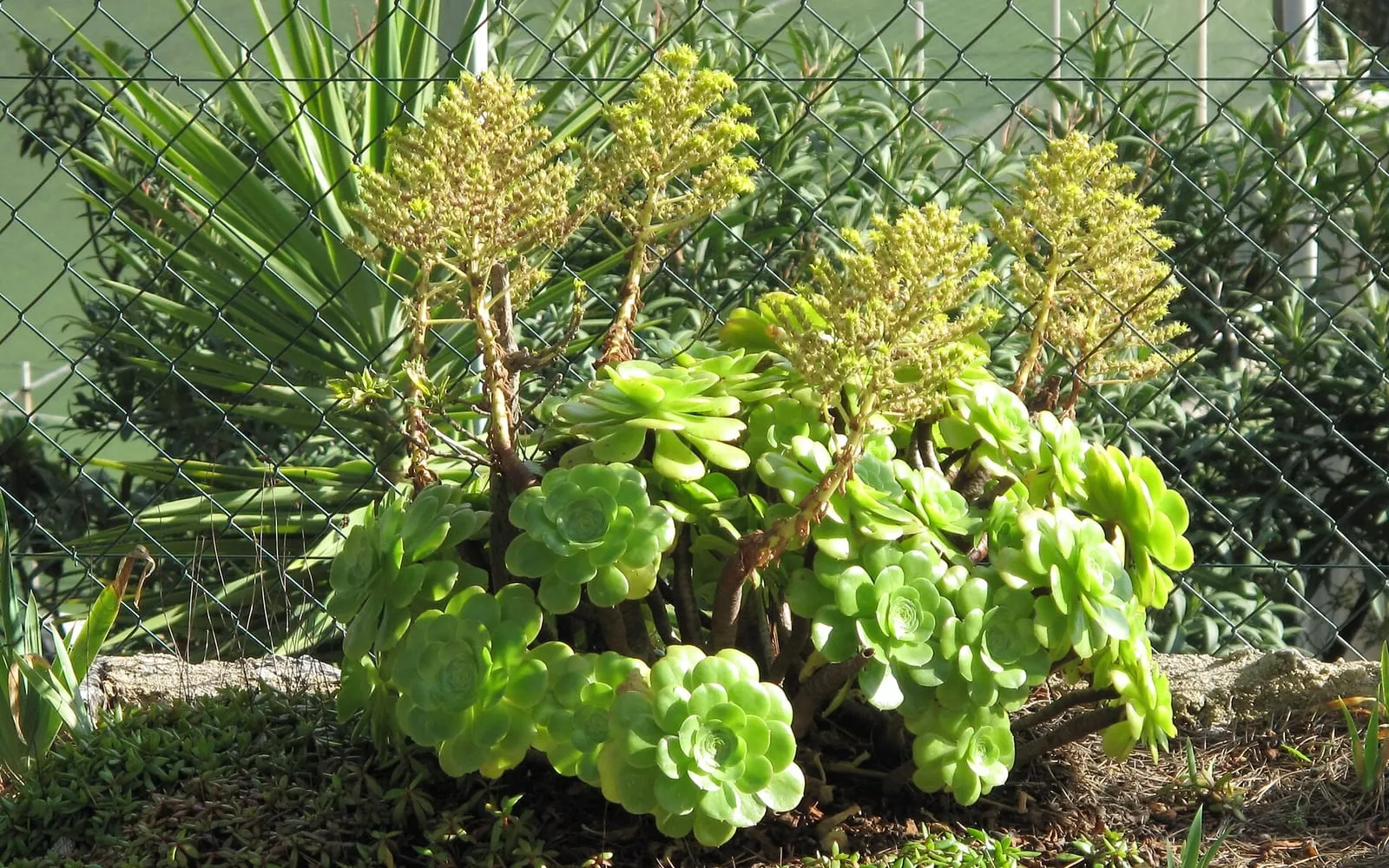
The rosette makes up almost the whole plant, a broad, flat circle of many overlapping leaves, pale to mid apple- green, sometimes edged faintly red in strong light, and low to the ground on a very short stem.
Each leaf is spoon-shaped and covered in fine, soft hairs, giving the velvety nap that names the plant and a matte instead of glossy surface.
It is largely solitary when young, forming one big rosette instead of a clump, though older plants may offset a little at the base.
Like all aeoniums it is monocarpic: a mature rosette eventually produces a tall cone of small yellowish flowers, sets seed, and then dies, so the flowering rosette is lost even as offsets or seed carry the plant on.
Where it is from
Aeonium canariense grows on the Canary Islands, on cool, humid coastal cliffs and slopes washed by Atlantic mists, where winters are mild and wet and summers warm and dry. It is a plant of a maritime, Mediterranean-type climate instead of a desert.
Give it bright light, cool air, sharp but not bone-dry drainage, and water while it is in growth over winter. It goes dormant through the dry summer.
How it grows
Most growth comes in autumn, winter and spring, when the rosette broadens and the leaves fill out, and it rests over summer, when the rosette folds inward into a tight, protective bud and looks shrunken. This is normal summer dormancy, not death.
Grow it in a free-draining mix that still holds a little moisture, with some compost instead of pure grit, in a wide, shallow pot to suit the flat rosette. Water when the surface dries during the winter growing season, and keep it much drier through its summer rest.
Give it bright light with some direct sun, but shade from the fiercest midday summer sun, which scorches the soft leaves. Keep it cool, above about 4 deg C, and it will grow happily on a bright sill or, in a mild climate, outdoors in a sheltered spot.
Propagate from offsets where they form, or from seed, since a solitary rosette gives few cuttings and flowering kills the parent.
Through the seasons
Autumn brings the plant out of its summer rest as temperatures fall. Resume watering and feeding, and the rosette begins to open and grow again.
Winter is the main growing season. Give it bright light, water when the surface dries, and feed lightly, keeping it cool but frost-free.
Spring continues active growth and is when a mature plant may send up its flower cone. Keep watering until the heat arrives.
Summer is dormancy. The rosette closes into a tight bud; keep it shaded, cool and nearly dry, and do not mistake the shrunken look for a problem.
Care difficulty
Moderate, largely because its winter-growing, summer-resting rhythm is the reverse of what most people expect. Watered heavily in summer it rots; kept bone-dry in harsh sun it scorches and shrivels. Follow its calendar, giving it water and light in the cool months and a shaded, dry rest in the heat, and it is straightforward. Cool, bright, airy conditions suit it best.
Watering
Water when the surface of the mix dries during the autumn-to-spring growing season, giving the plant a good drink and letting it drain, since it takes more water in growth than a desert succulent does.
Cut right back over summer, keeping the pot nearly dry while the rosette is dormant, because wet, warm compost in the resting season is what rots it. Leaves that shrivel in summer are normal dormancy; leaves that yellow and soften at any season point to rot from overwatering.
Warning signs, diseases and pests
A rosette that closes into a tight bud and sheds its outer leaves in summer is resting, not dying. Shade it, keep it dry, and it opens again in autumn. Only yellowing, softening leaves and a mushy base mean rot.
Root rot follows wet, cold compost, especially if the plant is watered through its summer rest. Improve drainage and keep it dry in the heat. Mealybugs and aphids gather in the rosette centre; wash or wipe them out and check the crown regularly, since the packed leaves can hide them.
Brown, scorched patches on the leaves come from fierce midday summer sun on the soft, downy surface. Give it some shade in the hottest months.
Growing environment
Bright light with some direct sun keeps the rosette broad and firm, but the soft leaves need shade from the fiercest summer midday sun, which scorches them. Too little light makes the rosette loose and pale.
Cool to warm, airy conditions suit it, above about 4 deg C, matching its mild maritime home. It dislikes both hard frost and stifling summer heat, and takes ordinary or low humidity.
Grow it in a wide, shallow pot of free-draining but slightly moisture-holding mix, on a cool, bright sill or, in a mild climate, in a sheltered spot outdoors.
Feeding
Feed lightly, a couple of times over the autumn-to-spring growing season, with a dilute balanced feed. It needs little, and rich feeding produces soft growth that spoils the tight, flat rosette.
Give nothing over the summer dormancy. Fresh mix supplies a newly potted plant through its first weeks.
Troubleshooting
The rosette has closed up and shed leaves in summer. This is normal summer dormancy. Shade it, keep it nearly dry, and it opens and grows again in autumn.
The leaves are yellowing and soft. Rot from overwatering, most often from watering through the summer rest. Improve drainage and keep it dry in the heat.
There are brown scorched patches on the leaves. Fierce summer midday sun on the soft, downy surface. Give it some shade in the hottest months.
Why did my plant flower and then die? Aeoniums are monocarpic, so a rosette dies after flowering. Grow on any offsets or save seed to continue the plant.
Is it safe around pets? Yes. Aeoniums are not listed as toxic, so this soft-leaved rosette is safe with cats, dogs and children.
Giant Velvet Rose problem guides
Not sure what is wrong? See the common houseplant pests guide.