
Houseplant
Disc House-Leek
Aeonium glandulosum
Also known as Aeonium glandulosum, Madeira Aeonium
How to grow Aeonium glandulosum, the disc houseleek from Madeira, a cliff-dwelling succulent with flat rosettes that press against rock and form mats.
At a glance
- Difficulty
- Moderate
- Water
- When the top of the mix dries, more in winter growth
- Light
- Bright light with some direct sun; shade from harsh summer sun
- Temperature
- Cool to warm; keep above about 5 deg C
- Humidity
- Low to average
- Hardiness
- USDA 9-11, RHS H2, hardy to 4 C
- Type
- Evergreen rosette succulent, monocarpic
- Height
- Rosettes to 25 cm across, mats wider
- Native to
- Madeira
A mat-forming rosette succulent found only on Madeira, clinging to damp coastal cliffs and roadside banks in a mild, humid Atlantic climate. It grows through the cool, wet winter and rests in the dry summer, wanting bright light, cool air and sharp drainage. It has little frost tolerance, is safest above about 4 deg C, and dislikes both hard frost and baking summer heat.
Hardiness zones describe winter cold alone. Summer heat, humidity, rainfall and the length of the growing season decide as much, so treat the range as the outer limit rather than as a recommendation.
Not known to be toxic
Safe to keep around pets and children. Like the other aeoniums, this Crassulaceae succulent is not listed as toxic by the ASPCA or the RHS, and no harmful compound is recorded in it. A nibbled leaf would give at most a brief, mild stomach upset, so the spreading mats of flat rosettes pose no hazard in a household with animals or young children.
Sources: ASPCA toxic and non-toxic plants, RHS potentially harmful garden plants
About
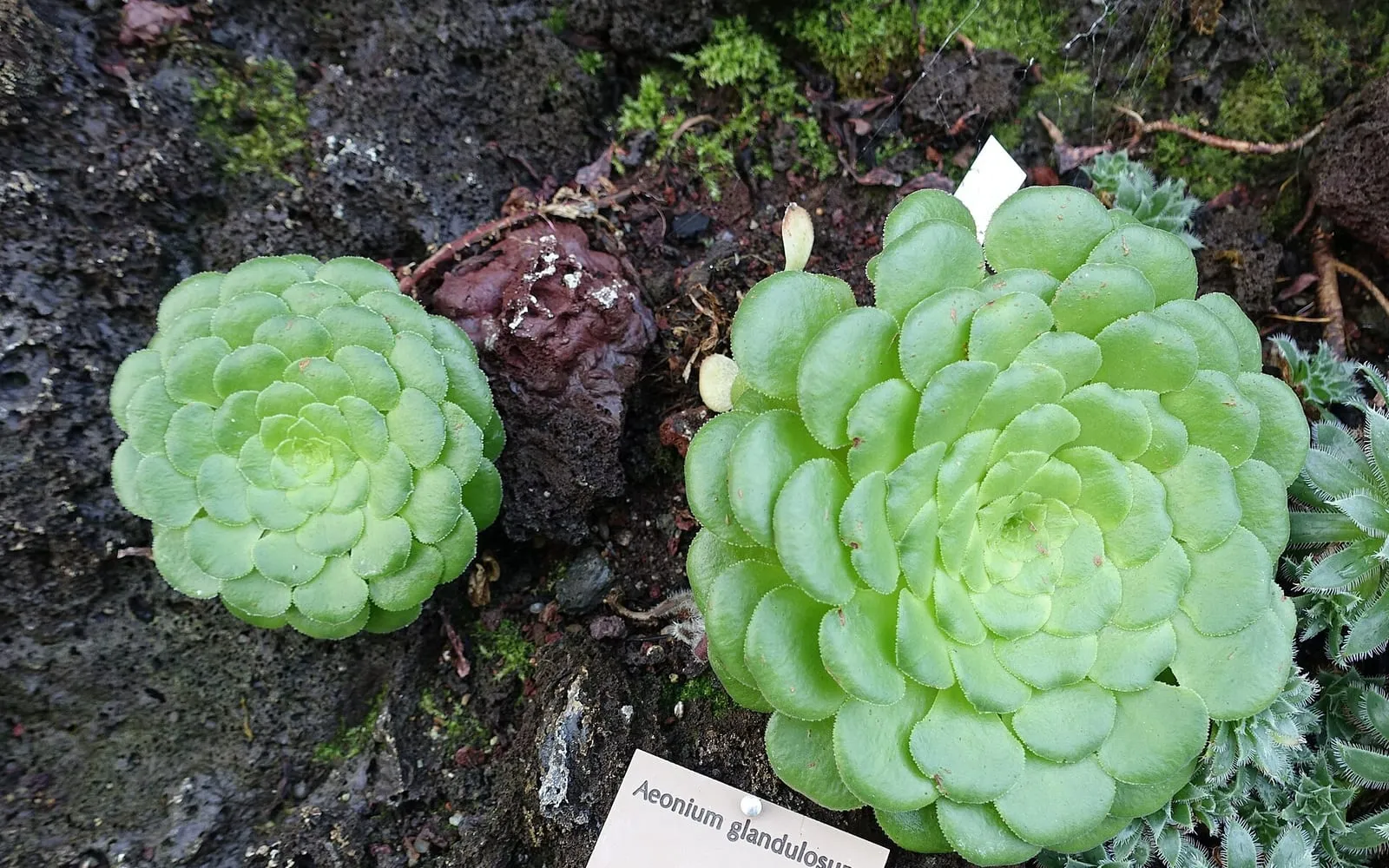
Disc houseleek grows as flat rosettes. Found wild only on the Atlantic island of Madeira, it forms low, almost stemless rosettes of broad, flat leaves that lie close against rock and spread sideways into mats instead of rising on a stem. The leaves are a fresh mid-green, sticky to the touch from fine glandular hairs, the feature that gives the plant its botanical name.
It shares the winter-growing, summer-resting rhythm of the Canary Island aeoniums, but its habit is its own: where the giant velvet rose makes one great solitary dish, this one multiplies into a colony of smaller flat discs, colonising cliffs and banks in its island home.
Its needs come from those damp Madeiran cliffs. It needs bright light, cool and humid air, and sharp drainage, with water in the cool months and a dry rest through the summer heat. Grown to suit that calendar, it makes an unusual, ground-hugging mat of green plates.
Appearance and character
The rosettes are flat and low, pressed close to the surface, made of broad, rounded, spoon-shaped leaves in a fresh mid-green that can flush red at the edges in strong sun.
The leaves feel slightly sticky or tacky, from the fine glandular hairs that coat them, a distinctive touch-test that separates this species from its smoother relatives.
Instead of one solitary rosette, it spreads by short offsets into a low, widening mat of many discs, the habit that suits it to trailing over the edge of a pot or covering the surface.
Like all aeoniums it is monocarpic, so any single rosette dies after producing its cone of small flowers, but the spreading mat continues from its other rosettes and offsets.
Where it is from
Aeonium glandulosum is endemic to Madeira, growing on damp, shaded coastal cliffs, rock faces and roadside banks in a mild, humid, oceanic climate of wet winters and warm, drier summers. It is a plant of rock crevices not open ground.
Give it bright light with cool, humid air, very sharp drainage in the crevice-like conditions it prefers, water while it grows in the cool months, and a dry, shaded rest through the summer, when it would otherwise rot or scorch.
How it grows
It grows through autumn, winter and spring, the flat rosettes broadening and the mat spreading, and rests over summer, when each rosette curls its leaves shut into a tight disc to conserve water. That summer dormancy is normal, not a sign of trouble.
Grow it in a gritty, free-draining mix with a little compost, in a wide, shallow pot or pan that gives the mat room to spread. Water when the surface dries during the cool growing season, and keep it much drier through the summer rest.
Give it bright light with some direct sun, shaded from the harshest summer midday sun that scorches the flat leaves, and keep it cool and airy above about 4 deg C. In a mild, frost-free climate it makes an attractive mat outdoors in a rockery or wall crevice.
Propagate by detaching rooted offsets from the mat, which is far easier here than with the solitary aeoniums, or grow from seed.
Through the seasons
Autumn ends the summer rest as it cools. The rosettes open and the mat resumes spreading; start watering and feeding again.
Winter is the main growing season. Give bright light, water when the surface dries, and feed lightly, keeping it cool but frost-free.
Spring carries on the growth, and a mature rosette may flower and then die, the mat filling the gap from neighbouring rosettes.
Summer is dormancy. The rosettes curl shut; keep the mat shaded, cool and nearly dry, and leave it alone until autumn.
Care difficulty
Moderate. As with all the winter-growing aeoniums, the difficulty is matching its seasonal conditions: it needs water and light in the cool months and a dry, shaded rest in the heat. Its mat-forming habit makes it easy to propagate, which offsets the loss of any rosette to flowering. Watered through its summer rest it rots; kept baked and exposed it scorches.
Watering
Water when the surface of the gritty mix dries during the autumn-to-spring growing season, soaking the mat and letting it drain, as it takes a little more water in growth than a desert succulent.
Reduce watering sharply over summer, keeping the pot nearly dry while the rosettes are curled shut, since warm, wet compost in the resting season rots the plant. Curled, shrunken rosettes in summer are normal dormancy; softening, yellowing leaves at any time mean rot.
Warning signs, diseases and pests
Rosettes that curl their leaves tightly shut and shrink in summer are resting, not failing. Keep the mat shaded and dry and it revives in autumn. Only soft, yellowing leaves and a mushy base point to rot.
Root rot follows wet compost, worst if the plant is watered through the summer rest; improve drainage and keep it dry in the heat. Mealybugs and aphids shelter among the flat, overlapping rosettes; wash or wipe them out and inspect regularly, since the tight mats hide them well.
Brown, scorched patches come from harsh summer sun on the flat leaves. Shade the mat in the hottest months to prevent it.
Growing environment
Bright light with some direct sun keeps the rosettes flat and firm, but shade the mat from the fiercest summer midday sun, which scorches the exposed leaves. In poor light the rosettes grow loose and pale.
Cool to warm, airy, ideally humid conditions suit it, above about 4 deg C, matching its damp Madeiran cliffs. It dislikes hard frost and stifling summer heat alike.
Grow it in a wide, shallow pan of gritty, free-draining mix where the mat can spread, on a cool, bright sill or, in a frost-free climate, in a rockery or wall crevice outdoors.
Feeding
Feed lightly, a couple of times over the autumn-to-spring growing season, with a dilute balanced feed. It needs little, and rich feeding forces soft, loose rosettes.
Give nothing over the summer rest. Fresh gritty mix carries a newly potted mat through its first weeks.
Troubleshooting
The rosettes have curled shut and shrunk in summer. Normal summer dormancy. Keep the mat shaded and nearly dry, and it opens and spreads again in autumn.
The leaves are soft and yellowing. Rot from overwatering, usually from watering through the summer rest. Improve drainage and keep it dry in the heat.
The leaves feel sticky. Is that a pest? No. The stickiness comes from the plant’s own glandular hairs, which give it its name, not from an infestation, though check the rosette centres for aphids that the tackiness can trap.
A rosette flowered and died. Aeoniums are monocarpic, so each rosette dies after flowering. The spreading mat fills the gap from its other rosettes and offsets.
Is it safe around pets? Yes. Aeoniums are not listed as toxic, so the mats are safe with cats, dogs and children.
Disc House-Leek problem guides
Not sure what is wrong? See the common houseplant pests guide.