
Houseplant
Southern Marsh Orchid
Dactylorhiza praetermissa
Also known as Dactylorhiza praetermissa
How to grow Dactylorhiza praetermissa, the southern marsh orchid, a hardy terrestrial orchid with dense purple spikes that loves damp meadow.
At a glance
- Difficulty
- Moderate
- Water
- Keep moist in growth; drier when dormant
- Light
- Full sun to part shade
- Temperature
- Hardy; needs a cold winter dormancy
- Humidity
- Average to high
- Hardiness
- USDA 5-8, RHS H6, hardy to -20 C
- Type
- Hardy deciduous terrestrial orchid
- Height
- 30 to 70 cm
- Native to
- Western Europe
A hardy marsh orchid from the damp meadows, fens and dune slacks of western Europe, growing in moist, humus-rich, neutral to slightly limy ground in sun or light shade. It is fully hardy and needs a cold winter dormancy, dying back to a tuber each year. It needs steady moisture in growth and cannot take a hot, dry root run, though it is more forgiving than the lady's slippers.
Hardiness zones describe winter cold alone. Summer heat, humidity, rainfall and the length of the growing season decide as much, so treat the range as the outer limit rather than as a recommendation.
Not known to be toxic
A safe plant to grow around pets and children. Hardy terrestrial orchids such as Dactylorhiza are not listed as toxic by the ASPCA or the RHS, and carry no harmful compound. A pet or child that chewed a leaf or tuber would come to no real harm beyond a possible mild stomach upset, so this meadow orchid poses no hazard in a garden with animals or children.
Sources: ASPCA toxic and non-toxic plants, RHS potentially harmful garden plants
About
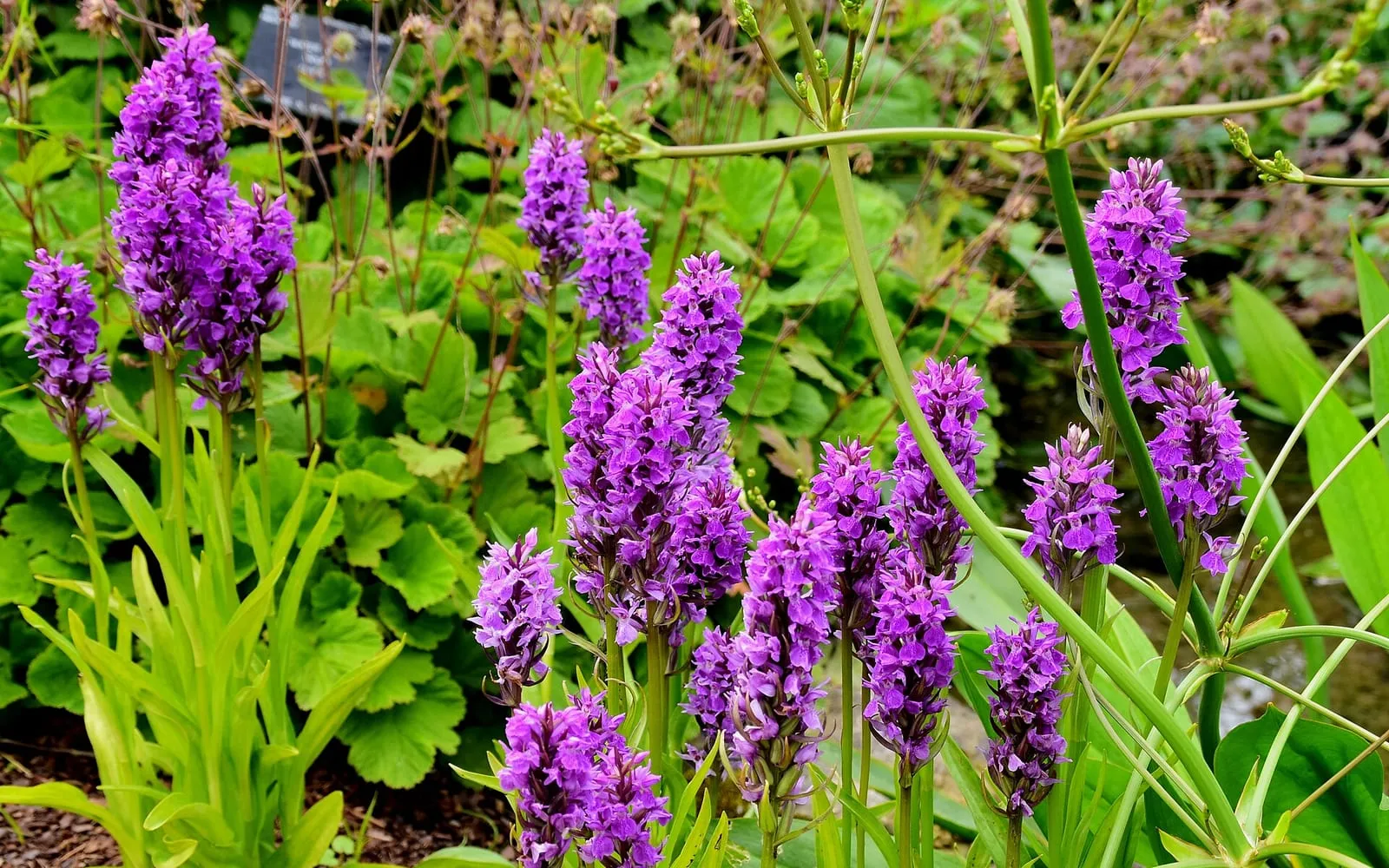
Southern marsh orchid is one of the easier hardy orchids to grow, and it is striking in flower. From a rosette of broad, sometimes spotted, upright leaves it sends up a stout stem topped with a dense, cylindrical spike of many small purple to magenta flowers, each with the lobed lip and little spur of an orchid. A colony in a damp meadow in early summer, with dozens of purple spikes together, is hard to miss.
It is a hardy terrestrial orchid from the damp meadows, fens and dune slacks of western Europe, growing in moist, humus-rich, neutral to slightly limy ground in sun or light shade. It is fully hardy, dying back to an underground tuber each year and needing a cold winter dormancy, and it is more forgiving than the lady’s slippers, being a plant of open, grassy wet ground instead of a fussy woodlander.
Grown in a damp border, a bog garden or even a moist, un-fed lawn or meadow planting, it can establish and self-seed into a colony given the right cool, moist, humus-rich conditions and a hands-off approach. It needs steady moisture in growth, a cold winter and lean, un-fertilised soil, and it responds to that with its bold purple spikes.
Appearance and character
The leaves are broad, upright and often marked with darker spots, forming a rosette in spring that dies back after flowering.
The flowers are small, purple to magenta, each with a lobed lip and a short spur, packed into a dense, cylindrical spike on a stout stem in early summer.
It grows from an underground tuber, dying back after flowering and resting dormant through winter, and it can self-seed into a spreading colony where conditions suit.
It is tougher and forgiving than the lady’s slippers, being a plant of open, grassy, damp ground, and it is not a skin irritant.
Where it is from
Dactylorhiza praetermissa grows in western Europe, in damp meadows, fens, marshes and dune slacks, in moist, humus-rich, neutral to slightly limy ground, in full sun to light shade. It is a plant of open, grassy wet ground.
Give it moist, humus-rich, neutral to slightly limy soil, steady moisture in growth, sun or light shade, and a cold winter dormancy. It cannot take a hot, dry root run, but it is more tolerant and easier than the woodland and wetland lady’s slippers.
How it grows
It grows in spring, throwing up its leafy rosette and dense flower spike, sets seed and builds its tuber through early summer, then dies back and rests dormant through winter. That cold dormancy is essential, and it can self-seed into a colony over years.
Grow it in moist, humus-rich, neutral to slightly limy soil in sun or light shade, in a damp border, bog garden or meadow planting, and keep it moist through the growing season with rainwater. It dislikes a hot, dry root run and a rich, fed soil.
Leave it undisturbed to build a colony, let the seed heads ripen if you want it to spread, and avoid feeding or disturbing the tubers. Cut or let the surrounding grass die down so as not to smother it.
Propagation is by division of an established clump when dormant, or by allowing it to self-seed, which is the easiest way to a colony.
Through the seasons
Spring brings the leafy rosette and, into early summer, the dense purple flower spike. Keep the soil moist.
Summer the plant sets seed and builds its tuber. Keep it moist in early summer, then let it die back naturally.
Autumn the foliage has died back and the tuber rests. Keep the ground from drying out completely but not waterlogged.
Winter the tuber lies dormant below ground. It is fully hardy, and the cold spell is what sets next year’s purple spike, so leave it out and keep the ground just moist.
Care difficulty
Moderate, and among the easier hardy orchids, given damp, humus-rich, un-fed ground and a cold winter. It needs steady moisture in growth, sun or light shade, and to be left undisturbed to build a colony. It goes wrong in a hot, dry root run, in rich, fed soil, or in warm, stagnant waterlogged ground. Given a damp meadow or bog-garden spot it establishes and self-seeds.
Watering
Keep the soil moist through the growing season with rainwater, since it comes from damp meadows, fens and dune slacks and will not stand drying out while the rosette and spike are up. A hot, dry root run checks it first.
Waterlogged, stagnant warmth rots the tuber, so aim for steady damp over ground that still drains. Let it dry a little as it dies back, keeping the dormant tuber just moist through winter.
Warning signs, diseases and pests
Warm, stagnant, waterlogged soil rots the tuber, while a hot, dry root run stops it returning at all. Keep the ground cool, moist and humus-rich through growth, draining underneath, and never let it bake.
Slugs and snails strip the emerging shoots and the packed purple spikes, so guard the young growth in spring. A plant that fails to come back has usually dried out, been fed too richly, or had its tuber disturbed.
Rich, fed soil makes it leafy and short-lived and can encourage competing grasses to smother it, so keep the ground lean.
Growing environment
Full sun to light shade suits it, matching its open, grassy home. It flowers best in good light and dislikes deep shade, though it takes light shade well.
Fully hardy down to about minus twenty, it must have the cold winter rest to flower, so it lives in the open garden instead of on a sill. It likes reliably moist ground and damp air.
Grow it in moist, humus-rich, neutral to slightly limy soil in a damp border, bog garden or meadow planting, in sun or light shade, and leave it undisturbed to spread.
Feeding
Feed very sparingly or not at all, since it is adapted to lean, damp meadow soil and rich feeding makes it leafy, short-lived and easily smothered by grasses. A humus-rich soil provides enough.
Give nothing in dormancy. Keeping the ground lean and the competing grasses in check matters more than feeding.
Troubleshooting
It did not come back. Usually the soil dried out, was too rich, or the tuber was disturbed. Keep the ground cool, moist, humus-rich and lean in growth, and leave the tubers undisturbed.
The tuber rotted. It sat in warm, stagnant, waterlogged soil. Keep the ground damp over free drainage, and never leave the tuber warm and sodden, which is what rots it.
How do I get a colony? Let the seed heads ripen and self-sow into suitable damp, lean ground, and leave the plants undisturbed. This is the easiest way to a spreading colony.
Is it easier than a lady’s slipper? Yes, generally. It is a strong meadow orchid, more forgiving than the woodland and wetland yellow and showy lady’s slippers, given damp, lean ground and a cold winter.
Is it safe around pets? Yes. Dactylorhiza and the other hardy meadow orchids carry nothing the ASPCA or RHS lists as toxic, so a chewed leaf or tuber does no real harm to a cat, dog or child.
Southern Marsh Orchid problem guides
Not sure what is wrong? See the common houseplant pests guide.