
Houseplant
Autumn Lady's Tresses
Spiranthes spiralis
Also known as Spiranthes spiralis
How to grow Spiranthes spiralis, autumn lady's tresses, a small hardy grassland orchid with a spiral of tiny white flowers in short turf.
At a glance
- Difficulty
- Difficult
- Water
- Rely on rainfall; the turf should be free-draining
- Light
- Full sun to light shade
- Temperature
- Hardy; grows in the cool seasons
- Humidity
- Average
- Hardiness
- USDA 6-9, RHS H5, hardy to -15 C
- Type
- Hardy terrestrial orchid, summer-dormant
- Height
- 7 to 20 cm
- Native to
- Europe, Western Asia
A tiny hardy grassland orchid of Europe and western Asia, growing in short, lean, free-draining turf, often over lime, in sun or light shade. It is summer-dormant, sending up its flowers in autumn and a leaf rosette over winter, and it is fully hardy. It cannot compete with lush grass or rich soil, needing short, lean, undisturbed turf and its soil fungi.
Hardiness zones describe winter cold alone. Summer heat, humidity, rainfall and the length of the growing season decide as much, so treat the range as the outer limit rather than as a recommendation.
Not known to be toxic
A safe plant to grow around pets and children. Hardy terrestrial orchids such as Spiranthes are not listed as toxic by the ASPCA or the RHS, and carry no harmful compound. The plant is tiny and grows in turf, so a pet or child is unlikely to come to harm from it; the difficulty is giving it the short, lean, undisturbed turf it needs.
Sources: ASPCA toxic and non-toxic plants, RHS potentially harmful garden plants
About
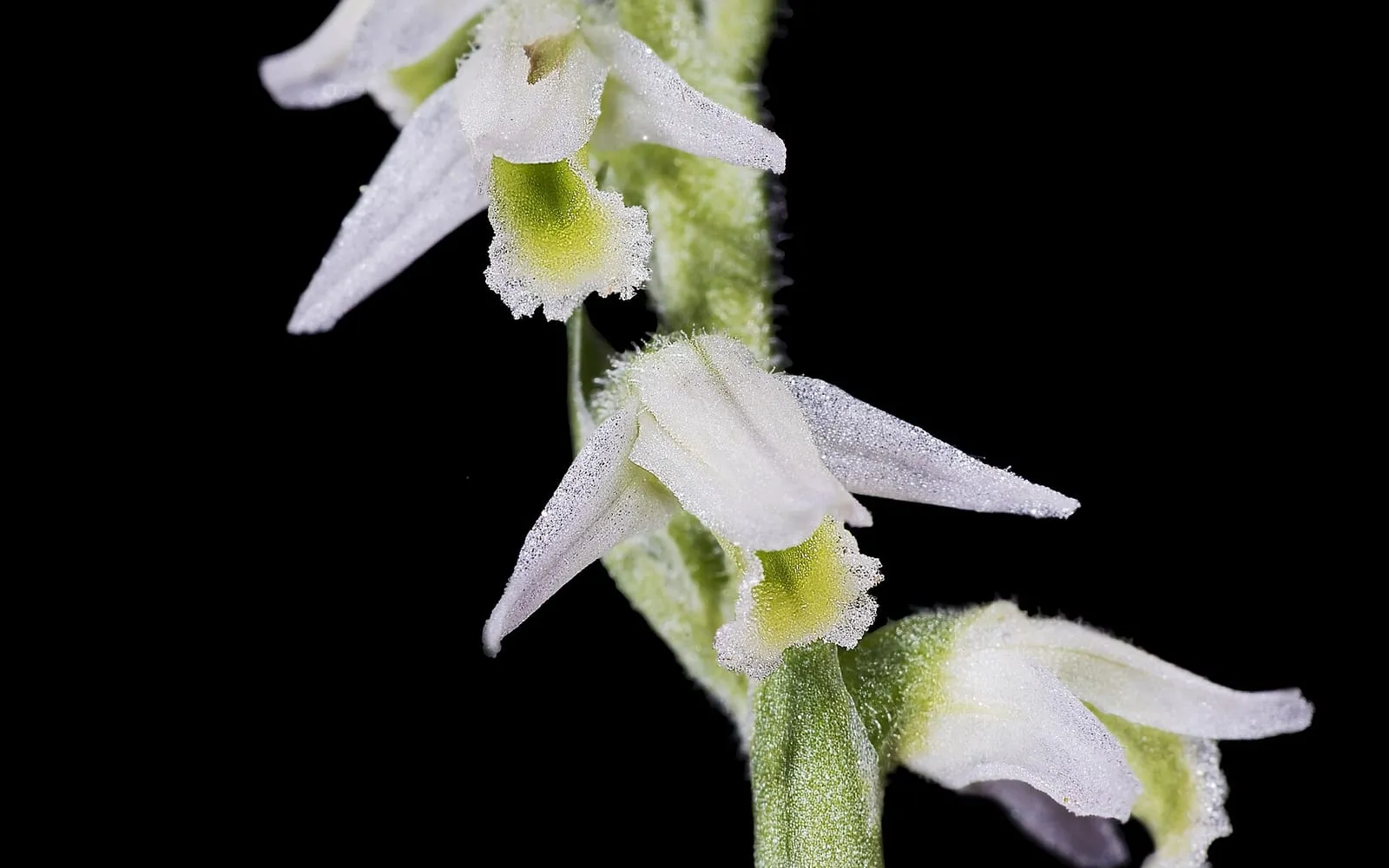
Autumn lady’s tresses is a tiny grassland orchid that many people have walked over without noticing. Each plant sends up a single slender stem, only a hand’s-span high, carrying a neat spiral of small, white, faintly fragrant flowers wound around it like a twist of braided hair, which explains the name. It flowers in late summer and autumn, when few other orchids are out, and can appear suddenly in short turf.
It keeps an unusual rhythm. It is dormant through the summer, flowers in autumn on a leafless stem, and then puts up a small rosette of leaves that sits out the winter and dies back before flowering. It grows in short, lean, free-draining turf, often over lime, and it cannot compete with lush grass, rich soil or feeding, so it is found in old lawns, closely grazed downland and un-improved grassland.
That need for short, lean, undisturbed turf and its soil fungi makes it difficult to establish deliberately, though it sometimes appears on its own in an old, un-fertilised lawn left long enough. It is better suited to a patient naturalist than to a border, and it is most often kept by maintaining the short, unfertilised grass it already likes.
Appearance and character
The flowers are tiny, white and faintly fragrant, wound in a single neat spiral around a slender stem only seven to twenty centimetres high, appearing in late summer and autumn.
The leaves form a small basal rosette that appears after flowering, sits out the winter, and dies back before the next autumn’s flowers, so the plant is leafless when in bloom.
It grows from small tubers in short, lean turf, depending on its soil fungi, and is summer-dormant, keeping a rhythm opposite to most plants.
It is tiny and easily overlooked, with its main interest in the delicate autumn spiral of flowers among short grass.
Where it is from
Spiranthes spiralis grows across Europe and western Asia, in short, lean, free-draining grassland, old lawns, closely grazed downland and dune turf, often over lime, in sun or light shade. It grows in short, un-improved, undisturbed turf.
Give it short, lean, free-draining, often limy turf, sun or light shade, and the soil fungi it depends on. In that setting it is fully hardy. It cannot compete with lush grass, rich or fertilised soil, or disturbance, all of which can make it disappear quickly.
How it grows
It is summer-dormant, flowers on a leafless stem in late summer and autumn, then puts up a winter leaf rosette that dies back before the next flowering. It grows from small tubers in short turf, depending on soil fungi, and increases only slowly.
It is difficult to establish deliberately, but it can be encouraged in an old, un-fertilised lawn or a lean, sunny, free-draining grassy area by mowing high and late, never feeding, and leaving the turf undisturbed so the tubers and fungi are not damaged. It sometimes colonises such turf on its own.
Do not feed, do not disturb the turf, and mow around the flowering time so as not to cut the autumn spikes. Let any seed ripen and fall into the short turf.
Propagation is mainly by leaving it undisturbed to increase and self-seed in suitable turf, since it is very hard to transplant or raise.
Through the seasons
Late summer and autumn bring the leafless flower spikes, with the spiral of white flowers among short grass. Mow around them and never feed.
Winter is when the small leaf rosette appears and survives the cold. Leave the turf undisturbed.
Spring is when the rosette persists, then dies back. Keep the turf short and lean, and do not feed or disturb it.
Summer the plant is dormant below ground. Keep the turf short and lean, and let it dry naturally.
Care difficulty
Difficult, since it needs short, lean, free-draining, undisturbed turf, its soil fungi, and freedom from lush grass, feeding and disturbance, none of which is easy to provide on purpose. It sometimes appears in an old, un-fertilised lawn left suitably short, and the way to keep it is to mow high and late, never feed, and leave the turf undisturbed.
Watering
Rely on rainfall, since it grows in free-draining turf and dislikes rich, wet ground. It needs no watering, and watering or feeding only encourages the lush grass that smothers it.
Its summer dormancy suits dry conditions, and its winter rosette sits out cool, moist weather. Free-draining, lean turf is the key, not any watering regime.
Warning signs, diseases and pests
Loss to lush grass, feeding or disturbance is the most common failure, not a disease. Keep the turf short and lean, never feed it, and do not dig or disturb the ground, since that destroys the tubers and their fungi.
Slugs and snails graze the small flower spikes; there is little to be done in turf but to accept some loss. Rich or wet ground rots the tubers and favours the grasses that out-compete it.
If it disappears, it has almost always been fed, allowed to be smothered by long grass, or disturbed.
Growing environment
Full sun to light shade suits it, in short, open, lean turf. It cannot cope with the shade of lush grass or with rich, fed ground, which smother it.
It is fully hardy and keeps its own summer-dormant, autumn-flowering rhythm, so it belongs in a lawn or grassland, not a pot or a border. Average conditions suit it, on lean, free-draining, often limy ground.
Grow it, or rather encourage it, in short, lean, free-draining, undisturbed turf in sun or light shade, mowed high and late and never fed.
Feeding
Do not feed. It depends on lean, un-improved turf, and any feeding boosts the grasses that smother it. Feeding is the easiest way to lose it.
Keep the ground lean and the grass short and unfed.
Troubleshooting
It disappeared from my lawn. Almost always because the lawn was fed, allowed to grow lush and long, or dug and disturbed. Keep the turf short, lean, un-fed and undisturbed to hold it.
Can I plant it in a border? Not as a rule. It needs short, lean, undisturbed turf and its soil fungi, so it belongs in an old lawn or grassland instead of a cultivated border, and it is very hard to transplant.
When does it flower? In late summer and autumn, on a leafless stem, when few other orchids are out. Its leaf rosette appears afterwards, over winter.
How do I encourage it? In a lean, sunny, free-draining lawn, mow high and late, never feed, and leave the turf undisturbed, and it may colonise or increase on its own.
Is it safe around pets? Yes. Hardy terrestrial orchids are not listed as toxic, so it is safe with cats, dogs and children; its difficulty is in its cultivation, not any hazard.
Autumn Lady's Tresses problem guides
Not sure what is wrong? See the common houseplant pests guide.