
Outdoor plant
Common Spotted Orchid
Dactylorhiza fuchsii
Also known as Spotted orchid
How to grow common spotted orchid, Dactylorhiza fuchsii, in a wildflower meadow or border. Its self-seeding habit, and why mowing time matters.
At a glance
- Difficulty
- Difficult
- Water
- Naturally rain-fed; minimal supplemental watering needed
- Light
- Full sun to light shade
- Hardiness
- USDA 5-8, RHS H6, hardy to -20 C
- Type
- Hardy deciduous terrestrial orchid
- Height
- 20-50 cm
- Native to
- Europe
Fully hardy through ordinary temperate winters, dying back to a pair of underground tubers each year and relying on winter cold as a normal part of its cycle rather than a threat to survive. Its real constraint in cultivation is soil fertility rather than temperature: it establishes far more readily in lean, unimproved meadow-type soil than in a rich, well-fed border.
Hardiness zones describe winter cold alone. Summer heat, humidity, rainfall and the length of the growing season decide as much, so treat the range as the outer limit rather than as a recommendation.
Not known to be toxic
Common spotted orchid has no toxicity listing from the RHS or the ASPCA and is considered safe around pets and children. It has no documented history of poisoning, and its main vulnerability is being accidentally mown or grazed rather than any hazard it poses to others.
Source: RHS
About
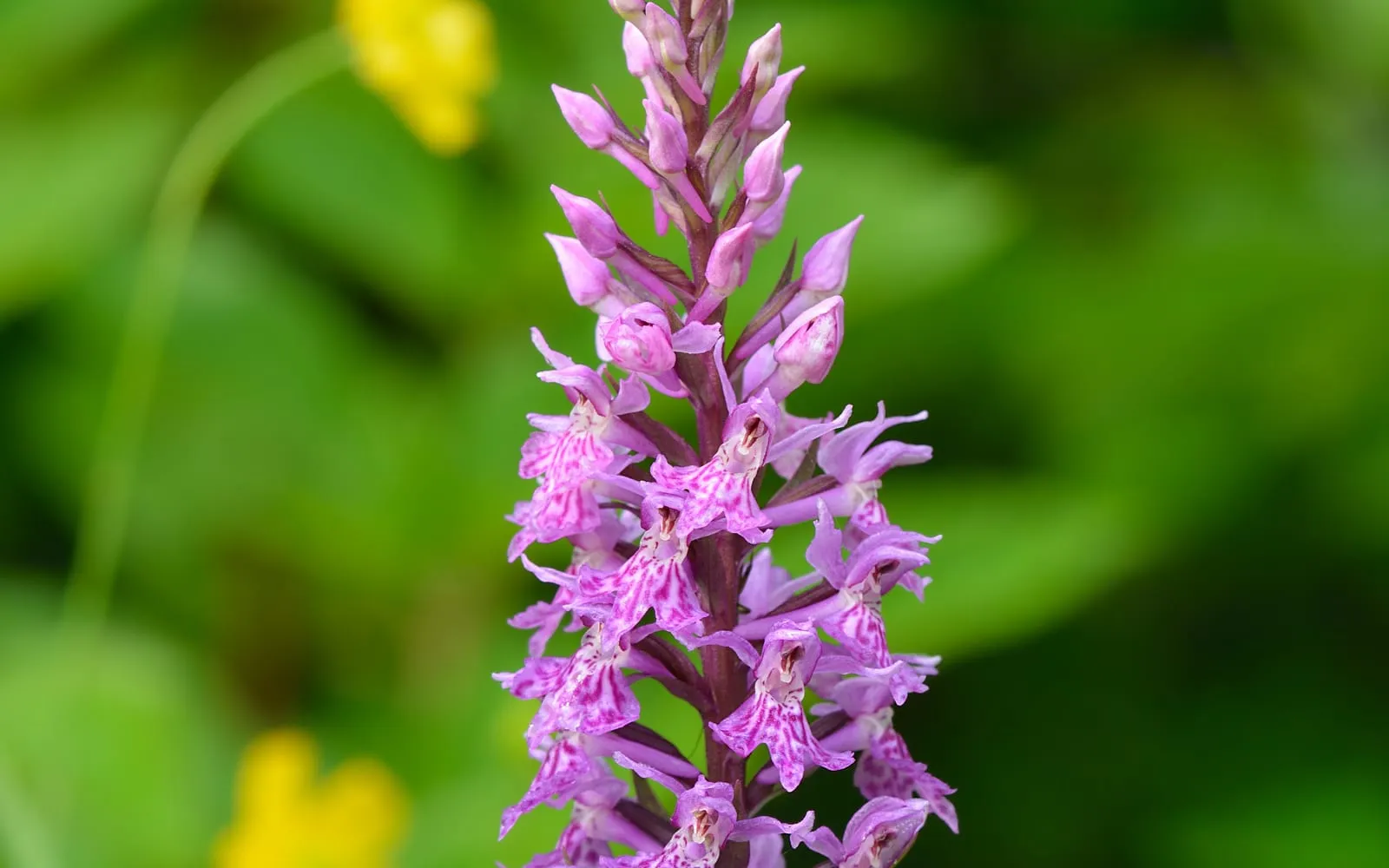
The common spotted orchid is, true to its name, the most widespread and frequently seen wild orchid across much of Europe, turning up in unimproved meadows, road verges, old lawns and even recently disturbed ground with a readiness few other native orchids match. Its pale pink to lilac flower spikes, densely packed with small, intricately marked flowers, and its leaves, spotted or blotched with purple-brown, make it one of the easier wild orchids to recognise at a glance.
Unlike many terrestrial orchids, which are painstaking and unreliable to establish deliberately, this species is a realistic choice for a wildflower meadow or unmown lawn area, provided the underlying soil conditions and mowing regime suit it, which makes it one of the more approachable native orchids for a gardener to try.
Appearance and character
A rosette of narrow, pointed leaves, usually marked with purple-brown spots or blotches, though occasionally unmarked, appears first in spring, followed by a dense, conical flower spike holding many small flowers in shades from pale pink through to a deeper lilac-purple, each one marked with fine, dark loop-like lines on the lip.
Flower spikes vary noticeably in height and colour intensity between individual plants and even between years for the same plant, depending partly on how favourable the growing season has been, and a large, well-established colony often shows considerable variation across its population.
Where it is from
Unimproved grassland, open woodland, road verges, dune slacks and similar lean, undisturbed habitats across Europe, typically on neutral to alkaline soil that has not been enriched with fertiliser.
That preference for lean, unimproved ground is central to how it behaves in cultivation: soil enriched for vegetables or a conventional flower border is generally too rich for this species, favouring vigorous grasses and other competitors that crowd it out before it can establish.
How it grows
Each plant grows from a pair of underground tubers, one supporting the current year’s growth and the other developing to carry the plant through the following year, a structure shared across the wider Dactylorhiza genus. The whole plant dies back completely after flowering and setting seed, disappearing entirely above ground until the following spring.
Where conditions suit it, this species self-seeds readily, and an established colony in a suitable meadow or lawn can expand noticeably over several years from just a handful of original plants, something few other terrestrial orchids achieve so willingly in cultivation.
Through the seasons
Spring the spotted leaf rosette emerges, followed by the developing flower spike.
Summer is the main flowering period, typically peaking in June, after which seed pods develop and eventually split to release vast numbers of dust-fine seeds.
Autumn top growth dies back completely once seed has dispersed.
Winter the plant is fully dormant as underground tubers, hardy to significant cold with no protection needed.
Care difficulty
Difficult to establish deliberately from scratch, though much more forgiving than most terrestrial orchids once it has taken hold in suitable conditions. The main skill is managing the site rather than the individual plant: lean soil, the right mowing regime, and patience while a colony builds from seed matter more than any hands-on care of individual plants.
Watering
This species relies on natural rainfall in an established meadow or lawn setting, and supplemental watering is rarely necessary or advisable except during an unusually severe drought. Overwatering, and the richer, wetter conditions it can create, tends to favour competing grasses over the orchid itself.
Warning signs, diseases and pests
Slugs and snails occasionally graze young leaves in spring, though established plants in a meadow setting are rarely seriously affected. Rabbits and deer can graze off flower spikes before they open, which is more of a concern in a rural or semi-rural garden and is addressed with temporary protection around a valued colony during the flowering season if grazing pressure is high.
The single most common cause of failure has nothing to do with pests. Mowing timed wrongly, cutting a meadow or lawn area before seed has fully dispersed, removes the plant’s main means of spreading and can prevent an establishing colony from ever building up. Delaying the first cut of the season until well after flowers have finished and seed pods have split is essential wherever this species is being encouraged.
Growing environment
Full sun to light shade both suit it, and lean, unimproved, neutral to alkaline soil is the single most important condition for successful establishment. A meadow or rough grass area that has never been heavily fertilised, or one that has had fertility deliberately reduced over several years, offers the best chance of this species taking hold and spreading on its own.
Feeding
None at all, and this is one of the clearest cases among garden plants where feeding actively works against the plant rather than merely being unnecessary. Rich soil favours the vigorous grasses and other plants that outcompete this orchid, so the best action a gardener can take is reducing rather than increasing soil fertility over time.
Troubleshooting
Orchids have appeared in a lawn or meadow without being deliberately planted. This is a good sign of suitable, unimproved soil conditions. Leave them undisturbed, delay mowing until after seed has dispersed, and they may spread further on their own in subsequent years.
A colony has failed to expand despite several seasons of flowering. Check the mowing timing, since cutting before seed pods have split removes the plant’s main means of spreading each year.
Flower spikes have disappeared before opening. Check for grazing by rabbits or deer, and consider temporary protection around a valued colony during the flowering season if this is a recurring problem.
You want to introduce this species to a new area of lawn. Reducing soil fertility over a season or two beforehand, by removing clippings rather than leaving them to rot down, improves the chances of establishment much more than planting into rich, well-fed turf.
You are trying to identify an unfamiliar orchid growing in a lawn. Spotted or blotched leaves and a densely packed, conical flower spike in shades of pink to lilac are the clearest identifying features of this species, though several related Dactylorhiza species look similar enough that a confident identification sometimes needs closer comparison against a regional wildflower guide.