
Houseplant
Downy Rattlesnake Plantain
Goodyera pubescens
Also known as Goodyera pubescens
How to grow Goodyera pubescens, the downy rattlesnake plantain orchid. Its white-netted evergreen leaves, its woodland needs and its hardiness.
At a glance
- Difficulty
- Difficult
- Water
- Keep cool and evenly, lightly moist; never dry or waterlogged
- Light
- Dappled to full shade
- Temperature
- Hardy; cool woodland conditions
- Humidity
- Average to high
- Hardiness
- USDA 4-8, RHS H7, hardy to -25 C
- Type
- Hardy evergreen terrestrial orchid
- Height
- 15 to 40 cm in flower; foliage low
- Native to
- Eastern North America
A hardy evergreen woodland orchid from eastern North America, growing in cool, acidic, humus-rich leaf mould in the deep shade of the forest floor. It is fully hardy but depends closely on cool, shaded, humus-rich conditions and its soil fungi, and it cannot take heat, drought or a warm, dry root run. It is grown for its netted evergreen foliage instead of its modest flowers.
Hardiness zones describe winter cold alone. Summer heat, humidity, rainfall and the length of the growing season decide as much, so treat the range as the outer limit rather than as a recommendation.
Not known to be toxic
Hardy terrestrial orchids such as Goodyera are not listed as toxic by the ASPCA or the RHS, and the leaves have a long folk history of use on the skin. A pet or child that chewed a leaf would be unlikely to come to serious harm beyond a possible mild stomach upset, so the main difficulty is cultivation rather than toxicity.
Sources: ASPCA toxic and non-toxic plants, RHS potentially harmful garden plants
About
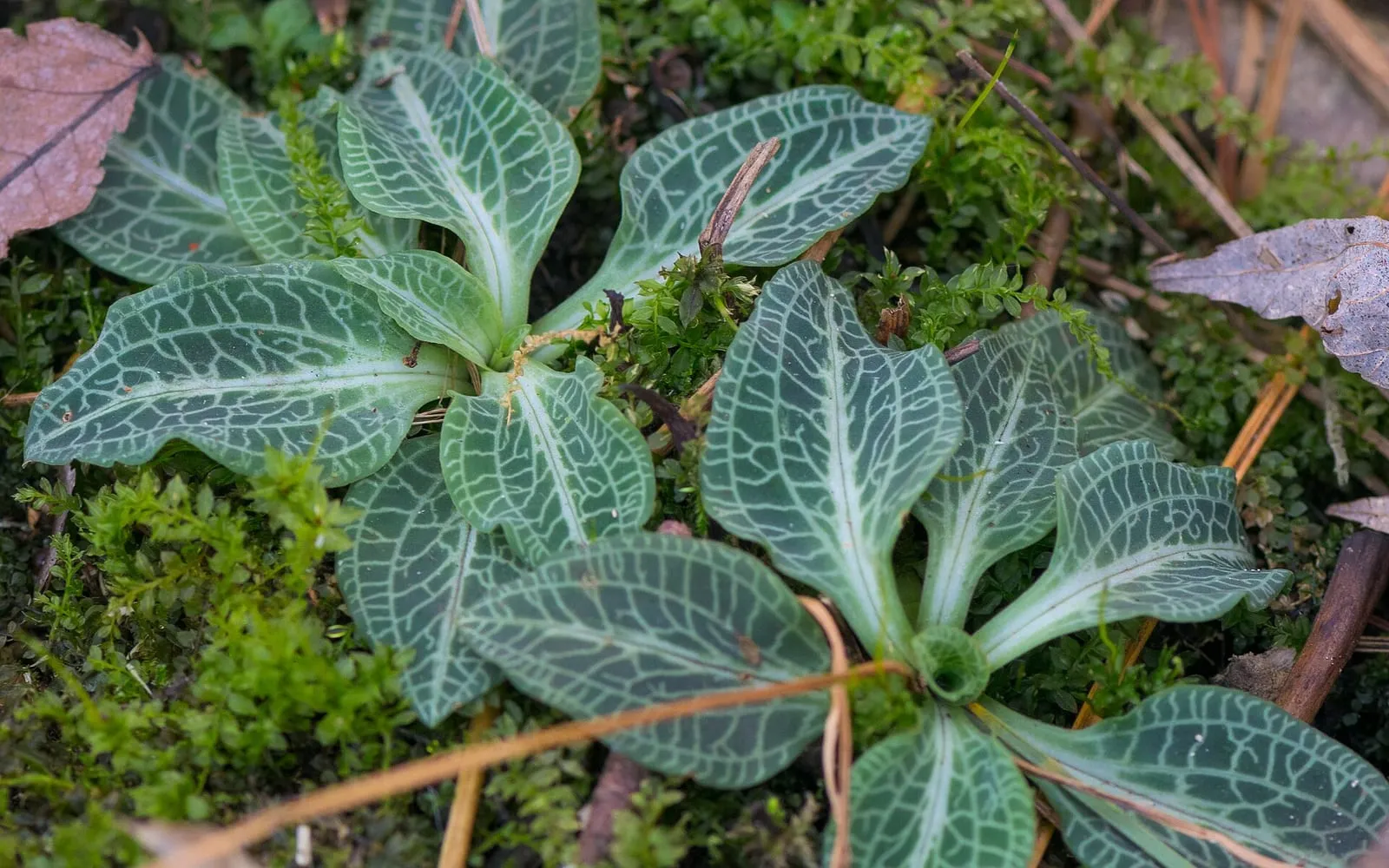
Rattlesnake plantain forms a low, ground-hugging rosette of dark blue-green leaves netted all over with a fine tracery of silvery-white veins, a pattern likened to snakeskin, which gives the plant its name. Evergreen and low, it grows on the shaded forest floor as small patterned rosettes, and sends up a slim spike of small white flowers in summer.
It is a terrestrial woodland orchid from eastern North America, growing in cool, acidic, humus-rich leaf mould in the deep shade of the forest floor. It is fully hardy, but it depends closely on those cool, shaded, humus-rich conditions and on its soil fungi, which makes it one of the more challenging hardy orchids to establish and keep.
Grown in a cool, shaded, acidic, leaf-mould-rich spot, in a woodland garden or a shaded, humus-rich bed, it can be kept for its year-round netted foliage. It responds poorly to heat, drought and disturbance, and it is a plant for the patient woodland grower rather than a quick or easy one. Its main appeal is those finely veined evergreen leaves.
Appearance and character
The leaves are dark blue-green, oval and low, netted all over with a fine tracery of silvery-white veins, forming a ground-hugging evergreen rosette.
The white-veined pattern, likened to snakeskin, is the plant’s main feature, and the rosettes stay low and evergreen through the year.
Its flowers are small and white, in a slim, downy spike held above the foliage in summer, modest and secondary to the leaves.
It spreads slowly by creeping rhizomes into small colonies, and depends closely on the fungi in its cool, humus-rich woodland soil.
Where it is from
Goodyera pubescens grows in eastern North America, on the cool, shaded floor of acidic woodland, in humus-rich leaf mould among tree roots. It is a plant of deep woodland shade and cool, leafy, acidic ground.
Give it dappled to full shade, a cool, acidic, humus-rich, free-draining leaf-mould root run, and its soil fungi. It cannot take heat, drought or a warm, dry root run, and it handles disturbance poorly.
How it grows
It grows slowly through the cooler, moister months, spreading its netted rosettes by creeping rhizomes, and holds its evergreen foliage through winter. It is fully hardy, but depends on cool, humus-rich conditions and its soil fungi, and grows and increases slowly.
Grow it in a cool, acidic, humus-rich, free-draining leaf-mould mix in dappled to full shade, in a woodland garden or a shaded, humus-rich bed, and keep it cool and evenly, lightly moist with rainwater. Do not let the root run warm, dry out or become waterlogged.
Mulch with leaf mould to keep the roots cool and to feed the plant naturally, and disturb it as little as possible, letting a colony build slowly.
Propagation is by careful division of an established colony, keeping soil and fungi around the roots, since it depends on them.
Through the seasons
Spring brings slow fresh growth as the rosettes spread. Keep the root run cool and lightly moist, and mulch with leaf mould.
Summer brings the slim white flower spike. Keep it cool, shaded and evenly, lightly moist, out of any heat.
Autumn growth slows. Keep the leaf-mould mulch topped up and the root run cool and just moist.
Winter leaves the evergreen rosettes in place. Keep the root run cool and only just moist, never warm or waterlogged.
Care difficulty
Difficult, since it depends closely on cool, shaded, acidic, humus-rich woodland conditions and its soil fungi, and does badly in heat, drought and disturbance. Given a cool, leaf-mould-rich, shaded spot it can be kept for its netted evergreen foliage, but it establishes and increases slowly and is unforgiving of a warm, dry or disturbed root run. It suits a patient woodland grower.
Watering
Keep the root run cool and evenly, lightly moist through the year, using rainwater, since it comes from cool, humus-rich woodland and dislikes both drying out and waterlogging. The leaf-mould medium should stay damp but never sodden.
Never let it warm and dry out in growth, or sit warm and stagnant, both of which it cannot survive. Keep it just moist and cool through winter, when the evergreen rosettes persist.
Warning signs, diseases and pests
Warm, wet or stagnant conditions rot the roots, and a warm, dry root run causes slow decline. Keep the root run cool, lightly moist, acidic and humus-rich, and never let it warm or dry out.
Slugs and snails graze the evergreen leaves, especially in shade and damp; protect them. Decline often follows the loss of the soil fungi through disturbance, warmth or drying, so keep the root run cool, undisturbed and rich in leaf mould.
Growing environment
Dappled to full shade suits it, matching the deep woodland floor it comes from. It cannot take sun or heat, which scorch and weaken it, and it holds its foliage best in cool, humid shade.
Average to high humidity and cool, shaded air suit it.
Grow it in a cool, acidic, humus-rich, free-draining leaf-mould mix in dappled to full shade, in a woodland garden or shaded bed, mulched with leaf mould.
Feeding
Feed nothing. It relies on the natural richness of cool leaf mould and its soil fungi, and dislikes fertiliser. A leaf-mould mulch feeds it as it needs.
Keeping the root run cool, acidic, humus-rich and undisturbed matters far more than any feeding.
Troubleshooting
It is slowly declining. Usually the root run has warmed, dried out, or lost its soil fungi through disturbance. Keep it cool, shaded, lightly moist and rich in leaf mould, and disturb it as little as possible.
The roots rotted. Warm, wet or stagnant conditions. Keep the leaf-mould medium cool, lightly moist and free-draining, and never let it sit warm and sodden.
Why is it hard to grow? It depends closely on cool, shaded, acidic, humus-rich woodland conditions and its soil fungi, which are hard to reproduce in cultivation.
Is it grown for its flowers? No, for its foliage. The dark leaves netted with silvery-white veins are the main appeal; the small white flower spike is modest and secondary.
Is it safe around pets? Hardy terrestrial orchids are not listed as toxic, so serious poisoning is not expected. Keep it away from pets that chew, since any plant can cause a mild stomach upset.
Downy Rattlesnake Plantain problem guides
Not sure what is wrong? See the common houseplant pests guide.