
Houseplant
Tuber Sword Fern
Nephrolepis cordifolia
Also known as Fishbone Fern, Erect Sword Fern
How to grow Nephrolepis cordifolia, the tuber sword fern, with upright sword-shaped fronds and water-storing tubers, and why it can become invasive.
At a glance
- Difficulty
- Easy
- Water
- Keep the compost evenly moist
- Light
- Bright indirect light to light shade
- Temperature
- Warm to cool; keep above 5 deg C
- Humidity
- Moderate to high
- Hardiness
- USDA 9-11, RHS H2, hardy to 5 C
- Type
- Evergreen fern from a rhizome, with round tubers
- Height
- 40 to 60 cm
- Native to
- Tropical Asia and Australasia
A tough evergreen fern from tropical Asia and Australasia, hardier and more drought-tolerant than the Boston fern. It grows outdoors in frost-free and nearly frost-free climates and is a resilient houseplant elsewhere, tolerating cooler rooms and drier air than most ferns. That toughness has a cost: in warm climates it escapes gardens and becomes an invasive weed, so it should be grown with care where it is not native.
Hardiness zones describe winter cold alone. Summer heat, humidity, rainfall and the length of the growing season decide as much, so treat the range as the outer limit rather than as a recommendation.
Not known to be toxic
Sword ferns are not listed as toxic by the ASPCA or the RHS, and no harmful compound is recorded in them. A child or pet that chewed a frond would come to no harm beyond the mild upset any leafy material might cause. It is a safe fern to grow around children and animals. The one caution attached to the plant is ecological instead of a matter of poisoning, since it can spread and become a weed in warm climates.
Sources: ASPCA toxic and non-toxic plants, RHS potentially harmful garden plants
About
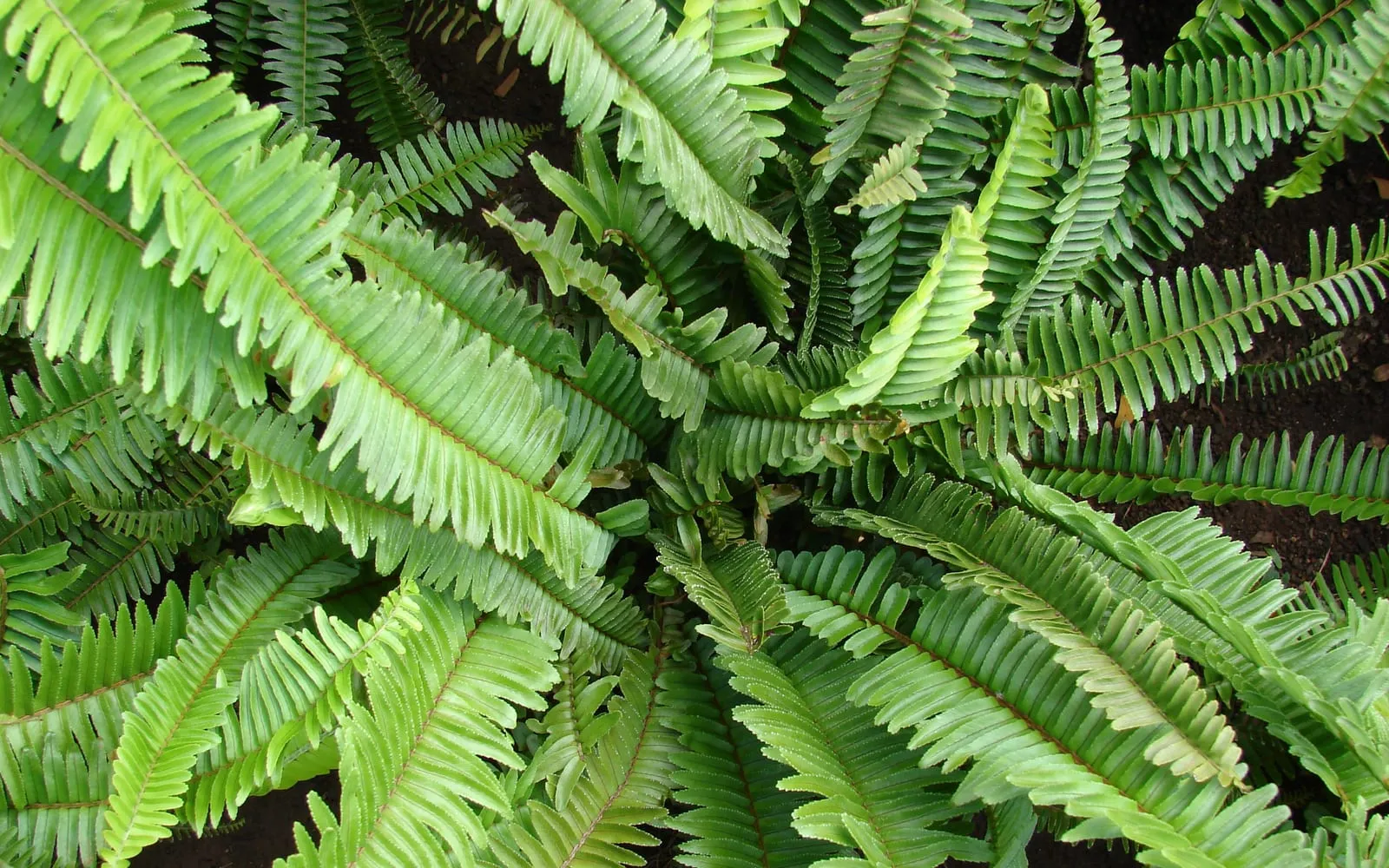
Tuber sword fern carries narrow, upright, sword-shaped fronds made of many small, neat leaflets set in even rows, giving it the other common name fishbone fern. The fronds are stiffer and more erect than the soft, arching ones of the Boston fern, and the plant makes a tidy, upright clump.
It is a close relative of the Boston fern, but tougher in several ways: it puts up with cooler rooms, drier air and the odd missed watering far better, and it stores water in small round tubers on its runners, which is where the name tuber sword fern comes from.
That toughness is also its drawback. In warm, frost-free climates it spreads freely by those tubers and runners and has become an invasive weed in places such as Florida, Hawaii, Australia and New Zealand, so it should be grown in a pot instead of planted out where it is not native.
Appearance and character
Fronds are narrow, upright and sword-shaped, made up of many small, closely set leaflets in even rows along the midrib, mid to bright green and slightly stiff. The regular, herringbone arrangement gives the fishbone-fern look.
The habit is an upright, arching clump, tidier and more erect than the Boston fern, reaching forty to sixty centimetres. It spreads by wiry runners that root as they go.
Small, round, furry tubers form on the runners, storing water and food. These are how the plant survives dry spells and how it spreads, and they let it regrow after a setback.
Like all ferns it reproduces by spores, borne in neat rows on the frond undersides, and it never flowers. The plant is grown for its fresh, upright foliage.
Where it is from
Nephrolepis cordifolia is native to tropical and subtropical Asia and Australasia, where it grows in warm, humid, lightly shaded places, on the ground and on rocks and tree bases. It is used to warmth and moisture but tolerates a fair range.
Give it warmth, moisture and gentle light. It also copes with cooler, drier conditions than most ferns, and in a suitable warm climate it spreads vigorously by its tubers and runners, so it is treated as an invasive weed in several countries.
How it grows
It grows steadily in warmth and moisture, throwing up fresh upright fronds and spreading by runners, and it holds up better than most ferns through cooler or drier spells. Given reasonable conditions it is vigorous and easy.
Pot it in a moist, free-draining, humus-rich mix, and keep the compost evenly moist. It tolerates the occasional dry spell thanks to its water-storing tubers, but it looks best kept steadily moist.
Grow it in bright indirect light or light shade, in a warm to cool room above about 5 deg C. It is a good choice for a spot that is a little cooler or drier than a Boston fern would accept.
Keep it in a pot instead of planting it in open ground in a warm climate, since it spreads and naturalises readily. Divide the clump or pot up rooted runners to make more plants.
Through the seasons
Spring brings a flush of new fronds as light and warmth increase, the best time to divide or repot.
Summer is the main growing season. Keep the compost moist and feed regularly, and the plant sends up fresh fronds and runners.
Autumn growth slows as light falls. Reduce feeding and keep it evenly moist.
Winter the plant rests in lower light. Keep it above about 5 deg C and evenly moist, and expect little new growth until spring.
Care difficulty
Easy, and one of the more forgiving ferns. It tolerates cooler rooms, drier air and the odd missed watering better than most, and its tubers help it recover from a setback. The main things to watch are letting it dry out badly, which browns the fronds, and its readiness to spread outdoors in warm climates. In a pot indoors it is straightforward.
Watering
Keep the compost evenly moist, watering when the surface begins to dry, and the plant grows freshly and steadily. Its water-storing tubers let it survive the odd dry spell better than a Boston fern, though it browns if left dry for long.
Avoid waterlogging as well as drought, and empty any saucer after watering. In winter, when growth slows, let the surface dry a little more between waterings.
Warning signs, diseases and pests
Scale insects sometimes settle on the fronds and stems as small brown bumps with sticky honeydew. Wipe them off and treat with horticultural oil, checking the frond undersides.
Browning, crisping fronds usually mean the plant dried out badly or sat in air that is too dry. Trim off the worst fronds, keep the compost evenly moist, and raise the humidity a little.
The plant’s spreading habit is the other thing to watch, though it is an ecological concern instead of a garden pest. Keep it contained in a pot in warm climates so it does not naturalise.
Growing environment
Bright, indirect light or light shade suits it, matching the lightly shaded places it grows in. It tolerates lower light than many ferns, though deep shade thins it, and direct sun scorches the fronds.
It tolerates a wider range of temperature and humidity than most ferns, coping with cooler rooms and drier air, though it is happiest warm and humid. Keep it above about 5 deg C.
Give it a moist, free-draining, humus-rich mix and keep it in a pot in warm climates. A hanging pot or a plant stand shows off its upright, arching fronds well.
Feeding
Feed monthly through spring and summer with a balanced liquid houseplant feed at half strength, to support fresh frond growth. Ease off in autumn and stop in winter while growth slows.
Fresh compost supplies enough for the first weeks after repotting, and a plant that is not growing needs no feed.
Troubleshooting
How is it different from a Boston fern? It is tougher and more upright. The fronds are stiffer and more erect, it stores water in round tubers, and it tolerates cooler, drier conditions than the soft, arching Boston fern. It also spreads more readily.
Is it invasive? It can be, in warm, frost-free climates, where it spreads by tubers and runners and has naturalised as a weed in several countries. Keep it in a pot instead of planting it out where it is not native.
The fronds are browning and crisping. Usually it dried out badly or the air is too dry. Trim the worst fronds, keep the compost evenly moist, and raise the humidity. It recovers well thanks to its tubers.
There are small brown bumps on the fronds. Scale insects. Wipe them off and treat with horticultural oil, and clean up any sticky honeydew.
What are the little round balls on the runners? Water-storing tubers, a normal and useful feature. They help the plant survive dry spells and are how it spreads, and rooted runners can be potted up to make new plants.
Tuber Sword Fern problem guides
Not sure what is wrong? See the common houseplant pests guide.