
Houseplant
Shining Maidenhair
Adiantum lucidum
Also known as Adiantum lucidum
How to grow Adiantum lucidum, the shining maidenhair fern, with glossy oblong pinnae on pendulous, once-divided fronds.
At a glance
- Difficulty
- Moderate
- Water
- Keep the mix evenly moist, with soft water
- Light
- Bright indirect light
- Temperature
- Warm; keep above about 13 deg C
- Humidity
- High
- Hardiness
- USDA 10-12, RHS H1b, hardy to 12 C
- Type
- Evergreen fern
- Height
- 30 to 50 cm
- Native to
- Tropical America
A glossy-fronded maidenhair from the humid forests of tropical America, growing on shaded, moist banks. It needs warmth, high humidity and bright indirect light, and it will not stand frost or dry air. It is safest above about 13 deg C, and its pinnae dull and brown if the air is dry or the root ball dries out.
Hardiness zones describe winter cold alone. Summer heat, humidity, rainfall and the length of the growing season decide as much, so treat the range as the outer limit rather than as a recommendation.
Not known to be toxic
A safe plant to keep around pets and children. Maidenhair ferns are not listed as toxic by the ASPCA or the RHS, and no harmful compound is recorded in Adiantum. A pet or child that chewed a frond would be unlikely to come to serious harm, so this glossy fern poses no hazard in a home with animals.
Sources: ASPCA toxic and non-toxic plants, RHS potentially harmful garden plants
About
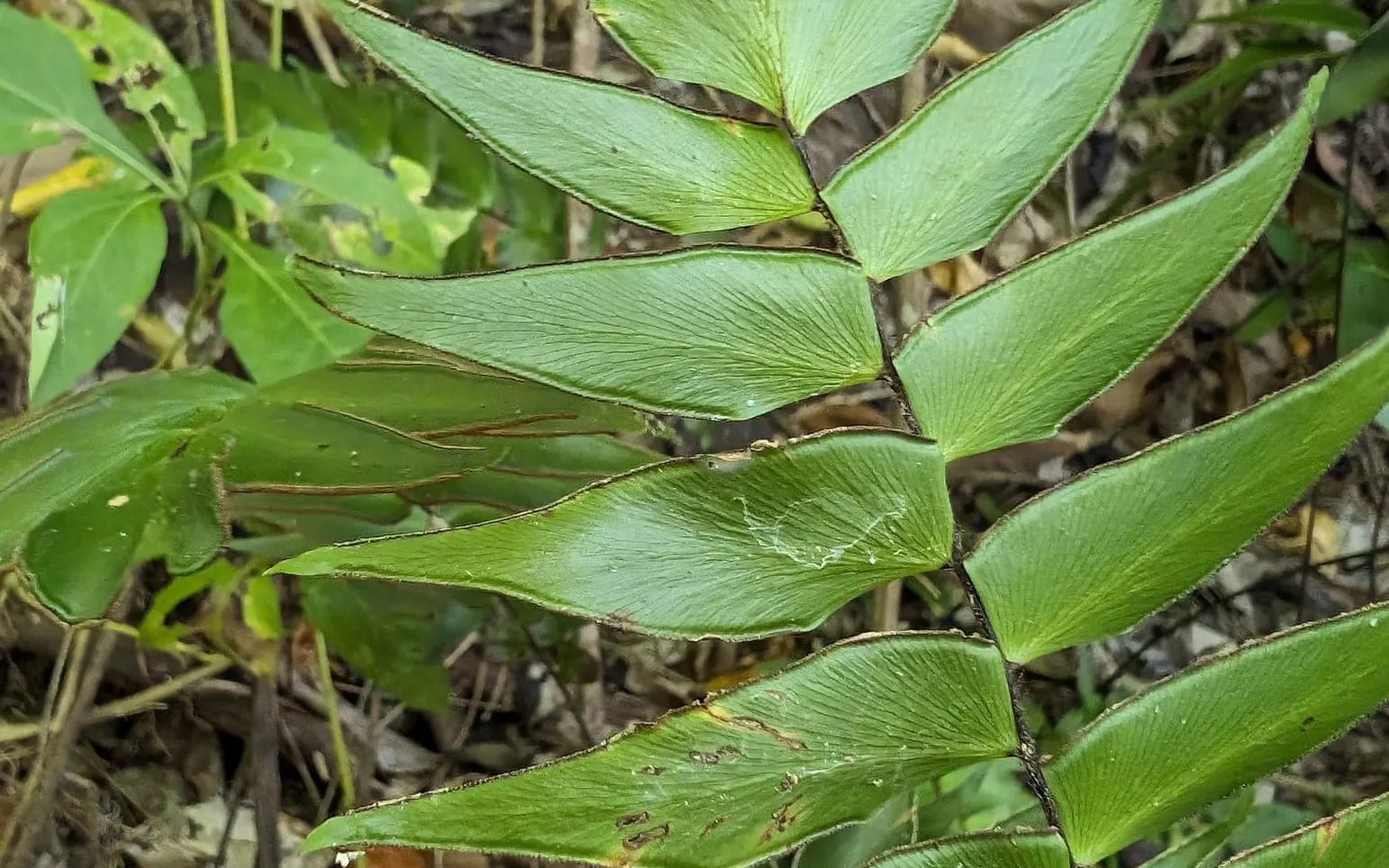
The name refers to the glossy foliage. Adiantum lucidum has once-divided fronds, simpler in shape than the feathery kinds, with oblong, sharp-tipped leaflets of deep glossy green. Those fronds hang on dark, springy stalks, giving the plant a cleaner outline than the fine lace of many maidenhairs.
Because the fronds divide only once, each leaflet is easy to see rather than becoming part of a fine mist of foliage. Growers keep it for that gloss and for the way the fronds spill from a raised or hanging pot.
It comes from humid forest in tropical America, on shaded, seeping banks. That makes it a tender fern that needs warmth, humid air, gentle light and a rootstock kept evenly damp. If the air or pot dries out, the leaflets lose their shine and brown. In a warm, humid and softly lit spot, it keeps its glossy trailing fronds.
Appearance and character
The fronds divide once, with oblong, pointed leaflets of deep glossy green. They arch and hang from dark, wiry stalks instead of fanning out flat.
That gloss on simple, well-spaced leaflets gives it a crisper profile than finely divided maidenhair ferns.
The trailing fronds look best from a raised or hanging pot, where the shining leaflets can hang freely.
Emerging fronds unroll pale before darkening to their glossy green, and the plant builds an arching crown off a short, slow-creeping rhizome.
Where it is from
Adiantum lucidum belongs to the humid forests of tropical America, where it grows on shaded, moist banks and rocks in warm, damp air. Steady warmth, shade and moisture are its natural conditions.
Its needs follow from that habitat. It needs warmth, high humidity, muted indirect light and roots held evenly damp. Frost, chill and dry air all dull the leaflets and turn them brown.
How it grows
Across the warm months it sends out fresh glossy fronds. Growth slows over winter, but the plant can keep its foliage in a warm, humid setting. Humid air and even moisture keep the leaflets glossy. A dry spell browns them.
Plant it in a springy, quick-draining yet retentive peat-free blend, and keep that blend evenly damp with soft water. A raised or hanging pot shows the trailing fronds well.
Keep the light muted and indirect, the warmth above roughly 13 deg C, and the air moist with a tray, a case or a humidifier. Cut off any browned fronds and correct the warmth and moisture, and fresh glossy fronds should follow.
Propagate it by dividing the crown in spring, or from spores.
Through the seasons
Spring brings a run of fresh glossy fronds. Divide it if you want more, restart feeding, and hold the compost damp and the air moist.
Summer is the main growth period. Keep the root run damp, the air humid, the monthly feed going, and the fronds off any direct sun.
Autumn slows growth as daylight fades. Cut back the feed and raise humidity against the drying warmth of heating.
Winter is a slower period. Keep it above about 13 deg C, damp instead of wet, and away from cold draughts.
Care difficulty
This is a moderate fern, close to other tropical maidenhairs in needing warmth, humidity and steady dampness. In those conditions, its glossy trailing fronds stay in good shape. It struggles in dry air, a parched root ball or hard sun, which dull and brown the leaflets. Cold, stagnant wet can rot the roots.
Watering
Water before the surface dries, and use soft water or rainwater. Salts and drought can both make the leaflets lose their gloss and brown. Do not leave this fern dry between drinks.
Avoid a heavy, airless medium that stays sodden, because it can rot the roots. The aim is free drainage with steady dampness. Ease back a little in winter, keeping the medium no more than just damp.
Warning signs, diseases and pests
Dulled, browning leaflets mean the rootstock dried, the air is too dry, or the water is hard. Restore even dampness and humidity, water with soft water, and cut off the worst fronds.
Dry warmth encourages spider mites, which dull the leaflets; raise humidity around the plant and deal with them early. A chilly, sodden, stale medium rots the crown, so keep the blend loose and the plant warm.
Remove browned fronds at the base. Fresh glossy fronds can then grow from the crown.
Growing environment
Muted indirect light suits it. Keep it out of sun, which scorches the leaflets and dulls the gloss. Heavy shade thins the plant, so aim for somewhere bright but sunless.
Warmth above about 13 deg C and humid air keep it glossy. Keep it well away from radiators and cold draughts. A humid, softly lit spot suits it well.
Grow it in an open, moisture-holding, peat-free blend in a raised or hanging pot. Site it where it gets warmth, moist air and gentle brightness.
Feeding
Feed monthly through the growing season with a weak, balanced liquid. Ferns do not need heavy feeding. Ease off through autumn and stop over winter.
An occasional plain-water drench clears any salt build-up. Fresh compost sustains a newly potted or divided plant through its first weeks.
Troubleshooting
The leaflets have lost their shine and are browning. The rootstock dried, the air is too dry, or the water is hard. Restore even dampness and humidity, water with soft water, and cut off the worst fronds.
Why are its fronds simpler than other maidenhairs? It divides its fronds only once, carrying larger glossy oblong leaflets instead of a fine mist of tiny ones, which gives it its bolder, shining look.
The fronds look stippled. Spider mites, drawn in by warm, dry air. Raise humidity and deal with them early.
Can it take direct sun? No. Direct sun scorches the leaflets and dulls the gloss. Keep the light bright but indirect.
Is it safe around pets? Yes. No toxin is on record for the maidenhairs, so cats, dogs and inquisitive children are in no danger from it.
Shining Maidenhair problem guides
Not sure what is wrong? See the common houseplant pests guide.