
Houseplant
Oblique Maidenhair
Adiantum obliquum
Also known as Adiantum obliquum
How to grow Adiantum obliquum, the oblique maidenhair fern, a tropical American fern with lopsided pinnae and arching once-divided fronds.
At a glance
- Difficulty
- Moderate
- Water
- Keep the mix evenly moist, with soft water
- Light
- Bright indirect light
- Temperature
- Warm; keep above about 13 deg C
- Humidity
- High
- Hardiness
- USDA 10-12, RHS H1b, hardy to 12 C
- Type
- Evergreen fern
- Height
- 30 to 50 cm
- Native to
- Tropical America
A maidenhair from the humid forests of tropical America, growing on shaded, moist banks in the West Indies and northern South America. It needs warmth, high humidity and bright indirect light, and it cannot take frost or dry air. It is safest above about 13 deg C, and its pinnae brown if the air is dry or the root ball dries out.
Hardiness zones describe winter cold alone. Summer heat, humidity, rainfall and the length of the growing season decide as much, so treat the range as the outer limit rather than as a recommendation.
Not known to be toxic
A safe plant to keep around pets and children. Maidenhair ferns are not listed as toxic by the ASPCA or the RHS, and no harmful compound is recorded in Adiantum. A pet or child that chewed a frond would come to little harm, so this fern poses no hazard in a home with animals.
Sources: ASPCA toxic and non-toxic plants, RHS potentially harmful garden plants
About
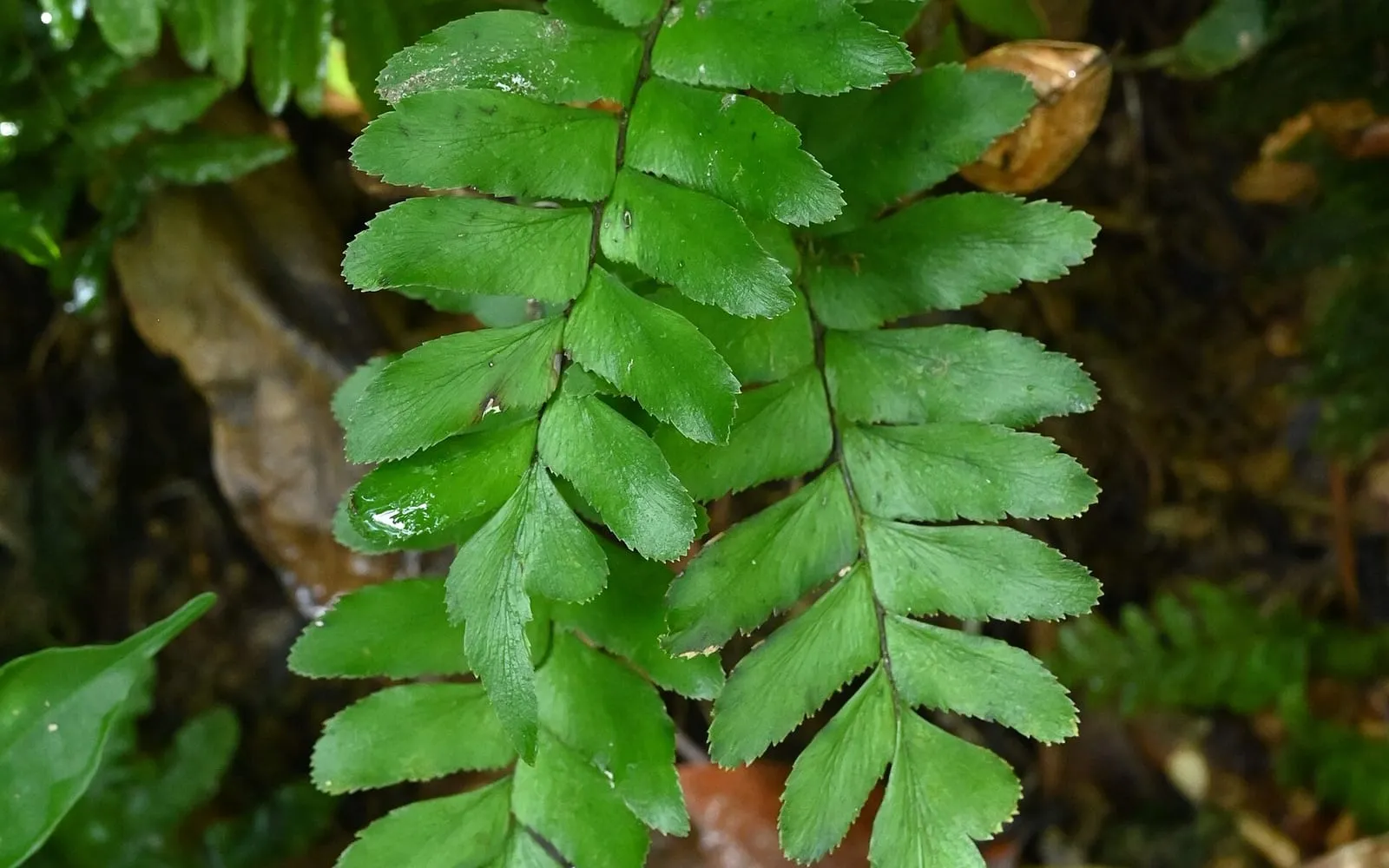
The lopsided pinnae give this fern its name and help separate it from other maidenhairs. The pinnae of Adiantum obliquum attach to their stalks on a skewed base, with one side longer than the other. A once-divided frond therefore looks slightly uneven rather than neatly symmetrical.
Each frond is divided once and carries mid-sized, pointed, burnished-green pinnae along dark, resilient stalks. The plant sits between the finer lace maidenhairs and the broader-panelled kinds. A settled specimen curves outward and looks best when a few fronds hang over the edge of the container.
The species grows through tropical American rainforest, from Caribbean islands into northern South America, on shaded slopes that stay wet. Its requirements match other tender maidenhairs. It needs warmth, high humidity, filtered brightness and roots that stay reliably moist. If the room is dry or the pot dries out, the pinnae turn brown.
Appearance and character
Where a pinna joins its stalk, the base is uneven, with one edge longer than the other. That gives the frond its tilted, asymmetric look.
Fronds are divided once only and sweep outward, carrying mid-sized, pointed, burnished-green pinnae on dark resilient stalks. In size, it sits between the very fine lace ferns and the broad-panelled maidenhairs.
From a short creeping base the plant raises a fountain of arching fronds and looks best where a few of them tip over the rim of a tall pot.
The youngest fronds emerge soft and pale, then stiffen to a lustrous green with age. The fern is grown for foliage alone, since maidenhairs never flower.
Where it is from
Adiantum obliquum ranges across the rainforests of tropical America, through the West Indies and into northern South America. It grows on shady, dripping banks and rock ledges where the air stays damp. Its habitat is warm, shaded and wet.
In cultivation it needs warmth, high humidity, filtered light and a permanently moist rootstock. It has no reserve against frost, a cold snap or dry room air, any of which can turn the pinnae brown.
How it grows
The fern unfurls fresh fronds through the warm part of the year and slows through winter, keeping its leaves if its position stays warm and humid. Heat, damp air and evenly moist roots support growth, while a dry spell browns the pinnae.
Its rooting medium should be loose and peat-free, draining fast but still holding moisture. Water before it dries right through, ideally with softened water. A tall or hanging container gives the arching fronds room to fall.
Filtered daylight, temperatures held past roughly 13 deg C, and moisture in the surrounding air, raised by a gravel tray, a glazed case or a small humidifier, keep it thriving. Trim away anything that has gone brown, keep the heat and damp steady, and replacement fronds arrive from the base.
To make more of it, prise the crown apart in spring, or sow spores under cover.
Through the seasons
Spring starts the crown into growth. Take divisions if you want extra plants, start feeding again, and keep both the medium and the air moist.
Summer brings the strongest growth. Water often enough that the roots never dry, keep the air humid, feed monthly, and shade it from direct sun.
Autumn slows growth as light fades. Reduce feeding and protect the humidity as heating comes on.
Winter is a lull. Hold it past about 13 deg C, on the moist side of dry, and out of the path of any chilling draught.
Care difficulty
Call it moderate, like most tropical maidenhairs. Heat, humid air, filtered light and moist roots give you a shapely arching fern with skewed pinnae. It fails in dry air, a dried-out rootstock or direct sun, all of which discolour the pinnae. Cold, stagnant wet can rot the base.
Watering
Water before the surface dries right through, using rainwater or another soft source if possible, since both mineral salts and drought can spot the pinnae. Treat it as a fern that does badly with any real dry interval.
At the other extreme, a dense, oxygen-starved medium left waterlogged will rot the base, so pair fast drainage with steady moisture. Reduce watering slightly across winter, letting the medium sit only barely moist.
Warning signs, diseases and pests
Discoloured pinnae usually trace to a dried rootstock, dry air or hard tap water. Restore steady moisture and a damp atmosphere, switch to softened water, and remove the worst fronds.
Warm, dry conditions encourage spider mites, which speckle the fronds. Raise humidity and treat them before they spread. A cold, waterlogged, stale medium can rot the base, so keep the mix breathable and the plant warm.
Any frond that has gone brown can be cut at its base, and the crown should produce new ones in time.
Growing environment
Filtered daylight is the target, away from sun that would scorch the pinnae. Too much shade leaves the plant sparse, so place it somewhere bright but shielded.
Temperatures above about 13 deg C and a moist atmosphere keep it healthy. Keep it clear of both heating and chilling draughts. A humid, softly lit spot suits it.
House it in a loose, water-holding, peat-free medium in a tall pot, and stand the whole thing in a warm, damp, gently lit spot such as a glazed case or a cluster of other plants.
Feeding
A dilute, balanced liquid feed once a month through the growing season is enough, since ferns are modest feeders. Reduce it as autumn arrives and withhold it through winter.
Once in a while, run plain water through the pot to rinse out salts. A fresh division lives off its new medium for the first few weeks before feeding restarts.
Troubleshooting
The pinnae are discolouring. A dried rootstock, dry air or hard water. Restore steady moisture and a damp atmosphere, switch to softened water, and remove the worst fronds.
Why do the pinnae look lopsided? Each attaches to its stalk on a skewed foot, one shoulder longer than the other, which marks the species out and gives it the name oblique.
The fronds look speckled. Spider mites, encouraged by warm, dry conditions. Raise the humidity and treat them before they spread.
Can it take direct sun? No. Direct sun scorches the pinnae. Keep the light bright but filtered.
Is it safe around pets? Yes. Nothing poisonous is recorded in the maidenhairs, so a cat, dog or inquisitive child is at no risk beside it.
Oblique Maidenhair problem guides
Not sure what is wrong? See the common houseplant pests guide.