
Houseplant
Fragile Maidenhair
Adiantum fragile
Also known as Adiantum fragile
How to grow Adiantum fragile, the fragile maidenhair fern. Its small, delicate rounded pinnae, its need for constant humidity, and its Caribbean origin.
At a glance
- Difficulty
- Moderate
- Water
- Keep evenly moist at all times, with soft water
- Light
- Bright indirect light
- Temperature
- Warm; keep above about 14 deg C
- Humidity
- High
- Hardiness
- USDA 10-12, RHS H1b, hardy to 13 C
- Type
- Evergreen fern
- Height
- 20 to 35 cm
- Native to
- The Caribbean and tropical America
A tender, delicate maidenhair from the humid forests and shaded limestone of the Caribbean and tropical America. It needs warmth, high humidity and bright indirect light, and it will not stand frost, chill or dry air. It is safest above about 14 deg C, and its thin pinnae drop and brown at the first sign of a dry root ball.
Hardiness zones describe winter cold alone. Summer heat, humidity, rainfall and the length of the growing season decide as much, so treat the range as the outer limit rather than as a recommendation.
Not known to be toxic
A safe plant to keep around pets and children. Maidenhair ferns are not listed as toxic by the ASPCA or the RHS, and no harmful compound is recorded in Adiantum. A pet or child that chewed a frond would be unlikely to have more than a mild stomach upset, so this delicate fern poses no hazard in a home with animals.
Sources: ASPCA toxic and non-toxic plants, RHS potentially harmful garden plants
About
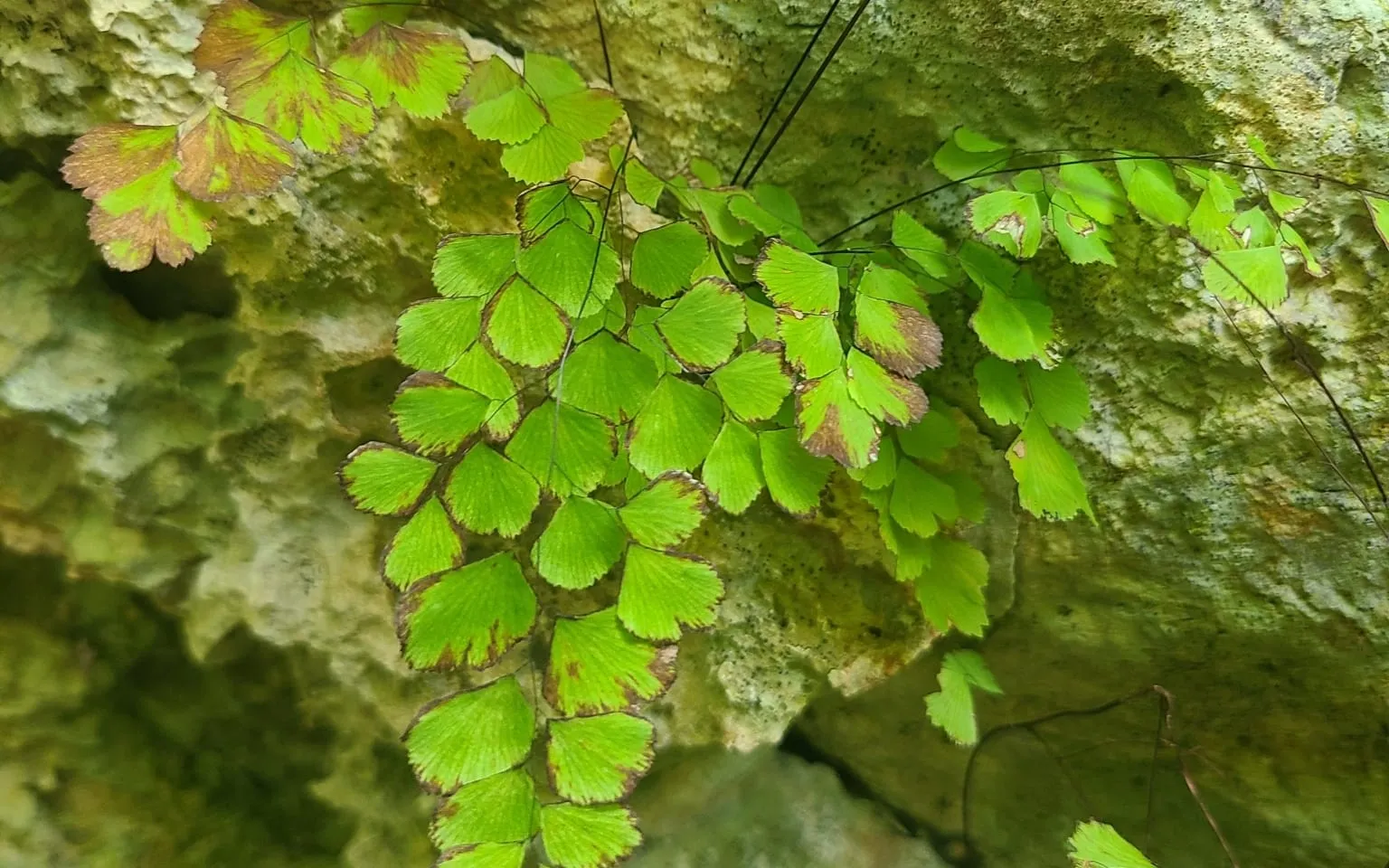
The name fits both the look and the behaviour. Adiantum fragile builds a small, close tuft of delicate fronds, each one cut into little rounded to fan-shaped pinnae of a soft, fresh green on hair-fine black stalks. The fronds shed easily, which explains the common name. It keeps smaller and more compact than most of its tropical relatives, which makes it useful for a terrarium or a small glazed case.
The fronds are thin and easily bruised, and the plant sheds its pinnae without much provocation once the air turns dry or the root ball is left to dry, so it needs steady moisture and humidity. Under cover it can stay neat and full; in a dry room it drops pinnae quickly and thins out.
Its origins lie in the humid forests and shaded limestone crevices of the Caribbean and tropical America, marking it as a tender, heat-loving, moisture-hungry fern. Steady warmth, damp air, soft light and a root ball that never parches keep it healthy. It usually does far better in the sealed humidity of a terrarium than on an exposed windowsill.
Appearance and character
The fronds are small and delicate, cut into little rounded to fan-shaped green pinnae on hair-fine black stalks, and they make a low, close tuft instead of a large or trailing plant.
The whole plant is light and breakable, its thin pinnae shedding easily at a knock or in a dry spell, which is the behaviour that names it.
It stays small and compact, ideally suited to a terrarium, a bell jar or a small sealed case where its frailty is protected.
The newest fronds open soft and pale before turning fresh green, and a settled plant makes a neat, lacy little cushion.
Where it is from
Adiantum fragile grows in the humid forests and on shaded limestone of the Caribbean and tropical America, in warm, moist, sheltered pockets out of the sun. Steady heat, shade and damp are its native conditions.
That home explains its care. It needs warmth, high humidity, gentle indirect light and a root ball held always moist, often over faintly limy ground. It cannot take frost, chill or a dry atmosphere, and a dried root ball makes it cast off its delicate pinnae.
How it grows
Across the warm months it fills out its small tuft with fresh fronds and keeps its foliage year round in a warm, humid case. Steady moisture and damp air keep the fronds intact; drying makes it shed.
Root it in a loose, peat-free mix that drains freely yet stays moist, by preference inside a terrarium or a covered case, and hold that mix constantly moist with soft water. A pinch of ground limestone suits it, echoing its native rock.
Keep it warm over roughly 14 deg C, in gentle indirect light and high humidity, sheltered from draughts. Sealed humidity is the most reliable way to grow it, so a terrarium works better than an open sill.
Increase it by carefully dividing the small crown, or from spores.
Through the seasons
Spring starts fresh, delicate fronds. Divide it if you want more, restart the feeding, and hold the mix constantly moist and the air damp.
Summer is the main growth period. Keep the mix constantly moist, the air humid, feed monthly, and keep the fronds off any direct sun.
Autumn slows growth. Cut the feed back and keep the case or corner damp against the drying warmth of heating.
Winter is a slower period. Hold it above about 14 deg C, evenly moist and humid, sheltered from cold draughts.
Care difficulty
Moderate, edging towards demanding, because it is small, delicate and quick to drop its pinnae once it dries. Given constant warmth, high humidity, gentle light and a root ball that never dries, it grows well. It fails in a dry atmosphere, a parched root run or hard sun, which drop and brown the pinnae, and in cold, motionless wet, which rots it. A terrarium suits it best.
Watering
Hold the mix constantly and evenly moist, watering before the surface dries, and use soft water or rainwater, since the thin pinnae mark easily from salts and drought. A covered case holds the moisture it needs.
A close, airless mix left waterlogged rots the small roots, so set constant moisture on top of fast drainage. Hold it almost as damp through winter, backing off only a little.
Warning signs, diseases and pests
Dropping, browning pinnae point to a dry root ball, dry room air or hard water. Restore constant moisture and humidity, water with soft water, and clear away the bare stalks.
Warm, dry air encourages spider mites that fleck the small pinnae; raise the humidity and treat at once. A cold, waterlogged, stale mix rots the small crown, so keep the mix open and the plant warm.
A plant that has shed badly can be cut back and held warm and humid, and fresh fronds usually return from the crown.
Growing environment
Soft, indirect light suits it, out of the sun that scorches the thin fronds. A spot too dim leaves the tuft sparse, so aim for bright but sunless.
Warmth over about 14 deg C and high humidity are essential, and a terrarium or a covered case supplies the steady humidity it needs. Keep it clear of cold draughts and dry radiator heat.
Grow it in a loose, moisture-holding, peat-free mix with a little ground limestone, standing it in a warm, humid, softly lit case.
Feeding
Give a weak, balanced liquid once a month through the growing season; a strong dose scorches the little rounded pinnae. Ease off through autumn and stop over winter.
Rinse the pot through with plain water now and then to wash out salts, which brown the thin pinnae. A plant just potted or divided can use the nutrients in its fresh mix for the first few weeks.
Troubleshooting
The pinnae are dropping. A dry root ball, dry room air or hard water. Restore constant moisture and humidity, water with soft water, and clear away the bare stalks.
Why is it so small and delicate? It is a naturally compact, thin-fronded species, so it is raised in terrariums and cases where it is protected and the humidity stays high.
The fronds look flecked. Spider mites, which arrive with warm, dry air. Raise the humidity and deal with them at once.
Can it live on an open windowsill? It struggles in open, dry room air; a terrarium or a covered case, kept warm and humid, suits it far better.
Is it safe around pets? Yes. No maidenhair holds a toxin the ASPCA or RHS lists, so a chewed frond should cause no more than a mild stomach upset.
Fragile Maidenhair problem guides
Not sure what is wrong? See the common houseplant pests guide.