
Houseplant
Broadleaf Maidenhair
Adiantum latifolium
Also known as Adiantum latifolium
How to grow Adiantum latifolium, the broadleaf maidenhair fern, a vigorous tropical fern with broad diamond pinnae and a colony-forming habit.
At a glance
- Difficulty
- Moderate
- Water
- Keep evenly moist; never dry out or waterlog
- Light
- Bright indirect light
- Temperature
- Warm; keep above about 13 deg C
- Humidity
- High
- Hardiness
- USDA 10-12, RHS H1b, hardy to 12 C
- Type
- Evergreen fern
- Height
- 25 to 45 cm
- Native to
- Tropical America
A vigorous, spreading maidenhair from the warm forests of tropical America, running through leaf litter and over damp ground to form colonies. It needs warmth, high humidity and bright indirect light, and it cannot take frost or dry air. It is safest above about 13 deg C, and it spreads readily where warm and moist.
Hardiness zones describe winter cold alone. Summer heat, humidity, rainfall and the length of the growing season decide as much, so treat the range as the outer limit rather than as a recommendation.
Not known to be toxic
A safe plant to keep around pets and children. Maidenhair ferns are not listed as toxic by the ASPCA or the RHS, and no harmful compound is recorded in Adiantum. A pet or child that chewed a frond would not be badly harmed, so this fern poses no hazard in a home with animals.
Sources: ASPCA toxic and non-toxic plants, RHS potentially harmful garden plants
About
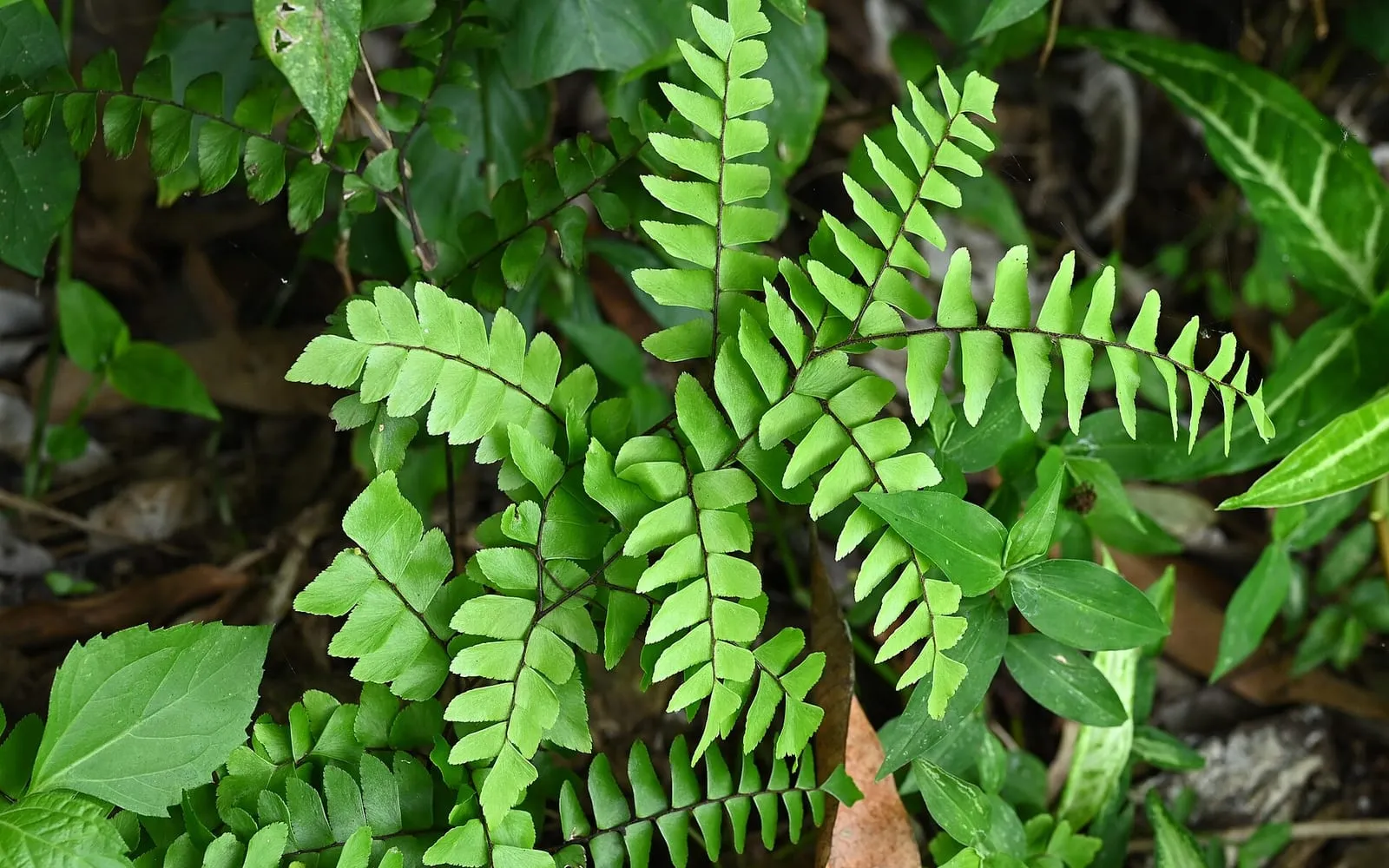
Adiantum latifolium differs from most maidenhairs in two ways a grower notices at once. The pinnae come first: broad rhombic blades several times the size of the little fans most of its relatives have, each one squared off and set well apart along a springy black-brown midrib, so the frond looks open and leafy instead of feathery. Then there is its spreading habit. A slim rhizome creeps just beneath the surface and produces fresh fronds at intervals as it advances, so what began as a single crown becomes a loose, wandering patch.
That spreading habit makes it useful in a wide pan or a heated border. It covers space quickly, and given the chance it will send the rhizome over the rim and into any damp compost within reach. Treat it less as a single specimen and more as a leafy groundcover for a warm, muggy corner where its vigour can be useful.
The plant belongs to the lowland rainforests of tropical America, running through leaf mould and across shaded, dripping banks. Indoors, it needs steady warmth, saturated air and a root zone that never parches. Chilled draughts and a parched atmosphere scorch the broad blades and stop the spread.
Appearance and character
The pinna is the easiest way to identify it, a wide blunt rhombus far larger and more angular than the dainty wedges of an ordinary maidenhair, spaced generously along the dark rachis so daylight passes between the blades.
Growth runs sideways. The buried rhizome advances a little each season and raises new fronds along its length, assembling a spreading stand instead of a tight central rosette.
Because it colonises, even a young plant covers ground fast, filling a shallow bowl and often reaching past the rim to strike roots wherever a node lands on moist compost.
Fronds emerge limp and pale bronze, then firm up and deepen to a mid green as they harden, and a settled colony forms a low leafy sward across the surface of the pot.
Where it is from
The species ranges through the humid lowland forests of tropical America, spreading over damp earth, rotting logs and shaded rock in air that stays wet the year round. It is a plant for warm, sheltered, constantly moist conditions, not open or seasonal ground.
Its needs follow from that background. It needs warmth, saturated air, screened light and a root run held permanently damp, and under those conditions it spreads readily. Frost, cold snaps and a dry indoor atmosphere are outside its range, and each shows first as browned blade margins and a halt to sideways growth.
How it grows
Through the warm half of the year the rhizome pushes on, producing broad-bladed fronds along its route, and it slows when light and warmth fall away in winter. Heat, wet air and unbroken soil moisture drive the expansion, while a spell of drought at the root browns the blades and checks it.
Pot it into a loose, quick-draining yet water-holding peat-free blend, choosing a wide, low pan that gives the rhizome plenty of room to travel. Keep the medium damp with rainwater, and expect it to colonise a broad container noticeably faster than a clumping fern would.
Screen it from direct sun, hold the warmth above roughly 13 deg C, and keep the air around it humid. To contain it, grow it on its own in a broad bowl; to make more of it, lift off a rooted length of rhizome and settle it into fresh compost.
Increase is straightforward from that creeping stem. Sever a section carrying roots and a growing tip and pot it up, or raise a fresh batch from spores if you have the patience.
Through the seasons
Spring starts rhizome growth again. Split off rooted lengths to propagate or to hold the colony in check, and start feeding once new fronds appear.
Summer is the strongest expansion season. Hold the compost damp, keep the surrounding air wet, feed each month, and keep the plant clear of scorching sun.
Autumn slows the sideways travel as daylight shortens. Taper the feed and defend the humidity against the drying pull of heating coming on.
Winter is a resting spell. Keep it above about 13 deg C, damp instead of wet, and shielded from any cold draught sliding under a door or window.
Care difficulty
Rate it moderate, and note that its vigour makes it one of the more forgiving tropical maidenhairs. Warm, humid, softly lit conditions with unbroken root moisture let it spread freely and cover its space. It struggles in a dry atmosphere, a parched root ball or hard sun, all of which brown the broad blades, and in cold stagnant wet, which rots the travelling stem. Its one real quirk is the urge to escape its pot.
Watering
Water before the surface has a chance to dry, since a lapse quickly marks the wide blades, and lean on rainwater because dissolved salts and drought both brown the margins. A spreading plant in a broad, shallow pan drinks steadily through the warm months and needs checking often.
Avoid a heavy, airless medium that stays sodden, since that suffocates and rots the running stem. Free drainage beneath constant dampness is the balance to aim for. Pull back a little over winter, keeping the compost no more than just damp.
Warning signs, diseases and pests
Browning blades usually mean a dry root ball, parched air or hard water. Lift the humidity, restore even root moisture, switch to rainwater, and cut away the worst-marked fronds at the base.
Warm, arid air encourages spider mites; raise the humidity and act at the first stippling. A cold, waterlogged, airless medium rots the rhizome, so keep the blend open and the plant warm.
Escaping the pot is normal. Lift and divide the rhizome to keep the colony within bounds, or to start new plants where you want them.
Growing environment
Screened light suits it, out of the sun that would scorch the broad pinnae. Deep gloom thins the colony and slows the creep, so aim for a bright but sunless spot.
Warmth above about 13 deg C and a wet atmosphere keep it expanding, kept well away from radiators and any chilly draught. A heated conservatory or a steamy room works well.
Set it in an open, moisture-holding, peat-free blend in a wide, low pan that gives the rhizome room to run, and site the pot where warmth, damp air and gentle brightness meet.
Feeding
Offer a weak, balanced liquid feed once a month across the growing season, since ferns use nutrients lightly. Reduce feeding through autumn and hold off entirely in winter.
Now and then flush the pot with plain water to wash out any build-up of salts. A freshly divided length of colony lives off its new compost for the first several weeks before it needs feeding.
Troubleshooting
It is spreading everywhere. That is the running habit. Grow it alone in a broad pan, and lift and divide the rhizome to hold it in check or to raise more plants.
The blades are browning. A dry root ball, arid air or hard water. Raise the humidity, keep the root run evenly damp, use rainwater, and trim the worst fronds.
Why are its pinnae so broad? The wide rhombic pinnae are what mark the species out, several times larger and far more angular than the small fans other maidenhairs carry.
The fronds look stippled. Spider mites, brought on by warm, dry air. Lift the humidity and treat at the first sign.
Is it safe around pets? Yes. Maidenhair ferns have no listed toxin, so it sits safely alongside cats, dogs and children.
Broadleaf Maidenhair problem guides
Not sure what is wrong? See the common houseplant pests guide.