
Houseplant
Diamond Maidenhair
Adiantum trapeziforme
Also known as Adiantum trapeziforme, Giant Maidenhair
How to grow Adiantum trapeziforme, the diamond maidenhair fern, a showy tropical maidenhair with large trapezium-shaped pinnae and bold arching fronds.
At a glance
- Difficulty
- Moderate
- Water
- Keep evenly moist; never dry out or waterlog
- Light
- Bright indirect light
- Temperature
- Warm; keep above about 13 deg C
- Humidity
- High
- Hardiness
- USDA 10-12, RHS H1b, hardy to 12 C
- Type
- Evergreen fern
- Height
- 45 to 90 cm
- Native to
- Tropical America
A large, showy maidenhair from the warm forests of tropical America, among the biggest and boldest of its kind. It needs warmth, high humidity and bright indirect light, and it cannot take frost or dry air. It is safest above about 13 deg C, and its big fronds brown at the edges if the air is dry or the root ball dries out.
Hardiness zones describe winter cold alone. Summer heat, humidity, rainfall and the length of the growing season decide as much, so treat the range as the outer limit rather than as a recommendation.
Not known to be toxic
A safe plant to keep around pets and children. Maidenhair ferns are not listed as toxic by the ASPCA or the RHS, and no harmful compound is recorded in Adiantum. A pet or child that chewed a frond would be unlikely to have more than a mild stomach upset, so this bold fern poses no hazard in a home with animals.
Sources: ASPCA toxic and non-toxic plants, RHS potentially harmful garden plants
About
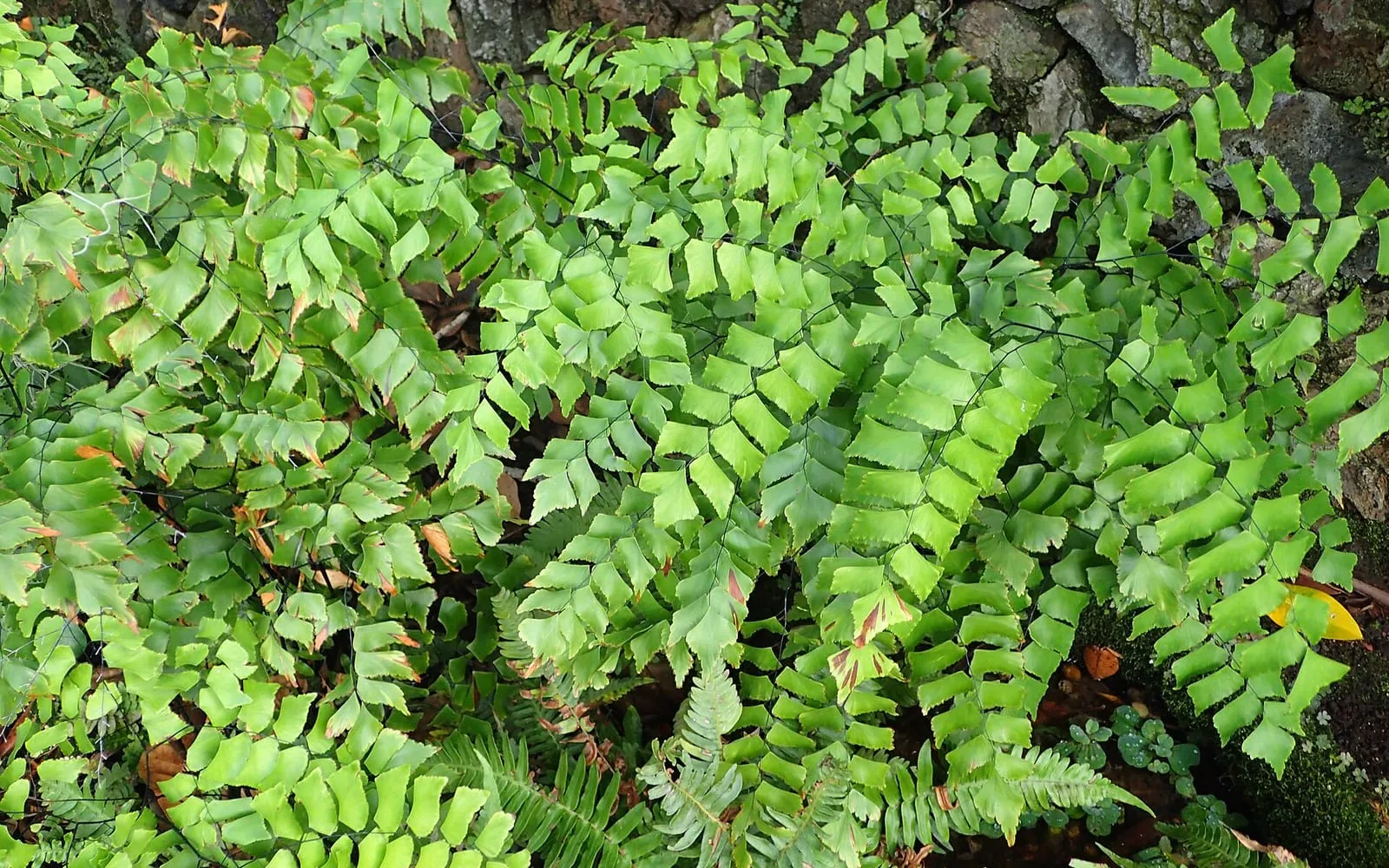
Adiantum trapeziforme is much larger and bolder than most maidenhair ferns. Its leaflets are the largest of any garden maidenhair, each a glossy, four-sided panel a few centimetres across, faintly lopsided and strung out along dark, cane-like stalks into fronds that arch up and outward to knee height or beyond. The plant has large, structured fronds rather than the fine lace of smaller maidenhairs.
Those big quadrilateral leaflets are exactly what the epithet trapeziforme records, and they earn the plant its shop names of diamond and giant maidenhair. The fronds spread as they lengthen, layering over one another so that a grown specimen builds a bold, tiered dome of green leaflets that can sit beside far larger foliage plants.
Despite its size, its origins in the warm rainforests of tropical America make it a tender, moisture-demanding fern. It needs heat, wet air, muted light and a rootstock kept reliably damp. The larger a frond, the faster it sheds water, so a parched pot or a dry room shows at the leaflet edges within a day or two. Meet its needs in a warm, humid, gently lit spot and it makes a strong foliage plant.
Appearance and character
The leaflets are the main feature. Each is a large glossy trapezium several centimetres across, several times the size of an ordinary maidenhair fan, ranged along stiff dark stalks.
Fronds grow long and arching, cresting at knee height or more, so the plant assembles a bold layered dome instead of a low delicate tuft.
That combination of size and broad, angular leaflets makes it one of the boldest members of the genus.
New fronds unroll pale and coppery, hardening to a lustrous green as they expand, and the crown thickens slowly into a substantial clump over several seasons.
Where it is from
Adiantum trapeziforme grows through the warm forests of tropical America, on shaded, dripping banks and among rocks where the air stays moist around the clock. Constant heat, shade and damp are the conditions it needs.
Its care follows that habitat. Give it warmth, a wet atmosphere, subdued indirect light and a root run kept evenly damp. Frost, cool spells and dry indoor air all damage it, and the broad fronds show stress early by browning along their outer edges.
How it grows
The clump produces its long arching fronds through the warmer months and slows through winter, holding its foliage year round wherever the air stays warm and humid. Heat, moisture in the air and unbroken dampness at the root keep the big fronds crisp; dry air scorches them at the margins.
Grow it in a springy, quick-draining yet retentive peat-free blend, in a pot generous enough for its bulk, and water with rainwater a shade more freely than you would a small maidenhair because those large fronds lose water so fast.
Keep the light soft and indirect, the warmth above roughly 13 deg C, and the humidity high with a tray, a humidifier or a group of neighbouring plants. Its size makes it a good floor or table specimen for a warm room or a heated conservatory.
Make more by splitting the crown in spring, or raise fresh plants from spores.
Through the seasons
Spring starts the strongest flush of new fronds. Divide it now if you want more, begin feeding, and hold the compost evenly damp and the air moist.
Summer is the peak of growth. Keep the root run damp, the atmosphere humid and the monthly feed going, and keep the fronds off any direct sun.
Autumn slows growth as the days shorten. Reduce feeding and raise the humidity against the drying warmth of heating switched back on.
Winter brings a rest. Hold it above about 13 deg C, damp instead of saturated, and clear of cold draughts that would spoil the large fronds.
Care difficulty
Moderate, and in its needs much like the other tropical maidenhairs, though its size means a dry atmosphere shows on those broad fronds sooner than on a small-leaved kind. Warmth, high humidity, gentle light and steady root dampness produce a large, healthy plant. It fails in dry air, a parched root ball or hard sun, all of which brown the wide leaflets, and in cold, stagnant wet, which rots the rootstock.
Watering
Water ahead of the surface drying, and rather more generously than for a small maidenhair, because the sizeable fronds transpire heavily through a warm day. Use rainwater, since salts and drought each scorch the leaflet margins.
Never let the blend turn to a dense, airless sludge, which rots the roots; free drainage under steady dampness is the target. Trim the watering back a little in winter, keeping the medium no wetter than just damp.
Warning signs, diseases and pests
Browning leaflet edges are the first warning sign, usually meaning dry air, a dry root ball or hard water, and they show fast on such broad fronds. Raise the humidity, restore even dampness, water with rainwater, and cut off the worst-affected fronds.
Warm, dry air brings on spider mites; lift the humidity and treat at the first stippling. A cold, waterlogged, airless medium rots the roots, so keep the blend open and the plant warm.
A frond that has browned badly is best removed at the base, and the crown should replace it with fresh growth when conditions improve.
Growing environment
Soft indirect light is what it needs, kept out of direct sun that would sear the large leaflets. Heavy shade thins the clump, so settle it somewhere bright but sunless.
Warmth above about 13 deg C and a humid atmosphere are essential for a tender rainforest fern carrying such thirsty fronds. Keep it clear of cold draughts and the dry heat of radiators.
Plant it in an open, moisture-holding, peat-free blend in a roomy pot, and stand it in a warm, humid, gently lit room or conservatory where it has space to spread.
Feeding
Feed once a month across the growing season with a weak, balanced liquid, since ferns feed lightly. Ease off through autumn and stop over winter.
An occasional plain-water drench flushes any accumulated salts from the pot. Fresh compost carries a newly potted or divided plant through its first weeks without extra feeding.
Troubleshooting
The frond edges are browning. Dry air, a dry root ball or hard water, and it shows quickly on the big fronds. Raise the humidity, hold the root run damp, water with rainwater, and trim the worst fronds.
Why are its pinnae so big? The large trapezium-shaped leaflets are the species’ hallmark, far bigger than any other maidenhair’s, and the reason it goes by diamond or giant maidenhair.
The fronds look stippled. Spider mites, brought on by warm, dry air. Raise the humidity and treat at the first sign.
Can it take direct sun? No. Direct sun sears the large leaflets. Keep the light bright but indirect.
Is it safe around pets? Yes. Maidenhair ferns have no listed toxin, so it is safe with cats, dogs and children.
Diamond Maidenhair problem guides
Not sure what is wrong? See the common houseplant pests guide.