
Houseplant
Polished Maidenhair
Adiantum concinnum
Also known as Adiantum concinnum, Brittle Maidenhair
How to grow Adiantum concinnum, the polished maidenhair fern, a delicate tropical fern with finely cut drooping fronds that needs humid shade.
At a glance
- Difficulty
- Moderate
- Water
- Keep evenly moist at all times, with soft water
- Light
- Bright indirect light
- Temperature
- Warm; keep above about 13 deg C
- Humidity
- High
- Hardiness
- USDA 10-12, RHS H1b, hardy to 13 C
- Type
- Evergreen fern
- Height
- 30 to 45 cm
- Native to
- Tropical America
A delicate maidenhair from the humid forests of tropical America, growing in shaded, moist, sheltered places. It needs warmth, high humidity and bright indirect light, and it cannot take frost, chill or dry air. It is safest above about 13 deg C, and its brittle fronds shatter and brown if the root ball dries or the air is dry.
Hardiness zones describe winter cold alone. Summer heat, humidity, rainfall and the length of the growing season decide as much, so treat the range as the outer limit rather than as a recommendation.
Not known to be toxic
A safe plant to keep around pets and children. Maidenhair ferns are not listed as toxic by the ASPCA or the RHS, and no harmful compound is recorded in Adiantum. A pet or child that chewed a frond would come to no serious harm, so this delicate fern poses no hazard in a household with animals.
Sources: ASPCA toxic and non-toxic plants, RHS potentially harmful garden plants
About
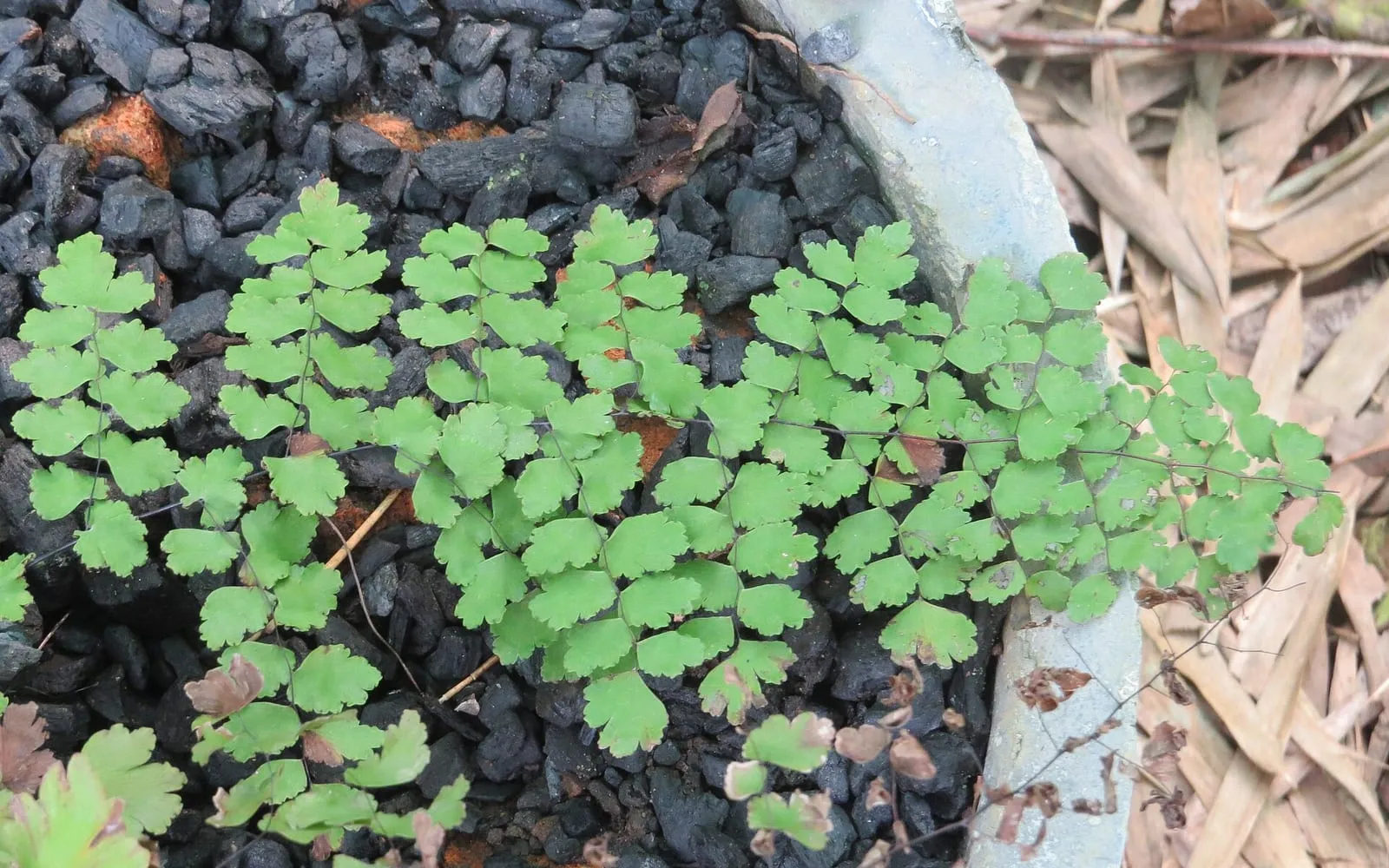
Few maidenhairs are cut as finely as this one. Adiantum concinnum carries broadly triangular fronds divided over and over into a mass of small, glossy, wedge-shaped pinnules, and they curve and hang from thread-fine black stalks. The second name, brittle maidenhair, is a useful warning, because the tissue is papery-thin and breaks up at a careless touch or after a short dry spell.
The polish of the name is the gloss on those minute pinnules, strongest on new growth, and a mature plant droops well from a raised pot or a shelf edge. It is one of the finest-textured maidenhairs a grower can keep.
Coming from the humid forests of tropical America, it is a warm-, shade- and moisture-loving fern that should not dry out. Heat, damp air, gentle light and roots kept always moist keep it healthy; a single dry spell browns the brittle fronds and crumbles them. It thrives far better in the humidity of a terrarium or a bathroom than in an open, dry room.
Appearance and character
The fronds are broadly triangular and dissected many times into small, glossy, wedge-shaped pinnules that arch and droop on thread-fine black stalks.
That gloss on the tiny pinnules, brightest on fresh growth, is what gives the plant its polished name.
The tissue is papery and brittle, breaking up at a rough touch or in a dry snap, so the plant needs gentle handling and steady moisture.
The youngest fronds unfurl pale and coppery before they turn green, and a settled specimen mounds up into a soft, drooping plant.
Where it is from
Adiantum concinnum grows in the humid forests of tropical America, in shaded, moist, sheltered corners on banks and among rocks close to running water. It is adapted to constant warmth, shade and damp air.
Its care follows from that habitat. Warmth, high humidity, softly filtered light and roots that stay evenly damp are its basic requirements. It does not tolerate frost, a cold snap, dry air or a dried root run; each can brown and break the brittle fronds.
How it grows
Fresh fronds rise all through the warm season, and the plant slows in winter while it keeps its foliage in a warm, humid corner. High humidity and steady moisture keep it healthy; even a short drought can crumble it.
Plant it in a loose, peat-free medium that drains freely yet stays moist, and keep that medium constantly moist with soft water. A raised or hanging pot suits the drooping fronds.
Give it gentle indirect light out of the sun, warmth over roughly 13 deg C, and moist air from a case, a tray or a humidifier. If fronds shatter or brown, cut them away and keep the plant warm and damp, and it can reshoot.
To make more of it, split the crown as spring growth begins, or grow it from spores if you are prepared to wait longer.
Through the seasons
Spring starts fresh growth. Split the crown for extra plants, resume feeding, and keep the medium saturated and the surrounding air moist.
Summer is the main growth period. Keep the medium constantly moist, the air humid, the monthly feed running, and the fronds well out of the sun.
Autumn slows growth as the light drops. Cut the feed back and lift the humidity against the drying warmth of heating.
Winter is a quiet period. Hold it above about 13 deg C, the medium damp and the air humid, and screen it from any cold draught that would crisp the fronds.
Care difficulty
Moderate, and close to demanding, because the papery, glossy fronds shatter as soon as the roots dry or the room turns arid. Given constant warmth, high humidity, gentle light and roots that never dry, it is a healthy, finely cut fern. It fails in a dry atmosphere, a parched root run or hard sun, which crumble and brown the fronds, and in cold, motionless wet, which rots it. It belongs in a humid, sheltered spot.
Watering
Hold the medium constantly and evenly moist, watering before the surface dries at all, and use soft water or rainwater, since the fine pinnules brown from salts and even a brief drought. This is no fern to leave dry between drinks.
It must not stand waterlogged either, since a dense, airless medium rots the roots, so set constant moisture against fast drainage. A drooping plant in a raised pot dries faster at the surface than a squat tuft, so check it often, and keep it almost as damp through winter, easing off only a little.
Warning signs, diseases and pests
Shattering, browning fronds usually mean the root run dried, the air is too arid, or the water is hard. Bring back constant moisture and humidity, water with soft water, and cut off the ruined fronds.
Warm, arid air encourages spider mites that speckle the fine glossy pinnules; lift the humidity and act at once. A cold, waterlogged, stale medium rots the roots, so keep the medium open and the plant warm.
A plant that has browned badly is often not dead; cut it down, keep it warm and damp, and fresh fronds usually follow.
Growing environment
It needs soft, indirect light, out of the direct sun that scorches the brittle fronds and away from the deep shade that draws them thin and dulls the gloss. A bright corner with no sun on it is ideal.
Warmth over about 13 deg C and high humidity are essential for a tender rainforest fern. Keep it clear of cold draughts and radiators, and lift the humidity in a dry room.
Grow it in a loose, moisture-holding, peat-free medium, standing it in a warm, humid, softly lit spot such as a terrarium, a bathroom or a group of plants.
Feeding
A weak, balanced liquid once a month through the growing months supports new fronds; a strong dose scorches the fine glossy pinnules. Ease the feed back through autumn and stop for winter.
Now and then, flush the pot through with plain water to wash out built-up salts, which quickly brown the thread-fine pinnules. A plant just potted or divided draws on its fresh medium for the first few weeks and needs no feed.
Troubleshooting
The fronds are shattering and browning. The root run dried, the air is too arid, or the water is hard. Bring back constant moisture and humidity, water with soft water, and cut off the ruined fronds.
It dried out and looks dead. It often is not. Cut it down, keep it warm and damp, and fresh fronds usually shoot again from the crown.
Why is it so fussy? Its papery, brittle fronds cannot bear drying, so it needs the constant moisture and humidity an open, dry room rarely holds; a terrarium or a bathroom suits it far better.
The fronds look flecked and dull. Spider mites, which appear when warm air runs dry. Lift the humidity and deal with them at once, before they damage more fronds.
Is it safe around pets? Yes. Adiantum carries no recorded toxin, so a nibbled frond does no harm to a cat, dog or child.
Polished Maidenhair problem guides
Not sure what is wrong? See the common houseplant pests guide.