
Houseplant
Rosy Maidenhair Fern
Adiantum hispidulum
Also known as Adiantum hispidulum, Rough Maidenhair
How to grow Adiantum hispidulum, the rosy maidenhair fern, a tougher maidenhair with hand-shaped fronds and rosy-bronze new growth.
At a glance
- Difficulty
- Moderate
- Water
- When the surface just dries; steady but not sodden
- Light
- Bright indirect light, tolerating a little gentle sun
- Temperature
- Warm to cool; keep above about 7 deg C
- Humidity
- Average to high
- Hardiness
- USDA 9-11, RHS H2, hardy to 5 C
- Type
- Evergreen fern
- Height
- 20 to 40 cm
- Native to
- The Old World tropics and Australasia
A tougher maidenhair from the Old World tropics and Australasia, growing on banks, rock and open ground in dappled light. Hardier and more sun- and drought-tolerant than most maidenhairs, it takes cooler, brighter, drier conditions and even a little gentle sun, though it is safest above about 5 deg C and still browns if baked dry.
Hardiness zones describe winter cold alone. Summer heat, humidity, rainfall and the length of the growing season decide as much, so treat the range as the outer limit rather than as a recommendation.
Not known to be toxic
A safe plant to keep around pets and children. Maidenhair ferns are not listed as toxic by the ASPCA or the RHS, and no harmful compound is recorded in Adiantum. A pet or child that chewed a frond would be unlikely to come to serious harm, so this fern poses no hazard in a home with animals.
Sources: ASPCA toxic and non-toxic plants, RHS potentially harmful garden plants
About
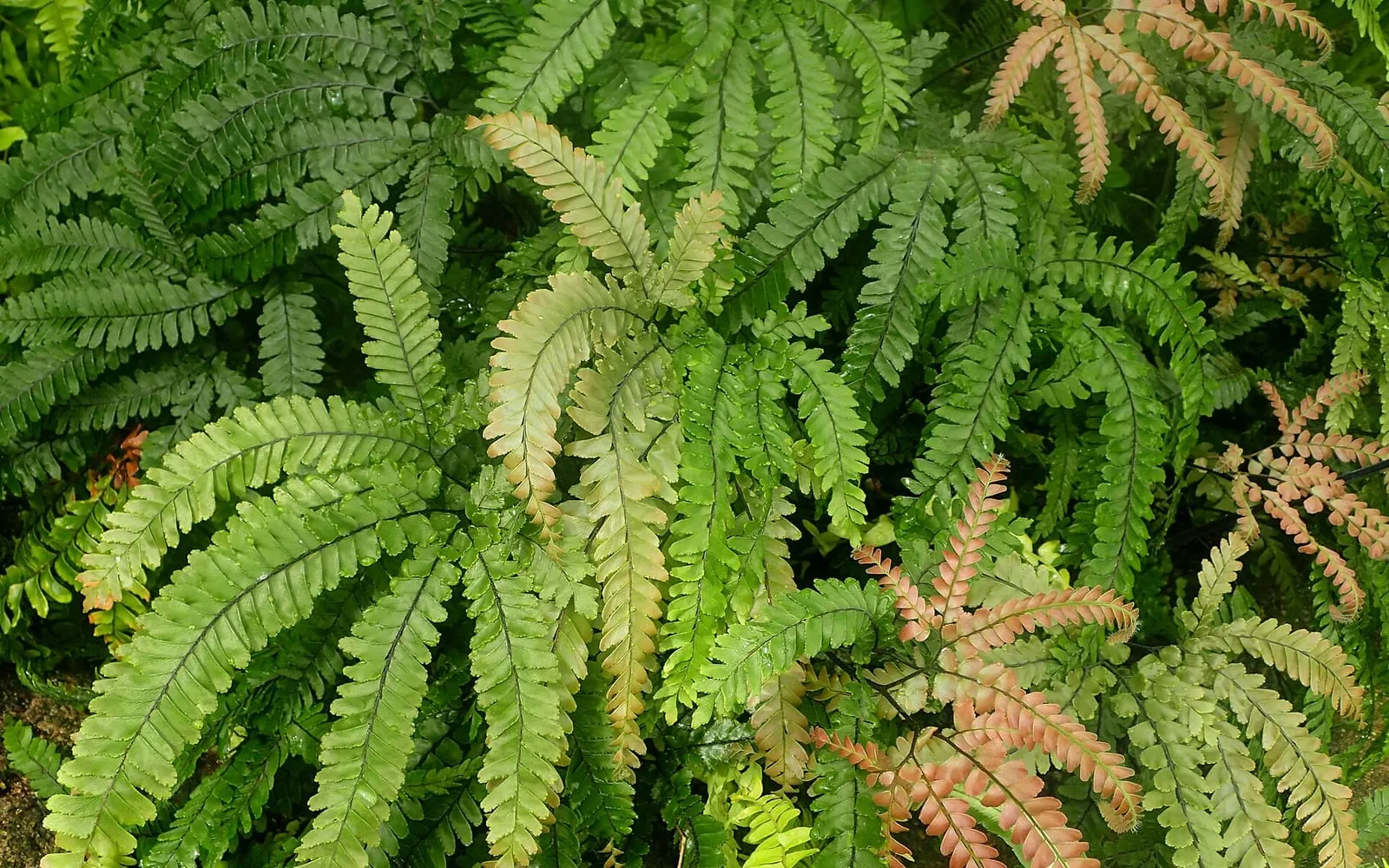
Rosy maidenhair is the maidenhair with pink new growth. Its fronds are held in a distinctive hand shape, with several finger-like divisions radiating out from the top of the stalk instead of spreading in a flat triangle, and each new frond unfurls a warm rosy-bronze before it hardens to green. That pink flush of fresh growth gives the plant its name and its main appeal.
Look closer and its other name, rough maidenhair, makes sense. The stalks and the frond axes are covered in fine, stiff bristles, unlike the smooth black wire of most maidenhairs. The pinnae themselves are small, wedge-shaped and toothed, closely set along the radiating fingers.
It comes from the Old World tropics and Australasia, growing on banks, rocks and open, disturbed ground, and it is noticeably tougher than the tender tropical maidenhairs. It takes cooler, brighter and drier conditions, even a little gentle sun, and tolerates the odd lapse that would kill a fussier kind. That tolerance, with its rosy new growth, makes it one of the easiest maidenhairs to keep, though it still browns if baked dry or left in fierce sun.
Appearance and character
The fronds are hand-shaped, with several finger-like divisions radiating from the top of the stalk, each lined with small, wedge-shaped, toothed green pinnae, giving a distinctive fan-of-fingers outline.
New fronds emerge a warm rosy-bronze or coppery-pink and harden to green as they expand. That colour gives the plant its name and appears through the growing season.
The stalks and axes are covered in fine, stiff bristles, giving a rough feel that separates it from the smooth- stalked maidenhairs.
It forms a spreading clump from a short rhizome, tougher and more upright than the drooping tropical kinds.
Where it is from
Adiantum hispidulum grows across the Old World tropics and Australasia, on banks, rock faces and open, disturbed ground in dappled light, often in drier, brighter spots than other maidenhairs tolerate. It is a plant of varied, sometimes exposed sites.
That broad, tougher habitat makes it hardier and more forgiving. It takes bright indirect light with a little gentle sun, cooler conditions, and a mix kept steadily but not constantly wet, and it recovers from lapses that finish the tender maidenhairs, though fierce sun and a baked root ball still scorch it.
How it grows
It grows through the warm months, sending up hand-shaped fronds flushed rosy at first, and slows in cooler weather. Bright light and steady moisture keep it vigorous; strong midday sun and drought scorch the fronds.
Grow it in a light, free-draining but moisture-retentive, peat-free mix, and water when the surface just dries, keeping it steady instead of sodden. It tolerates a little more light and drying than other maidenhairs.
Give it bright indirect light, with a little gentle morning sun tolerated, warmth to cool above about 7 deg C, and average to high humidity. It suits a bright, cooler room better than the tender kinds do.
Increase it by dividing the spreading clump in spring, or from spores.
Through the seasons
Spring brings rosy new fronds. Divide if needed, resume feeding, and keep it steadily moist and bright.
Summer is the main growing season. Water when the surface dries, feed monthly, and shade it from strong midday sun.
Autumn slows growth as light fades. Reduce feeding and let the mix dry a little more between waterings.
Winter is when the fern rests. Keep it cool but above about 7 deg C, bright, and only lightly moist, away from cold draughts.
Care difficulty
Moderate, and among the easier maidenhairs, because it is tougher and more forgiving. Given bright indirect light, steady moisture and reasonable humidity it grows freely and produces rosy new fronds. It goes wrong in fierce midday sun or a baked root ball, which scorch the fronds, and in cold, stagnant wet, which rots it. It takes lapses better than the tender kinds.
Watering
Water when the surface just dries, keeping the mix steadily moist instead of constantly saturated, since this tougher maidenhair takes a little drying that the tender kinds cannot. Rainwater suits it best.
It still dislikes a sodden, airless mix, which rots the roots, and a fully baked root ball, which browns the fronds, so aim for steady, moderate moisture. Ease off a little in the cooler months.
Warning signs, diseases and pests
Scorched, browned fronds usually mean strong midday sun or a dried-out root ball. Move it out of fierce sun, keep the mix steadily moist, and trim the worst fronds.
Warm, dry air brings spider mites; raise the humidity and treat early. Cold, stagnant, waterlogged compost rots the roots, so keep the mix open and the plant frost-free.
Tired, browned fronds can be cut back; fresh rosy fronds will come from the crown.
Growing environment
Bright indirect light suits it, and it tolerates a little gentle morning sun that would scorch other maidenhairs, though fierce midday sun still burns it. Deep shade dulls the rosy flush.
Warmth to cool above about 7 deg C and average to high humidity suit it, and it takes cooler, brighter rooms better than the tender maidenhairs. Keep it off cold draughts.
Grow it in a light, free-draining but moisture-retentive, peat-free mix in a bright spot out of fierce sun, in a cooler room, conservatory or sheltered outdoor spot in mild climates.
Feeding
Feed monthly through the growing season with a dilute balanced feed, since ferns are light feeders. Ease off in autumn and stop in winter.
An occasional plain-water flush clears any salts. Fresh mix supports a newly potted or divided plant for its first weeks.
Troubleshooting
The fronds are scorched. Strong midday sun or a dried-out root ball. Move it out of fierce sun, keep the mix steadily moist, and trim the worst fronds.
Why is the new growth pink? Fresh fronds emerge a rosy-bronze and green up as they harden. That is the plant’s natural habit and the source of its name.
The stalks feel rough. That is normal; the bristly stalks give it the alternative name rough maidenhair and distinguish it from the smooth-stalked kinds.
Can it take some sun? A little gentle morning sun, yes, unlike most maidenhairs, though fierce midday sun still scorches it. It is the toughest of the group.
Is it safe around pets? Yes. Maidenhair ferns are not listed as toxic, so it is safe with cats, dogs and children.
Rosy Maidenhair Fern problem guides
Not sure what is wrong? See the common houseplant pests guide.