
Houseplant
Largeleaf Maidenhair
Adiantum macrophyllum
Also known as Adiantum macrophyllum
How to grow Adiantum macrophyllum, the largeleaf maidenhair fern. Its few large pinnae, its vivid red new fronds, and how to grow this tropical maidenhair.
At a glance
- Difficulty
- Moderate
- Water
- Keep the mix constantly, evenly moist, with soft water
- Light
- Bright indirect light
- Temperature
- Warm; keep above about 14 deg C
- Humidity
- High
- Hardiness
- USDA 10-12, RHS H1b, hardy to 13 C
- Type
- Evergreen fern
- Height
- 30 to 50 cm
- Native to
- Tropical America
A striking maidenhair from the humid forests of tropical America, unusual for its few large pinnae and its scarlet new fronds. It needs warmth, high humidity and bright indirect light, and it cannot take frost or dry air. It is safest above about 14 deg C, and its broad pinnae brown quickly if the air is dry or the root ball dries.
Hardiness zones describe winter cold alone. Summer heat, humidity, rainfall and the length of the growing season decide as much, so treat the range as the outer limit rather than as a recommendation.
Not known to be toxic
Maidenhair ferns are not listed as toxic by the ASPCA or the RHS, and no harmful compound is recorded in Adiantum. A pet or child that chewed a frond would be unlikely to have more than a mild stomach upset.
Sources: ASPCA toxic and non-toxic plants, RHS potentially harmful garden plants
About
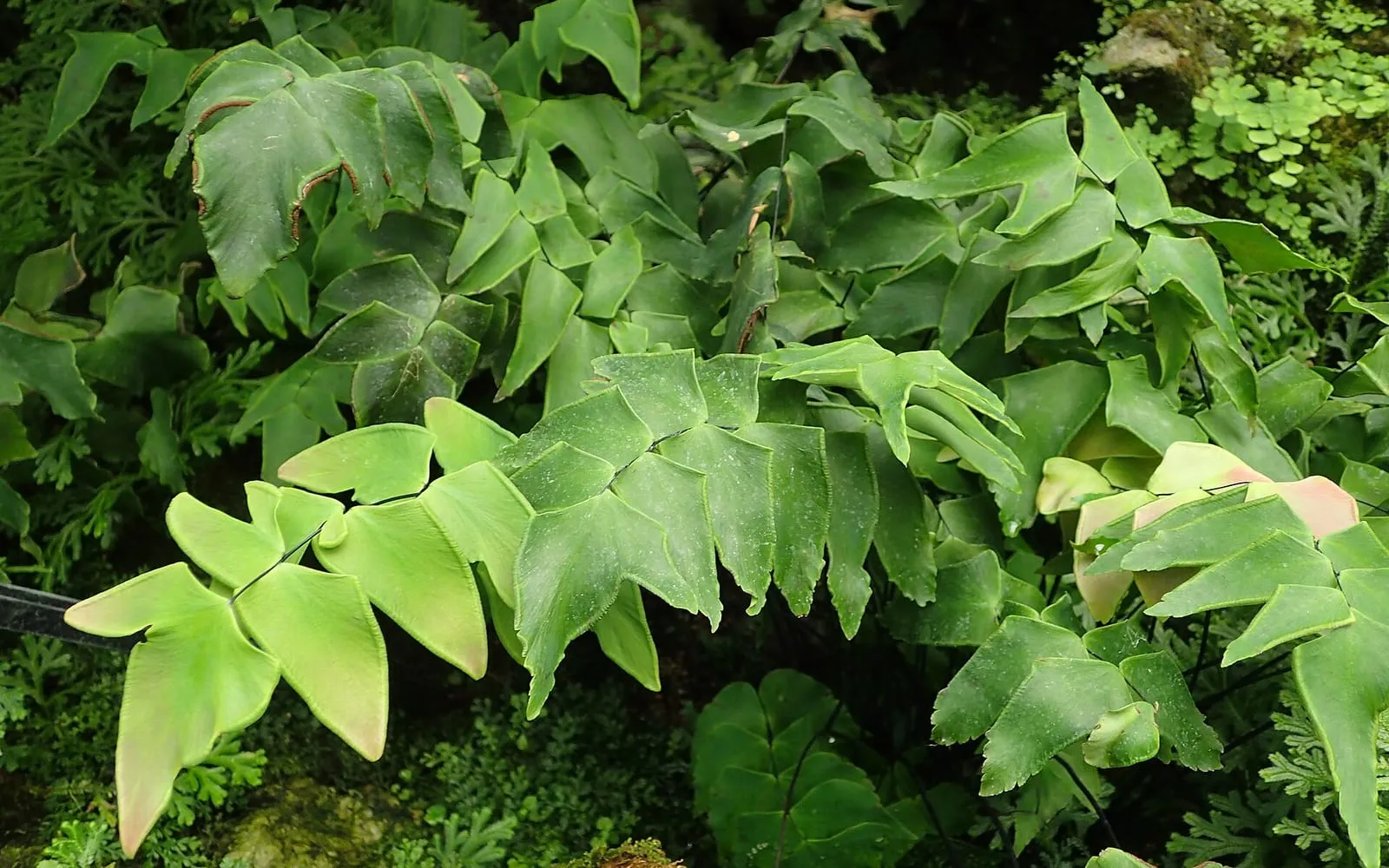
Adiantum macrophyllum looks very different from the usual idea of a maidenhair fern. Instead of a haze of tiny fans, it has a handful of large, broad, triangular leaflets on each frond, with glossy panels on fine black stalks. The young growth is the main display. Fresh fronds emerge coral-red to salmon-pink and take their time turning green.
That pairing of few, oversized leaflets and red new growth makes it one of the more distinctive maidenhairs in cultivation, grown as much for the colour of its emerging fronds as for the leaves themselves. It holds fairly upright instead of drooping, and a settled plant forms a bold, colourful clump instead of a soft mound.
It comes from the humid forests of tropical America, so it is a tender fern that does badly if it dries out. Broad leaflets lose water fast, so a dry rootstock or dry indoor air browns them within hours. Keep it warm, humid, softly lit and never parched, and it produces repeated red new fronds.
Appearance and character
Each frond has only a few oversized, broadly triangular leaflets, glossy panels far larger than the little fans of other maidenhairs, poised on slim dark stalks.
New fronds emerge vivid coral-red to salmon-pink and turn green slowly, so the freshest growth gives the plant most of its colour.
The habit is upright and self-supporting, which separates it from its lacier relatives at a glance.
Reproduction is by spores ripening beneath those broad leaflets, and the plant is raised for its foliage and that red new growth, since no maidenhair flowers.
Where it is from
Adiantum macrophyllum grows in the humid forests of tropical America, on shaded, seeping banks and among rocks in air that stays warm and wet through the year. Steady heat, shade and moisture define its habitat.
That habitat translates directly into care. It needs warmth, high humidity, muted indirect light and a rootstock held consistently damp. Frost, chill and dry air are outside its tolerance, and its broad leaflets brown quickly the moment the atmosphere dries or the pot runs short of water.
How it grows
Growth comes through the warm months as red-flushed fronds appear and turn green as they mature, and it slows over winter while the plant keeps its foliage in a warm, humid setting. Warmth and steady moisture support the red new growth; a dry atmosphere scorches the broad leaflets.
Grow it in a springy, free-draining yet retentive peat-free blend, and keep that blend uniformly damp with soft water, because the large leaflets brown quickly if it dries.
Give it subdued indirect light out of the sun, warmth above roughly 14 deg C, and humid air from a case, a tray or a humidifier. If fronds brown, cut them away and keep the plant warm and moist so fresh red fronds can follow.
Multiply it by splitting the crown in spring, or from spores.
Through the seasons
Spring brings the most vivid flush of red new fronds. Divide it now if you wish, restart feeding, and hold the compost constantly damp and the air moist.
Summer brings the heaviest growth and the brightest emerging fronds. Keep the root run damp, the air humid, the monthly feed going, and the plant out of the sun.
Autumn slows the pace as the light drops away. Cut back the feed and raise the humidity against the drying warmth of heating.
Winter is a slower period. Keep it above about 14 deg C, constantly damp, and clear of cold draughts.
Care difficulty
Moderate leaning towards demanding, because those broad leaflets brown fast whenever it dries. Given constant warmth, high humidity, soft light and an evenly damp rootstock, it produces red new fronds. It struggles in dry air, a parched root run or hard sun, which scorch the large leaflets, and in cold, stagnant wet, which rots the roots. A humid, sheltered position suits it best.
Watering
Hold the blend uniformly damp, watering before the surface dries, and use soft water or rainwater, since the broad leaflets brown at any hint of salts or drought. This is no fern to let dry between drinks.
Do not let it sit sodden in an airless medium either, which rots the roots; free drainage beneath constant dampness is the balance. Keep it nearly as damp through winter, easing off only a shade.
Warning signs, diseases and pests
Browning leaflets usually mean the rootstock dried, the air is too dry or the water is hard, and the fault shows fast across such broad surfaces. Bring back constant dampness and humidity, water with soft water, and cut off the worst fronds.
Warm, dry air brings on spider mites; raise the humidity and treat at the first sign. A cold, waterlogged, airless medium rots the roots, so keep the blend open and the plant warm.
If the red flush fades from new growth, the cause is usually too little warmth or light; keep it warm and softly but brightly lit and the colour should return.
Growing environment
Muted indirect light suits it. Keep it out of sun that scorches the broad leaflets and out of heavy shade that dulls the red new growth. A bright, sunless corner is best.
Warmth above about 14 deg C and high humidity are essential for a tender rainforest fern with big, thirsty leaflets. Keep it away from cold draughts and radiators.
Set it in an open, moisture-holding, peat-free blend, and stand it in a warm, humid, softly lit position such as a terrarium, a glass case or a grouped corner.
Feeding
Feed monthly across the growing season with a weak, balanced liquid, since strong fertiliser scorches the fronds. Ease off through autumn and stop over winter.
Flush the pot with plain water now and then to clear salts. A freshly potted or divided plant has enough nutrients in its new compost for the first weeks before it needs any feed.
Troubleshooting
The leaflets are browning. The rootstock dried, the air is too dry or the water is hard. Restore constant dampness and humidity, water with soft water, and cut off the worst fronds.
Why is the new growth red? Fresh fronds open a bright coral-red to salmon and turn green as they mature, which is the plant’s natural habit and main display.
Why are its leaflets so big? The few oversized, broad leaflets are the species’ hallmark, far larger than the little fans of other maidenhairs, and the reason it goes by largeleaf maidenhair.
The fronds look stippled. Spider mites, from warm, dry air. Raise the humidity and treat at the first sign.
Is it safe around pets? Yes. Maidenhair ferns have no listed toxin, so it is safe with cats, dogs and children.
Largeleaf Maidenhair problem guides
Not sure what is wrong? See the common houseplant pests guide.