
Disorder
Transplant shock
Also called Planting check, Transplant stress
Transplant shock makes a moved plant wilt, drop leaves or stand still for weeks. Protect the roots, water deeply and reduce stress until new roots start growing.
At a glance
- Type
- Disorder
- Cause
- Growing conditions
- Severity
- Weakens the plant
- Affects
- Garden plants, Herbs and edibles, Houseplants
- Active
- All year
What you are seeing
- Wilting within a day or two of planting, worst in the afternoon
- Leaves yellowing and dropping, oldest first, over the following fortnight
- A plant that stands still for weeks and makes no new growth
- Leaf margins browning and going crisp while the soil is moist
- A newly moved evergreen browning from the outside of the plant inwards
- Flowers and buds shed after planting
- Vegetables bolting shortly after being transplanted
Before you treat anything
Nothing here is harmful. Products sold as rooting tonics and transplant boosters are largely unnecessary, and the money is better spent on a watering can and a bag of mulch.
What you are looking at
A plant that was fine in its pot wilts within a day or two of going into the ground. Over the next fortnight it drops its oldest leaves, browns at the leaf margins, sheds any flowers it was carrying, and then stands completely still for weeks while everything around it grows.
Feel the soil. It is moist. That is the confusing part, and it is the whole of the explanation.
The roots are the wrong shape for the job
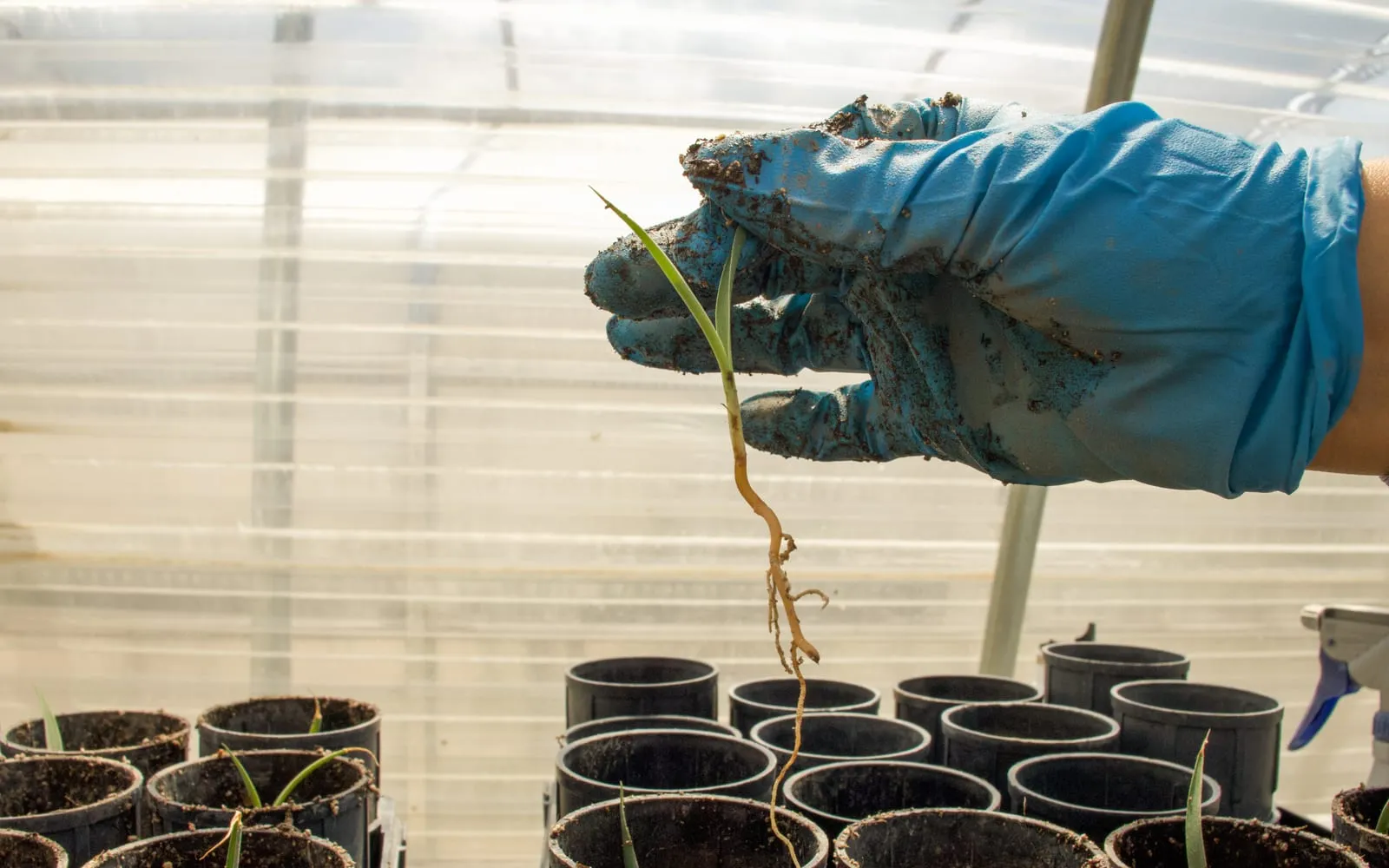
A plant in a pot has a root system shaped like the pot, dense and shallow, and entirely inside a volume of compost that behaves differently from garden soil.
When it goes into the ground, two things happen at once. The fine root hairs that do nearly all the water uptake are damaged by the move, and the roots that remain are confined to a small block of compost that dries out faster than the soil around it. So the plant can be standing in damp ground and still be unable to drink, and the leaves lose water faster than the roots can replace it.
Everything on this page follows from that. Water the root ball rather than the bed. Reduce the canopy so there is less to supply. Do not feed, because feeding demands growth the roots cannot pay for. Shelter the plant from wind, which dries it faster than sun does. And give the roots somewhere worth going, which means backfilling with the soil from the hole rather than a pocket of compost.
How long it lasts
A herbaceous perennial or a vegetable transplant usually recovers in a fortnight.
A shrub takes a season. A tree takes two or three, and a large specimen longer still, which is why small trees overtake big ones within a few years of planting. There is a well-worn saying about the first year sleeping, the second creeping and the third leaping, and it is a fair description of what is happening underground.
Autumn and early spring planting shortens all of this considerably, because the roots get months to spread before the plant has a full canopy to support.
What to do about it
Plant in autumn or early spring wherever the choice exists.
Tease the outer roots free of the root ball, and cut down the sides of a congested one.
Plant at the depth it was growing, and backfill with the soil that came out of the hole.
Water the root ball directly, thoroughly, once or twice a week rather than a little every day.
Mulch generously and keep it off the stem.
Do not feed until the following season.
Cut back a quarter of the top growth on a moved shrub, and take off flowers and buds.
Shelter it from wind for a fortnight.
Keep a clear circle of bare ground around a new tree for the first few years.
Then wait, because most of what looks like failure is a plant getting on with something you cannot see.
What it gets mistaken for
Drought produces identical wilting on soil that is dry all the way through.
Wind rock moves the plant at the base and opens a hole around the stem.
Root rot follows overwatering a struggling new plant, which is a common and avoidable sequence. The plant wilts, so it gets watered more, and the roots drown.
Vine weevil grubs eat the roots of a container-grown plant and produce the same stall, with white C-shaped grubs in the compost.
Bolting follows a root check on lettuce, coriander and cauliflower, and the flower stem tells you which one you have.
Frost damage on a newly planted evergreen browns the exposed side after a cold night rather than declining steadily.
What to do, in order
Start here
Prevention, and the changes that stop the problem returning. Most of these pages should end at this tier.
- Plant at the right time of year
- Autumn and early spring planting gives roots months to grow out before the plant has a canopy to support. The same shrub planted in June faces a whole summer of demand on a root system that is still confined to the shape of its pot. Bare-root trees and hedging go in between November and March for this reason and establish far better than containerised stock planted in July.
- Water thoroughly and less often
- The root ball dries out faster than the surrounding soil, so a new plant needs its own water directly over the root ball, not a general sprinkle across the bed. Give it a full can once or twice a week rather than a splash daily, which encourages roots to go down and out.
- Do not feed a plant that has just been moved
- Feed pushes top growth the roots cannot supply, and concentrated fertiliser against damaged roots makes things worse. Get the plant established first and feed it the following season. A mulch is the exception and it is worth applying.
- Reduce what the roots have to support
- Where a plant has lost roots, cutting some top growth back rebalances it. On a moved shrub take out a quarter of the growth, and on a transplanted perennial cut the foliage back hard. Removing flowers and buds is worth doing too, since a plant flowering is a plant not rooting.
- Tease the roots out at planting
- A root ball lifted straight from a pot keeps growing in a circle and never leaves the shape of the container. Tease the outer roots free, or cut down the sides of a badly congested ball with a knife, so they are pointing into the soil they need to colonise.
- Plant at the right depth into unimproved soil
- Set the plant at the depth it was growing, and backfill with the soil that came out of the hole rather than with compost. A hole full of compost holds water like a bucket on clay and discourages roots from leaving it on sand.
Then reach for a barrier
Netting, hand removal and water. Nothing here harms anything except the target.
- Shade and shelter a new plant for a fortnight
- Fleece, a windbreak or temporary shading takes the pressure off while the roots catch up. Wind dries a plant faster than sun does, so shelter matters more than shade in most of Britain.
- Mulch, keeping it off the stem
- A generous mulch over the root area conserves moisture, moderates the soil temperature and suppresses the weeds competing for water. Leave a clear collar around the stem.
- Keep the grass and weeds off the root zone
- Grass growing up to the trunk of a young tree competes for water and measurably slows establishment. A clear circle a metre across for the first few years makes a large difference and is the most under-rated thing anyone does for a new tree.
Plants affected
Guides that name it among the problems to watch for. The list is the plants it is characteristic of rather than everything it will feed on.