
Houseplant
Pink Silver Hoya
Hoya pubicalyx
Also known as Hoya pubicalyx, Porcelain Flower
How to grow Hoya pubicalyx, the pink silver hoya. Its silver-flecked leaves and near-black flowers, why it is an easy wax plant, and how to bloom it.
At a glance
- Difficulty
- Moderate
- Water
- When the top of the airy mix has dried
- Light
- Bright indirect light, with some gentle sun
- Temperature
- Warm, 18 to 29 deg C; keep above 13 deg C
- Humidity
- Moderate to high
- Hardiness
- USDA 11-12, RHS H1b, hardy to 13 C
- Type
- Evergreen climbing or trailing epiphyte
- Height
- 2 to 4 m of growth
- Native to
- The Philippines
A vigorous tropical wax plant from the warm forests of the Philippines, grown indoors for its flowers and its speed. It has no frost tolerance and needs steady warmth above about 13 deg C with bright light. It is one of the most forgiving hoyas, growing fast and flowering readily, though cold, wet compost still rots it.
Hardiness zones describe winter cold alone. Summer heat, humidity, rainfall and the length of the growing season decide as much, so treat the range as the outer limit rather than as a recommendation.
Not known to be toxic
Hoyas are not listed as toxic by the ASPCA, which records the wax plants as non-toxic to cats and dogs. The stems carry a little milky sap that can mildly irritate sensitive skin, so wash it off if you prune the plant, but there is no real poisoning hazard. It is a safe plant to grow around pets and children.
Sources: ASPCA toxic and non-toxic plants, RHS potentially harmful garden plants
About
Pink silver hoya is a good wax plant to start with. It is fast, tough and free-flowering, with thick, pointed, dark green leaves splashed and flecked with silvery grey, and clusters of small star flowers in dramatic deep colours, from dusky pink to a maroon so dark it looks almost black.
Where the miniature and Himalayan wax plants are dainty and a little particular, this one is a vigorous grower that climbs or trails several metres and flowers readily once settled. That makes it one of the easiest hoyas to succeed with.
It is grown much like the common wax plant, climbing a support or trailing from a hanging pot, and it shares the family’s need for an airy root run, bright light and a slightly cooler, drier winter rest to flower.
Appearance and character
Leaves are thick, waxy and pointed, dark green and generously flecked and splashed with silvery grey, the flecking heavier on plants grown in good light.
Stems are vigorous, twining and climbing by long searching shoots, or trailing where there is no support. They can grow fast to several metres.
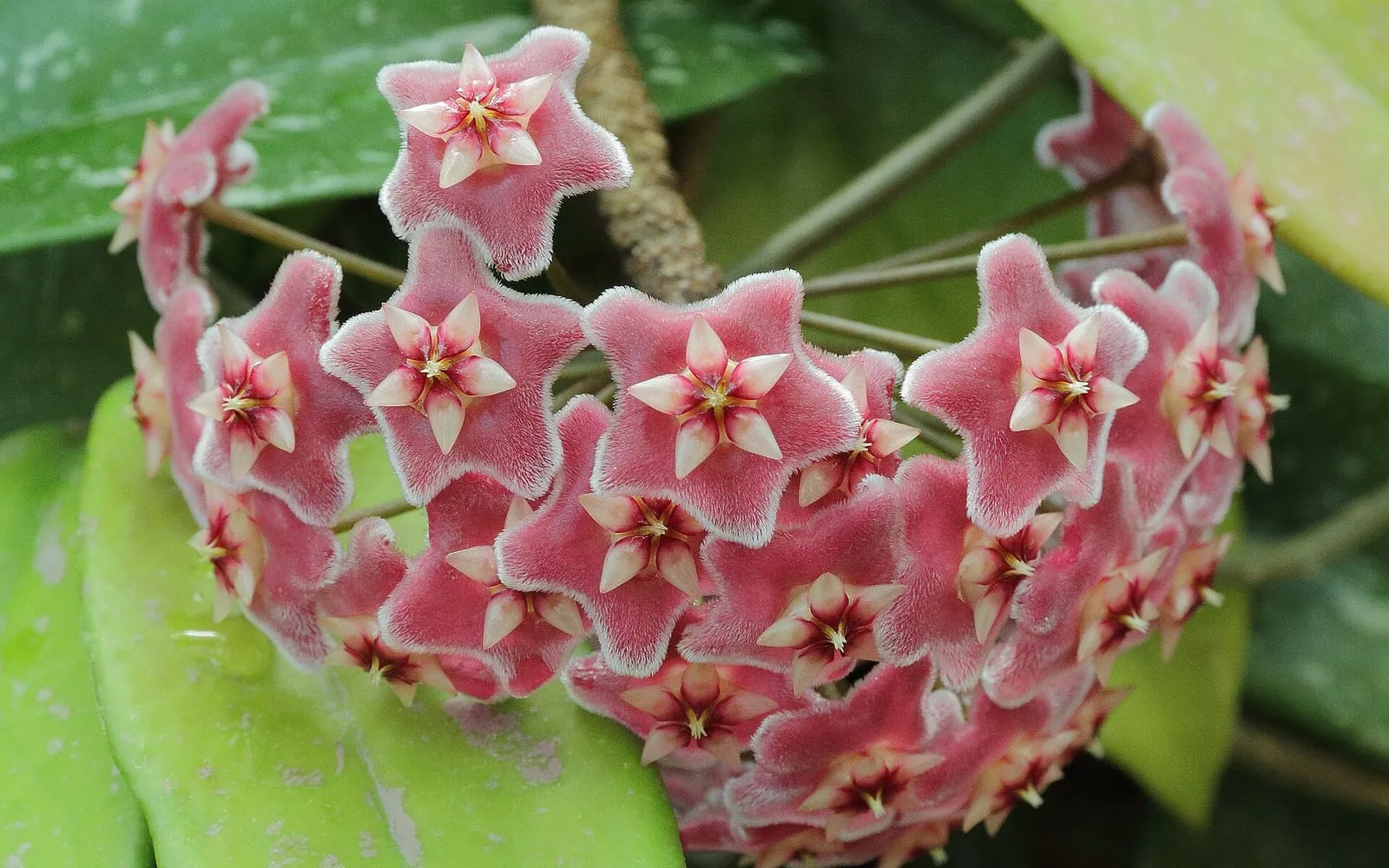
Flowers appear in rounded clusters of small, waxy, five-pointed stars in dusky pink through to near-black maroon, often scented, with a central crown that catches the light. They open in summer and can repeat.
The clusters form on short spurs that flower again year after year, so these should never be cut off after flowering.
Where it is from
Hoya pubicalyx is native to the warm forests of the Philippines, growing as an epiphyte on trees in bright, filtered light and humid, warm air. Warmth and quick growth are its nature.
That tropical home makes it warmth-loving and vigorous. It needs bright light, warmth, moderate humidity and an open root run. It has no frost tolerance and, like all hoyas, does badly in cold, wet compost, but it is otherwise easygoing.
How it grows
It grows fast in warmth and bright light, climbing or trailing and flowering in summer once established, and slows in winter. Given a warm, bright spot it is one of the quickest hoyas to fill a support.
Grow it in a very open bark and perlite mix with only a little compost, and give it a trellis or moss pole, since the long shoots reach for a support and climb fastest with one to grip. Water once the top of the mix has dried, and leave it slightly pot-bound, which brings on the flowering spurs.
Keep it warm, above about 13 deg C, in bright indirect light with a little gentle sun. Leave the flowering spurs in place, and avoid moving the plant once it has buds, since it drops them if disturbed.
Take stem cuttings to propagate, which root easily in an airy mix, and use them to fill out a support or make new plants.
Through the seasons
Spring brings fast renewed growth as light increases, the time to repot if needed, train the shoots and resume feeding.
Summer is the flowering season, with dark flower clusters opening on the spurs. Keep it bright, warm and evenly but lightly watered, and feed for flowers.
Autumn slows the fast summer growth as light falls. Cut back feeding and watering, and stop tying in the climbing shoots as they stall.
Winter is a slightly cooler, drier rest in good light, which helps set the next year’s flowers. Keep it above about 13 deg C.
Care difficulty
Moderate, and one of the easiest wax plants for a beginner. It grows fast, tolerates a range of conditions and flowers readily once settled. The main pitfalls are wet compost, which rots the roots, and moving it in bud, which drops the buds. Give it bright light, warmth and an airy mix and it grows quickly.
Watering
Water when the top of the airy mix has dried, giving enough to moisten the roots and letting the excess drain. The thick, waxy leaves store water, so the plant copes with a short dry spell far better than with a soggy pot.
Ease off in winter for the cooler, drier rest that helps flowering. Empty any saucer, and lean towards slightly too dry instead of too wet.
Warning signs, diseases and pests
Mealybugs are the commonest pest, hiding among the leaves and, especially, deep in the flower clusters as white woolly tufts. Check the clusters and leaf joints, and dab them off or treat with horticultural oil.
Root rot follows heavy, wet compost, showing as blackening, collapsing stems. Repot what is sound into fresh open bark, water less, and strike a few healthy stem tips as a backup, since this hoya roots quickly from cuttings.
Bud drop before the flowers open usually means the plant was moved or knocked while in bud. Settle it in one spot before it buds up and leave it there.
Growing environment
Bright, indirect light suits it, with a little gentle direct sun bringing out the silver flecking and encouraging flowers. Too little light gives sparse growth and few blooms.
Warmth and moderate humidity suit it, above about 13 deg C, away from cold draughts. It is less fussy about humidity than the finer hoyas but still appreciates a little extra in a dry room.
Give it a very airy, free-draining mix and a support to climb or a hanging pot to trail from, in a bright, warm position. Keeping it slightly pot-bound helps it flower.
Feeding
Give a dilute balanced feed once a month from spring through summer, when the climbing shoots extend fastest, then switch to a high-potassium feed as the dark buds swell so the clusters open fully. Keep it to half strength, since a rich dose pushes the vigorous growth into soft leaf and delays the flowers.
Ease off in autumn and stop in winter during the cooler rest. A plant just repotted into fresh bark and perlite has enough to draw on for its first few weeks.
Troubleshooting
It grows fast but does not flower. Often too little light, too rich a feed, or too large a pot. Give it brighter light, keep it slightly pot-bound, feed with a high-potassium feed in summer, and rest it cooler and drier over winter.
The buds dropped before opening. Usually because it was moved or chilled in bud. Settle it in one bright, warm spot before it buds and leave it undisturbed.
There are white woolly tufts in the flower clusters. Mealybugs, which love the clusters. Check and treat there as well as in the leaf joints, dabbing them off or using horticultural oil.
Should I cut off the old flower stalks? No. The short spurs rebloom year after year, so leaving them in place keeps the next year’s flowers.
Is it safe around pets? Yes. The ASPCA lists the wax plants as non-toxic to cats and dogs, and Hoya pubicalyx is no exception. The cut stems weep a little milky sap that can irritate sensitive skin, so wash your hands after pruning, but nothing about the plant poisons a pet or child.
Pink Silver Hoya problem guides
Not sure what is wrong? See the common houseplant pests guide.