
Houseplant
Old Lady Cactus
Mammillaria hahniana
Also known as Mother of hundreds cactus
How to grow old lady cactus as a houseplant. Its dense covering of white hair-like spines, ring of pink spring flowers, and how to avoid rot.
At a glance
- Difficulty
- Easy
- Water
- Regular watering in summer, minimal in winter
- Light
- Bright light, some direct sun
- Temperature
- 10-30 deg C; tolerates a cool, dry winter rest
- Hardiness
- USDA 9-11, RHS H2, hardy to 2 C
- Type
- Evergreen perennial cactus
- Height
- 10-15 cm per stem, clumps spreading wider
- Native to
- Central Mexico
Tolerant of a light, brief chill but not real frost, and best treated as a container plant everywhere outside a reliably mild, dry climate. A cool, dry winter rest, well above freezing but noticeably cooler than summer, supports the following spring's ring of flowers far more reliably than being kept warm year round.
Hardiness zones describe winter cold alone. Summer heat, humidity, rainfall and the length of the growing season decide as much, so treat the range as the outer limit rather than as a recommendation.
Not known to be toxic
Old lady cactus has no toxicity listing from the RHS or the ASPCA and is considered safe around pets and children in terms of chemical toxicity. Its dense covering of fine white hairs conceals real spines beneath, which can still scratch or lightly puncture skin on contact despite the soft appearance, so handling it barehanded is still worth avoiding.
Source: RHS
About
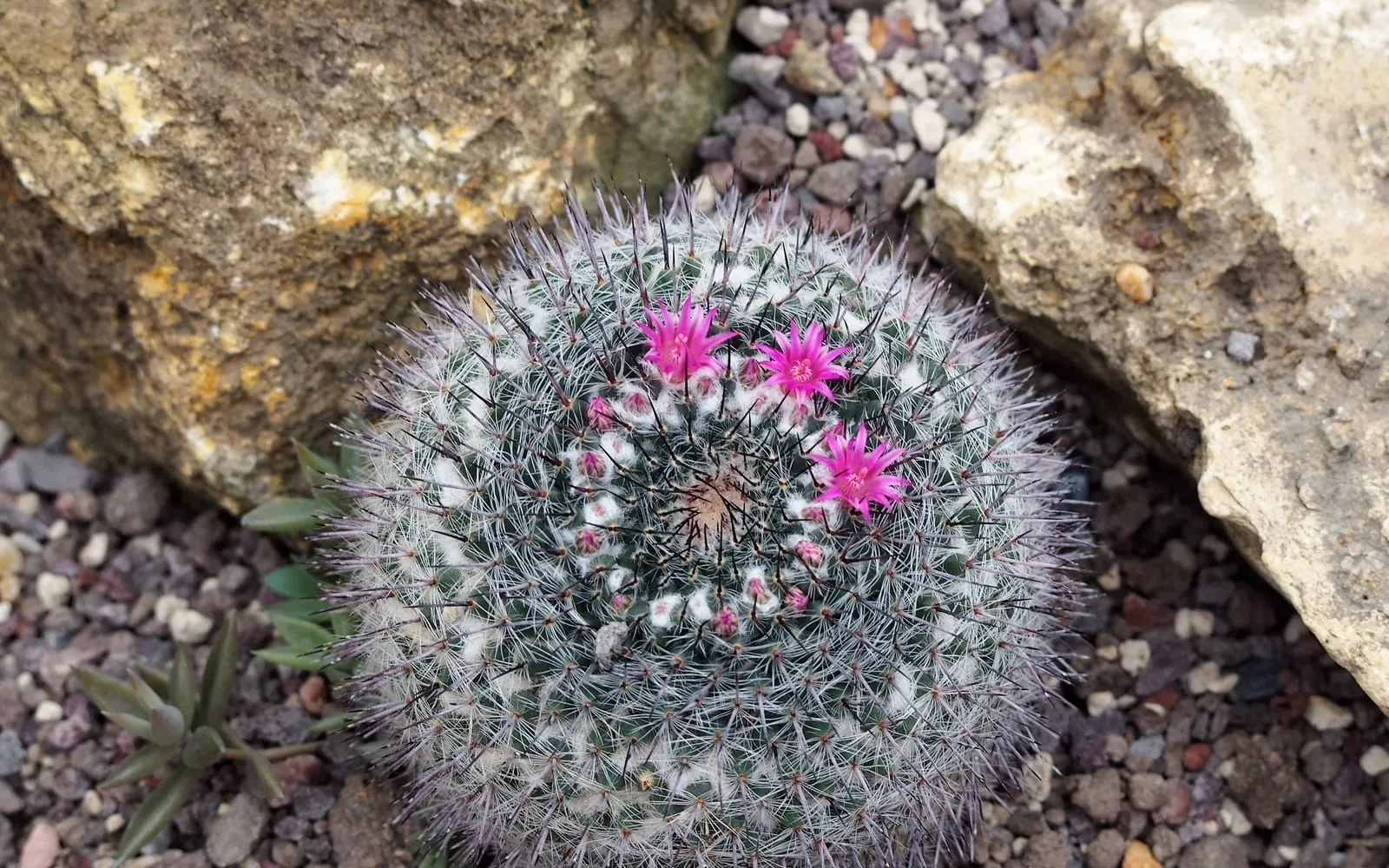
The old lady cactus is one of the most popular small Mammillaria species grown as a houseplant, prized for the dense covering of fine, white, hair-like spines that gives each rounded stem a soft, aged, almost woolly appearance quite unlike the stiffer spines of most other cacti. Despite the delicate look, the plant is a tough, easy houseplant. A mature clump can produce a ring of small, bright pink flowers around its crown each spring.
Individual stems slowly produce offsets around their base over time, gradually building a single small specimen into a dense, mounded cluster of many stems, each one capable of flowering once mature enough.
Appearance and character
Rounded to slightly cylindrical stems are covered in small, wart-like tubercles, each one bearing a tuft of fine white hairs alongside shorter, less conspicuous true spines beneath. The overall effect is a soft, white, almost fuzzy surface that has made the species a favourite among collectors who might otherwise avoid a spinier cactus.
A ring of small, vivid pink to magenta flowers opens around the crown of a mature stem in spring, often appearing in a dense, synchronised flush that circles the top of the plant, followed by small, club-shaped red fruit later in the season.
Where it is from
Rocky, semi-arid hillsides in central Mexico, typically at moderate elevation, where cool nights, strong sun and a pronounced dry season are the norm.
That semi-arid, seasonally cool origin is part of why this species benefits so noticeably from a distinct winter rest in cultivation, cooler and much drier than its summer growing conditions, which mirrors the natural seasonal rhythm it evolved to expect.
How it grows
A young plant spends its first couple of years widening and covering itself in the white hairs that give the species its name, with little sign yet of the offsets to come. Once a stem reaches a reasonable size it starts budding pups around its base, and within a few more seasons a single dome has become a mound of many heads, each capable of flowering on its own once mature.
Warmth and a full watering can push growth along quickly in summer; the same plant given a cool, dry winter will sit almost motionless until spring, using that rest to set the buds for its spring display rather than pushing out new growth.
Through the seasons
Spring: A crowded ring of small pink blooms around the top of every stem old enough to flower.
Summer is the main growing season. Water on a regular schedule and work in a feed once or twice as the season progresses.
Autumn: Growth slows with the shortening days; start stretching out the gaps between waterings.
Winter cut watering back to almost nothing and keep the plant somewhere cool, since this dry spell is what sets up next spring’s ring of flowers more than anything else you can do for it.
Care difficulty
Easy. Few houseplant cacti forgive as much as this one does, and a bright windowsill with a dry winter behind it is close to all the plant needs before it flowers.
Watering
Soak the compost thoroughly, then leave it to dry out completely before watering again. Over winter, back this off sharply, keeping the compost close to bone dry, since that contrast between wet summer and dry winter is what drives reliable spring flowering more than any single watering habit through the rest of the year.
Warning signs, diseases and pests
The white hairs that make this cactus so recognisable also make a good hiding spot for mealybug, so check the base of each stem closely rather than trusting a glance from a distance; regular inspection catches a colony before it spreads. If growth stalls with nothing visible wrong above the compost, tip the pot out and check the roots for aphids feeding where they cannot be seen.
Wider gaps opening up between the tubercles, with paler colour than usual, mean the plant is stretching toward whatever light it can find; move it somewhere brighter and later growth will tighten back up, though the stretched section itself will not. A soft, discoloured patch at the base is rot, and calls for cutting back to firm tissue and easing off the watering that likely caused it.
Growing environment
Bright light with some direct sun keeps growth compact and supports reliable flowering; in low light the plant stretches and flowers poorly. Sharply free-draining cactus compost is essential, and a distinctly cooler, drier winter spot, whether a cool windowsill or an unheated but frost-free room, supports the seasonal rest this species benefits from.
Feeding
A low-nitrogen cactus fertiliser, applied once or twice through the growing season, supports steady growth and good flowering without encouraging soft growth. Stop feeding entirely once the plant enters its winter rest.
Troubleshooting
No flowers appear in spring despite a healthy-looking plant. Usually a sign the plant did not get a proper cool, dry winter rest the previous season. Provide a more distinct seasonal contrast between summer and winter conditions the following year.
Growth looks stretched and pale, with visible gaps between tubercles. Too little light is the most common cause. Move the plant to a brighter spot; new growth will be more compact, though existing stretched growth stays as it is.
The base of the stem is soft and discoloured. Suspect rot from overwatering. Cut back to healthy tissue, let it callus, and repot into fresh, sharply draining compost, adjusting future watering accordingly.
Small clusters are visible among the white hairs at the base of a stem. Check for mealybug, which can hide within the dense hair covering more easily than on a smoother cactus. Treat with careful manual removal or a horticultural soap.
You want to separate offsets to grow as new plants. Wait until an offset has grown to a reasonable size and remove it cleanly at its point of attachment, then let the cut surface callus for several days before setting it on top of barely moist, sharply draining compost. New roots typically form within a few weeks without needing to bury the base.
Old Lady Cactus problem guides
Not sure what is wrong? See the common houseplant pests guide.