
Houseplant
Star Cactus
Astrophytum ornatum
Also known as Ornamental star cactus, Monk's hood cactus
How to grow star cactus as a houseplant. Its ribbed, star-shaped silhouette, dense white speckling, and why it needs particularly sharp drainage.
At a glance
- Difficulty
- Moderate
- Water
- Sparing even in summer; minimal to none in winter
- Light
- Bright light, full sun once acclimatised
- Temperature
- 10-30 deg C; tolerates a cool, dry winter rest
- Hardiness
- USDA 9-11, RHS H2, hardy to 2 C
- Type
- Evergreen perennial cactus
- Height
- 15-30 cm tall, potentially larger with great age
- Native to
- Central Mexico
Tolerant of a light chill but not real frost, and best grown as a container plant across most temperate climates. It needs strong, reliable sun and a dry winter rest to grow well, and is much less forgiving of damp, low-light conditions than many other commonly grown houseplant cacti.
Hardiness zones describe winter cold alone. Summer heat, humidity, rainfall and the length of the growing season decide as much, so treat the range as the outer limit rather than as a recommendation.
Not known to be toxic
Star cactus has no toxicity listing from the RHS or the ASPCA and is considered safe around pets and children in terms of chemical toxicity. Its spines, though not especially long, are stiff and sharp enough to puncture skin, and its ribs can carry a considerable number of them close together, so handling with padded tools rather than bare hands is worthwhile.
Source: RHS
About
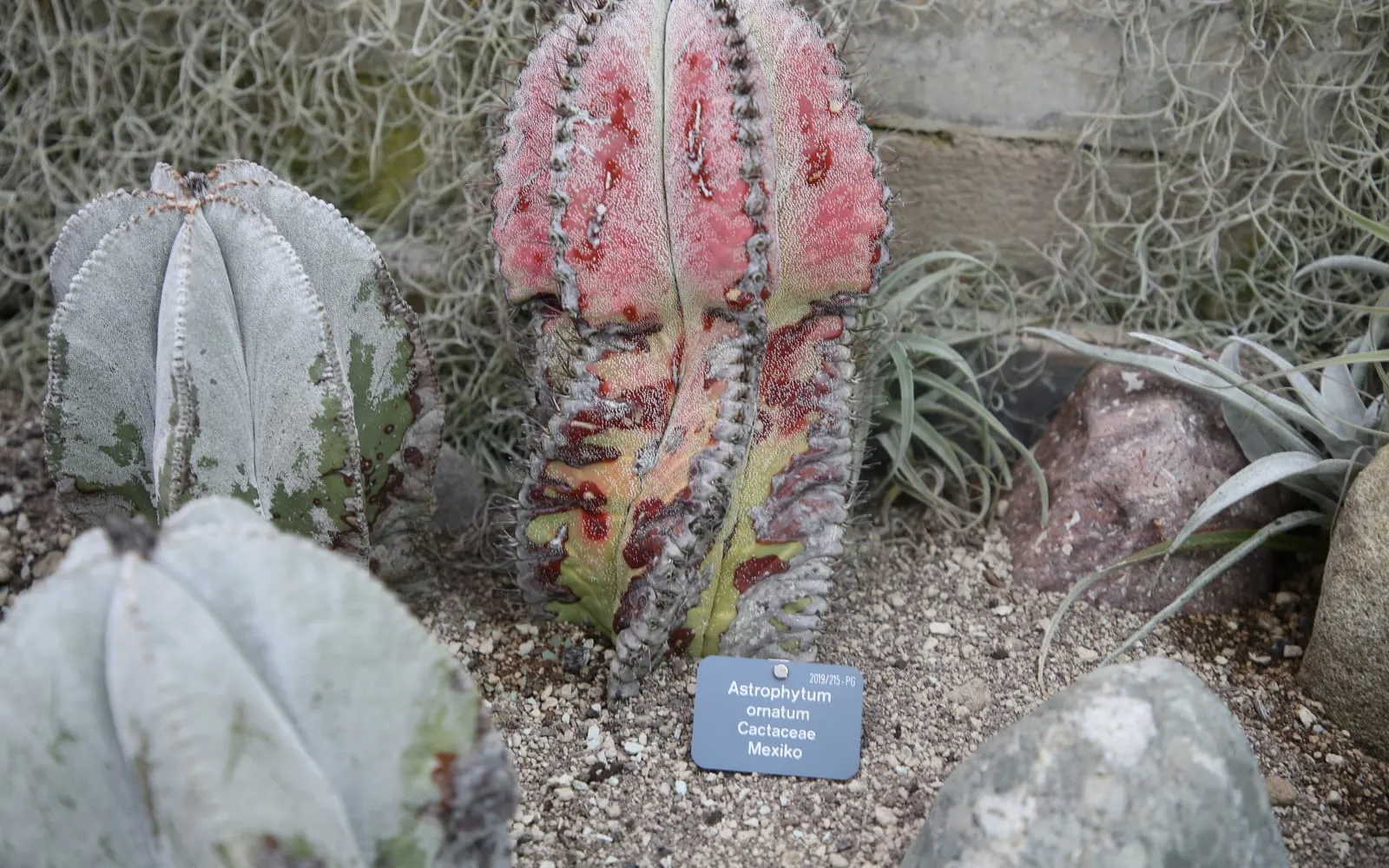
The star cactus is grown for its striking geometric form: a solitary, strongly ribbed stem, typically with seven or eight pronounced ribs, that creates a distinctive star-shaped outline when viewed from above, further decorated with dense flecks of fine white woolly scale scattered across its surface. Among cactus collectors it is prized as one of the larger and faster-growing members of the Astrophytum genus, a group otherwise known for slow, patient growth.
A well-grown, mature specimen can eventually become a substantial plant, much larger than many of its smaller relatives in the same genus, though reaching that size still takes many years of consistent, careful cultivation.
Appearance and character
A solitary, columnar to barrel-shaped stem with sharply defined ribs has clusters of stiff, straight spines along each rib, interspersed with a dense scattering of small, white, felted flecks across the entire stem surface, an effect that gives the plant a speckled, almost frosted appearance quite distinct from most other cacti.
Large, pale yellow flowers open from the crown of a mature plant in summer, each one relatively short-lived but often produced in succession over several weeks on a well-established specimen growing in strong enough light.
Where it is from
Rocky, semi-arid hillsides in central Mexico, typically among sparse scrub in intense sun and free-draining, mineral soil with very little organic content.
That harsh, sun-baked, mineral-poor origin explains the plant’s need for particularly sharp drainage and strong light in cultivation; a compost mix too rich in organic matter, or a position with insufficient sun, both lead to problems this species tolerates far less well than many other, more forgiving houseplant cacti.
How it grows
An evergreen cactus growing slowly but steadily from the tip of its single stem, gradually increasing in height and girth over years without producing offsets in the way many clustering cacti do, remaining a solitary specimen throughout its life under normal cultivation.
Because it grows as a single, unbranched stem, damage to the growing tip at the crown is a more serious setback for this species than it would be for a plant capable of resprouting from offsets or side branches.
Through the seasons
Spring growth resumes as temperatures rise and light levels increase.
Summer is the main growing and flowering season, with pale yellow flowers opening from the crown in strong light. Water sparingly and feed once through this period.
Autumn growth slows as temperatures and light levels drop; reduce watering accordingly.
Winter keep the plant almost completely dry and in a cool but frost-free spot to support strong growth and flowering the following season.
Care difficulty
Moderate. This species needs stronger light and sharper drainage than many of the more forgiving houseplant cacti, and getting either wrong tends to show clearly, whether as weak, etiolated growth from too little light or as rot from compost that holds too much moisture.
Watering
Water thoroughly but sparingly during the growing season, always allowing the compost to dry out completely between waterings; this species is markedly less tolerant of a generous watering regime than many other cacti. Keep the compost almost entirely dry through winter, since overwatering, particularly during the cooler months, is the most common cause of loss in cultivation.
Warning signs, diseases and pests
Mealybug occasionally colonises the crown or the base of the stem, and is treated with careful manual removal or a horticultural soap for persistent infestations. Root rot from overwatering is by far the most serious and common problem this species faces, showing as a soft, discoloured base that can spread upward through the stem if not addressed promptly.
Pale, washed-out colouring with a noticeable loss of the plant’s usual white speckled texture often indicates too little light, and moving the plant to a brighter, sunnier position, gradually to avoid scorch, usually restores stronger colour and more typical growth over subsequent seasons.
Sun scorch, showing as a yellowish or brownish patch on the side of the stem facing strong light, can occur if a plant is moved into intense direct sun too quickly without a period of gradual acclimatisation.
Growing environment
Full sun, reached gradually if the plant has been growing in lower light, supports the healthiest growth, strongest colour and best flowering. Extremely free-draining, mineral-rich cactus compost is essential, and adding extra grit or pumice to a standard cactus mix often improves results further for this particularly drainage-sensitive species.
Feeding
A low-nitrogen cactus fertiliser, applied once during the growing season, is generally sufficient. This is not a heavy feeder, and excess fertiliser risks producing soft growth more prone to rot than the firm, compact growth this species naturally produces given the right light and watering regime.
Troubleshooting
The base of the stem is soft and discoloured. Suspect root rot from overwatering, the most common serious problem with this species. Cut back to firm, healthy tissue if caught early, let it callus for several days, and repot into fresh, sharply draining compost.
The plant looks pale and has lost its characteristic white speckling. Usually too little light. Move it to a brighter, sunnier spot gradually over a couple of weeks to avoid scorching previously shaded growth.
A yellowish or brown patch has appeared on one side of the stem. Likely sun scorch from too sudden a move into strong direct light. Provide some temporary shade and acclimatise the plant more gradually in future.
Growth seems very slow despite apparently good conditions. Confirm light levels are strong rather than merely bright, since this species needs more direct sun than many other cacti to grow at its best pace, and check that watering is sparing enough during the growing season.
You are comparing this species with a smaller relative in the same genus. Other Astrophytum species generally stay noticeably more compact and grow more slowly than this one, so a plant expected to match a small star-shaped relative may come as a surprise once it starts putting on size. The same sharp-drainage, strong-light care suits the whole genus.
Star Cactus problem guides
Not sure what is wrong? See the common houseplant pests guide.