
Houseplant
Nipa Palm
Nypa fruticans
Also known as Mangrove Palm, Attap Palm, Nypa fruticans
How to grow Nypa fruticans, the nipa or mangrove palm, a trunkless palm whose fronds rise from tidal mud and whose sap is useful.
At a glance
- Difficulty
- Difficult
- Water
- Keep the roots permanently wet or standing in water
- Light
- Full sun to bright light
- Temperature
- Warm; keep above about 18 deg C
- Humidity
- Very high
- Hardiness
- USDA 11-12, RHS H1a, hardy to 16 C
- Type
- Evergreen trunkless mangrove palm
- Height
- Fronds to 9 m
- Native to
- Coastal Southeast Asia, Northern Australia and the western Pacific
A mangrove palm of tidal estuaries and coasts across tropical Southeast Asia and the western Pacific, growing with its rhizome in soft, waterlogged, often brackish mud and its fronds rising into hot, humid air. It needs constant warmth, very high humidity and permanently wet, muddy roots, tolerating salt and tidal flooding. It cannot take frost, cool or dry conditions, and is safest above about 16 deg C.
Hardiness zones describe winter cold alone. Summer heat, humidity, rainfall and the length of the growing season decide as much, so treat the range as the outer limit rather than as a recommendation.
Not known to be toxic
- Safe to eat
- Young seeds (attap chee) and the tapped flower-stalk sap
A safe and, in fact, useful plant. Nypa is not listed as toxic by the ASPCA or the RHS, and it is a food and drink plant across its range: the young seeds are eaten as attap chee, and the flower stalks are tapped for a sweet sap made into sugar, vinegar and alcohol. A pet or child comes to no chemical harm from it, so the only real difficulty is meeting its watery, tropical needs.
Sources: ASPCA toxic and non-toxic plants, RHS potentially harmful garden plants
About
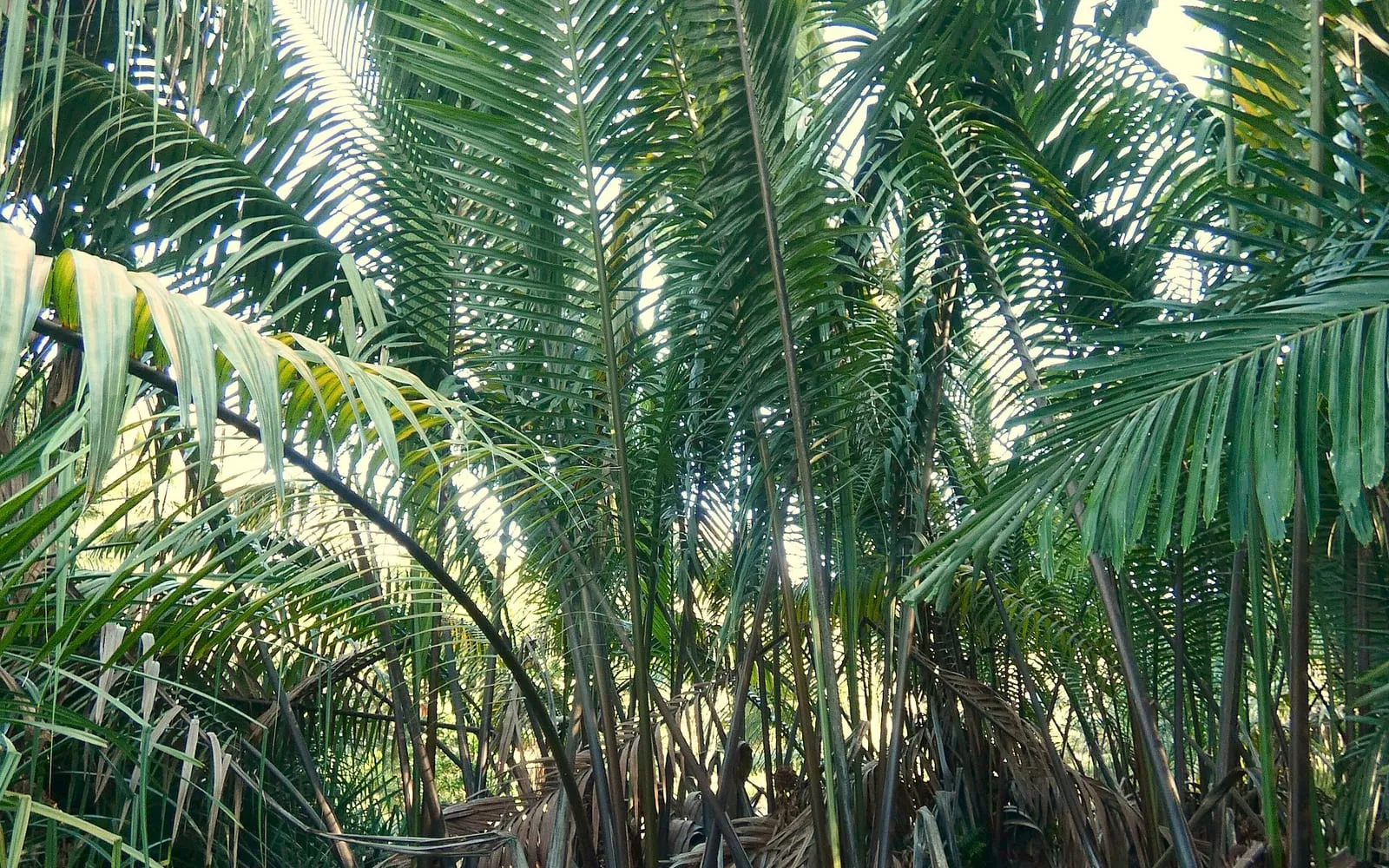
Nipa palm is very different from a typical pot-grown palm. It has no upright trunk. Instead, a creeping rhizome runs through soft tidal mud, and huge feather fronds rise straight from the ground to nine metres. A stand of it looks like a thicket of giant leaves growing from the water. It is a mangrove plant from the brackish, waterlogged estuaries of tropical Southeast Asia and the western Pacific, where its roots are flooded by the tides.
Give it constant warmth, very high humidity and permanently wet, muddy roots. It tolerates salt and standing water that would drown an ordinary palm. It has no tolerance at all for frost, cool rooms or dry conditions, so it is a plant for a heated, humid pond or bog in a large conservatory instead of an ordinary pot.
It is also a useful plant across its range. Its seeds are eaten, and its flower stalks are tapped for a sweet sap made into sugar and vinegar. It can be grown by an enthusiast with the warmth, humidity and standing water it needs, but without those conditions it will not survive.
Appearance and character
The plant has no visible trunk. Its stout rhizome creeps through soft mud, and the large, upright feather fronds, divided into many stiff leaflets, rise directly from the ground, sometimes to nine metres.
It grows in soft, waterlogged, often brackish mud, its roots flooded by the tides, and forms spreading colonies along estuaries and tidal creeks.
Its flowers form a rounded head low among the frond bases, and the ball-like clusters of seeds that follow float and are carried by the water; the young seeds are the edible attap chee.
Unlike most palms it spreads by its branching rhizome as well as by seed, so it makes colonies instead of single trunks.
Where it is from
Nypa fruticans grows in the tidal estuaries, mangrove swamps and muddy coasts of tropical Southeast Asia and the western Pacific, its rhizome in soft, waterlogged, brackish mud and its fronds in hot, humid air. It is a true mangrove, flooded by the tides.
Give it constant warmth, very high humidity and permanently wet, muddy roots. It tolerates salt and standing water. It cannot survive frost, cool rooms or any drying out, which makes it difficult away from the tropics.
How it grows
It grows all year in the warm, wet conditions of the tropics. Its rhizome creeps through the mud and sends up huge fronds, with no true dormant season when warmth stays constant. Warmth, humidity and standing water keep it going; cool, dry or frosty conditions kill it.
Grow it, if at all, in a large heated pond, bog or water feature under glass, in wet, muddy soil kept permanently waterlogged, ideally with some salt to mimic brackish water. It is not an ordinary pot plant and needs standing water, not merely moist compost.
Give it full sun to bright light, constant warmth above about 18 deg C, and very high humidity. Keep the roots wet at all times. Never let it dry out, and never expose it to cold.
Propagation is from the floating seeds, sown into warm, wet mud, or by division of the rhizome.
Through the seasons
Spring and summer are warm growing periods under glass, when it throws up fronds most strongly. Keep it warm, wet and humid, and feed monthly.
Autumn and winter bring the greatest risk, since heating must hold the warmth and humidity up. Keep it above about 16 deg C, its roots wet, and the air humid; do not let it cool or dry.
Care difficulty
Difficult, and among the hardest plants to grow away from the tropics because its needs are so specific. It needs constant warmth, very high humidity and permanently wet, brackish roots, conditions that only a heated, humid pond under glass can usually supply. It has no chemical hazard and is not fussy about feeding; the difficulty is its watery, tropical habitat. Without standing water and heat, it dies.
Watering
Keep the roots permanently wet, standing in water, since this is a mangrove plant flooded by the tides in the wild. It cannot be watered like an ordinary pot palm and must never dry out.
Some salt in the water mimics its natural brackish estuary and suits it, though it grows in fresh water too. The main risk is not overwatering, which it cannot suffer, but the water going cold, stagnant or drying away.
Warning signs, diseases and pests
Frond browning and decline usually mean the air is too dry, the roots have dried out, or the plant has been too cold. Any of these can be fatal for a mangrove palm. Restore constant warmth, high humidity and standing water at once.
Scale insects can settle on the fronds and be treated with horticultural oil. Because it grows in water, the usual root rot of a dry-loving plant is not the issue; cold and drying out are the dangers instead.
Never cut the growing points among the frond bases, since like other palms it grows from them.
Growing environment
Full sun to bright light suits it, as in its open tidal habitat. It needs strong light along with its warmth and water.
Constant warmth above about 18 deg C and very high humidity are essential, with the roots standing in water at all times. It has no frost or cold tolerance and cannot dry out, so it belongs in a heated, humid pond under glass.
Grow it in wet, muddy soil in a large heated water feature or bog under glass, with high humidity and, ideally, some salt in the water.
Feeding
Feed monthly in warm growth with a diluted balanced feed added to the water or mud. It is a vigorous grower given warmth and water and takes regular feeding.
Reduce feeding if growth slows in cooler, darker months, but keep the warmth, humidity and standing water constant.
Troubleshooting
The fronds are browning and dying back. The air is too dry, the roots have dried out, or it has been too cold. Restore constant warmth, high humidity and standing water immediately, since any of these failings is fatal.
Can I grow it in an ordinary pot? No. It is a mangrove palm that needs permanently wet, muddy, ideally brackish roots and standing water, not moist compost, along with constant tropical warmth and humidity.
Is it useful? Yes, greatly so in its range: its young seeds are eaten as attap chee, and its flower stalks are tapped for a sweet sap made into sugar, vinegar and alcohol.
Why has it no trunk? It grows from a creeping underground rhizome, sending its fronds straight up from the mud, which is unusual among palms and suits its tidal, flooded habitat.
Is it safe around pets? Yes. Nypa is not listed as toxic and is in fact a food plant, so it poses no chemical hazard; the difficulty is its demanding watery needs.
Nipa Palm problem guides
Not sure what is wrong? See the common houseplant pests guide.