
Houseplant
Canyon Dudleya
Dudleya cymosa
Also known as Dudleya cymosa, Canyon Liveforever
How to grow Dudleya cymosa, the canyon dudleya, a Californian succulent with small rosettes in rock crevices and vivid red and orange flowers.
At a glance
- Difficulty
- Moderate
- Water
- When the mix dries; more in cool winter growth, little in summer
- Light
- Bright light with some direct sun
- Temperature
- Cool to warm; keep above about 2 deg C
- Humidity
- Low
- Hardiness
- USDA 7-10, RHS H4, hardy to -8 C
- Type
- Evergreen rosette succulent, winter-growing
- Height
- Rosette 6 to 15 cm across; flower stalk taller
- Native to
- California, Southern Oregon
A small, variable rosette succulent from the canyons and rocky slopes of California, wedged into cliff crevices in a Mediterranean-type climate of wet winters and hot, dry summers. It grows through the cool, wet season and rests in the dry summer, wanting bright light and very sharp drainage. Some mountain forms take hard frost, and it is safest above about minus 8 deg C; it rots in warm, wet summer compost.
Hardiness zones describe winter cold alone. Summer heat, humidity, rainfall and the length of the growing season decide as much, so treat the range as the outer limit rather than as a recommendation.
Not known to be toxic
This is a safe plant to keep around pets and children. Dudleya, a Californian relative of the echeverias, is not listed as toxic by the ASPCA or the RHS, and no harmful compound is recorded; its rosettes were traditionally eaten. A pet or child that bit a leaf would at worst have a watery, faintly sour mouthful and mild stomach upset.
Sources: ASPCA toxic and non-toxic plants, RHS potentially harmful garden plants
About
Canyon dudleya is a small, variable species. It grows neat rosettes, seldom wider than a hand, in cracks on canyon walls and cliff faces across the mountains and foothills of California, and no two colonies quite match. Its leaves range from green to grey, from broad to slim, from bare to faintly floured, and often redden where the sun strikes hardest. Botanists have long struggled to define its limits, and collectors prize that range.
Its flowers are large in effect for such a small rosette. Each spring it raises thin reddish stems carrying clusters of vivid tubes in red, orange or yellow, bright enough to pull in hummingbirds and conspicuous on so small a plant. That display, on a compact crevice-dweller, is much of why people grow it.
It follows the Californian calendar of the genus, growing through the cool, wet season and resting through the hot, dry one, with bright light and very fast drainage. Several of its mountain forms take hard frost. Kept lean, watered in the cool months and left dry in the heat, it makes a good small rock-pot plant.
Appearance and character
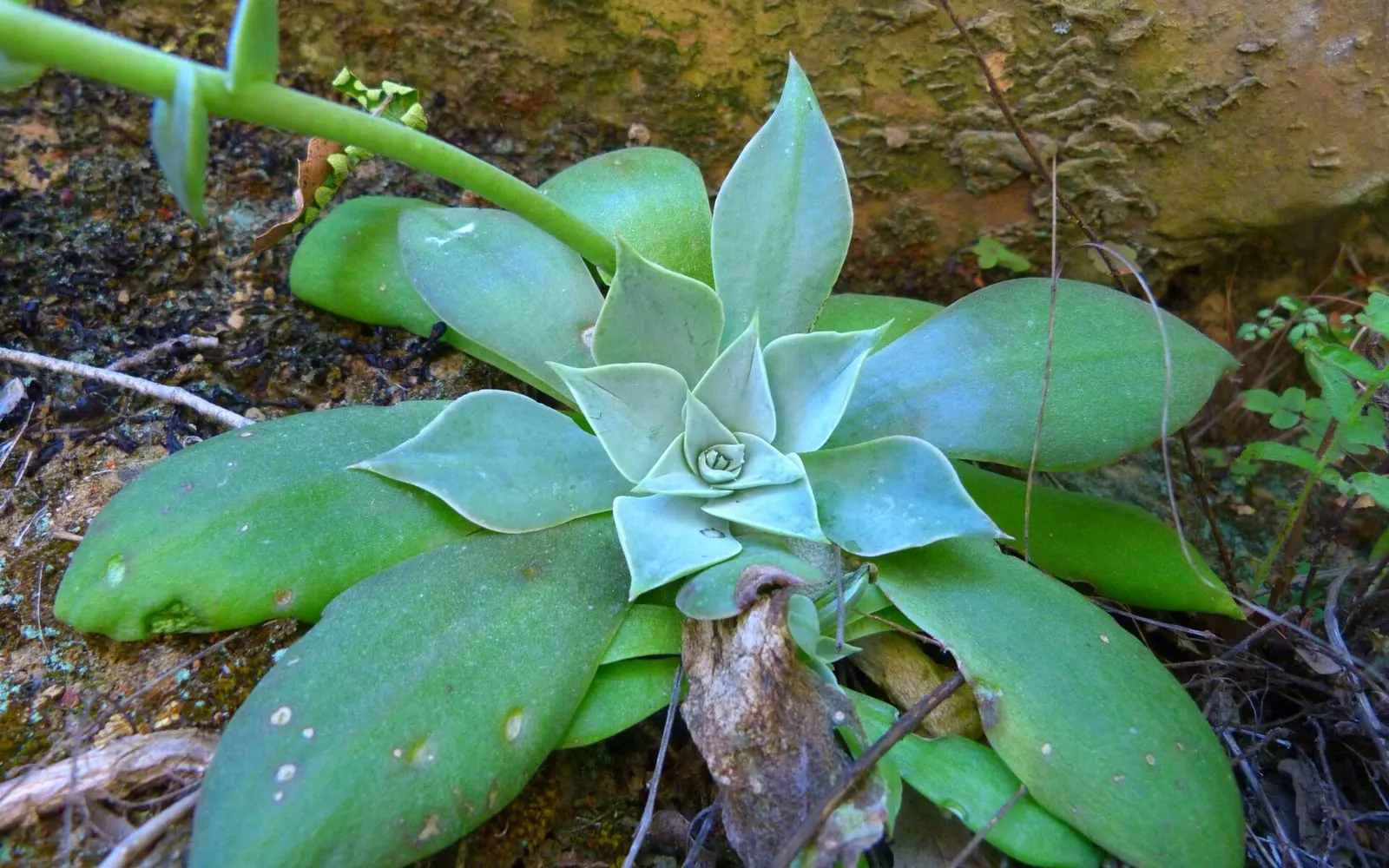
The rosettes stay small, six to fifteen centimetres, built from thick pointed leaves that differ sharply between forms, green to grey, broad to narrow, and frequently red-rimmed in strong sun.
Some forms have a light flouring of chalk and others almost none, part of the variability that makes the species so hard to pin down and so sought after by rock-plant growers.
It grows as a single small rosette or in loose clusters, wedged into crevices in the wild, and stays neat enough for a shallow pot or a trough.
The flowers are the main display: clusters of bright red, orange or yellow tubes on slim reddish stems in spring, unusually showy for the size of the plant and well worked by hummingbirds.
Where it is from
Dudleya cymosa lives in the canyons, rocky slopes and cliff cracks of California, from the coast ranges back into the Sierra foothills, through a Mediterranean-type run of wet winters and hot, dry summers. It roots in thin soil and rock seams, often on shaded canyon walls.
Its crevice habitat explains its care. It needs bright light, drainage that clears at once, and cool, dry-leaning conditions. It grows in the cool, damp months and rests through the summer heat. Some high-country forms take hard frost, but all of them rot in warm, wet compost.
How it grows
Its growing season is the cool one, autumn through spring, when the rosette firms and, in spring, produces its bright flower stems. It rests through the dry summer, slowing and drawing tight. Follow that inverted calendar: a summer watering is the usual cause of failure.
Set it in a gritty, mineral, fast-clearing mix in a small pot, trough or crevice planting, and water once the mix has dried, only through the cool growing spell. Run it much drier across the summer rest.
Bright light with a little direct sun keeps the rosette tight and can flush the leaves red; keep it cool where you can, down to about minus 8 deg C for the hardier forms. Fast drainage matters most, since a crevice plant is used to water disappearing at once.
Raise it from seed, or lift offsets from a clustering form as growth restarts in autumn.
Through the seasons
Autumn ends the summer rest as the cool, damp weather returns and the rosette starts back into growth. Begin watering once the mix dries.
Winter is its main growing spell. Give bright light, water as the mix dries, feed lightly, and keep it cool.
Spring continues growth and produces the vivid flower stems. Keep watering until the summer heat sets in.
Summer is the rest. The rosette slows and draws tight; keep it bright, cool where you can, and much drier, since a warm, wet pot now rots it.
Care difficulty
Moderate, and much like its relatives. The main point is the inverted calendar: water in the cool months and keep it near-dry in the heat, which is the reverse of most succulents. A summer soaking rots it, while a plant kept lean and sharply drained is tough. Its small size and bright flowers suit a trough or a rock pot.
Watering
Water once the gritty mix has dried, through the cool autumn-to-spring growing spell, giving the small rosette a drink and letting it drain fast. As a crevice plant it needs water gone at once and never left standing.
Keep it much drier through the summer rest, wetting it only enough that the rosette does not shrivel, since a warm, wet pot in the heat can kill it. A rosette drawing tight in summer is resting; a soft, discoloured crown is rotting.
Warning signs, diseases and pests
A warm, wet pot in summer rots roots and crown, the most common cause of failure. Keep it cool and dry through the heat, water only in the cool season, and keep the crown dry. A soft, discoloured centre means rot.
Mealybugs and aphids gather in the small rosette’s centre; float or wipe them off and check the crown often, since a compact rosette screens them well.
A slack, stretched rosette with pale leaves is short of light. Move it into brighter light with a little direct sun to firm it up.
Growing environment
Bright light with a little direct sun keeps the rosette tight and can redden the leaves; a dim spot leaves it loose, pale and drawn out. It needs bright light and cool air, as on its canyon walls.
Cool to warm, dry conditions suit it, down to about minus 8 deg C for the hardier forms. It needs low humidity and drainage that clears at once, and cannot tolerate warm, stagnant summer wet.
Grow it in a gritty, mineral, fast-clearing mix in a small pot, trough or crevice, in bright light, where its compact rosette and bright flowers show well.
Feeding
A dilute, low-nitrogen feed once or twice across the cool growing spell is enough; it needs very little, and rich feeding softens and slackens the rosette.
Feed it nothing across the summer rest. After repotting, the fresh gritty mix keeps it going through its first season.
Troubleshooting
The rosette has gone loose and stretched. Short of light. Move it into brighter light with a little direct sun to firm it up.
The crown has gone soft and discoloured. Rot, usually from watering through the summer rest. Keep it cool and dry in the heat, water only in the cool season, and improve the drainage.
When should I water? Chiefly through the cool autumn-to-spring growing spell, once the mix has dried. Run it much drier through the summer heat, which is its rest.
Why do the plants look so different from one another? It is a highly variable species, with leaf colour, shape and flouring changing between forms and sites. That variation is much of its appeal to collectors.
Is it safe around pets? Yes. Dudleya carries no listed toxin, so the small rosettes are safe with cats, dogs and children.
Canyon Dudleya problem guides
Not sure what is wrong? See the common houseplant pests guide.