
Houseplant
Spanish Dagger
Yucca gloriosa
Also known as Yucca gloriosa, Moundlily Yucca
How to grow Yucca gloriosa, the Spanish dagger. Its stiff sword-leaved rosettes, tall white flower spikes, why it is sharp and toxic, and its toughness.
At a glance
- Difficulty
- Easy
- Water
- When the soil dries; drought-tolerant once established
- Light
- Full sun to bright light
- Temperature
- Hardy; tolerates frost, keep well drained
- Humidity
- Low to average
- Hardiness
- USDA 7-11, RHS H5, hardy to -15 C
- Type
- Evergreen shrubby succulent
- Height
- 1 to 2.5 m
- Native to
- Southeastern United States
A tough coastal yucca from the sandy shores and dunes of the southeastern United States, used to sun, salt wind and sharp drainage. It is fully hardy to frost, wanting full sun and free-draining soil, and it rots only in heavy, wet ground. It tolerates coastal exposure and drought, and is safest with its roots kept from winter wet.
Hardiness zones describe winter cold alone. Summer heat, humidity, rainfall and the length of the growing season decide as much, so treat the range as the outer limit rather than as a recommendation.
Harmful if eaten
- Do not eat
- The leaves and roots, which contain saponins; the leaf tips also wound
- Harm from
- Eating it
- Affects
- People, cats and dogs
Yuccas hold saponins that irritate the gut, and the ASPCA lists Yucca as toxic to cats and dogs, which may vomit or drool after eating the leaves. The saponins are only mildly harmful to people. Far more pressing on this species is the physical danger: the stiff leaves end in needle-sharp points hard enough to pierce skin and reach an eye, so it is called the Spanish dagger. Site it well away from paths, doorways and play areas, and handle it with eye protection.
Sources: ASPCA toxic and non-toxic plants, North Carolina Extension plant toxicity database
About
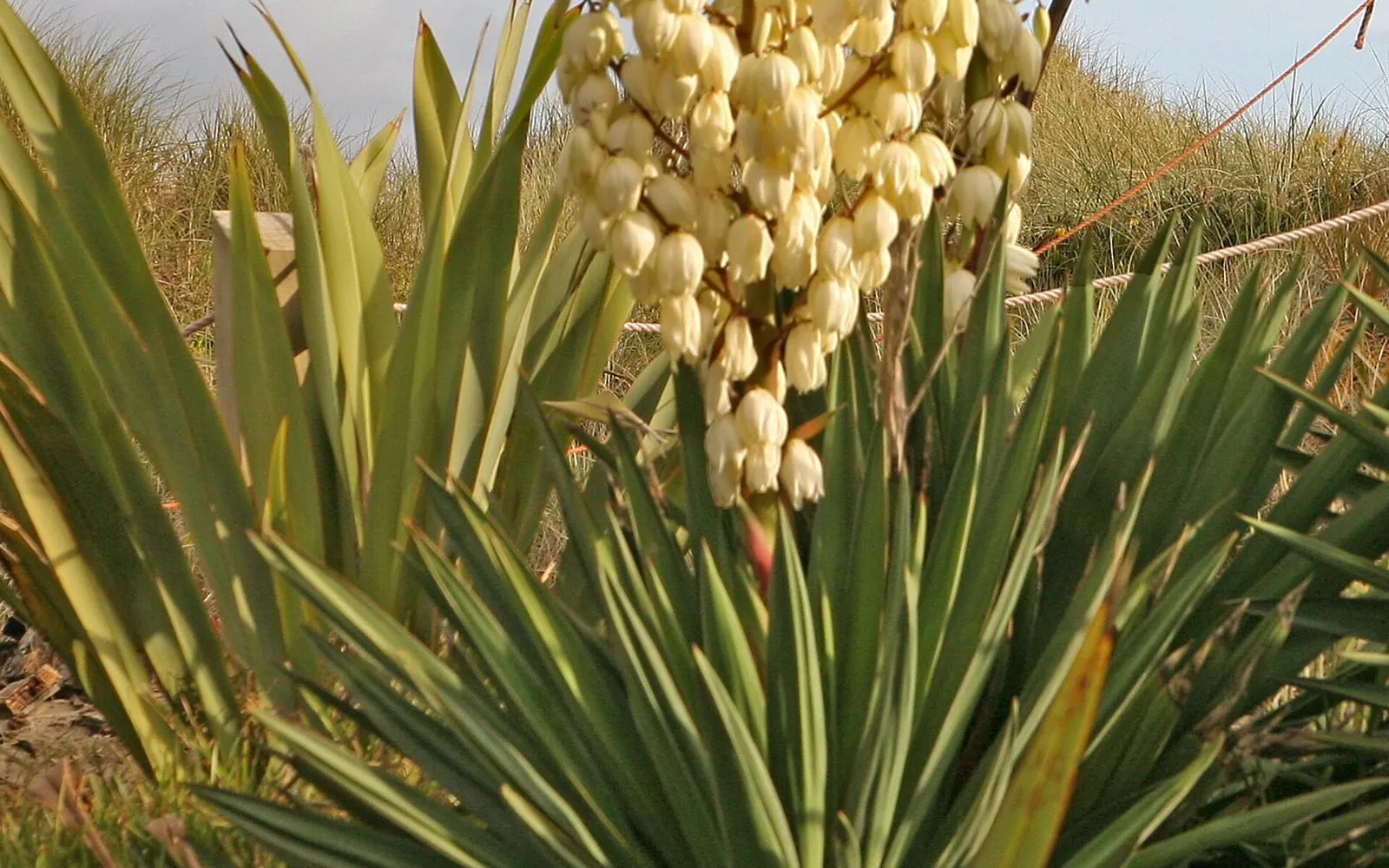
Spanish dagger is well named. Its rosettes are built of stiff, straight, sword-shaped leaves, each ending in a hard, needle-sharp point that will pierce skin and has been known to reach an eye, so this is a plant to admire from a safe distance. It clumps into bold rosettes, sometimes lifted on short trunks, and in late summer sends up tall spikes of large, creamy-white bells that are a fine sight against the spiky foliage.
It is a tough coastal plant from the sandy shores and dunes of the southeastern United States, used to sun, salt wind and drought, and it is fully hardy to frost. That makes it an easy, architectural plant for a sunny border, a gravel garden or a large pot, needing little beyond sun and sharp drainage.
Its sharpness and its mildly toxic saponins are the two things to respect. Site it where no one will brush against the leaf tips, and keep it from pets that chew. Given a sunny, well-drained spot it is very tough, tolerating frost, drought and coastal exposure.
Appearance and character
The leaves are stiff, straight and sword-shaped, blue-green to deep green, arranged in bold rosettes, and each ends in a hard, needle-sharp terminal spine.
The rosettes clump and, with age, may rise on short trunks, building into a substantial architectural plant one to two and a half metres tall.
Unlike its softer-leaved relatives, its rigid leaves hold their dangerous points stiffly outward, which is the reason for careful siting.
Its flowers are tall spikes of large, creamy-white, bell-shaped blooms in late summer and autumn, held well above the foliage and a strong feature of a mature plant.
Where it is from
Yucca gloriosa grows on the sandy shores, dunes and coastal scrub of the southeastern United States, in full sun, salt wind and sharply drained sand. It is a plant of harsh coastal exposure and drought.
Give it full sun and free-draining soil. It tolerates frost, salt wind and drought, and rots only in heavy, wet ground. Sharp drainage and sun are enough.
How it grows
It grows steadily through the warmer months, building and clumping its rosettes, flowers in late summer, and is fully hardy through winter. It is easy and reliable, spreading slowly into a bold clump.
Grow it in free-draining, sandy or gritty soil in full sun, in a border, gravel garden or large pot. Water new plants until established, after which it is drought-tolerant and needs watering only in long dry spells or, in a pot, when the soil dries out.
Remove spent flower spikes and any tatty lower leaves, wearing eye protection and gloves because of the sharp points. It needs no other pruning, and offsets can be detached to propagate.
Propagation is from offsets, stem cuttings or seed, all reasonably straightforward.
Through the seasons
Spring brings fresh growth as the rosettes start again. Tidy old leaves, wearing protection, and remove offsets to propagate.
Summer builds the rosettes and, in late summer, the flower spikes. Water only in drought, and feed little or not at all.
Autumn carries the last of the flowers. Cut down spent spikes, and little other care is needed.
Winter the plant is fully hardy and needs no protection, though its roots should not sit in cold, wet ground.
Care difficulty
Easy, and one of the toughest architectural succulents, given sun and sharp drainage. It tolerates frost, drought and coastal exposure, and needs almost nothing. Its one weakness is heavy, wet soil, which rots the roots. The real considerations are its dangerous leaf tips, which demand careful siting, and its mild toxicity to pets.
Watering
Water a newly planted yucca until it establishes, then leave it largely to the weather, since it is drought-tolerant and stores water in its leaves and roots. In the ground it needs watering only in prolonged dry spells.
In a pot, water when the soil dries and let it drain, easing off in winter. Wet roots in cold, heavy soil are the one thing that rots it, so sharp drainage matters most.
Warning signs, diseases and pests
Heavy, wet soil rots the roots, the commonest cause of trouble, shown by softening, discoloured tissue at the base. Improve drainage, and in pots keep it drier and sheltered from winter wet.
Scale insects settle on the leaves as small brown bumps. Scrape them off and treat the plant with horticultural oil. Otherwise it is little troubled by pests.
The needle-sharp leaf tips are the main hazard; site the plant away from paths, doorways and play areas, and wear eye protection when working near it.
Growing environment
Full sun gives the firmest rosettes and the best flowering. It tolerates a little shade but grows loosest and flowers least there. It needs an open, sunny position.
It is fully hardy to frost and tolerates salt wind and coastal exposure, so it suits a sunny border, gravel garden, coastal planting or large pot. It dislikes only heavy, wet soil.
Grow it in free-draining, sandy or gritty soil in full sun, sited well clear of where anyone might meet its sharp leaves.
Feeding
Feed little or not at all. Lean soil gives the firmest, most architectural growth, and rich feeding forces soft leaves. At most, a single light feed in spring.
A potted plant benefits from fresh gritty compost every few years instead of heavy feeding. Nothing is needed in autumn or winter.
Troubleshooting
The base has gone soft and discoloured. Root rot from heavy, wet soil. Improve drainage, and in pots keep it drier and sheltered from winter wet.
The leaves are dangerously sharp. This is the nature of the Spanish dagger. Site it away from paths and play areas, and some growers trim the very tips off the leaves with secateurs to make it safer near people.
Can it take frost? Yes, it is fully hardy, tolerating hard frost as well as salt wind and drought. It needs no winter protection beyond good drainage.
Is it safe around pets? Its saponins are mildly toxic and the ASPCA lists Yucca as toxic to pets, so keep it from chewing animals. The sharp leaves are the greater hazard.
How is it different from a beaked yucca? This one has rigid, dangerously sharp leaves and clumps into rosettes, where the beaked yucca carries a soft, spherical head of fine, flexible blue leaves on a single trunk.
Spanish Dagger problem guides
Not sure what is wrong? See the common houseplant pests guide.