
Houseplant
Mottled Spurge
Euphorbia lactea
Also known as Dragon Bones, Candelabra Cactus, Mottled Candlestick
How to grow Euphorbia lactea, the mottled spurge or dragon bones, with ridged green-and-white stems and caustic milky sap that needs careful handling.
At a glance
- Difficulty
- Easy
- Water
- Sparingly; let the mix dry out fully between waterings
- Light
- Bright light to full sun
- Temperature
- Warm; keep above 10 deg C
- Humidity
- Undemanding; tolerates dry air
- Hardiness
- USDA 10-12, RHS H1b, hardy to 10 C
- Type
- Evergreen succulent shrub or small tree
- Height
- Up to 5 m in the wild, far smaller in a pot
- Native to
- South Asia
A tender succulent from the hot, dry parts of South Asia, grown as a houseplant. It has no frost tolerance and should stay above about 10 deg C. It needs strong light, sharp drainage and little water, coping easily with heat, drought and dry air, while cold, wet compost rots it. It is treated as a desert succulent rather than a leafy plant.
Hardiness zones describe winter cold alone. Summer heat, humidity, rainfall and the length of the growing season decide as much, so treat the range as the outer limit rather than as a recommendation.
Poisonous if eaten
- Do not eat
- The milky white sap in all parts
- Harm from
- Handling it, sap in the eyes and eating it
- Affects
- People, cats and dogs
Mottled spurge bleeds a milky white latex when cut or broken, and that sap is seriously caustic. On skin it causes burning, redness and blistering, and in the eyes it can cause intense pain and temporary or even lasting damage to sight, so eye contact needs immediate rinsing and medical attention. If eaten, it causes severe mouth and stomach irritation. The ASPCA lists Euphorbia as toxic to cats and dogs. Always wear gloves and eye protection when pruning or repotting it, keep the sap off your skin, and keep the plant away from children and pets.
Sources: ASPCA toxic and non-toxic plants, RHS potentially harmful garden plants
About
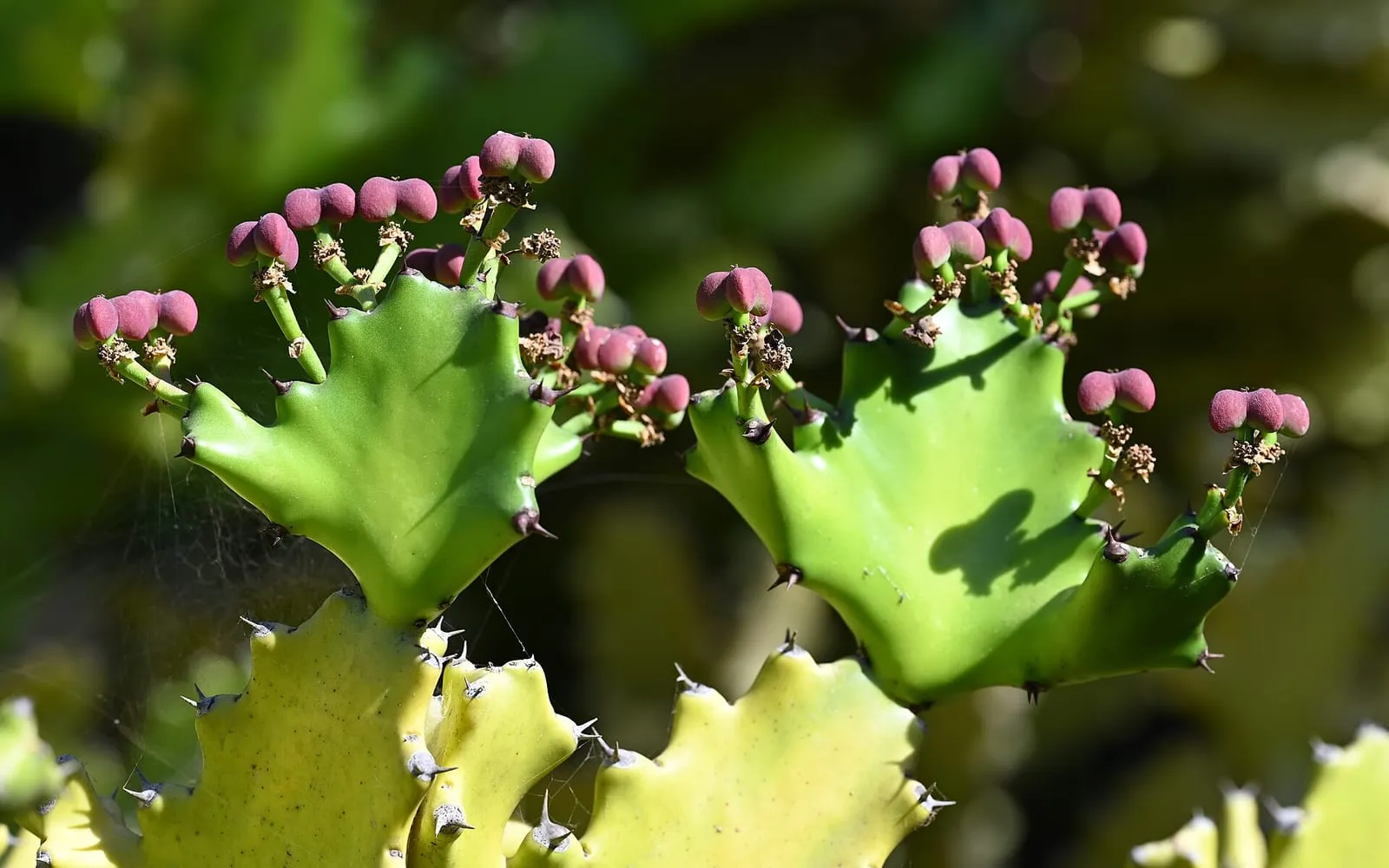
Mottled spurge is a cactus-like succulent grown for its upright, ridged green stems marbled with silvery white along the centre of each face. Despite the look, it is a euphorbia instead of a cactus. It carries the caustic milky sap found across the genus, and that is the main safety point.
It branches into a candelabra of narrow, three or four-sided stems with small paired spines along the ridges, and in the wild it becomes a small tree. In a pot it stays manageable, and the crested form with a wavy, brain-like crown is widely sold.
It is easy to grow, wanting only strong light, sharp drainage and little water. What it needs in return is careful handling, since the sap burns skin and can damage the eyes.
Appearance and character
Stems are upright, narrow and ridged, with three or four flat faces, mid green marbled with silvery white down the centre of each face, giving the mottled look that names the plant.
Small paired spines run along the ridges, sharp enough to catch, and short-lived tiny leaves may appear near the growing tips before dropping.
The habit is branching and candelabra-like, building into a tall, sculptural plant, up to several metres in the wild and far smaller and slower in a pot.
All parts carry the milky white latex of the euphorbias. It bleeds from any cut or break and is the plant’s main hazard.
Where it is from
Euphorbia lactea is native to the hot, dry regions of South Asia, and is now widely grown and naturalised in warm climates. It grows in strong sun on poor, free-draining ground and is adapted to heat and drought.
Give it full sun or bright light, gritty soil and little water. It has no tolerance for frost or wet roots. Sharp drainage and restrained watering keep it healthy.
How it grows
It grows slowly to moderately in warmth and strong light, branching upward, and needs little attention. In a pot it stays compact for years.
Pot it in a very free-draining, gritty cactus mix in a pot that is not too large, and water only when the mix has dried out completely. Support a tall plant if it becomes top-heavy.
Keep it warm, above about 10 deg C, in bright light or full sun, and water very little in winter. Prune only when necessary, always in gloves and eye protection, and stem the flow of sap from cuts with a little water.
Take stem cuttings to propagate, wearing gloves, and let the cut ends dry and stop bleeding for several days before potting them into gritty mix.
Through the seasons
Spring brings renewed growth as light increases, the time to repot or take cuttings, with full protection against the sap.
Summer is the main growing season. Water when the mix dries fully and give strong light.
Autumn slows growth as light drops. Cut the watering back as the season turns.
Winter is rest. Hold it warm, above about 10 deg C, and nearly dry, since cold, wet compost rots it.
Care difficulty
Easy to grow and demanding to handle. Given strong light, gritty soil and little water it thrives with almost no attention. The difficulty is the sap, which burns skin and can damage eyes, so every pruning or repotting needs gloves and eye protection. The plant is tough, but handling it needs real care.
Watering
Give a thorough soak only once the gritty cactus mix has dried right through, then let the surplus run off. Its ridged stems hold their own reserve, drawn on slowly, so the pot can stand dry for weeks. Through winter give barely a drop, since a resting plant sat in cold, wet compost rots from the base.
The stored water in the stems means a dry plant can recover, while a soaked plant rots. Lean firmly towards too dry, and empty any saucer.
Warning signs, diseases and pests
Root rot from overwatering is the one thing that kills it, the stems going soft and yellow and toppling, usually rotting up from the base. Water well back, repot into grittier mix, and, in gloves, cut healthy pieces from the top to root afresh if the base has collapsed.
Mealybugs hide in the stem ridges as white woolly tufts. Treat with horticultural oil or dab them off, taking care not to break the stems and release sap.
The caustic sap is the plant’s real hazard. Any cut releases it, so protect skin and eyes whenever you handle the plant, and keep it away from children and pets.
Growing environment
Bright light or full sun suits it best, keeping the stems firm and well-coloured. Too little light gives weak, drawn growth.
Warmth matters more than humidity. Keep it above about 10 deg C, and it is untroubled by dry air. It needs no misting or humidity tray.
Give it a gritty, free-draining mix and a bright, warm spot, out of reach of children and pets and away from where people brush past. A sunny windowsill or conservatory suits it.
Feeding
Feed lightly, once or twice over spring and summer, with a dilute cactus feed. The plant needs little, and heavy feeding produces soft growth.
Do not feed in winter while it rests. A repot into fresh gritty mix carries it for a year or more, since it grows so slowly in a pot.
Troubleshooting
The sap got on my skin and it burns. Wash it off at once with soap and water. The milky latex is caustic and causes burning and blistering. Wear gloves and long sleeves whenever you cut or handle the plant.
Sap got in my eye. Rinse the eye with plenty of water immediately and seek medical attention, since the sap can cause severe pain and damage to sight. Always wear eye protection when pruning this plant.
The stem is going soft and yellow from the base. Rot from overwatering. Water much less, move it to a grittier, faster-draining mix, and, wearing gloves, take cuttings from the firm upper growth to start again.
Is it a cactus? No, though it looks like one. It is a euphorbia, and unlike a cactus it bleeds caustic milky sap when cut, which is the key difference to remember when handling it.
Is it safe around pets and children? No. The sap burns skin and eyes and irritates the mouth and gut, and the ASPCA lists Euphorbia as toxic to cats and dogs. Keep it well out of reach.
Mottled Spurge problem guides
Not sure what is wrong? See the common houseplant pests guide.