
Houseplant
Powdery Liveforever
Dudleya farinosa
Also known as Bluff Lettuce, Dudleya farinosa, Sea Lettuce
How to grow Dudleya farinosa, the bluff lettuce or powdery liveforever, with clustering chalky rosettes that flush pink on sea cliffs and grow in winter.
At a glance
- Difficulty
- Moderate
- Water
- When the mix dries; more in cool winter growth, little in summer
- Light
- Bright light with some direct sun
- Temperature
- Cool to warm; keep above about 2 deg C
- Humidity
- Low to average; used to coastal fog
- Hardiness
- USDA 9-10, RHS H3, hardy to -4 C
- Type
- Evergreen rosette succulent, winter-growing
- Height
- Rosettes 8 to 15 cm across, clumps wider
- Native to
- Western North America
A cliff-dwelling rosette succulent from the Pacific coast of North America, from Oregon south into California, where it clings to sea bluffs in cool, foggy, mild winters and dry summers. It grows through the cool, moist season and rests in the dry summer, needing bright light and very sharp drainage. It takes a light frost and cool coastal air, is safest above about minus 4 deg C, and rots in warm, wet compost.
Hardiness zones describe winter cold alone. Summer heat, humidity, rainfall and the length of the growing season decide as much, so treat the range as the outer limit rather than as a recommendation.
Not known to be toxic
A safe plant to keep around pets and children. Dudleya, a Californian relative of the echeverias, is not listed as toxic by the ASPCA or the RHS, and has no harmful compound recorded; the rosettes were eaten by Indigenous peoples of the Pacific coast, which is one origin of the name bluff lettuce. A pet or child that bit a leaf would meet a watery, faintly sour mouthful and at worst a mild stomach upset.
Sources: ASPCA toxic and non-toxic plants, RHS potentially harmful garden plants
About
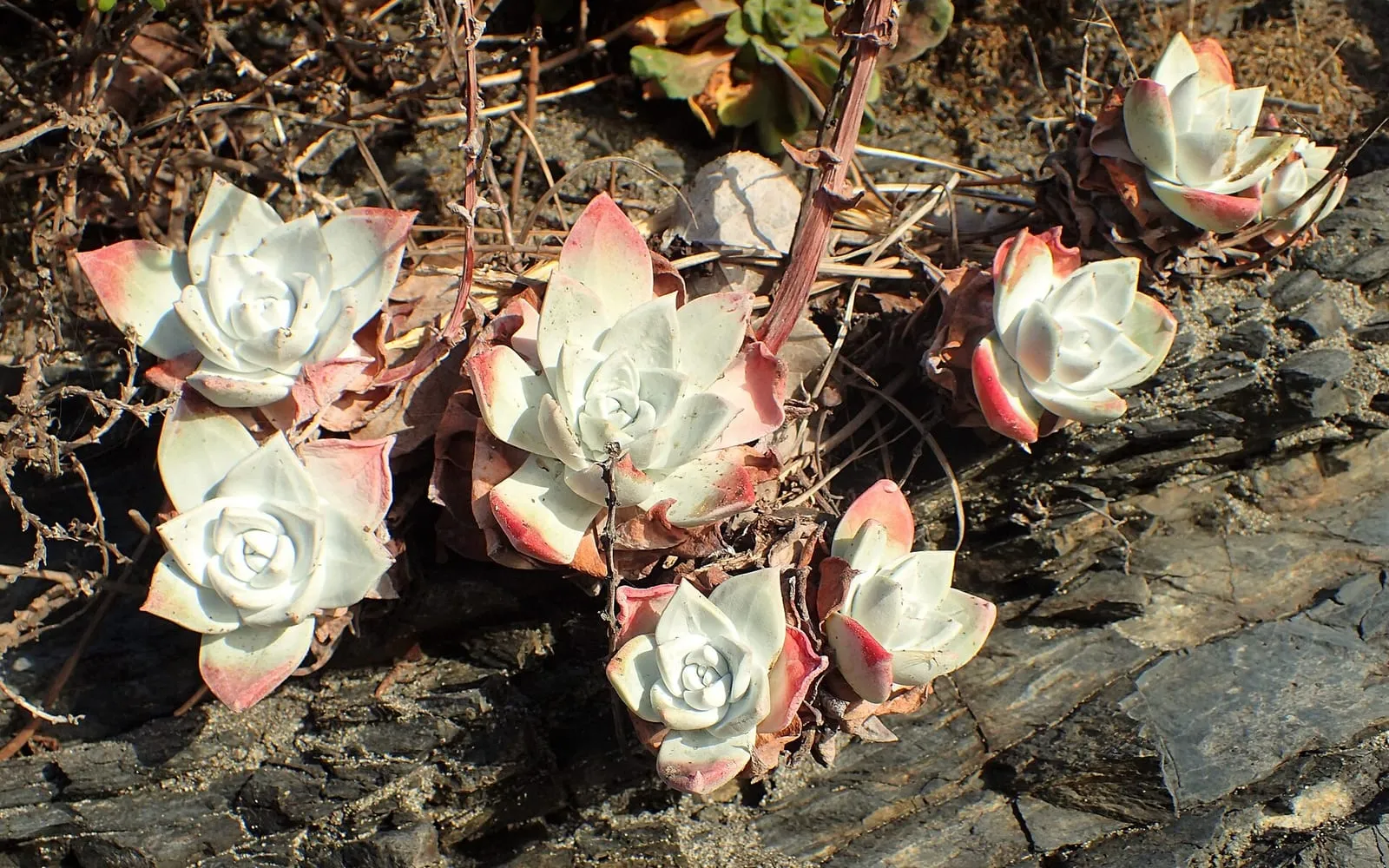
Bluff lettuce grows on sheer sea cliffs and fog-washed headlands of the Pacific coast from Oregon down into California. Its rosettes are small and pale grey-green, coated in a soft chalk, and where the sun and salt wind reach them they turn a warm pink or coral. In the wild, a colony can colour a grey bluff with pink rosettes.
It differs from the giant, single-crowned dudleyas because it clumps. Fresh rosettes bud from the base and build into low, spreading mats, which fills a pot quickly and makes the plant simple to divide. The pale bloom on its leaves is the family’s usual sunblock, and it rubs off at a touch and never returns, so move the plant by its pot and water at the soil.
Its calendar is the coastal Californian one, growing through the cool, foggy, wet winter and resting through the dry summer, the reverse of a typical desert plant’s year. Cool, bright, sharply drained conditions suit it, and a warm, wet pot in the summer heat rots it. It shares that rhythm with the towering giant chalk dudleya, but this species stays small and clumping.
Appearance and character
Each rosette is small, up to fifteen centimetres or so, made of thick, pointed, upcurved leaves under a chalky pale coat, and it warms to pink or coral at the tips and edges under strong sun and cool air.
Instead of standing alone, it buds offsets at the base into spreading mats of many rosettes. The same habit colours wild cliffs and lets you pull the plant apart to propagate.
The chalk coat is a natural sunblock, at its brightest on an unstressed plant, and a fingertip leaves a permanent mark, so the plant is best handled only by its pot.
Its flowers, borne on mature rosettes, are pale yellow to cream on arching reddish stalks in late spring, held above the mats and busy with bees.
Where it is from
Dudleya farinosa grows on the coastal bluffs, headlands and rocky slopes of the Pacific coast of North America, from Oregon through central and northern California, in a cool, foggy, mild-wintered maritime climate with dry summers. It roots in cliff cracks kept damp by sea fog.
That seaside habitat determines its needs. It grows through the cool, damp season and rests dry through summer. It tolerates cool air, coastal fog and a light frost, but warm, wet compost in summer rots it.
How it grows
Its growing months are the cool ones, autumn through spring, when the rosettes swell, the coat is brightest and the colony creeps outward. Through the dry summer it slows and dries down. Keep to that cool-season rhythm; a summer soaking is the usual way the plant is lost.
Pot it in a gritty, mineral, quick-clearing mix in a pan that lets the mat spread, and water at the soil, only in the cool growing season, once the mix has dried. Let it run much drier through the summer rest.
Bright light with a little direct sun keeps the rosettes tight and the edges pink. Keep it as cool as you can above about minus 4 deg C, and let air move over the crowded crowns so they stay dry and less prone to rot.
Because it clusters, propagation is the easiest of any chalky dudleya: lift a rooted offset from the mat as growth restarts in autumn, or sow seed.
Through the seasons
Autumn restarts growth as the coast cools and the fog returns; the rosettes freshen and the mat begins to creep. Water at the soil again once the gritty mix dries out.
Winter is the main growing season. Keep it in bright light, water at the base whenever the mix dries, feed it once or twice, and hold it cool but clear of hard frost.
Spring continues growth and raises the arching flower stalks. Keep watering at the base until the heat comes.
Summer is the rest. The rosettes slow and tighten; keep the mat bright, cool where you can, and much drier, because a warm, wet pot now rots it.
Care difficulty
Moderate, for the pair of reasons shared across the chalky dudleyas. Its year runs backwards from most succulents, so it needs water in the cool months and near-drought in the heat, and a summer soaking rots it; and its coat marks permanently, so it is handled by the pot and watered at the soil. Its clumping makes it the easiest of the group to increase. Given bright light and quick drainage, it is otherwise no trouble.
Watering
Pour the water at the soil, never over the leaves, once the gritty mix has dried, and only through the cool autumn-to-spring growing spell. Splashing the rosettes marks the coat and can pool in the crowded crowns and rot them.
Run it much drier through the summer rest, giving only enough that the rosettes do not shrivel, since a warm, wet pot in the heat can kill it. Rosettes thinning in summer are resting; a soft, discoloured crown is rotting.
Warning signs, diseases and pests
A warm, wet pot in summer rots roots and crowded crowns, the commonest cause of failure. Keep the colony cool and dry through the heat, water only in the cool season, and keep air moving around the crowns. A soft, discoloured centre means rot.
Mealybugs and aphids tuck into the packed rosettes, hidden by the coat; float or wipe them off, disturbing the bloom as little as you can. Green marks on the leaves are coat rubbed away by a hand or splash, and will not come back.
Slack, dull rosettes with weak colour are short of light. Move the colony into brighter light with a little direct sun to tighten the rosettes and bring the pink back.
Growing environment
Bright light with a little direct sun holds the rosettes tight, the coat thick and the edges pink; a dim spot leaves them loose and dull. This is a plant of bright coastal light and cool air.
Cool to warm, dry, airy conditions suit it, down to about minus 4 deg C. It takes cool air and a light frost, needs moving air to keep the crowns dry, and rots in warm, stagnant damp.
Grow it in a gritty, mineral, fast-clearing mix in a shallow pan that lets the mat spread, water at the soil, and lift it only by the pot to spare the coat.
Feeding
Once or twice through the cool growing spell, a dilute, low-nitrogen feed is all the colony needs. Overfeed it and the growth turns soft and the crowded rosettes lose their tight, pink-edged form.
Feed it nothing across the summer rest. After dividing or repotting, the fresh gritty mix supports a colony through its first season.
Troubleshooting
There are green marks on the pale leaves. Coat rubbed off by a hand or splash. It will not return, so handle the plant only by its pot and water at the soil.
The crowns have gone soft and discoloured. Crown rot, usually from a summer watering or water pooling in the packed rosettes. Water only at the soil during the cool season, and keep the colony dry and airy right through the heat.
When should I water? Mainly across the cool autumn-to-spring growing spell, poured at the soil once the mix has dried. Run it much drier through the summer, which is when the colony rests.
How is it different from the giant chalk dudleya? This one is small and clumps into pink-flushed cliff-colonies, while the giant chalk dudleya is one large, brilliant-white rosette. Both grow in the cool season and rest through summer.
Is it safe around pets? Yes. No dudleya has a listed toxin, and the rosettes were once eaten along this coast, so the plant is safe with cats, dogs and children.
Powdery Liveforever problem guides
Not sure what is wrong? See the common houseplant pests guide.