
Houseplant
Medusa Orchid
Bulbophyllum medusae
Also known as Bulbophyllum medusae
How to grow Bulbophyllum medusae, the Medusa orchid, an epiphytic orchid with mop-like heads of long thread sepals that needs warmth and humidity.
At a glance
- Difficulty
- Moderate
- Water
- Keep evenly moist year round; let the surface just dry
- Light
- Bright indirect light
- Temperature
- Warm; keep above about 16 deg C
- Humidity
- High
- Hardiness
- USDA 11-12, RHS H1b, hardy to 15 C
- Type
- Evergreen epiphytic orchid
- Height
- 15 to 30 cm
- Native to
- Southeast Asia
A warm-growing epiphytic orchid from the humid lowland forests of Southeast Asia, perched on tree trunks in dappled light. It needs steady warmth, high humidity and even moisture the year round, with an open, fast-draining root run, and it cannot take frost, chill or a hard dry rest. It is safest above about 16 deg C, and dry air or a dry root run check it.
Hardiness zones describe winter cold alone. Summer heat, humidity, rainfall and the length of the growing season decide as much, so treat the range as the outer limit rather than as a recommendation.
Not known to be toxic
Orchids, including Bulbophyllum, are not listed as toxic by the ASPCA or the RHS, and no harmful compounds are recorded for them. A pet or child that chewed a leaf or pseudobulb would be unlikely to have more than a mild stomach upset. Some Bulbophyllum flowers carry a strong scent that attracts flies, which is normal.
Sources: ASPCA toxic and non-toxic plants, RHS potentially harmful garden plants
About
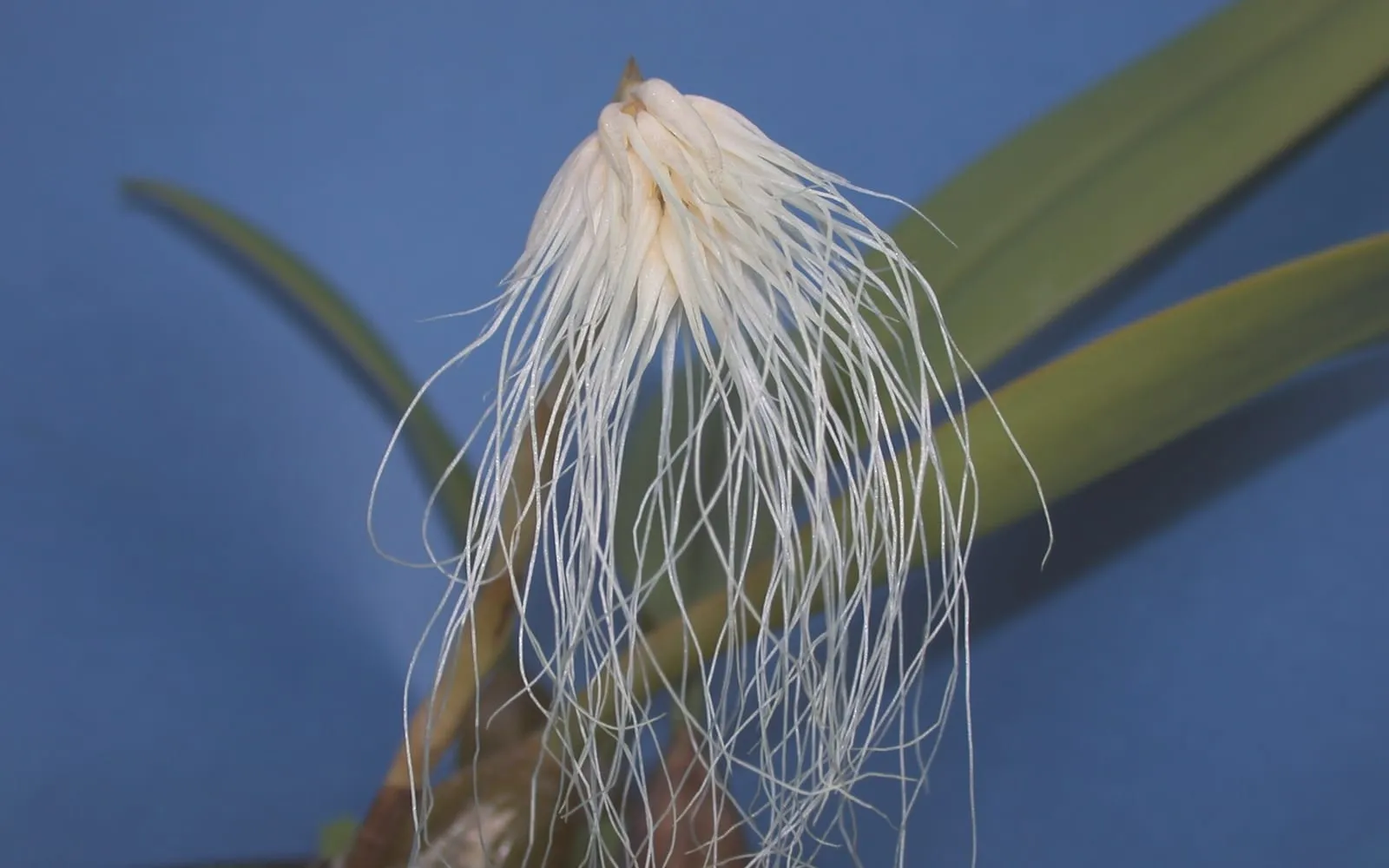
Medusa orchid is grown for its unusual flower head. Its blooms cluster into a rounded head, and the side sepals extend into long, fine, white to cream threads. Those threads tangle together like a mop or a head of pale hair, which is what gives the plant its Medusa name. A plant in flower is easy to recognise among orchid growers.
It is an epiphytic orchid from the humid lowland forests of Southeast Asia, perched on tree trunks in dappled light, its creeping rhizome studded with small pseudobulbs each carrying a leaf. As a warm-growing lowland orchid it needs steady warmth, high humidity and even moisture the year round, with an open, fast-draining root run, and it has no hard dry rest.
Grow it mounted on bark or in a shallow pot of open orchid mix, and keep it warm, humid and evenly moist. It creeps as it grows, so it suits a mount or a wide, shallow container. Its needs are straightforward once its warmth and humidity are met, and the flower head is the main reason to grow it.
Appearance and character
The rhizome creeps along the surface, studded at intervals with small pseudobulbs, each bearing a single leathery leaf, so the plant spreads sideways instead of clumping tightly.
The flowers cluster into a rounded, umbel-like head, from which the side sepals are drawn out into long, fine, white to cream threads that tangle together like a mop of pale hair.
That threaded head is the plant’s main feature. It is unlike most orchid flowers and is often faintly scented, in the Bulbophyllum way, to attract small flies.
It grows warm and evergreen, keeping its leaves and needing even moisture the year round, without the marked dry rest some orchids take.
Where it is from
Bulbophyllum medusae grows in the humid lowland forests of Southeast Asia, perched as an epiphyte on tree trunks and branches in warm, dappled, constantly humid conditions. It is a plant of steady warmth and damp, not of any dry season.
Give it steady warmth, high humidity and even moisture the year round, with an open, fast-draining root run and bright but filtered light. It cannot take frost, chill or a hard dry rest, and dry air sets it back.
How it grows
It grows through the year in steady warmth, creeping along its rhizome and adding pseudobulbs, with no marked dormant season if warmth and moisture stay constant. Warmth, humidity and even moisture keep it growing; cold, dry air or a dry root run set it back and shrivel it.
Grow it mounted on bark or cork, or in a shallow pot or basket of very open, bark-based orchid mix, and keep it evenly moist the year round, letting only the surface just dry, using rainwater. It creeps, so give it room to spread on its mount or in a wide, shallow container.
Give it bright but filtered light, steady warmth above about 16 deg C, and high humidity from a humidifier, tray or grouped plants. Keep it off cold draughts and never let it dry out hard.
Propagation is by division of the creeping rhizome once a plant is large, keeping several pseudobulbs to a piece.
Through the seasons
Spring brings stronger growth as light and warmth build. Resume regular feeding and keep it evenly moist and humid.
Summer is the main growing season. Keep it warm, humid and evenly moist, and feed at quarter strength every couple of weeks.
Autumn growth eases as light fades. Reduce feeding but keep the warmth, humidity and even moisture up.
Winter it rests a little in the dimmer light. Keep it warm above about 16 deg C, humid and evenly moist, never letting it dry out or chill.
Care difficulty
Moderate, and straightforward once its warmth and humidity are met. Given steady warmth, high humidity, even moisture and an open root run, it grows and flowers reliably. It goes wrong in cold, dry air, which shrivels the pseudobulbs, or in cold, wet, stagnant conditions, which rot the rhizome. Its creeping habit suits a mount or shallow pot.
Watering
Keep the plant evenly moist the year round, letting only the surface of the open mix just dry before watering again, and use rainwater, since it comes from constantly humid forest and has no hard dry rest. Soak a mounted plant, then let it come close to dry before soaking it again.
Never let it dry out hard, which shrivels the pseudobulbs, nor sit cold and stagnant, which rots the rhizome. It needs a little less in the dimmer winter light but should stay evenly moist.
Warning signs, diseases and pests
Cold, wet, stagnant conditions rot the roots and rhizome, shown by soft, blackening pseudobulbs and roots. Move it to an airier mount or mix, keep it warmer, and improve air movement.
Dry air or a dry root run shrivels the pseudobulbs; raise the humidity and keep it evenly moist. Scale insects and mealybugs settle on the pseudobulbs and can be wiped off and treated with horticultural oil.
A strong, fly-attracting scent from the flowers is normal for many Bulbophyllum. It is a smell issue, not a health problem with the plant.
Growing environment
Bright but filtered light suits it, matching its dappled forest home. Direct sun scorches the leaves, and deep shade weakens it and prevents flowering. A bright spot out of direct sun is ideal.
Steady warmth above about 16 deg C and high humidity are essential, since it is a warm, humid lowland orchid. Keep it off cold draughts and away from dry radiator heat.
Grow it mounted on bark or cork, or in a shallow pot or basket of very open, bark-based orchid mix, in a warm, humid, brightly but indirectly lit spot, with room to creep.
Feeding
Feed fortnightly at quarter strength with a dilute orchid feed through the growing season, since orchids are light feeders that resent strong fertiliser. Flush the roots with plain water now and then to clear salts.
Reduce feeding in the dimmer winter light, and resume as growth strengthens in spring.
Troubleshooting
The pseudobulbs are shrivelling. Dry air or a dry root run. Raise the humidity, keep it evenly moist, and, if mounted, soak it more often; it has no hard dry rest.
The pseudobulbs and roots are soft and black. Rot from cold, wet, stagnant conditions. Move it to an airier mount or mix, keep it warmer, and improve air movement.
Why do the flowers smell? Many Bulbophyllum flowers carry a strong scent to attract flies as pollinators, which is normal and a matter of smell instead of any problem.
Do I grow it mounted or potted? Either suits it, since it creeps. Mount it on bark or cork, or grow it in a shallow pot or basket of open bark mix, with room to spread. Mounted plants need more frequent soaking.
Is it safe around pets? Yes. Orchids are not listed as toxic, so it is safe with cats, dogs and children.
Medusa Orchid problem guides
Not sure what is wrong? See the common houseplant pests guide.