
Houseplant
Laelia
Laelia anceps
Also known as Mexican Laelia, Christmas Orchid
How to grow Laelia, Laelia anceps, including its tall arching sprays of pink-purple flowers, close kinship with Cattleya, and preference for more light and less water.
At a glance
- Difficulty
- Moderate
- Water
- Water thoroughly through the growing season, then reduce sharply for a distinct winter dry rest
- Light
- Bright light with several hours of direct sun
- Temperature
- 10-28 deg C, tolerating a cooler winter than most epiphytic orchids
- Humidity
- 40-60 percent
- Hardiness
- USDA 9b-11, RHS H1c, hardy to 5 C
- Type
- Evergreen epiphytic and lithophytic perennial orchid
- Height
- 30-45 cm, with flower spikes reaching 60-90 cm
- Native to
- Mexico, Honduras
Native to the highlands of Mexico and Honduras, often growing as a lithophyte on sun-exposed rock faces at elevations where nights turn cool and a pronounced dry season sets in each winter. That combination of strong light, cool nights and a real dry spell explains why this species tolerates conditions that would stress a typical lowland epiphytic orchid, and why keeping it warm, shaded and constantly moist suppresses flowering rather than helping it.
Hardiness zones describe winter cold alone. Summer heat, humidity, rainfall and the length of the growing season decide as much, so treat the range as the outer limit rather than as a recommendation.
Not known to be toxic
Laelia has no toxicity listing from the RHS or the ASPCA, and orchids of this kind carry an unusually clean safety record among houseplants generally. No part of the plant is documented as harmful to cats, dogs or people if chewed, and there is no recorded history of poisoning associated with the species.
Source: ASPCA
About
Laelia anceps is a close relative of Cattleya, grouped alongside it in some older breeding programmes, but built for a sunnier, drier life than most of its showier cousins tolerate. Where a typical Cattleya wants shade from the harshest midday sun and a mix that never runs fully dry for long, this species is often found growing exposed on bare rock faces in strong light, and it carries that toughness into cultivation.
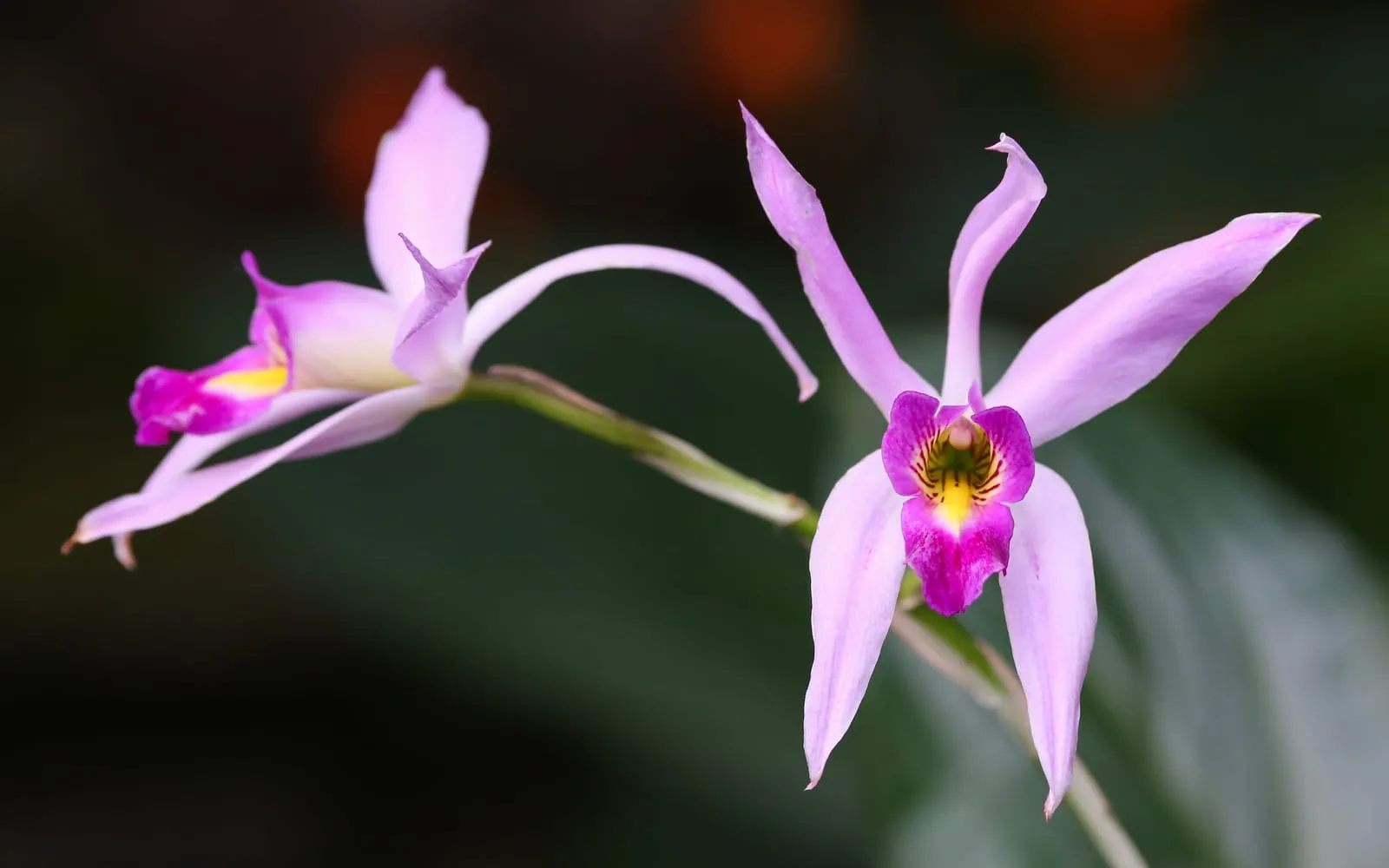
Its flower spikes are the clearest sign of that different origin. A single tall, wiry stem rises well above the foliage, often 60 to 90 cm, and arches gracefully under the weight of two to six large, rose-purple flowers with a deeper, ruffled magenta lip. Few epiphytic orchids of similar size produce a spray held so far clear of the plant itself.
Appearance and character
Growth comes from narrow, upright pseudobulbs, each topped with a single stiff, leathery leaf, forming a spreading clump over several years as new growths emerge from the base of the previous one. The pseudobulbs are noticeably slimmer than a Cattleya’s, in keeping with a species built to tolerate drier conditions between waterings.
Flowers open in succession along the arching spike, each one 8 to 10 cm across, the sepals and petals a clear rose-purple, and the lip a darker, frilled magenta marked with yellow and darker veining toward the throat. A well-grown clump can carry several spikes at once, each one lasting several weeks in bloom.
Where it is from
This species grows through the highlands of Mexico and into Honduras, frequently as a lithophyte rooted directly into cracks and ledges on sun-exposed rock rather than up in the shaded canopy the way many epiphytic orchids grow. At the elevations it favours, nights turn noticeably cool for much of the year, and a pronounced dry season sets in each winter, standing in sharp contrast to the warm, humid, evenly wet conditions many other popular orchids come from.
A grower needs to reproduce that native combination of strong light, cool nights and a real dry season if the plant is to flower well. A Laelia kept warm, shaded and constantly moist, the regime that suits a lowland Phalaenopsis or Cattleya, tends to grow leaves steadily while flowering only sparingly.
How it grows
Pot it in a coarse, fast-draining bark mix, or mount it on bark or a slab once established, both of which suit a species built to dry out between waterings rather than stay evenly damp. A mix that holds too much moisture, of the kind that suits a Zygopetalum or Miltonia, does this species no favours and increases the risk of root rot.
Give it strong light, including several hours of direct sun where possible, considerably more than most epiphytic orchids in this collection tolerate well. A plant kept too shaded produces soft, dark green leaves and rarely flowers, even if otherwise healthy.
From autumn into winter, reduce watering sharply and let the plant experience a real, if not total, dry rest, closer to what it receives in its native highland dry season than to the year-round watering many other orchids prefer. This rest, together with cooler night temperatures, most reliably triggers a strong spring flowering.
Through the seasons
Spring brings the main flowering for many plants, with tall spikes arching out from mature pseudobulbs. Resume regular watering as new growth begins.
Summer is the main growing season, with strong light and regular watering supporting new pseudobulb development. Feed every second watering through this period.
Autumn growth slows as days shorten. Begin easing off watering gradually in preparation for the winter rest.
Winter provide a distinct, cooler dry rest, watering only sparingly. This seasonal contrast, more pronounced here than in many other epiphytic orchids, is central to reliable flowering.
Care difficulty
Moderate. The plant tolerates more light and less water than most orchids a grower may already be used to, which can catch someone out in either direction: too little light or too much year-round watering both suppress flowering, even though the plant itself may look perfectly healthy on either regime.
Watering
Water thoroughly through the main growing season, letting the mix approach dryness before watering again rather than keeping it evenly damp. As autumn arrives, reduce watering sharply for a genuine winter dry rest, closer to what many other epiphytic orchids receive only in a mild form.
Even during the driest part of winter, an occasional light watering prevents the pseudobulbs from shrivelling more than the plant can recover from, but the aim through this period is a real, noticeable reduction rather than a token gesture.
Warning signs, diseases and pests
Scale insects and mealybugs can settle along the pseudobulbs and leaf undersides, appearing as small brown bumps or cottony white tufts. Check regularly, particularly on new growth, and treat with horticultural soap at the first sign.
Spider mites favour the warm, dry conditions this species is often grown in, showing as fine stippled speckling on the leaves; a stronger infestation can appear here than on more humidity-loving orchids grown alongside it, since the drier air this species tolerates also suits the mites.
Shrivelled, wrinkled pseudobulbs during active summer growth point to underwatering, more of a concern here than during the intended winter rest, when some shrivelling is normal. Soft, discoloured pseudobulbs indicate rot, usually from a mix kept too damp or a winter rest that was not dry enough; cut away affected tissue and repot into fresh, coarse bark.
Growing environment
Strong light suits this species well, including direct sun for several hours a day where it can be provided, considerably brighter than most other epiphytic orchids in this collection tolerate without scorching. A south or west-facing window, or time outdoors in summer, usually gives the best flowering.
Moderate humidity, around 40 to 60 percent, is enough; this species tolerates drier air than many other orchids, in keeping with its lithophytic, rock-dwelling habit. A cooler night temperature, especially through autumn and winter, supports flowering more than any single other adjustment.
Feeding
Feed with a balanced orchid fertiliser every second watering through spring and summer, switching to a high-potash, low-nitrogen formula for several weeks before the expected spring flowering to support bud development on mature pseudobulbs.
Stop feeding once the winter rest begins, resuming as new growth picks up strongly the following spring. A plant fed through its dry rest builds soft growth poorly matched to the dry conditions it is meant to be experiencing.
Troubleshooting
The plant grows healthy pseudobulbs but rarely flowers. Almost always too little light, too little winter rest, or both. Give it several hours of direct sun through the growing season and a noticeably drier, cooler winter before judging flowering again.
The pseudobulbs have shrivelled during summer. Underwatering during active growth. Increase watering frequency; some shrivelling during the intended winter rest is normal, but shrivelling in summer signals the plant is being kept too dry for the season.
Spider mites keep returning despite treatment. The warm, drier air this species tolerates well also suits spider mites. Raise humidity somewhat during any active infestation, treat thoroughly, and inspect new growth closely in the weeks that follow.
How dry should the winter rest actually be? Dry enough that the mix approaches full dryness between the occasional light watering, closer to a true dry season than the light seasonal easing off suitable for many other epiphytic orchids. A few weeks without any water at all is tolerated by an established plant.
A pseudobulb has gone soft rather than staying firm. Check for rot, most likely from a mix that stayed too damp or a winter rest that was not dry enough. Cut away the affected tissue and repot into fresh, fast- draining bark.
Can this orchid be grown outdoors through summer? Yes, in a sheltered, bright spot once night temperatures are reliably above around 10 deg C, and many growers find it flowers more reliably with a real summer outdoors before coming back inside for a cooler, drier winter.
Laelia problem guides
Not sure what is wrong? See the common houseplant pests guide.