
Houseplant
Many-Leaved Monanthes
Monanthes polyphylla
Also known as Monanthes polyphylla
How to grow Monanthes polyphylla, the many-leaved monanthes, a miniature Canary succulent with tiny rosettes that form mossy green cushions.
At a glance
- Difficulty
- Moderate
- Water
- When the surface dries; steady in cool growth, less in summer heat
- Light
- Bright indirect light to light shade
- Temperature
- Cool to warm; keep above about 5 deg C
- Humidity
- Low to average
- Hardiness
- USDA 9-11, RHS H2, hardy to 4 C
- Type
- Evergreen dwarf cushion succulent
- Height
- Rosettes 1 to 2 cm; mats low and spreading
- Native to
- Canary Islands
A miniature cushion succulent from the Canary Islands, growing in shaded, humid rock crevices in a mild, maritime climate. Unlike the sun-baking succulents it prefers cooler, brighter shade and a little more moisture, growing through the cool season and resting in high summer. It has little frost tolerance, is safest above about 4 deg C, and rots in hot, stagnant, wet conditions.
Hardiness zones describe winter cold alone. Summer heat, humidity, rainfall and the length of the growing season decide as much, so treat the range as the outer limit rather than as a recommendation.
Not known to be toxic
Monanthes, a small Crassulaceae relative of the aeoniums, is not listed as toxic by the ASPCA or the RHS, and no harmful compound is recorded in the genus. The rosettes are tiny, so a pet is unlikely to bother them, and a nibbled one would be unlikely to cause more than a brief, mild stomach upset.
Sources: ASPCA toxic and non-toxic plants, RHS potentially harmful garden plants
About
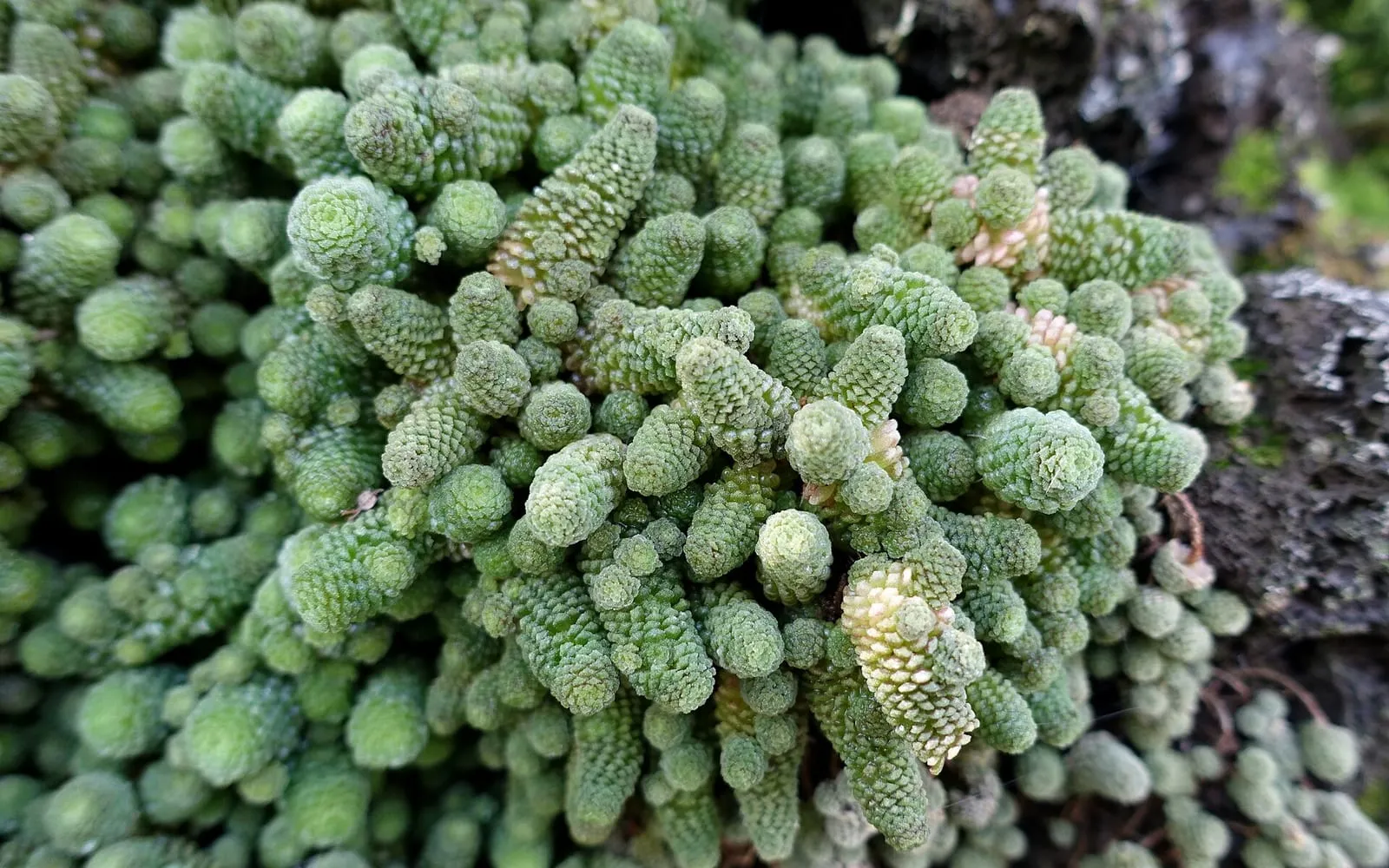
Many-leaved monanthes is a tiny cushion-forming succulent. Its rosettes are barely a centimetre or two across, each packed with dozens of small, soft, fleshy leaves. They multiply into low, dense, green cushions that spread over the surface of a pot and creep into crevices. From a little distance a well-grown plant can look like bright green moss.
It is a Canary Islands plant, but it grows in shade rather than baking sun, in cool, humid rock crevices out of the fiercest light. That sets it apart from most succulents. It needs bright shade instead of full sun, cooler conditions, and a little more moisture. It responds poorly to the hot, dry treatment that suits an aeonium or an echeveria. It grows in the cool season and rests through high summer.
Small and undemanding once its preference for cool shade is understood, it makes an unusual miniature for a shaded sill or a terrarium-like setting. Its tiny starry flowers are easiest to appreciate close up. Given gritty but slightly humus-rich soil, cool bright shade and careful watering, it forms a low green cushion.
Appearance and character
The rosettes are minuscule, one to two centimetres across, each crowded with many small, soft, fleshy, pale to mid-green leaves, giving the plant its name.
They multiply into low, dense cushions or mats that spread over the soil and into crevices, so the plant can look like a mound of moss instead of a set of distinct rosettes.
It prefers cooler, shadier and slightly moister conditions than most succulents, reflecting its home in shaded rock crevices instead of open sun.
Its flowers are tiny, star-shaped and greenish to reddish, often with fine detail visible only close up, borne among the rosettes.
Where it is from
Monanthes polyphylla grows on the Canary Islands, in cool, humid, shaded rock crevices and on damp banks in a mild, maritime climate, out of the fiercest sun. It is a plant of shade and rock, not open desert.
Give it bright shade or indirect light instead of full sun, cooler conditions, free drainage with a little humus, and a little more moisture than a desert succulent. It grows through the cool season and rests in high summer, when heat and stagnant damp can rot it.
How it grows
It grows through the cooler, brighter half of the year, with the cushions spreading and thickening, and rests in the heat of high summer, when growth slows. Cool, bright shade and steady but modest moisture keep it healthy. Fierce sun, heat and stagnant damp all harm it.
Grow it in a free-draining, gritty mix with a little leaf mould or humus, in a shallow pot or pan, and water when the surface dries during the cool growing season. Keep it a touch drier and cooler through high summer.
Give it bright indirect light or light shade, cool conditions above about 4 deg C, and some air movement to prevent stagnation. It suits a shaded sill, a cool porch or a shallow alpine-style pan.
Propagate by teasing apart the cushion into rooted pieces at the start of the growing season, or from seed.
Through the seasons
Autumn brings the cool, brighter growing weather it likes. The cushions spread, so resume steady watering and feeding.
Winter is a main growing season in the cool light. Keep it bright but out of fierce sun, water when the surface dries, and keep it above about 4 deg C.
Spring continues growth, and the tiny flowers may appear among the rosettes. Keep it cool and lightly moist.
Summer is a rest in the heat. Keep the cushion cool, shaded and a touch drier, with good air movement, since hot, stagnant damp is what rots it.
Care difficulty
Moderate, and unusual among succulents in wanting cool shade instead of sun. The main thing to get right is its preference for bright shade, cooler conditions and steady but modest moisture, the reverse of sun-baking succulents. It rots in hot, stagnant, wet conditions, and scorches and shrivels in fierce sun. Given cool bright shade and airy, gritty, slightly humus-rich soil, it is manageable.
Watering
Water when the surface of the gritty mix dries during the cool growing season, keeping the cushion lightly and evenly moist, since it needs a little more moisture than a desert succulent but still does badly in waterlogged soil.
Ease back through high summer, keeping it cooler and a touch drier while it rests, since hot, stagnant, wet conditions are what rot it. A cushion that browns and shrivels signals heat or sun stress; one that goes soft and mushy signals rot.
Warning signs, diseases and pests
Hot, stagnant, wet conditions rot the cushion, shown by soft, mushy, browning patches. Improve air movement, keep it cooler and a touch drier, and remove affected patches. It is the summer heat combined with damp, more than winter cold, that threatens it.
Mealybugs and aphids shelter among the tiny rosettes, hidden by the dense packing. Wash or wipe them out gently and check the cushion closely.
A cushion browning and shrivelling in summer usually means too much sun or heat. Move it into cooler, brighter shade.
Growing environment
Bright indirect light or light shade suits it, matching its shaded rock-crevice home. Fierce direct sun scorches and shrivels the soft cushions, while deep shade thins them. Aim for bright but sunless.
Cool to warm conditions suit it, above about 4 deg C, with some air movement to prevent stagnation. It needs low to average humidity and dislikes both hot, stagnant damp and hard frost.
Grow it in a free-draining, gritty mix with a little leaf mould, in a shallow pot or pan, in cool, bright shade, perhaps on a shaded sill or in a cool porch.
Feeding
Feed sparingly, once or twice in the cool growing season, with a very dilute balanced feed. It needs very little, and rich feeding produces soft growth that rots.
Give nothing through the summer rest. Fresh gritty mix supports a divided or repotted cushion through its first season.
Troubleshooting
The cushion is browning and shrivelling. Too much sun or heat, most likely in summer. Move it into cooler, brighter shade and keep it lightly moist.
Soft, mushy patches have appeared. Rot from hot, stagnant, wet conditions. Improve air movement, keep it cooler and a touch drier, and remove the affected patches.
Why does it want shade when my other succulents want sun? It grows in shaded, humid rock crevices on the Canary Islands instead of in open sun, so it prefers cooler, brighter shade and a little more moisture than the sun-baking succulents.
How do I propagate it? Tease the cushion apart into rooted pieces at the start of the cool growing season, and pot them up, or grow from seed.
Is it safe around pets? Yes. Monanthes is not listed as toxic, and the rosettes are tiny, so it is safe to grow around cats, dogs and children.
Many-Leaved Monanthes problem guides
Not sure what is wrong? See the common houseplant pests guide.