
Houseplant
Southern Maidenhair Fern
Adiantum capillus-veneris
Also known as Maidenhair Fern, Venus's Hair Fern, Common Maidenhair
How to grow Adiantum capillus-veneris, the southern maidenhair fern, hardier than the houseplant maidenhairs but needing constant moisture.
At a glance
- Difficulty
- Easy
- Water
- Keep the compost or soil moist at all times
- Light
- Bright indirect light to shade
- Temperature
- Cool to warm; hardier than tender maidenhairs
- Humidity
- High; it must not dry out
- Hardiness
- USDA 7-10, RHS H4, hardy to -12 C
- Type
- Evergreen or semi-evergreen fern from a creeping rhizome
- Height
- 15 to 35 cm
- Native to
- Warm-temperate and tropical regions worldwide
The most cold-tolerant of the commonly grown maidenhairs, and quite unlike the tender Delta maidenhair sold as a houseplant. It grows wild on damp, shaded limestone rocks and walls near water across warm-temperate and tropical regions, and in mild climates it survives outdoors in a sheltered, shaded, permanently moist spot. What it will not tolerate anywhere is drying out, so constant moisture and humidity matter more than warmth.
Hardiness zones describe winter cold alone. Summer heat, humidity, rainfall and the length of the growing season decide as much, so treat the range as the outer limit rather than as a recommendation.
Not known to be toxic
Maidenhair ferns are not listed as toxic by the ASPCA or the RHS, and no harmful compound is recorded in them. A child or pet that chewed a frond would come to no harm beyond the mild upset any leafy material might cause. It is a safe fern to grow around children and animals, and the delicate fronds are more likely to be damaged by handling than to do any damage themselves.
Sources: ASPCA toxic and non-toxic plants, RHS potentially harmful garden plants
About
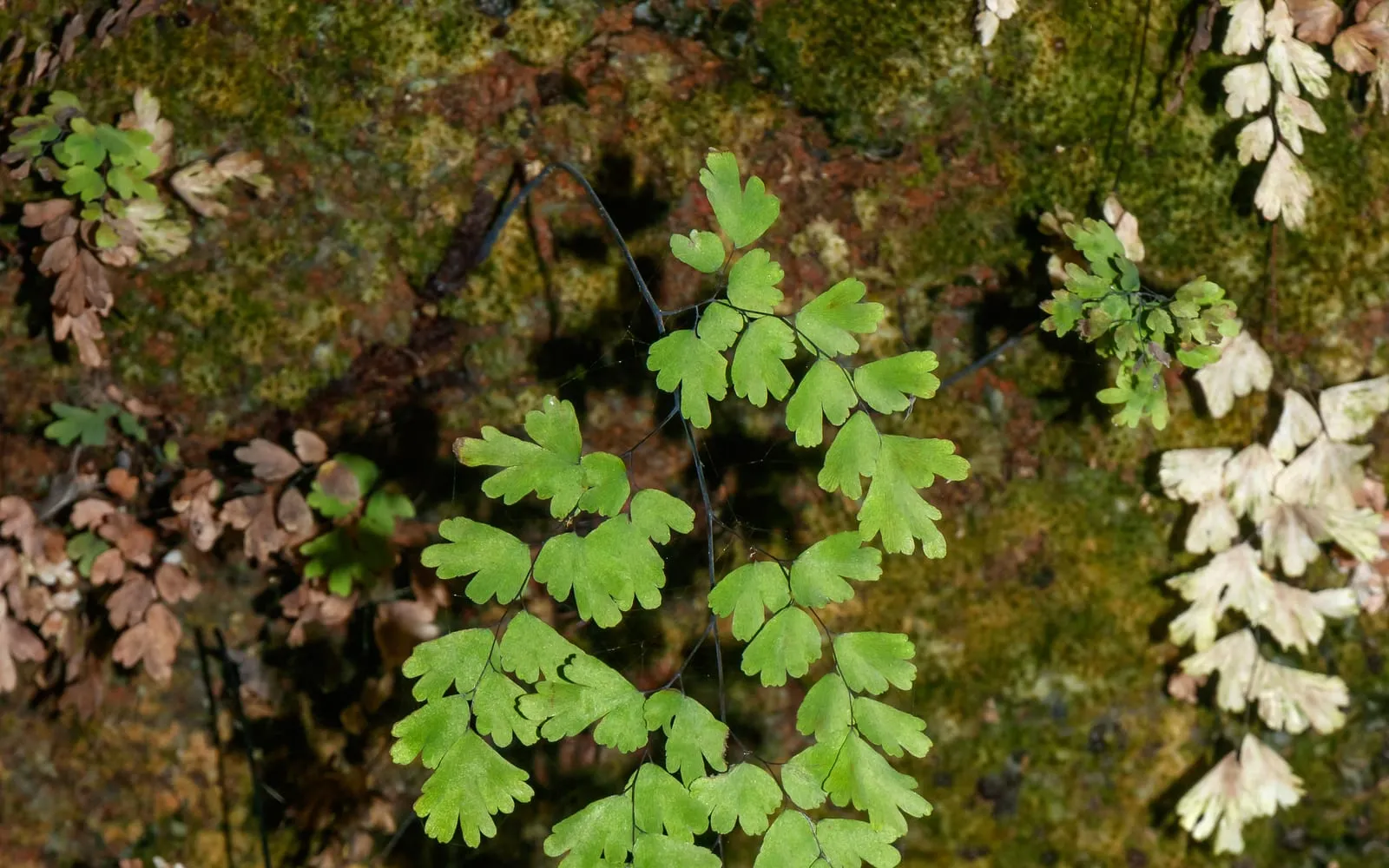
Southern maidenhair fern carries small, delicate, fan-shaped leaflets of the freshest green on fine, wiry, jet-black stems, so the whole plant seems to float. It is the true maidenhair of Europe and much of the warm world, the Venus’s-hair fern, and it grows wild on damp, shaded rocks and walls wherever water seeps over limestone.
It is worth separating from the maidenhair usually sold as a houseplant, the tender Delta maidenhair Adiantum raddianum. This one is hardier, coming from a wider range that reaches into cool-temperate country, and in a mild climate it can be grown outdoors on a shaded, permanently damp wall, which the tender kind cannot.
What it shares with all maidenhairs is a horror of drying out. The fine fronds crisp within hours of the roots going dry, which is the single thing that makes or breaks it, indoors or out.
Appearance and character
Fronds are the whole charm of the plant, finely divided into many small, fan-shaped or wedge-shaped leaflets, each thin and bright light green, giving a soft, lacy, weightless look.
Stems are fine, wiry and glossy black, holding the leaflets out on almost invisible threads, which is where the maidenhair name comes from and what gives the plant its floating appearance.
The habit is a low, arching, spreading clump, fifteen to thirty-five centimetres tall, growing from a slender creeping rhizome that lets it spread over rock and soil.
It is evergreen in mild, humid conditions and may die back and reshoot where winters are colder or drier, returning from the rhizome when moisture and warmth return.
Where it is from
Adiantum capillus-veneris grows across warm-temperate and tropical regions worldwide, on damp, shaded limestone rocks, cliffs, cave mouths and old walls where water seeps constantly. It is a plant of shaded, humid, lime-rich, wet places.
Give it constant moisture and humidity, shade or gentle light, and a neutral to limy soil, and it tolerates cool conditions far better than the tropical maidenhairs. Dry air and dry roots are what it cannot survive.
How it grows
It grows steadily from a creeping rhizome, spreading into a soft clump wherever the surface stays damp and shaded. In constant humidity it grows year-round, and in colder or drier spells it may pause and reshoot.
Indoors, grow it in a moisture-retentive, free-draining, slightly limy compost, in bright indirect light or light shade, and keep the compost moist at all times. A terrarium, a bottle garden or a humid bathroom suits it far better than an open, dry room.
Outdoors in a mild climate, plant it in a shaded, sheltered, permanently damp spot, such as a north-facing wall, a shaded rock crevice or the side of a water feature, where it can root into moist, limy stone or soil.
Trim away any browned or tatty fronds at the base to keep it fresh, and divide the rhizome in spring to make more plants or to refresh an old, congested clump.
Through the seasons
Spring brings new fronds uncurling as light and warmth increase, the best time to divide, repot or plant out.
Summer is the main growing season. Keep the roots constantly moist and the air humid, and shade it from hot direct sun that would scorch the fine fronds.
Autumn growth slows. Keep it moist, and outdoors mulch the crown in colder areas as the season turns.
Winter it rests, evergreen in mild, humid conditions and dying back where it is colder. Keep indoor plants moist and humid, and protect outdoor plants from hard frost and drying wind.
Care difficulty
Easy in the right conditions and quick to fail in the wrong ones. The plant needs two things: constant moisture and humid, shaded air. Given those, it grows happily. The single common cause of failure is letting it dry out, even once, which crisps the fronds. Grow it somewhere naturally humid and it is undemanding.
Watering
Keep the compost or soil moist at all times, watering little and often instead of letting it dry and then flooding it. The fine fronds have no tolerance for dry roots and brown almost at once when the compost dries.
Stand an indoor plant on a pebble tray, or water from below, to keep the roots evenly moist without waterlogging the crown. Use rainwater or filtered water in hard-water areas to keep the delicate fronds clean, though it tolerates lime at the root.
Warning signs, diseases and pests
Crisp, browning fronds are the commonest problem and nearly always mean the plant dried out or sat in air that is too dry. Trim off the damaged fronds, keep the roots moist and the air humid, and fresh fronds will follow.
Scale insects sometimes settle on the stems and fronds as small brown bumps. Because the foliage is so delicate, wipe them off gently or treat with a light horticultural oil instead of anything harsh.
Dry indoor air is the underlying enemy, bringing both browning and pests, so a humid position solves most of the plant’s troubles at once.
Growing environment
Bright, indirect light or light shade suits it, matching the shaded rocks and walls it grows on. Direct sun scorches the thin fronds, and deep shade thins the plant.
Humidity is as important as light. Indoors it does best in a terrarium, a bottle garden, or a humid bathroom or kitchen, and struggles in dry, open room air. A pebble tray or humidifier helps where the air is dry.
The soil should be moist, humus-rich, free-draining and neutral to limy, since the plant grows naturally over limestone. Outdoors, a shaded, sheltered, permanently damp wall or rock crevice in a mild climate suits it well.
Feeding
Feed sparingly, with a balanced liquid feed at half strength or weaker, monthly through the growing season. The fine roots and delicate fronds are easily scorched by strong fertiliser.
Stop feeding in autumn and winter while growth slows, and never feed a dry plant, since fertiliser on dry roots does more harm than good. Fresh compost supplies enough for the first weeks after repotting.
Troubleshooting
The fronds went brown and crisp. It dried out, at the roots or in the air, or both. Trim off the crisped fronds, keep the compost constantly moist and raise the humidity, and new fronds will come. This is the plant’s one great weakness.
How is it different from the maidenhair sold as a houseplant? That is usually the tender Delta maidenhair, Adiantum raddianum. This species is hardier, comes from a wider range, and can grow outdoors on a damp shaded wall in a mild climate, which the tender kind cannot.
Can I grow it outside? In a mild climate, yes, in a shaded, sheltered, permanently moist spot such as a north wall or a shaded rock crevice, ideally over limy stone. Protect it from hard frost and drying wind.
It is covered in small brown bumps. Scale insects. Wipe them off gently or use a light horticultural oil, taking care with the delicate fronds.
It dried out completely and looks dead. Is it? Maybe not. If the rhizome is still alive, cut off all the dead fronds, keep it moist and humid, and it may reshoot from the base. Maidenhairs often return after a dry shock.
Southern Maidenhair Fern problem guides
Not sure what is wrong? See the common houseplant pests guide.