
Houseplant
Lycaste Aromatica
Lycaste aromatica
Also known as Lycaste aromatica
How to grow Lycaste aromatica, a cool orchid with cinnamon-scented yellow flowers, deciduous pseudobulbs and a dry winter rest.
At a glance
- Difficulty
- Moderate
- Water
- Even moisture in leaf; withhold once the leaves drop
- Light
- Bright indirect light
- Temperature
- Cool to warm; cooler, dry rest in winter
- Humidity
- Average to high in growth
- Hardiness
- USDA 10-12, RHS H1c, hardy to 8 C
- Type
- Deciduous epiphytic to lithophytic orchid
- Height
- 30 to 50 cm
- Native to
- Mexico, Central America
A cool-growing orchid from the seasonally dry forests of Mexico and Central America, growing on trees and rocks that are wet in the growing season and dry in winter. It needs bright light and even moisture while in leaf, then a cooler, dry winter rest once the leaves drop. It cannot take frost, is safest above about 8 deg C, and rots if watered during its dry, leafless rest.
Hardiness zones describe winter cold alone. Summer heat, humidity, rainfall and the length of the growing season decide as much, so treat the range as the outer limit rather than as a recommendation.
Not known to be toxic
Orchids, including Lycaste, are not listed as toxic by the ASPCA or the RHS, and no harmful compound is recorded in the genus. A pet or child that chewed a leaf would be unlikely to have more than a mild stomach upset. The leafless pseudobulbs develop small spiny points at the top after the leaves drop, so handle them with a little care.
Sources: ASPCA toxic and non-toxic plants, RHS potentially harmful garden plants
About
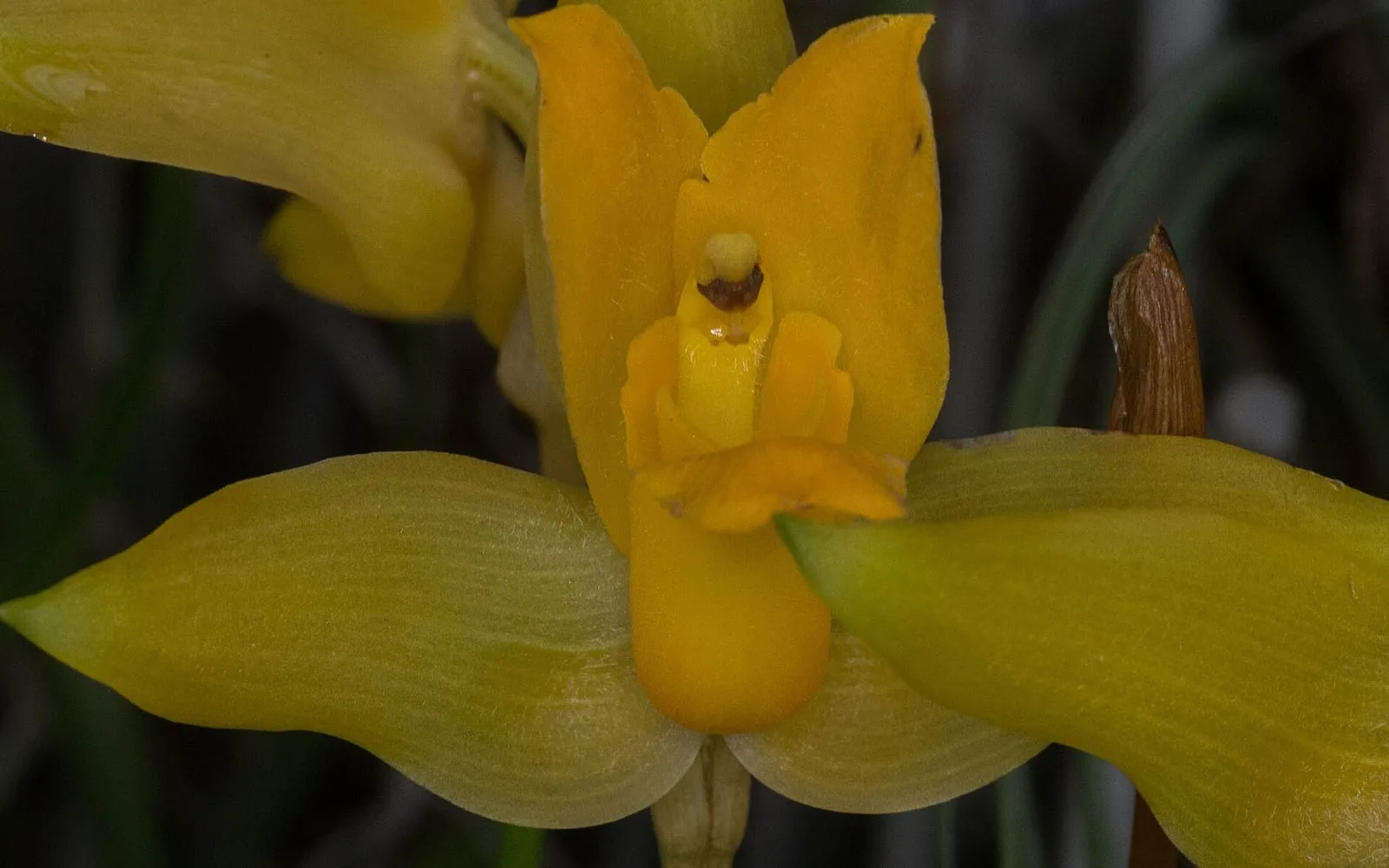
Lycaste aromatica is grown as much for its scent as its bright flowers. In spring, from the base of its leafless pseudobulbs, it sends up a cluster of waxy, cupped flowers in a clear egg-yolk yellow. Each flower has a strong, warm cinnamon scent that can fill a room. A well-grown plant can carry a dozen or more of these fragrant yellow flowers at once in early spring.
It comes from the seasonally dry forests of Mexico and Central America, growing on trees and rocks that are wet in the growing season and dry in winter, and it keeps that rhythm closely. It is deciduous: it grows and carries broad, pleated leaves through the warm, wet season, then drops them and rests, cool and dry, through winter, flowering from the bare pseudobulbs before the new leaves come.
Grown in an open, bark-based orchid mix, kept bright and evenly moist in leaf and then cool and dry once the leaves drop, it is manageable. The key is that dry winter rest, both to trigger the fragrant flowers and to avoid rotting the resting pseudobulbs. The bare pseudobulbs develop small spiny points at the top, so handle them with care.
Appearance and character
The pseudobulbs are plump and clustered, each carrying, in the growing season, one or more broad, pleated, soft green leaves that are shed in autumn.
The flowers are waxy and cupped, a clear egg-yolk yellow, borne in a cluster from the base of the leafless pseudobulbs in spring, and strongly cinnamon-scented.
After the leaves drop, the top of each pseudobulb develops small, sharp spiny points, so the bare pseudobulbs are handled with a little care.
It is deciduous and seasonal, growing in the warm wet season and resting leafless and dry through winter, flowering from the bare bulbs before the new leaves come.
Where it is from
Lycaste aromatica grows in the seasonally dry forests of Mexico and Central America, on trees and rocks that are wet through the growing season and dry in winter, in bright, dappled light. It is a plant of a marked wet-and-dry cycle.
Give it bright light and even moisture while in leaf, then a cooler, dry winter rest once the leaves drop, in an open, fast-draining root run. It cannot take frost, and it rots if watered during its dry, leafless rest.
How it grows
It grows through the warm, wet season, building plump pseudobulbs and broad leaves. It then drops the leaves in autumn and rests cool and dry through winter, flowering from the bare bulbs in spring. The dry winter rest and good light in the growing season help produce flowers.
Grow it in an open, bark-based orchid mix in a pot, and water evenly and feed while it is in leaf and growing, then withhold water almost entirely once the leaves drop, keeping it cool and dry through winter. Resume watering as new growth and flowers appear in spring.
Give it bright indirect light, cool to warm growing conditions and a cooler, dry winter rest, above about 8 deg C. Repot as new growth begins, when the mix breaks down, handling the spiny bare pseudobulbs with care.
Propagation is by division of the clump as new growth starts, keeping several pseudobulbs to a piece.
Through the seasons
Spring brings the fragrant yellow flowers from the bare pseudobulbs, followed by new leafy growth. Resume watering and feeding as growth starts.
Summer is the main growing season in leaf. Keep it bright, evenly moist, and fed at half strength.
Autumn is when the leaves yellow and drop. Ease off watering as they fall, towards the dry rest.
Winter is a cool, dry, leafless rest. Withhold water almost entirely, keep it cool and bright, above about 8 deg C, and let the pseudobulbs rest.
Care difficulty
Moderate, given bright light, even moisture in leaf, and a cool, dry winter rest once the leaves drop. Its main quirk is that deciduous rhythm: watered during its dry rest it rots, and without the dry rest it flowers poorly. It also loses its leaves each winter, which is normal. The spiny bare pseudobulbs need careful handling.
Watering
Water evenly through the growing season while the plant is in leaf, keeping the open mix moist but never sodden, and feed at the same time. As the leaves yellow and drop in autumn, ease off, and once they are down withhold water almost entirely.
Keep it cool and dry through the leafless winter rest, giving only enough to stop the pseudobulbs shrivelling badly, since watering the resting bulbs rots them. Resume normal watering as new growth and flowers appear in spring.
Warning signs, diseases and pests
Watering during the dry, leafless rest rots the roots and pseudobulbs, the most common way to lose it. Keep it cool and dry once the leaves drop, and resume watering only as new growth starts.
Warm, dry air in the growing season brings spider mites and scale; raise the humidity, and treat early. Failure to flower usually means no cool, dry winter rest, or too little light in the growing season.
Leaf drop in autumn is normal, since the plant is deciduous, not a sign of trouble.
Growing environment
Bright indirect light suits it, out of direct sun, and good light in the growing season is needed for flowering. Deep shade prevents bloom.
Cool to warm growing conditions and a cooler, dry winter rest suit it, above about 8 deg C, with average to high humidity while in leaf. It does better in a cool, bright room or greenhouse than a hot one.
Grow it in an open, bark-based orchid mix in a pot in bright indirect light, evenly moist in leaf and cool and dry over its leafless winter rest.
Feeding
Feed fortnightly at half strength with a dilute orchid feed while the plant is in leaf and growing, since orchids do not tolerate strong fertiliser well. Flush the roots with plain water now and then to clear salts.
Stop feeding as the leaves drop and through the dry winter rest, resuming as new growth starts in spring.
Troubleshooting
The pseudobulbs rotted over winter. Watering during the dry, leafless rest. Keep it cool and dry once the leaves drop, and resume watering only as new growth starts in spring.
It dropped all its leaves. This is normal. The plant is deciduous, shedding its leaves in autumn and resting leafless through winter before flowering from the bare bulbs.
It did not flower. Usually no cool, dry winter rest, or too little light in the growing season. Give it a proper dry, cool rest and bright light while in leaf.
Why are the bare pseudobulbs spiny? After the leaves drop, the top of each pseudobulb develops small sharp points. This is normal, but handle the bare bulbs with a little care.
Is it safe around pets? Yes. Orchids, including Lycaste, are not listed as toxic, so it is safe with cats and dogs.
Lycaste Aromatica problem guides
Not sure what is wrong? See the common houseplant pests guide.