
Houseplant
Zygopetalum
Zygopetalum maculatum
Also known as Zygopetalum maculatum, Zygopetalum mackayi
How to grow Zygopetalum maculatum, a fragrant cool orchid. Its green-and-maroon flowers with a violet-veined lip, its rich scent, and how to grow this rewarding, easier orchid.
At a glance
- Difficulty
- Moderate
- Water
- Even moisture in growth; a little drier in winter
- Light
- Bright indirect light
- Temperature
- Cool to warm; cooler nights help flowering
- Humidity
- Average to high
- Hardiness
- USDA 10-12, RHS H1c, hardy to 10 C
- Type
- Evergreen epiphytic to terrestrial orchid
- Height
- 40 to 60 cm
- Native to
- South America
A cool-growing orchid from the forests of southern Brazil and neighbouring South America, growing on trees, rocks and leafy ground in cool, humid, bright conditions. It needs bright indirect light, even moisture in growth and a slightly cooler, drier spell in winter, with cooler nights to help flowering. It cannot take frost, is safest above about 10 deg C, and rots in heavy, wet, stagnant compost.
Hardiness zones describe winter cold alone. Summer heat, humidity, rainfall and the length of the growing season decide as much, so treat the range as the outer limit rather than as a recommendation.
Not known to be toxic
A safe plant to keep around pets and children. Orchids, including Zygopetalum, are not listed as toxic by the ASPCA or the RHS, and no harmful compound is recorded for them. A pet or child that chewed a leaf is unlikely to come to serious harm.
Sources: ASPCA toxic and non-toxic plants, RHS potentially harmful garden plants
About
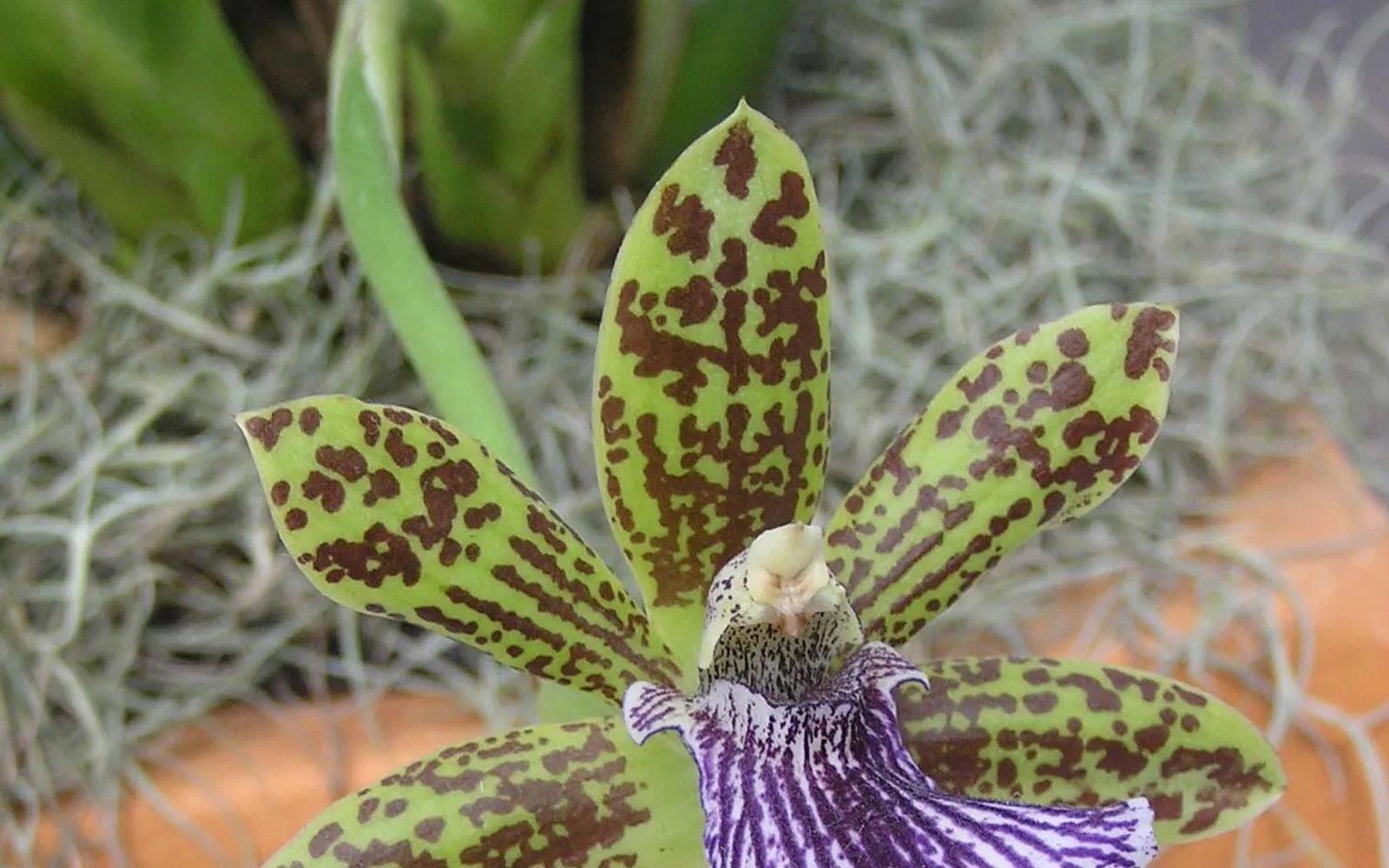
Zygopetalum is grown for scented flowers with strong colour. Each waxy bloom has green to yellow-green sepals and petals blotched and barred with maroon-brown, set off by a broad, flaring lip washed and veined in violet-blue and white. Several flowers are borne on an upright spike, with a sweet fragrance often likened to hyacinths.
It comes from the forests of southern Brazil and neighbouring South America, growing on trees, rocks and leafy ground in cool, humid, bright conditions. It needs bright indirect light, even moisture through the growing season and a slightly cooler, drier spell in winter, with cooler nights helping to bring on the flowers. Its glossy, strappy leaves give it a tidy clump of pseudobulbs even out of flower.
Grown in an open, bark-based orchid mix, kept bright and evenly moist with soft water, and given cooler winter nights, it flowers freely and is more forgiving than many cool orchids. Hard water can streak its leaves with black, so soft water suits it best.
Appearance and character
The flowers are waxy, with green to yellow-green sepals and petals boldly blotched and barred maroon-brown, and a broad, flaring lip washed and veined violet-blue on white, several to an upright spike.
They carry a strong, sweet fragrance, often likened to hyacinths.
The pseudobulbs are plump and clustered, carrying glossy, strappy, mid-green leaves, so the plant forms a tidy clump even out of flower.
It grows cool and evergreen, needing even moisture in growth and a slightly cooler, drier winter, and is among the easier and more forgiving cool orchids.
Where it is from
Zygopetalum maculatum grows in the forests of southern Brazil and neighbouring South America, on trees, rocks and leafy ground in cool, humid, bright conditions. It is a plant of cool, moist, bright forest instead of warm lowland jungle.
Give it bright indirect light, even moisture in growth, a slightly cooler, drier winter with cooler nights, and an open, free-draining root run. It cannot take frost, dislikes hard water, and rots in heavy, wet, stagnant compost.
How it grows
It grows through spring and summer, building its pseudobulbs and glossy leaves, then, helped by cooler winter nights, sends up its fragrant flower spikes in autumn and winter. Bright light, even moisture and cooler nights are what bring the flowers.
Grow it in an open, bark-based orchid mix in a pot, and keep it evenly moist through the growing season with soft water, easing off a little in winter. Let it drain freely, and never let it sit heavy and wet.
Give it bright indirect light, cool to warm conditions with cooler nights, and average to high humidity, above about 10 deg C. Repot in fresh open mix as growth starts when the mix breaks down.
Propagation is by division of the clump as new growth starts, keeping several pseudobulbs to a piece.
Through the seasons
Spring wakes strong growth. Repot if needed, resume feeding, and keep it evenly moist and bright.
Summer is the main growing season. Keep it evenly moist, humid and fed at half strength, in bright indirect light.
Autumn brings the fragrant flower spikes as nights cool. Keep it bright and evenly moist, easing feeding.
Winter is a slightly cooler, drier spell with cool nights. Keep it a little drier and cool, above about 10 deg C, and enjoy the flowers.
Care difficulty
Moderate, and among the easier cool orchids, given bright light, even moisture and cooler winter nights. It flowers freely and is more forgiving than many cool orchids. Hard water can streak the leaves, and heavy, wet, stagnant compost rots the roots. Soft water, an open mix and cooler nights are the main requirements.
Watering
Keep the plant evenly moist through the growing season, using soft water such as rainwater, since hard water streaks its leaves with black. Let the open mix drain freely and never sit heavy and wet.
Ease off a little over the slightly cooler, drier winter, keeping it lightly moist instead of dry. Even moisture in growth, soft water and free drainage are what it needs.
Warning signs, diseases and pests
Black streaks or spots on the leaves usually come from hard water or a build-up of salts, not disease. Water with soft water, flush the roots with rainwater, and the new leaves grow clean.
Heavy, wet, stagnant compost rots the roots; keep the mix open and evenly moist, and repot in fresh bark as it breaks down. Warm, dry air brings spider mites and scale; raise the humidity and treat early.
Failure to flower usually means too little light, or no cooler winter nights; give it brighter indirect light and cooler nights.
Growing environment
Bright indirect light suits it, out of direct sun, which scorches the leaves. Good light is needed for flowering, and deep shade prevents it.
Cool to warm conditions with cooler winter nights suit it, above about 10 deg C, with average to high humidity. It is happier in a cool, bright room or greenhouse than a hot one.
Grow it in an open, bark-based orchid mix in a pot in bright indirect light, evenly moist with soft water, and cooler and a little drier in winter.
Feeding
Feed fortnightly at half strength with a dilute orchid feed through the growing season, since orchids resent strong fertiliser. Flush the roots with soft water now and then to clear salts.
Ease off in the cooler, darker months, and resume as growth strengthens in spring.
Troubleshooting
The leaves have black streaks. Usually hard water or a build-up of salts. Water with soft water such as rainwater, flush the roots, and the new leaves grow clean.
The roots rotted. Heavy, wet, stagnant compost. Keep the mix open and evenly moist, water with soft water, and repot in fresh bark as it breaks down.
It did not flower. Usually too little light, or no cooler winter nights. Give it brighter indirect light and cooler autumn and winter nights to bring on the fragrant spikes.
Is it a good beginner’s orchid? It is among the easier cool orchids, provided you give it soft water, an open mix and cooler nights.
Is it safe around pets? Yes. Orchids, including Zygopetalum, are not listed as toxic, so it is safe with cats, dogs and children.
Zygopetalum problem guides
Not sure what is wrong? See the common houseplant pests guide.