
Houseplant
Giant Chalk Dudleya
Dudleya brittonii
Also known as Dudleya brittonii, Britton's Dudleya, Chalk Liveforever
How to grow Dudleya brittonii, the giant chalk dudleya. Its large rosette coated in white chalk, why not to touch the leaves, and its winter growth.
At a glance
- Difficulty
- Moderate
- Water
- When the mix has dried; more in cool winter growth, little in summer
- Light
- Bright light with some direct sun
- Temperature
- Warm to cool; keep above about 4 deg C
- Humidity
- Low
- Hardiness
- USDA 9-11, RHS H2, hardy to -1 C
- Type
- Evergreen rosette succulent, winter-growing
- Height
- Rosette to 30 to 45 cm across
- Native to
- Baja California
A chalk-coated rosette succulent from the coastal bluffs of Baja California, where it grows in a Mediterranean-type climate of mild, wet winters and hot, dry summers. It grows through the cool, wet winter and rests in the dry summer, wanting bright light, sharp drainage and cool, dry-side conditions. It has little frost tolerance and is safest above about minus 1 deg C.
Hardiness zones describe winter cold alone. Summer heat, humidity, rainfall and the length of the growing season decide as much, so treat the range as the outer limit rather than as a recommendation.
Not known to be toxic
Dudleya, a Californian relative of the echeverias, is not listed as toxic by the ASPCA or the RHS. The rosettes were eaten by Indigenous peoples of its range. A pet or child that bit a leaf would be unlikely to suffer more than mild stomach upset, so the chalky rosette is not considered a poison risk.
Sources: ASPCA toxic and non-toxic plants, RHS potentially harmful garden plants
About
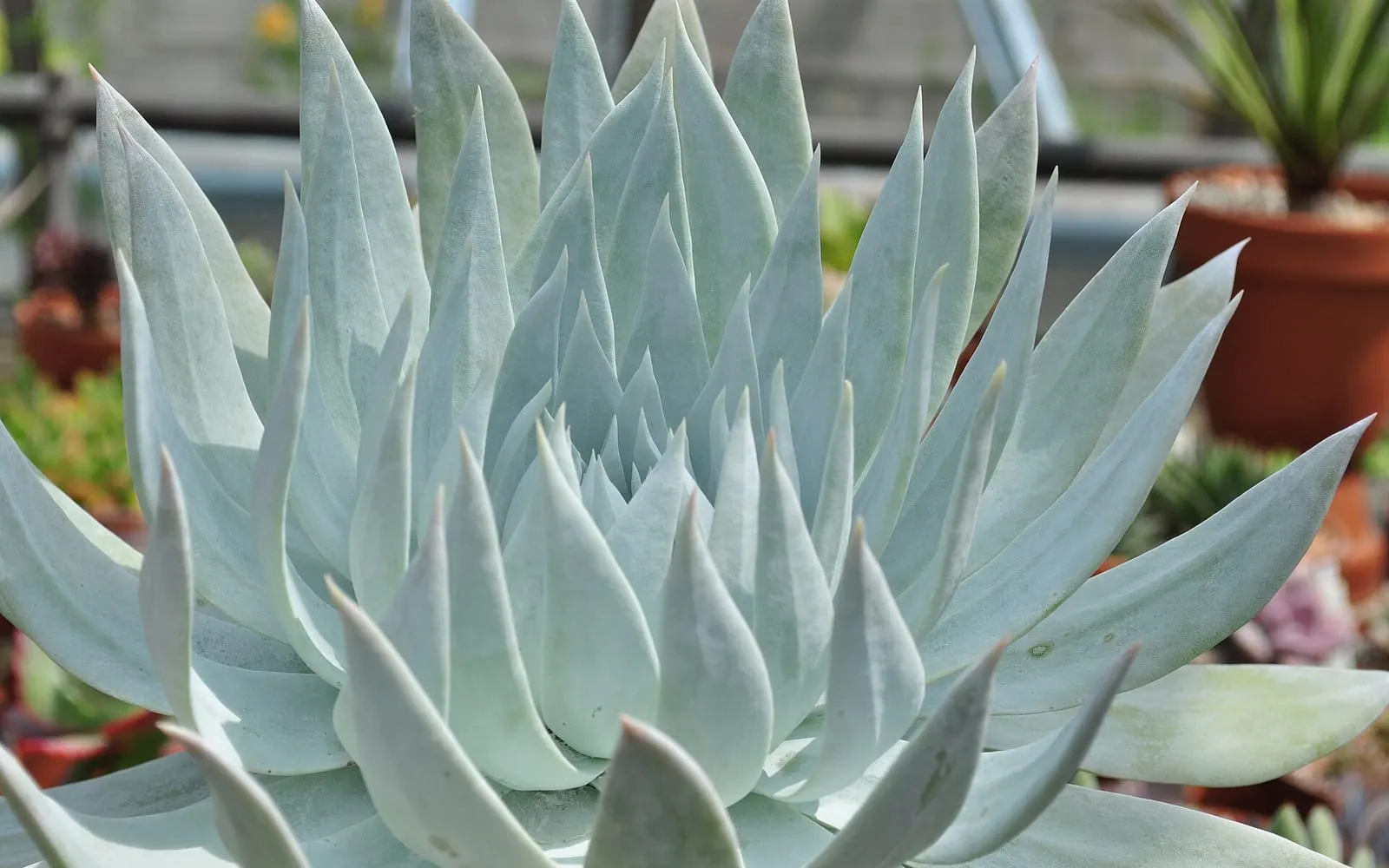
Giant chalk dudleya is one of the whitest succulents most people will ever grow. Its broad, pointed leaves form a large rosette, up to 45 centimetres across, with a thick powdery white coating. In sun, the whole plant looks silver-white. The chalk is a natural sunscreen, a farina the plant secretes to reflect the strong coastal sun of its home.
That coating also creates the plant’s main handling rule: do not touch the leaves. A single fingerprint rubs the chalk away and leaves a permanent green mark that does not regrow. Handle the plant by the pot and water at the base, never over the leaves.
It comes from a narrow band of Pacific-facing bluffs in northern Baja California, fog-cooled, wet in winter and dry all summer, so like the aeoniums it grows in the cool season and rests through the heat. Bright light, sharp drainage and its winter-growing calendar are what it needs. Watered heavily in summer heat, it rots.
Appearance and character
The rosette is large and solitary, up to 45 centimetres across, built of broad, pointed, upcurved leaves, and coated all over in a thick, powdery, chalk-white farina that makes it the whitest of succulents.
That white coating is a natural sunscreen the plant secretes, and it rubs off at a touch, leaving a permanent green fingerprint. The chalk is both the plant’s protection and the part most easily damaged in cultivation.
It grows as a single rosette on a short stem, rarely offsetting, so it is usually raised from seed rather than from pups, and an old plant lifts its rosette slightly on a thickening base.
Its flower, on a mature plant, is an arching, reddish stalk carrying pale yellow blooms in late spring, held well clear of the rosette. The chalk-white leaves are the main reason most growers keep it.
Where it is from
Dudleya brittonii is endemic to a narrow strip of coastal bluffs and rocky slopes in northern Baja California, where it grows in strong sun and fast-draining ground and receives sea fog from the Pacific. Winters there are mild and wet, summers hot, dry and rainless, and the thick chalk turns away the strong coastal glare.
That climate gives it a winter-growing, summer-resting rhythm, the reverse of the desert succulents most growers know. It takes up water through the cool wet months and stays dry through the summer heat, when warm, wet compost would rot the crown. It needs bright light, very sharp drainage and cool, dry-side air.
How it grows
It grows through autumn, winter and spring, the rosette broadening and the chalk at its brightest, and rests over summer, when growth slows and it should be kept dry. This reversed calendar, with growth in cool weather and rest in hot weather, is the main care point. Many plants are lost because they are watered through summer heat.
Grow it in a very free-draining, gritty, mineral mix in a pot sized to the broad rosette, and through the cool growing season water at the base once the mix has dried. Keep it much drier through the summer rest, and never let water run over the leaves, since a splash lifts the chalk and leaves a lasting green mark.
Give it bright light with some direct sun, which keeps the rosette tight and the chalk thick, and keep it cool to warm above about minus 1 deg C. Good airflow helps keep the crown dry and reduces rot risk.
Propagate from seed, since it rarely offsets, and handle seedlings by their roots or the pot to spare their developing chalk.
Through the seasons
Autumn ends the summer rest as temperatures fall. The rosette starts growing again, so begin watering at the base whenever the gritty mix dries out.
Winter is the main growth season. Keep it in bright light, water at the base as the mix dries, feed once lightly, and hold it cool but clear of frost.
Spring continues growth and brings the arching flower stalk on a mature plant. Keep watering at the base until the heat arrives.
Summer is the rest. Growth slows; keep it bright, cool where you can, and much drier, since warm, wet compost now rots it.
Care difficulty
Moderate, for two reasons. Its winter-growing, summer-resting calendar is the reverse of what most people expect, so it rots if watered heavily through summer heat and needs most of its water in the cool months. Its chalk coating also marks permanently at a touch, so it must be handled by the pot and watered at the base. Follow those two rules, give it bright light and sharp drainage, and it is otherwise straightforward.
Watering
Water at the base of the plant, never over the leaves, when the gritty mix has dried during the cool autumn-to-spring growing season. Watering over the rosette marks the chalk and can pool in the crown and rot it, so always water the soil.
Keep it much drier through the summer rest, giving only enough to stop the rosette shrivelling, since warm, wet compost in the heat is what rots it. Leaves that thin slightly in summer are resting; a soft, discoloured crown or base signals rot from summer wet.
Warning signs, diseases and pests
Warm, wet compost in the summer rest rots the roots and crown, the most common way to lose the plant. Keep it dry and cool through the heat, water only in the cool growing season, and keep the crown dry. A soft, discoloured centre means the rot has reached the crown.
Mealybugs and aphids gather in the rosette centre, hidden by the chalk; wash or wipe them out gently, taking care not to rub off more chalk than you must, and check the crown regularly.
Green marks and streaks on the leaves are rubbed-off chalk, from handling or splashing, and do not regrow. Handle the plant only by its pot and water at the base to keep the white coating intact.
Growing environment
Bright light with some direct sun keeps the rosette tight and the chalk thick and white. In poor light the rosette grows loose and the coating thins. It comes from strong coastal light and needs a bright spot.
Cool to warm, dry, airy conditions suit it, above about minus 1 deg C, matching its Mediterranean-type home. It needs low humidity and good airflow, which help keep the crown dry, and dislikes warm, stagnant damp.
Grow it in a very free-draining, gritty, mineral mix in a pot in bright light, watered at the base, and handle it only by the pot to protect the chalk.
Feeding
A dilute, low-nitrogen feed once or twice through the cool growing season is plenty. Too much nitrogen draws up soft leaves that spread the rosette open and thin the chalk, so keep it lean.
Give nothing through the summer rest. Fresh gritty mix carries a newly potted plant through its first season.
Troubleshooting
There are green marks on the white leaves. Rubbed-off chalk, from touching or splashing the plant. The chalk does not regrow, so handle the plant only by its pot and water at the base to keep the coating intact.
The centre has gone soft and discoloured. Crown rot, usually from watering through the summer rest or over the leaves. Water only at the base in the cool season, keep it dry and airy in summer, and keep the crown dry.
When do I water it? Mainly in the cool autumn-to-spring growing season, at the base, when the mix has dried. Keep it much drier through the summer heat, which is its rest. This reversed calendar is the main care point.
The rosette has gone loose and the white has thinned. Too little light. Move it into brighter light with some direct sun to tighten the rosette and thicken the chalk.
Is it safe around pets? Yes. Dudleya is not listed as toxic, so the chalky rosette is safe with cats, dogs and children.
Giant Chalk Dudleya problem guides
Not sure what is wrong? See the common houseplant pests guide.