
Houseplant
San Pedro Cactus
Echinopsis pachanoi
Also known as Trichocereus pachanoi
How to grow San Pedro cactus as an ornamental columnar cactus. Its fast growth, cold tolerance for a cactus, and the legal status of its alkaloid content.
At a glance
- Difficulty
- Easy
- Water
- Regular watering in summer, minimal in winter
- Light
- Full sun to bright light
- Temperature
- Above 5 deg C; brief light frost tolerated once mature
- Hardiness
- USDA 9-11, RHS H2, hardy to -2 C
- Type
- Evergreen perennial cactus
- Height
- 2-6 m outdoors in a favourable climate, much less potted
- Native to
- Andes of Ecuador and Peru
More cold-tolerant than many columnar cacti thanks to its high-altitude Andean origin, tolerating a brief light frost once mature and established in dry soil. It is not hardy through a real temperate winter outdoors, and container-grown plants need to come under cover before the first real frost wherever winters regularly drop below freezing.
Hardiness zones describe winter cold alone. Summer heat, humidity, rainfall and the length of the growing season decide as much, so treat the range as the outer limit rather than as a recommendation.
Harmful if eaten
- Do not eat
- The whole plant, particularly the outer green layer beneath the skin
- Harm from
- Eating it
- Affects
- People
This species contains mescaline and related alkaloids, the same compound found in peyote, and has a long documented history of ceremonial use in parts of the Andes. Eating any part of the plant can cause nausea and disorientation, and mescaline is a controlled substance in many countries; regulations on the plant itself vary by jurisdiction and typically govern preparation for consumption rather than ornamental cultivation. This entry describes growing it as a garden and container cactus and does not cover extraction, preparation or use of any kind; check local law before acquiring the plant if in any doubt.
Source: RHS
About
San Pedro cactus is a fast-growing, tall, ribbed columnar cactus from the high Andes, grown by ornamental cactus collectors for its rapid growth, striking blue-green colour and large, fragrant white flowers that open at night in summer. It is one of the quicker-growing columnar cacti available, capable of noticeable height gain within a single good growing season, unusual among a group of plants generally associated with slow, patient growth.
The species has a long history of ceremonial and traditional use across parts of the Andes owing to the psychoactive alkaloids it contains, and its legal status as a plant varies between countries; this entry covers its horticultural care as an ornamental cactus rather than any aspect of that traditional or recreational use, both because that use falls outside the scope of a growing guide and because regulations differ significantly by jurisdiction.
Appearance and character
Tall, ribbed, blue-green to grey-green columns, typically with six to eight rounded ribs, branch from the base or partway up an older stem, building into a substantial clump over time. Areoles along each rib carry short, inconspicuous spines, much less fearsome than those of many other columnar cacti, which makes handling and repotting comparatively easier.
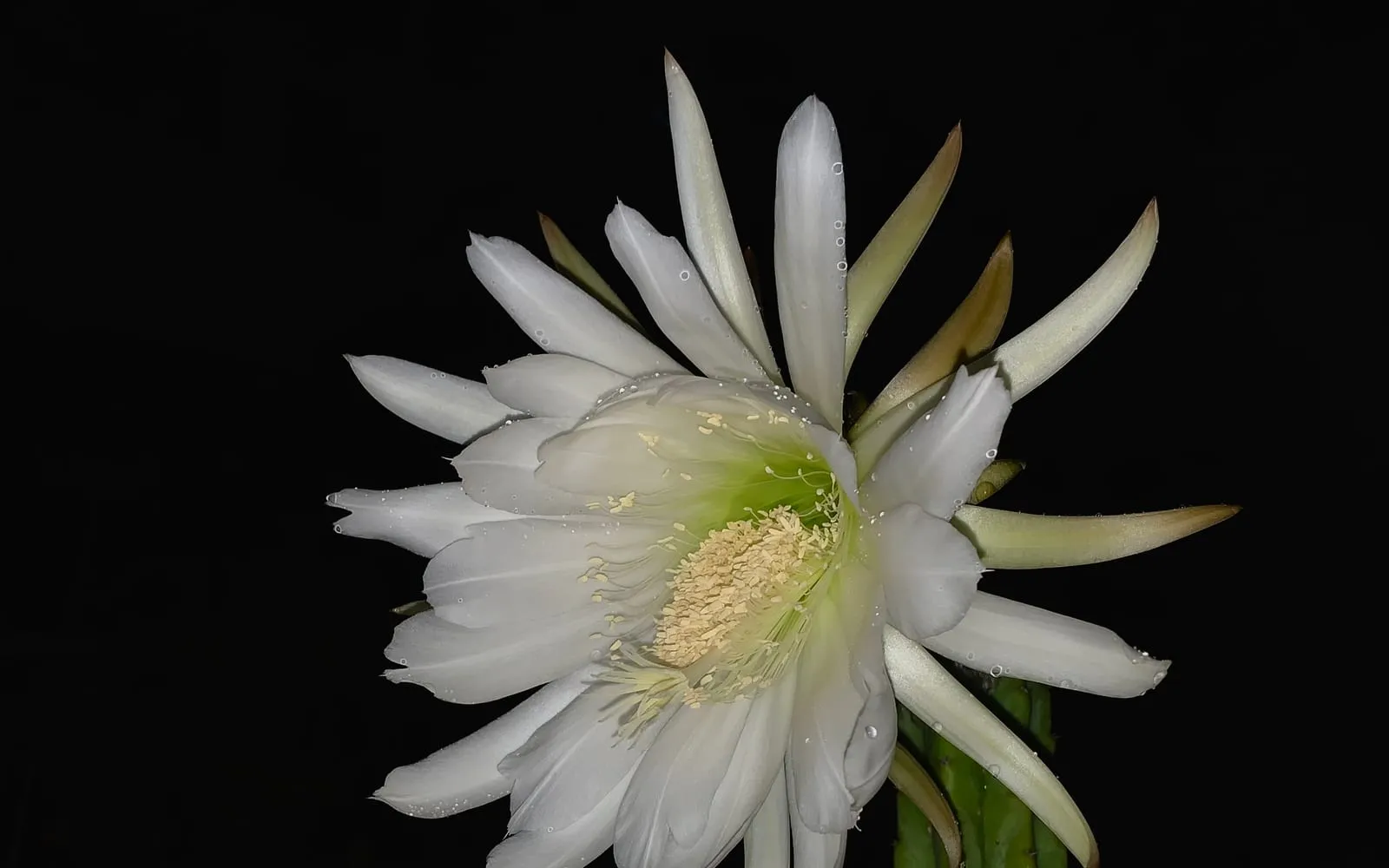
Large, trumpet-shaped white flowers, often 15-20 cm across and lightly fragrant, open at night in summer and typically close again by the following midday, a bloom pattern shared with several other night-flowering columnar cacti and adapted to pollination by moths.
Where it is from
Rocky slopes in the Andes of Ecuador and Peru, typically at moderate to high altitude, where cool nights, intense daytime sun and free-draining soil are the norm.
That high-altitude origin is the source of this species’ better than average cold tolerance for a columnar cactus, since a plant adapted to cool Andean nights copes with an unexpected cold snap noticeably better than a cactus from a uniformly warm lowland desert would.
How it grows
An evergreen cactus growing from the tip of each stem, with new branches arising from the base or from wounds and cuts on older growth. Growth is fast by cactus standards, particularly in full sun with regular summer watering, and a young plant can add a significant amount of height within just a few years given good conditions.
Because it branches readily, both naturally and in response to damage or pruning, an established specimen often develops into a substantial, multi-stemmed clump over time rather than staying as a single column indefinitely.
Through the seasons
Spring growth resumes as temperatures rise and watering increases.
Summer is the main growing season, with the fastest height gain and, on a mature plant, night-blooming white flowers. Feed once or twice through this period.
Autumn growth slows as temperatures and light levels drop; reduce watering accordingly.
Winter keep the compost almost completely dry and the plant somewhere frost-free if grown in a container, since cold, wet compost is a far greater risk to this cactus over winter than cold alone.
Care difficulty
Easy. This is one of the more forgiving and fastest-growing columnar cacti available, tolerant of a wide range of conditions provided the basic cactus rules, strong light and sharp drainage, are respected.
Watering
Water thoroughly during the growing season, then allow the compost to dry out completely before watering again; this species is markedly more tolerant of a generous watering regime in summer than many slower-growing cacti, provided drainage is sharp. Reduce watering drastically over winter, since this is when overwatering does the most damage.
Warning signs, diseases and pests
Mealybug and scale insects occasionally colonise the ribs, particularly in the grooves between them, and respond to careful manual removal or a horticultural oil treatment for persistent infestations. Root rot, usually from overwatering during the cooler months, is the most serious problem this species is likely to face, showing as a soft, discoloured base and, in advanced cases, a stem that topples from rot at the roots.
Pale, yellowish patches on an otherwise healthy stem often indicate too much direct, intense sun for a plant that has not been gradually acclimatised to it, particularly after a period of lower light indoors; moving a plant into strong sun gradually over a couple of weeks avoids this kind of scorch.
Growing environment
Full sun to bright light supports the fastest, most compact growth, though a plant moved from lower light should be acclimatised gradually to avoid scorching. Sharply free-draining, gritty cactus compost is essential, and a container without adequate drainage holes is one of the more common avoidable causes of root rot in this species.
Feeding
A low-nitrogen cactus fertiliser, applied once or twice through the growing season, supports steady, sturdy growth. Avoid heavy or frequent feeding, which can produce soft, weak growth more prone to toppling or splitting.
Troubleshooting
The base of the plant is soft and discoloured. Suspect root rot from overwatering, particularly if this has developed over winter. Cut back to firm, healthy tissue, let the cut callus for several days, and repot into fresh, sharply draining compost.
Yellowish or scorched patches have appeared on the stem. Usually sun scorch from a sudden move into strong direct light. Provide some shade temporarily and acclimatise the plant more gradually in future.
The plant has grown tall and is leaning or has toppled. Fast growth can outpace the strength of the stem in some conditions. Stake a leaning plant if needed, and consider that a plant grown in slightly less rich compost with firm, less frequent watering often develops sturdier growth.
You are unsure about the legal status of owning this plant. Rules vary significantly by country and sometimes by region within a country, and typically concern extraction or use of its alkaloids rather than ornamental cultivation. Check current local regulations directly rather than relying on general assumptions.
A stem has become too tall and top-heavy for its pot. Repot into a heavier, wider container to improve stability, or cut the stem back to a manageable height; a healthy cut section can be left to callus and replanted as a new specimen rather than discarded, since this species propagates readily from cuttings.
San Pedro Cactus problem guides
Not sure what is wrong? See the common houseplant pests guide.