
Houseplant
Joshua Tree
Yucca brevifolia
Also known as Yucca brevifolia
How to grow Yucca brevifolia, the Joshua tree, a slow-growing Mojave icon with branching arms of stiff spiny leaves. It is toxic and sharp.
At a glance
- Difficulty
- Moderate
- Water
- When the mix has dried right through; very drought-hardy
- Light
- Full sun
- Temperature
- Hardy to hard frost; needs heat and dry cold
- Humidity
- Low
- Hardiness
- USDA 6-10, RHS H4, hardy to -12 C
- Type
- Evergreen tree-like succulent
- Height
- Up to 9 m outdoors; a slow specimen in a pot
- Native to
- Southwestern United States
The signature tree of the Mojave Desert in the southwestern United States, growing on high, dry, stony ground with fierce summers and cold, dry winters. It needs full sun, very sharp drainage and long drought, tolerates hard frost when dry, and is safest above about minus 12 deg C. It rots in damp, airless or humid conditions and cannot tolerate wet roots.
Hardiness zones describe winter cold alone. Summer heat, humidity, rainfall and the length of the growing season decide as much, so treat the range as the outer limit rather than as a recommendation.
Harmful if eaten
- Do not eat
- The leaves and roots, which contain saponins; the leaf tips also wound
- Harm from
- Eating it
- Affects
- People, cats and dogs
Yuccas contain saponins that irritate the gut, and the ASPCA lists Yucca as toxic to cats and dogs, which may vomit or drool after chewing the leaves. The saponins are only mildly harmful to people, and the plant's parts have been used as food and soap after processing, but the raw plant is best kept from pets that chew. The greater everyday hazard is physical: the stiff leaves end in hard, sharp points that can inflict a nasty jab, so site and handle it with care.
Sources: ASPCA toxic and non-toxic plants, North Carolina Extension plant toxicity database
About
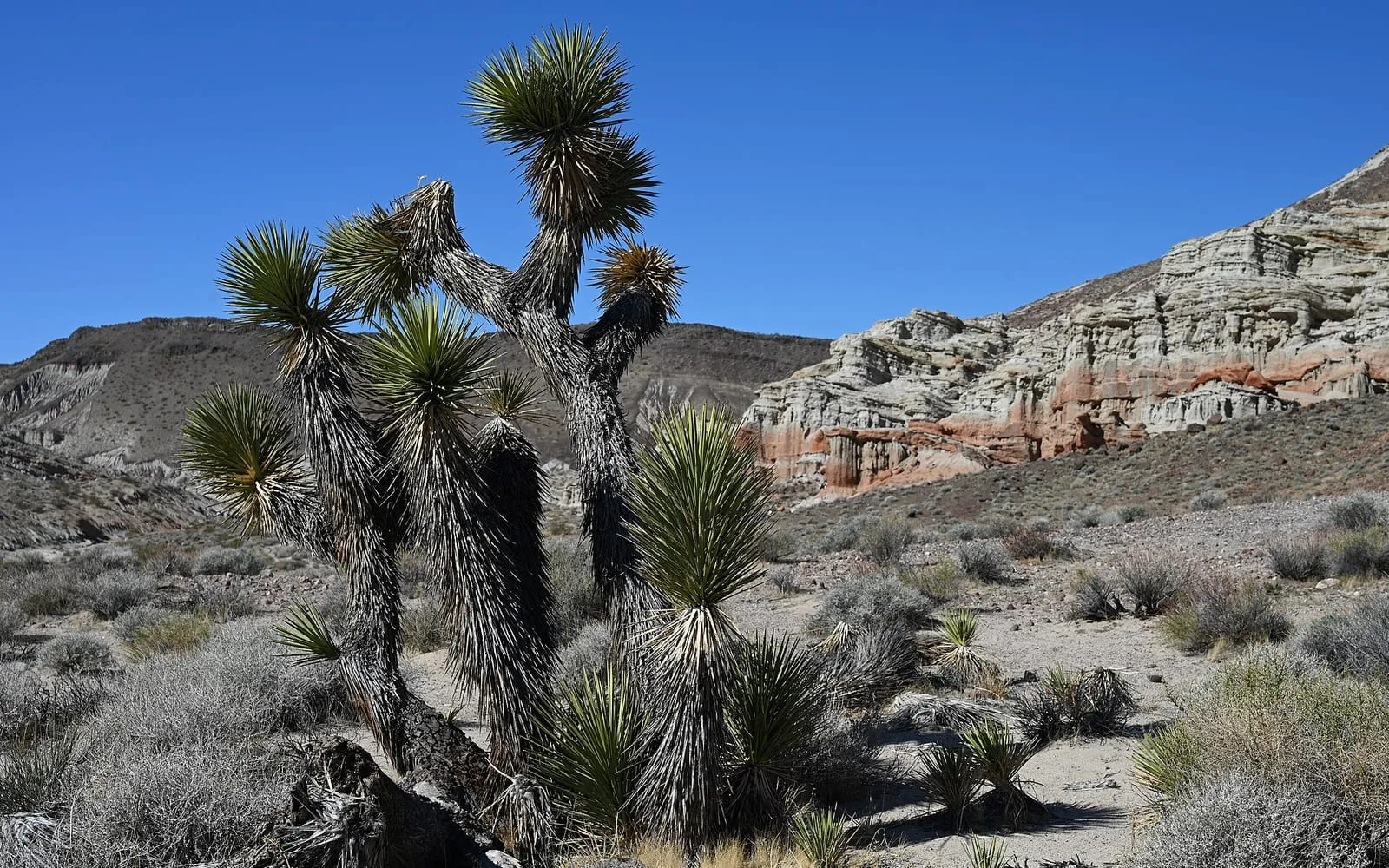
Yucca brevifolia is one of the best-known plants of the Mojave Desert. It has stout, forking limbs, each capped by a bristling tuft of short, rigid blades, and an old wild specimen can stand several metres above the desert floor. Grown in a container it stays a compact, prickly rosette for a great many years.
This is a desert plant through and through. It needs strong sun, a mix that drains in seconds and long dry spells, and its high-country origin has left it hardy to a sharp freeze so long as it stays dry. Muggy, still or waterlogged conditions rot it, so a warm dry corner suits it far better than the average living room.
It grows extremely slowly. A young plant may add almost nothing to its height in a season, so it suits a grower willing to wait. The blades finish in hard, needle-fine points, and the sap carries the mild saponins common to the genus, so where it sits and how it is handled both matter.
Appearance
The leaves are short, thick and dagger-shaped, blue-grey to a dull olive, packed into dense clusters at the ends of the branches, and every one tapers to a hard spike.
The trunk and its arms are broad and shaggy, wrapped in a coat of old brown foliage. A plant branches only after it flowers or suffers damage, so a juvenile is a lone spiky knot while a veteran becomes the many-armed tree seen in desert landscapes.
Growth is very slow. A wild tree adds so little each year that the largest are thought to be centuries old, and a pot-grown plant keeps the same slow pace.
Flowering, when a mature outdoor plant manages it, produces a crowded spike of waxy cream blooms. In the wild yucca moths pollinate it, and a potted specimen almost never reaches the flowering stage at all.
Where it is from
Yucca brevifolia belongs to the Mojave Desert of the southwestern United States, scattered across high, stony plains and bajadas between roughly six hundred and eighteen hundred metres. Summers there are hot, rain is scarce and unreliable, and winters bring dry, biting cold.
Everything about its care follows from that. It needs full sun, drainage that leaves no lingering wet, and weeks or months without rain, and it tolerates hard frost while dry. Humidity, stagnant air and a soggy root zone rot the plant, so heat and dryness matter most.
How it grows
Through the warm season it grows slowly, then shuts down for winter, gaining little at any time of year. Bright sun with drainage and drought keeps it firm and sound, while damp, shade and close air weaken and eventually rot it.
Give it a very open, gritty, lean substrate in a deep pot that lets the roots run down, and water only when the whole mix has dried out. It stores moisture internally and uses water rarely, and rich or spongy compost that holds water around the base.
Full sun with all the warmth and moving air you can supply suits it, and a dry winter lets it take a hard freeze without harm. A hot, bright glasshouse or an outdoor bed in the right climate suits it better than a humid room ever will.
Propagation runs from seed, from the occasional offset, or from root cuttings, though every route tests the grower’s patience.
Through the seasons
Spring starts a little growth as light and warmth return. Resume the odd watering and repot if the pot has grown tight.
Summer is the year’s main growth period, modest as it is. Water once the mix has dried right through, and give full sun with a good flow of air.
Autumn slows growth. Stretch the gaps between waterings and start easing the plant towards a dry winter.
Winter is a parched dormancy. Hard frost does no harm while the plant is dry, so keep it close to bone dry and shielded from cold rain, which is more dangerous than the cold itself.
Care difficulty
Moderate, chiefly because its desert conditions are hard to reproduce indoors. Full sun, fast drainage, warmth and airflow make it durable and long-lived, frost-hardy while dry. Damp, humid or airless surroundings rot it, and its very slow growth demands patience. Sharp leaf tips and a mild toxicity mean it needs a careful position.
Watering
Water only after the gritty mix has dried out completely, then soak it and let it drain away. Stored moisture in the trunk and leaves lets it go far longer between drinks than most houseplants, and it much prefers drought to any lingering wet.
Give next to nothing over winter, when cold and damp together rot it. When in doubt, keep it dry, because it is overwatering instead of thirst that kills this plant.
Warning signs, diseases and pests
Damp, humid or airless conditions rot the roots and crown, the most common way a plant is lost, shown by soft, discoloured, collapsing tissue at the base. Improve the drainage and the air movement, keep it drier, and stand it somewhere hot and bright.
Scale appears on the stiff leaves as little brown bumps and can be scraped away and dabbed with horticultural oil. Slow or stalled growth is normal for the species, not a fault.
The hard leaf spikes are the everyday risk to people. Keep the plant clear of walkways and wear gloves when handling it.
Growing environment
Full sun produces the firmest, healthiest growth. In shade the plant weakens and rots. It needs the most direct light, heat and moving air you can give.
Since it takes hard frost while dry, it can live outdoors in a hot-summer, dry-winter climate, or under glass in a warm bright house. It cannot tolerate dampness, humidity or still air.
Plant it in a very open, gritty, low-nutrient mix in a deep pot in full sun, positioned well clear of anywhere its spikes could jab a passer-by.
Feeding
Feed barely, or not at all. Lean ground suits it, and feeding produces soft growth. At the most, one weak dose of low-nitrogen cactus food during the growing season.
Offer nothing through winter. Because the plant grows so slowly, a fresh gritty mix supports it for a long time without any supplement.
Troubleshooting
The base has gone soft and discoloured. Rot from damp, humid or airless conditions. Sharpen the drainage and airflow, keep it much drier, and move it somewhere hot and bright. A soft crown rarely recovers.
It has barely grown. Expected. The Joshua tree is among the slowest of plants, and a potted one stays small for many years.
Can it take frost? Yes, hard frost, provided it is dry. Its high-desert home has cold winters, so it withstands freezing while kept dry, though cold wet rots it.
Is it dangerous? The saponins are mildly toxic and the ASPCA lists Yucca as harmful to pets, so keep chewing animals away. The larger hazard is the hard, sharp leaf tips, so place and handle it with care.
Why will it not branch? Branching follows flowering or injury, so a young plant remains a single rosette for a long stretch of its life.
Joshua Tree problem guides
Not sure what is wrong? See the common houseplant pests guide.