
Houseplant
Rough Agave
Agave asperrima
Also known as Agave asperrima
How to grow Agave asperrima, the rough agave, a grey clumping rosette of northern Mexico and Texas with sandpapery leaves and a stout terminal spine.
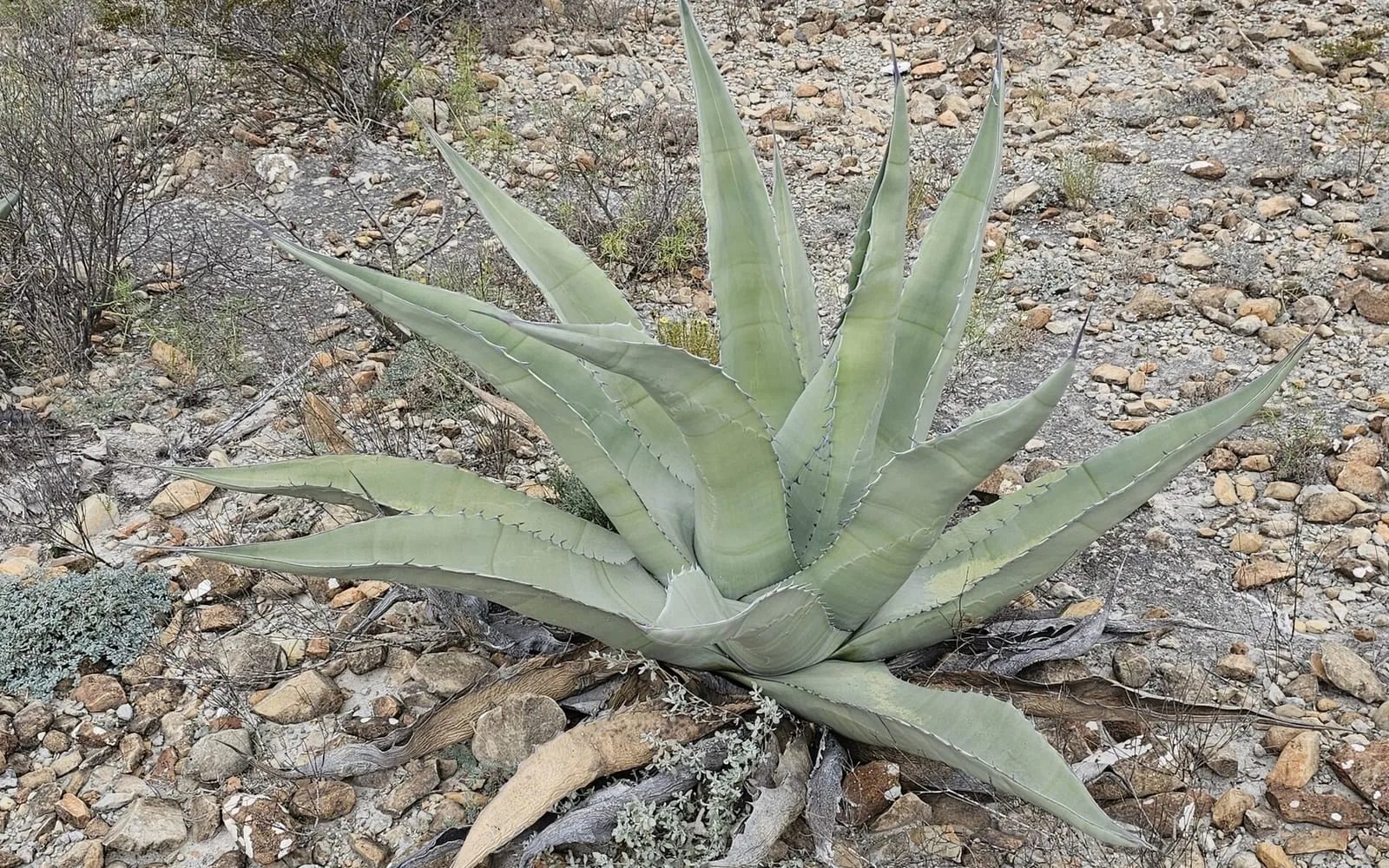
At a glance
- Difficulty
- Easy
- Water
- Once the mix has dried right through
- Light
- Full sun
- Temperature
- Hardy to about -9 deg C when dry; keep frost-free indoors
- Humidity
- Low
- Hardiness
- USDA 8-11, RHS H4, hardy to -9 C
- Type
- Perennial
- Height
- Up to 1.5 m
- Native to
- Mexico, the southern United States
A desert agave from the limestone hills of northern Mexico and the Chihuahuan borderlands of Texas. It takes dry cold to about -9 deg C but not wet cold, so winter drainage determines whether it survives. It needs full sun, and dry air suits it.
Hardiness zones describe winter cold alone. Summer heat, humidity, rainfall and the length of the growing season decide as much, so treat the range as the outer limit rather than as a recommendation.
Toxic if eaten
- Do not eat
- The leaves and sap
- Harm from
- Eating it, handling it and sap in the eyes
- Affects
- People, cats and dogs
Agave sap contains calcium oxalate crystals and saponins. The ASPCA lists Agave as toxic to cats and dogs, and the sap can cause painful skin irritation and inflamed eyes. A pet or child that chews a leaf may drool, vomit or have diarrhoea, and the mouth and throat can be sore. The stout end spine and marginal teeth can also drive sap into a puncture wound. The ASPCA names other agaves instead of this species, so the rating rests on the genus. Wear gloves and eye protection when cutting or repotting, wash sap off skin, and keep the plant away from chewing pets and children.
Sources: ASPCA toxic and non-toxic plants, RHS potentially harmful garden plants
About
Draw a hand down a leaf of Agave asperrima and the name makes sense. The surface has a faint tooth to it, closer to fine sandpaper than to the glassy finish of most agaves, and that texture explains both the Latin epithet and the English name. Older references file it under Agave scabra, which carries exactly the same sense.
Its range runs across northern Mexico and reaches up into the Chihuahuan borderlands of Texas, on limestone hills and open desert grassland. There it forms a broad grey rosette that widens on offsets into a low clump, adapted to drought and strong sun.
Kept indoors or under glass it is tough and tolerant. It stores water in its wide leaves, spreads into a clump, and needs good light, quick drainage and warmth. A cold pot holding water is the main thing that causes trouble.
Appearance and character
The leaves are broad, thick and matt grey, their surface finely roughened to the touch instead of polished. Bold teeth stud the margins, often riding on raised bumps that give the edge a knuckled look, and each blade finishes in a stout, dark terminal spine that keeps hands at bay.
Offsets push up around the base as the plant matures, so a single rosette becomes a spreading clump over the years. That habit lets it spread across desert ground in the wild and fill a wide pot without much help.
Flowering is the end of a rosette. After many years it sends up a tall, branched stalk of yellow bloom, ripens seed, and dies away while its offsets take over. A container plant almost never gets that far, so the rough grey rosette is what people keep it for.
Where it is from
Limestone slopes, gravel flats and desert grassland across northern Mexico and the southern rim of Texas make up its habitat. Rain there is light and seasonal, the sun is strong, and a shower drains into the stony soil within minutes.
That dry habitat explains the care. Strong light and a gritty compost that drains at once are the main requirements, and a cold, sodden pot is unlike its natural conditions. Warmth, brightness and grit give it the closest indoor match.
How it grows
Broad leaves build over the warm months while pups break the surface at the rim, then the clump slows as the light thins. Under full sun the foliage stays thick and grey; short of it the leaves slacken and the rosette stretches.
Its bed is a coarse, grit-heavy compost. Once it is settled, hold off watering until the blend has dried right down, letting the wide leaves use their stored water across the dry weeks, since compost that stays damp damages the roots.
In a pot it takes dry cold to about -9 deg C, though indoors it is safer kept above freezing and away from cold glass. The easiest way to increase it is to prise off a rooted pup, since it comes up already anchored.
Through the seasons
Spring starts the clump into growth as light strengthens. Start watering again and lift crowded pups for potting.
Summer is the main growing season. Water once the blend has dried, and give it full, direct sun.
Autumn slows it. Stretch the dry gaps and cut the feed as the days shorten.
Winter is a warm, dry rest. Water rarely and keep the rosettes clear of cold, damp air.
Care difficulty
Easy, and hard-wearing wherever light and drainage are right. It pups, stores water and needs little feed. The main risk is a cold, wet root run rotting the base, so keep it dry in winter, and the bold teeth and stout spine need room away from passers-by.
Watering
Wait for the grit to dry right through the pot, then give it a heavy soak and tip out whatever the saucer holds. The stored water in the broad leaves keeps the rosette going through a dry spell, while roots sitting in wet compost will rot.
Over winter keep it to the barest trickle, since a chilled, saturated compost finishes a settled plant. When you cannot decide whether to water, leave it, because this agave tolerates thirst far better than sodden roots.
Warning signs, diseases and pests
Most losses trace to rot from a cold, waterlogged root run, shown by a soft, browning base or a rosette that has worked loose in the compost. Improve the drainage, cut the watering right down, above all in winter, and hold it in strong light.
Dry indoor air encourages spider mites, and mealybugs hide around the base of the pups. Part the crowded rosettes to look them over, and treat any colony before it spreads.
Browning tips usually mean scorch or dry air. Steady the watering, give it some air movement, and the leaves recover.
Growing environment
Give it as much direct light as you can. Under full sun the rosette stays close and the leaves thick and grey; in shade the form sags and the colour fades thin.
It takes dry cold to about -9 deg C, but wet cold rots it, so shelter it from cold draughts and winter damp. A sunny sill or a bright glasshouse suits it, and it does well outdoors in a hot summer.
Grow it in a lean, sharp, gritty compost in a fast-draining pot, and give the clump room to broaden. Lift it by the pot to keep your hands off the teeth and spine.
Feeding
A thin, balanced feed once or twice through the growing season is enough. Overfeed it and the broad grey leaves flop and spoil the rosette, so keep the strength down.
Hold off feeding through the winter rest. A repot into fresh grit every few years supports it better than any bottle.
Troubleshooting
Why is my rough agave going soft? A chilled, wet root run is the likely culprit. Sharpen the drainage, cut the watering right back, and hold it warm and brightly lit.
How much light does it need? As much direct sun as you can manage. Shade opens the rosette and fades the matt grey.
How often should I water it? Only after the coarse compost has parched to the bottom, and next to never in winter, reading the mix instead of the calendar.
How do I propagate it? Ease a rooted pup off the spreading clump and grow it on in its own pot.
Is it safe around pets? No. The sap irritates skin and eyes, and the ASPCA lists Agave as toxic to cats and dogs, so keep chewers away. The bold, knuckled teeth and stout end spine need as much care as the sap.
Rough Agave problem guides
Not sure what is wrong? See the common houseplant pests guide.