
Outdoor plant
False Daisy
Eclipta prostrata
Also known as Bhringraj, Yerba de Tago, Han Lian Cao
How to grow false daisy, Eclipta prostrata, a sprawling warm-climate annual of damp ground with small white flowers, known as bhringraj in Ayurveda.
At a glance
- Difficulty
- Easy
- Water
- Keep the soil moist to wet
- Light
- Full sun to partial shade
- Temperature
- Frost-tender; grows in warmth and dies at frost
- Hardiness
- USDA 9-11, RHS H2, hardy to 2 C
- Type
- Fast-growing annual, often rooting where it sprawls
- Height
- 20 to 50 cm
- Native to
- The tropics worldwide
A warm-climate annual of damp ground that grows fast in heat and moisture and dies at the first frost, returning through seed. It thrives in the wet, warm conditions of rice paddies, ditches and damp fields across the tropics and subtropics, and where summers are warm and wet it can self-seed freely. In cool climates it lasts a single warm season.
Hardiness zones describe winter cold alone. Summer heat, humidity, rainfall and the length of the growing season decide as much, so treat the range as the outer limit rather than as a recommendation.
Not known to be toxic
False daisy is widely used in herbal medicine, especially in Ayurveda under the name bhringraj, and the young plant is eaten as a cooked green in some cuisines, so it is not regarded as a poisonous plant. The crushed plant yields a dark, staining juice once used as a dye and a tattoo ink, which marks skin and cloth, so wear gloves if you want to avoid stains. There is no serious toxic hazard, and any medicinal use is a matter for a qualified practitioner.
Sources: RHS potentially harmful garden plants, North Carolina Extension plant toxicity database
About
False daisy is a fast, sprawling annual of warm, damp ground, found across the tropics and subtropics of the world and best known as the Ayurvedic herb bhringraj. It carries small white flowerheads that look like tiny daisies, which is where the common name comes from, on a low, spreading, rather weedy plant.
It grows in the wet: rice paddies, ditches, pond edges, damp fields and other soggy, sunny places, where it can spring up quickly and seed itself freely in a warm season. As a garden plant it is easy in warmth and moisture and is grown mainly by those interested in medicinal or Asian and Indian herbs.
It has a long history of medicinal use in several traditions, as bhringraj in India and as han lian cao in China, and the young plant is also eaten as a cooked green in parts of Asia. This guide covers growing it instead of any medicinal use.
Appearance and character
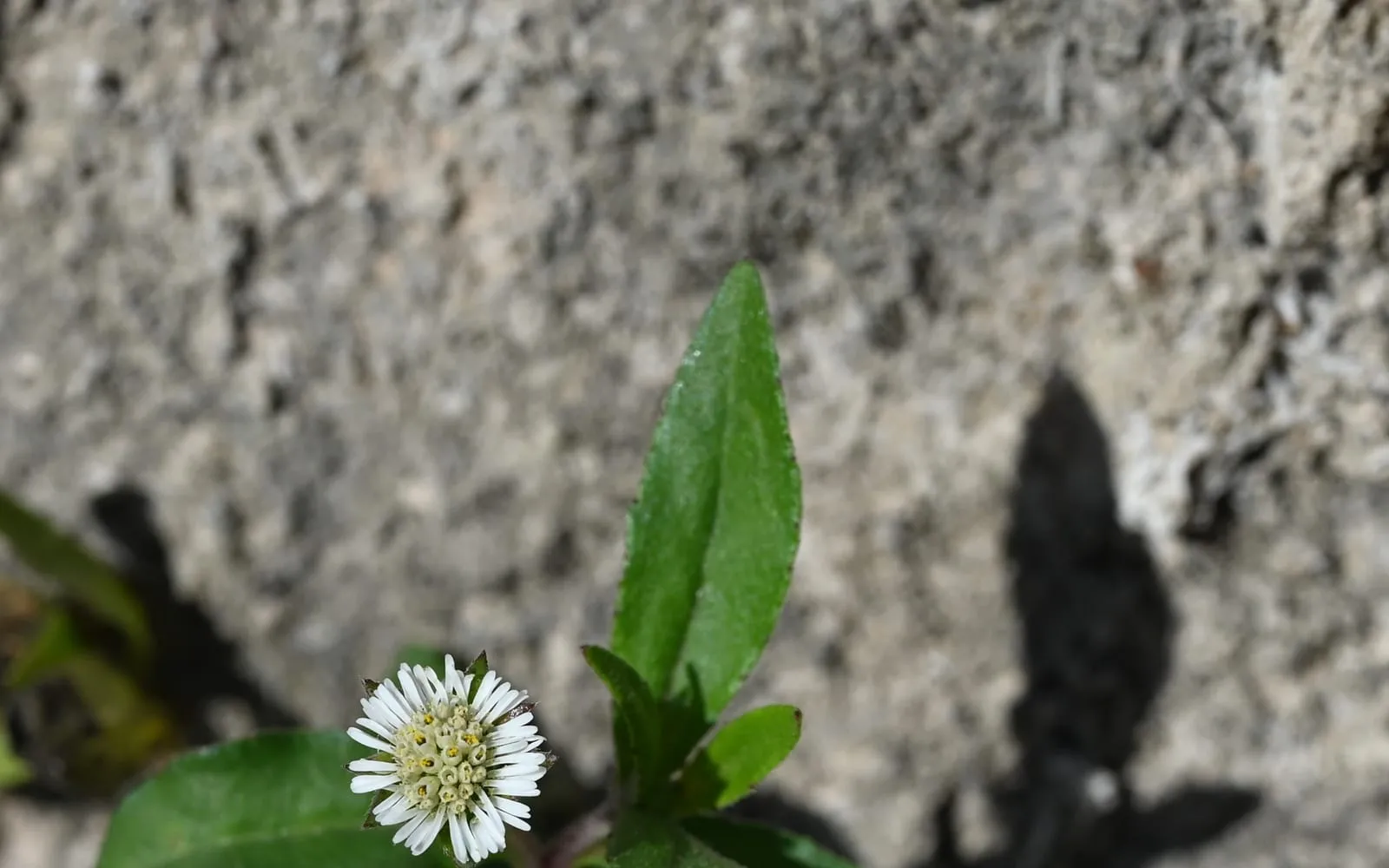
Flowerheads are small and daisy-like, white with a slightly greenish or yellowish centre, sitting on short stalks from the leaf joints, and they open through the warm season on a plant that flowers freely.
Leaves are lance-shaped, pointed, rough and hairy, held in opposite pairs along the stems, mid green and plain.
Stems are slender and often reddish, sprawling along the ground and rooting where the joints touch damp soil, then turning up at the ends, so the plant spreads into a low, loose mat or a lax, leaning clump.
The crushed plant releases a dark juice that stains skin and cloth almost black, a property once used for dye and for temporary tattooing. Wear gloves if you want to avoid stains.
The whole plant is low and weedy in look, some twenty to fifty centimetres, grown for use and interest instead of for any garden display.
Where it is from
Eclipta prostrata grows throughout the warm regions of the world, in wet, sunny places such as rice fields, ditches, marshy ground and damp waste places. It is one of the most widespread weeds of warm, wet farmland.
Give it warmth and wet ground. It needs a moist to wet, fertile soil and a warm season, grows fast when it has them, and dies at the first frost, so in cool climates it is a summer annual and in warm ones a free-seeding, near-permanent presence.
How it grows
Seed germinates in warm, damp soil and the plant grows quickly, sprawling and rooting as it goes, flowering and setting seed through the warm season. Given heat and moisture it needs little care.
Sow it in warmth in spring, or set out young plants once frost has passed, in a moist to wet, fertile, sunny or lightly shaded spot. A pond margin, a boggy corner or a well-watered bed all suit it, and it also grows in a pot kept standing moist.
Keep it wet. This is a plant of damp ground, and it wilts quickly if allowed to dry out. Where the season is warm and wet it will seed itself, so remove spent plants before the seed scatters if you want to keep it in check.
It is a warm-season plant that frost kills outright, so in a cool climate save or buy seed and start again each year, or grow it under cover for a longer season.
Through the seasons
Spring is for sowing in warmth, or planting out once frost has passed, into moist, warm ground.
Summer is fast sprawling growth, flowering and seeding, when keeping the soil wet matters most and the plant is at its most vigorous.
Autumn brings the last flowers and seed, and the first frost then kills the plant. Collect seed beforehand if you want it again.
Winter nothing survives in a cool climate except saved seed, while in a frost-free one the plant may persist and seed on through the year.
Care difficulty
Easy in warmth and moisture, and impossible in cold. Given a warm season and a wet, fertile soil it grows fast and needs almost nothing, to the point of seeding itself freely. The main requirements are heat and constant moisture, and the main limit is frost, which ends it. In a cool climate it is a simple summer annual.
Watering
Keep the soil moist to wet at all times, since this is a plant of paddies and ditches with no tolerance for dry ground. Generous watering, or a naturally damp site, keeps it growing well.
A plant in a pot does best standing in a saucer of water or in a boggy spot through the warm season, and in the ground it needs the wettest, most reliably moist position you can give it.
Warning signs, diseases and pests
Aphids may gather on the soft growth, as on many fast annuals, and can be washed off or left to natural predators. The plant is otherwise rarely troubled, growing too fast and briefly for most problems to build up.
Self-seeding is the main nuisance in a warm, damp garden, where it can spread freely. Remove spent plants before the seed scatters if you want to contain it.
The dark, staining juice of the crushed plant marks skin and cloth, so handle it with that in mind, though it is not a toxic hazard and the plant is safe to grow.
Growing environment
Full sun to partial shade suits it, with plenty of sun in a wet spot giving the strongest growth. It is adaptable on light as long as the ground stays wet.
The soil should be moist to wet and fertile, matching the paddy and ditch habitats it comes from. Dry, free-draining ground is wrong for it, and it is one of the few herbs that prefers soggy soil to a well-drained bed.
A pond margin, a bog bed, a rain garden or a well-watered container all suit it, and it fits best among moisture-loving plants instead of in a dry border.
Feeding
Feed little on a fertile, moist soil, where the plant has plenty to support its fast growth. On a poor soil, a light balanced feed through the growing season helps, but heavy feeding is unnecessary for such a quick annual.
Troubleshooting
It stains my hands black. That is normal. The crushed plant yields a dark juice once used as a dye and tattoo ink, which marks skin and cloth. Wear gloves if you want to avoid the stain; it is harmless.
It keeps drying out and wilting. Too dry. This is a plant of wet ground with no drought tolerance. Keep the soil moist to wet, move it to a damper spot, or stand a potted plant in water through the warm season.
Will it survive winter? Only where it never frosts. It is a frost-tender annual, killed by the first frost, so in a cool climate save seed and sow again each spring, or grow it under cover.
Can I eat it? The young plant is eaten as a cooked green in parts of Asia and it is widely used in herbal medicine, so it is not a poisonous plant. Cook it as a potherb from a plant grown without pesticides instead of eating it raw, and leave any medicinal use to a qualified practitioner.
Is it invasive? It can seed itself freely in warm, damp ground and is a common weed of wet farmland, so remove spent plants before they seed if you want to keep it contained. In a cool climate frost limits it.