
Houseplant
Dwarf Chin Cactus
Gymnocalycium baldianum
Also known as Baldy's chin cactus
How to grow dwarf chin cactus as a houseplant. Its ribbed, spineless-looking body, large red flowers, and why strong light matters for both.
At a glance
- Difficulty
- Easy
- Water
- Regular watering in summer, minimal in winter
- Light
- Bright light, protected from harsh midday summer sun
- Temperature
- 10-28 deg C; tolerates a cool, dry winter rest
- Hardiness
- USDA 9-11, RHS H2, hardy to 2 C
- Type
- Evergreen perennial cactus
- Height
- 5-8 cm tall, 6-10 cm wide
- Native to
- Argentina
Tolerant of a light chill but not real frost, best grown as a container plant in most temperate climates. A cool, dry winter rest supports better flowering the following season, and this species tolerates a slightly shadier position than many other cacti without losing its compact shape, though flowering still depends on reasonably bright light overall.
Hardiness zones describe winter cold alone. Summer heat, humidity, rainfall and the length of the growing season decide as much, so treat the range as the outer limit rather than as a recommendation.
Not known to be toxic
Dwarf chin cactus has no toxicity listing from the RHS or the ASPCA and is considered safe around pets and children. Its spines are short and comparatively soft for a cactus, making it one of the more forgiving species to handle during repotting, though care is still worthwhile since any cactus spine can scratch skin.
Source: RHS
About
The dwarf chin cactus is a small, compact species prized for the combination of its neat, rounded, ribbed body and its comparatively large, vivid red to deep pink flowers, which are strikingly out of proportion to the modest size of the plant that produces them. It belongs to the Gymnocalycium genus, whose common name chin cactus refers to the small, chin-like protrusion beneath each areole visible on many species in the group.
Its compact size and reliable flowering have made it a popular starting species for people new to growing cacti. It can flower while still small, rather than needing years of growth before it does anything visible.
Appearance and character
A small, rounded, distinctly ribbed stem, typically bluish-green to grey-green, has short, curved spines along each rib that lie close to the body rather than projecting far outward, giving the plant a comparatively smooth, low-profile look next to many spinier cacti. Older plants sometimes produce offsets around the base, forming a small cluster over time.
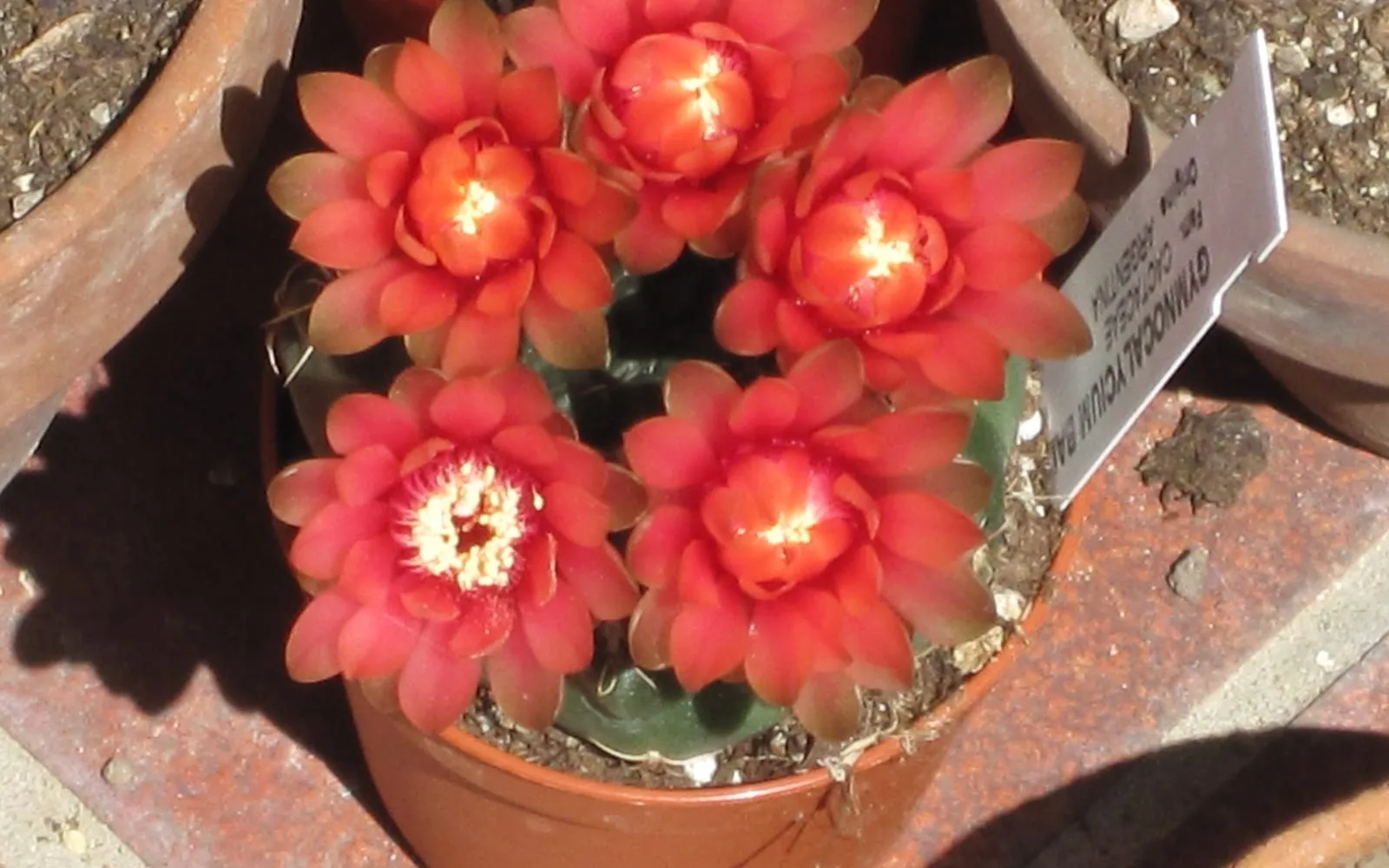
Flowers are the plant’s standout feature: relatively large, funnel-shaped and a rich red to deep pink, opening from buds that emerge near the crown and often appearing over an extended period through late spring and summer on a well-grown specimen, rather than in one brief flush.
Where it is from
Rocky, semi-arid slopes in Argentina, typically among grass and low scrub at moderate elevation, in a climate with a pronounced dry season and cool nights.
That semi-arid origin with real seasonal temperature swings underlies its preference for a distinct, cooler winter rest in cultivation, and its tolerance of somewhat less intense light than a full desert species, reflecting the partial shelter of grass and scrub it often grows among in the wild.
How it grows
An evergreen cactus growing slowly from the tip of its single stem, with older specimens sometimes producing offsets from the base to form a small cluster. Growth is modest and unhurried even by cactus standards, and the plant stays a manageable size for a very long time, which is part of its appeal as a houseplant that never outgrows its space.
Flower buds form near the crown once a stem reaches a reasonable size, and even a comparatively young, small plant is often capable of flowering, unlike some cacti that take many years to reach flowering maturity.
Through the seasons
Spring growth resumes and the first flower buds typically appear as temperatures rise.
Summer is the main flowering period, often with a series of blooms opening over several weeks rather than all at once. Water regularly and feed once or twice through this period.
Autumn growth and flowering slow as temperatures drop.
Winter keep the plant cool and nearly dry to support strong flowering the following season.
Care difficulty
Easy. This is a compact, forgiving cactus well suited to a beginner, tolerating a wider range of light conditions than many other flowering cacti while still flowering reliably given reasonably bright conditions and a proper winter rest.
Watering
Water thoroughly during the growing season, letting the compost dry out fully between waterings. Reduce watering significantly over winter, keeping the compost close to dry, which supports the following season’s flowering.
Warning signs, diseases and pests
Mealybug can colonise the base of the stem or settle among the ribs, and is treated with careful manual removal or a horticultural soap for persistent infestations. Root aphids, feeding unseen below the compost surface, occasionally cause an unexplained stall in growth, best confirmed by checking the roots directly if other causes have been ruled out.
A stem that stays green but produces no flowers over more than one season despite otherwise healthy growth often reflects insufficient light or a winter rest that was not cool or dry enough, rather than disease, and adjusting either condition the following year generally improves flowering.
Soft, discoloured tissue at the base of the stem indicates rot from overwatering, and is addressed by cutting back to healthy tissue and adjusting the watering regime, along with checking that the compost drains sharply enough.
Growing environment
Bright light supports the best flowering, though this species tolerates somewhat more shade than many other cacti without losing its compact shape, provided it is not kept in very dim conditions. Sharply free-draining cactus compost is essential, as with any cactus, and a cooler winter spot supports stronger flowering the following season.
Feeding
A low-nitrogen cactus fertiliser, applied once or twice through the growing season, supports steady growth and flowering. Stop feeding entirely once the plant enters its winter rest.
Troubleshooting
No flowers despite a healthy, established plant. Usually insufficient light or too warm and wet a winter rest. Move it to a brighter spot and provide a cooler, drier winter the following year.
The base of the stem is soft and discoloured. Suspect rot from overwatering. Cut back to healthy tissue, let it callus, and repot into fresh, sharply draining compost.
Small offsets have appeared around the base of an older plant. This is normal for a mature specimen. They can be left in place to form a cluster, or carefully removed once large enough and their own roots have formed, to grow on as separate plants.
Growth seems stalled with no obvious cause. Check the roots for signs of root aphids by tipping the plant from its pot, particularly if watering and light both seem adequate and no other pest is visible above the compost surface. In either case, resist the urge to feed a stalled plant more heavily to compensate, since this rarely helps and can worsen an existing root problem.
You want to grow a new plant from an offset. Remove a well-formed offset carefully once it is a reasonable size, let the cut surface callus for a few days in a dry, shaded spot, then set it on top of slightly moist, sharply draining compost without burying it. Roots typically form within a few weeks, after which watering can move to the normal routine for an established plant.
Dwarf Chin Cactus problem guides
Not sure what is wrong? See the common houseplant pests guide.