
Houseplant
Glory of Texas
Thelocactus bicolor
Also known as Texas rainbow cactus
How to grow glory of Texas as a houseplant. Its banded pink and cream spines, large summer flowers, and why it tolerates a range of conditions well.
At a glance
- Difficulty
- Easy
- Water
- Regular watering in summer, minimal in winter
- Light
- Bright light, full sun once acclimatised
- Temperature
- 10-30 deg C; tolerates a cool, dry winter rest
- Hardiness
- USDA 8-11, RHS H3, hardy to -5 C
- Type
- Evergreen perennial cactus
- Height
- 8-20 cm tall
- Native to
- Southern United States, Northern Mexico
More cold-tolerant than many small ornamental cacti, surviving a brief light frost once established in dry, sharply draining soil. It needs strong sun and a proper dry winter rest to flower well, and while it can be grown outdoors year round in a suitably dry, mild climate, it is more often kept as a container plant in a temperate garden.
Hardiness zones describe winter cold alone. Summer heat, humidity, rainfall and the length of the growing season decide as much, so treat the range as the outer limit rather than as a recommendation.
Not known to be toxic
Glory of Texas has no toxicity listing from the RHS or the ASPCA and is considered safe around pets and children in terms of chemical toxicity. Its long, distinctively banded spines are sharp and can cause a painful puncture on contact, so handling it with padded tools rather than bare hands is worthwhile, especially when repotting.
Source: RHS
About
Glory of Texas is grown for its striking spines, long and distinctly banded in shades of pink, cream and red along their length, arranged in dense clusters along a strongly ribbed stem, and for its large, vivid magenta-pink flowers that open in summer and are often disproportionately big compared with the modest size of the plant itself. It is one of the more colourful small cacti widely available, both in flower and, thanks to its spines, even when not.
Native to a range spanning parts of Texas and northern Mexico, it has long been popular with cactus collectors for its reliable flowering and its comparative tolerance of a range of growing conditions compared with some more demanding small cacti.
Appearance and character
A solitary or occasionally slowly clustering stem, distinctly ribbed and typically bluish-green, has clusters of long, straight to slightly curved spines along each rib, each spine showing clear bands of colour, often pink or red near the base shading to cream or grey toward the tip, giving the whole plant a striking, almost painted appearance even before it flowers.
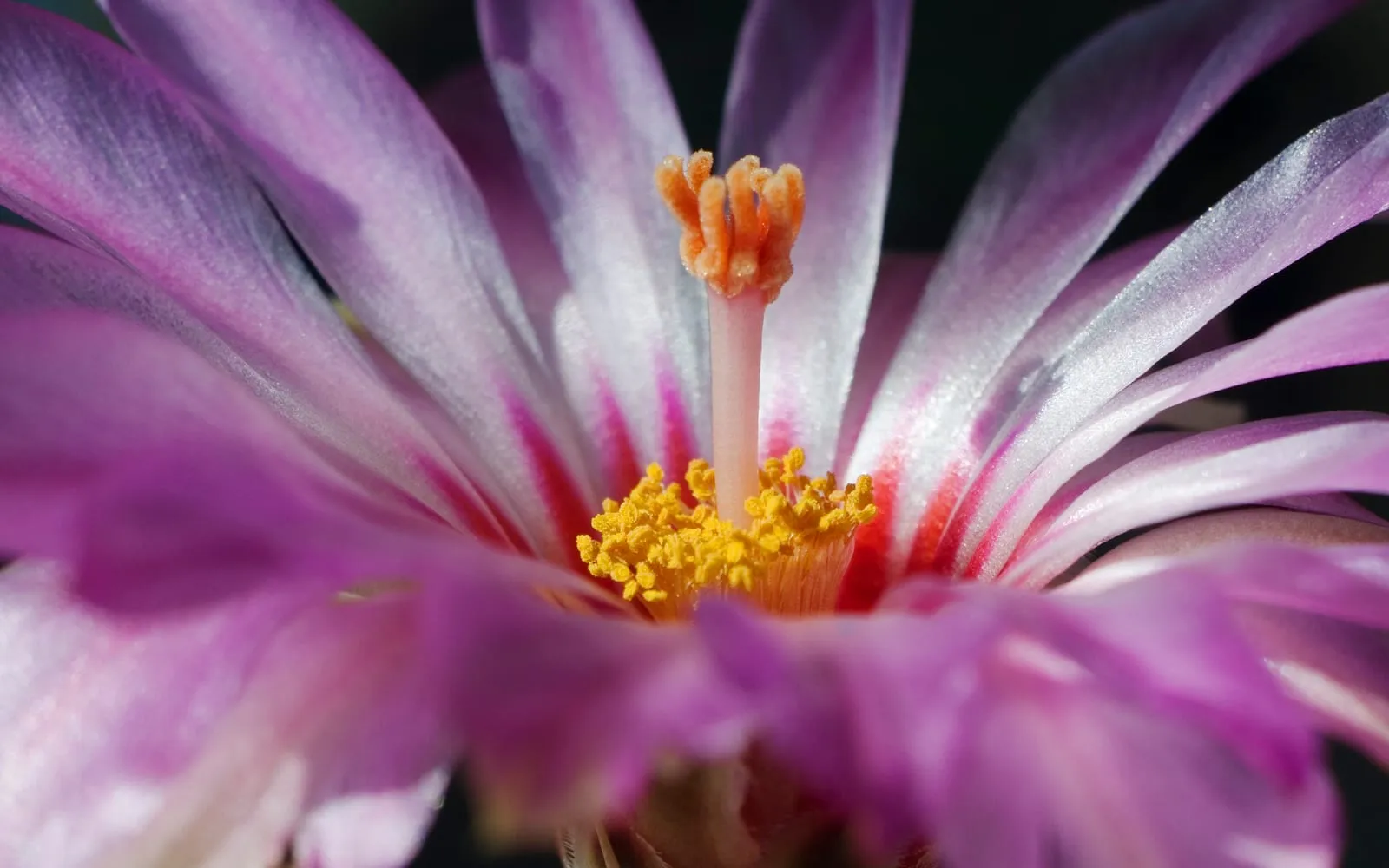
Large, funnel-shaped flowers, typically a vivid magenta-pink with a paler throat, open from the crown in summer. Each flower often lasts several days, and a well-established plant can flower over a longer period than many cacti with single-day blooms.
Where it is from
Rocky desert and scrubland across parts of Texas and northern Mexico, in a climate with intense summer heat, cold winter nights and generally low, unpredictable rainfall.
That range, spanning both hot desert lowlands and somewhat cooler, higher ground, is part of why this species tolerates real winter cold better than many other small ornamental cacti, provided the soil stays dry through the coldest months.
How it grows
Unlike the fast offsetting habit of many small cacti, this species mostly keeps to itself, adding height and girth to a single stem for years before an offset appears, if one ever does. What it lacks in clustering speed it makes up for in colour: the banding on each new spine sharpens with every flush of growth a well-lit plant puts on.
The stem thickens fastest through the warmer months, provided it is watered on a proper cycle, then holds steady through a cool, dry winter that does more for the following summer’s flowers than anything applied during the growing season itself.
Through the seasons
Spring the stem wakes back up as light strengthens, and the first flower buds start forming on plants old enough to carry them.
Summer is when the show happens, with the big magenta-pink blooms opening in succession over weeks rather than all at once. Keep watering regular and work in a feed once or twice as the season runs its course.
Autumn both growth and flowering taper off as the light fades.
Winter pull watering right back and keep the plant somewhere cool, setting up a stronger flowering run the following summer.
Care difficulty
Easy, and a good choice for anyone who wants strong colour without a demanding routine. It handles a broader range of everyday conditions than many small cacti and still flowers dependably provided it gets real sun and a proper winter off.
Watering
Soak the compost right through, then hold off until it has dried out completely before watering again. Cut this back sharply over winter, keeping things close to dry, since that rest is what the following summer’s flowering depends on most.
Warning signs, diseases and pests
Check the crown and the base of the stem for mealybug from time to time, treating any colony found with careful manual removal or a horticultural soap before it spreads. Rot is the more serious concern here, usually starting at the base wherever drainage has fallen short or watering has run too generous, and it needs cutting back to firm tissue the moment it is spotted.
A stem that has faded in colour and started stretching is asking for more light rather than fighting off a pest; move it somewhere sunnier and watch the next flush of spines come in tighter and better banded, though what has already stretched will not tighten up on its own. A summer with noticeably fewer flowers than usual almost always traces back to a winter that was not cold or dry enough, rather than to anything wrong with the plant itself.
Growing environment
Strong light with real direct sun brings out the banded spine colour this species is grown for and keeps flowering reliable; skimp on either and both suffer together. Mineral, sharply draining compost matters as much as light does, and a cool, dry spot over winter rounds out what this cactus needs to perform at its best.
Feeding
A low-nitrogen cactus fertiliser, applied once or twice through the growing season, supports steady growth and reliable flowering. Stop feeding entirely once the plant enters its winter rest.
Troubleshooting
Few or no flowers despite a healthy-looking plant. Usually insufficient light or a winter rest that was not cool or dry enough. Move the plant to a brighter spot and provide a more distinct seasonal contrast the following year.
Growth looks pale and stretched, with duller spine colour. Too little light is the most common cause. Move the plant to a brighter, sunnier spot; new growth will show stronger colour and a more compact habit.
The base of the stem is soft and discoloured. Suspect rot from overwatering or poor drainage. Cut back to healthy tissue, let it callus, and repot into fresh, sharply draining compost.
Spines look duller or less distinctly banded than expected. This can reflect insufficient light, since strong sun tends to intensify the banded colouring this species is known for. Increasing light exposure gradually often improves colour on new growth over subsequent seasons.
You want to try growing this species from seed. Fresh seed germinates reasonably readily in warm, humid conditions over a sharply draining seed mix, though seedlings need a slow, gradual introduction to strong sun over their first year or two, well short of the full intensity a mature plant tolerates, to avoid scorching their still-soft tissue.
Glory of Texas problem guides
Not sure what is wrong? See the common houseplant pests guide.